A great Tartarus build should do more than look impressive in a boss showcase. It should get through the awkward gearing stages, handle the content you actually enjoy, and leave room for affordable upgrades. Our team's approach is straightforward: choose a reliable starter first, then decide which endgame build deserves a bigger commitment.
That starts with a realistic Torchlight Infinite FE budget. We would rather complete a functional setup than buy one expensive item and spend the next several sessions trying to make it work. Below, we separate our starter shortlist from longer-term projects, explain the trade-offs, and show how we would approach progression.
Our Tartarus Build Shortlist
Our recommendations are routes to investigate, not a verified SS14 competitive ranking. The community's Tartarus tier-list service explicitly describes its ratings as a forecast based on earlier results, patch changes, and creator material.
For a quick decision, here is how we would narrow the field:
| Your priority | Our starting shortlist | Check before committing |
|---|---|---|
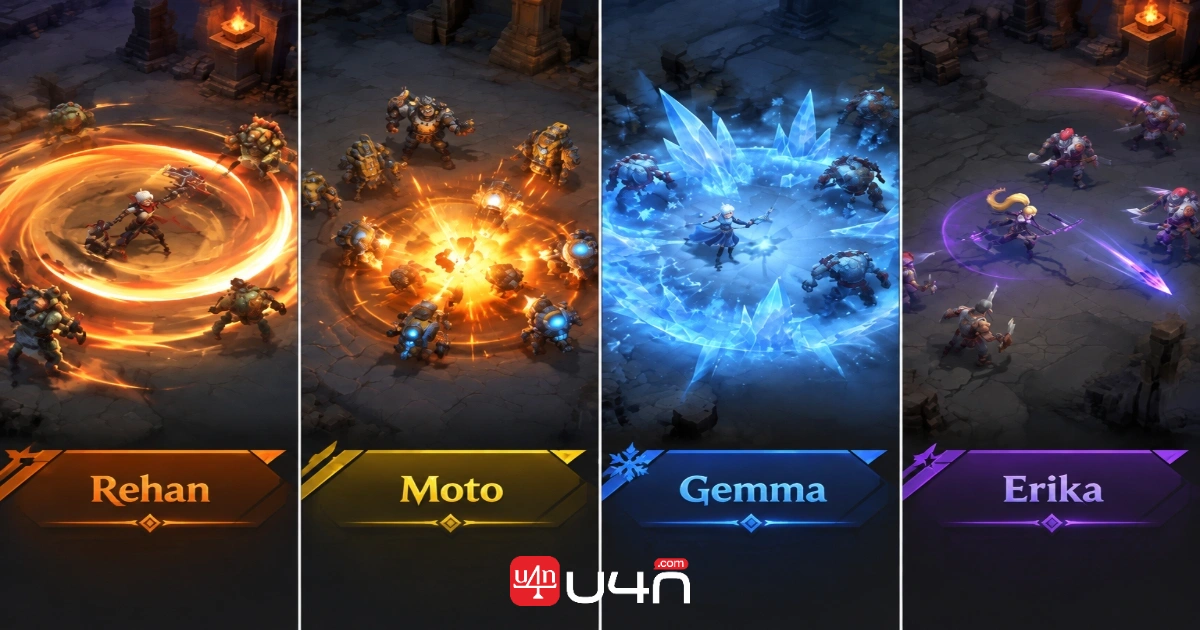
| Whirlwind melee progression | Rehan 1 | Leveling transitions and replacement gear |
| Self-destruct minion gameplay | Moto 2 | Summoning rhythm and automation requirements |
| A guided cold-skill route | Gemma 2 | A matching Cold Tangle configuration |
| Active mapping | Erika 1 | Single-target progression and defenses |
| Ground-skill gameplay | Selena 2 | Current-version scaling |
| An elixir-focused endgame project | Sage | Complete build interactions |
| Invested melee progression | Rehan 2 | Skill variant and full setup cost |
| A specialized endgame configuration | Rosa 2 | Exact variant and mandatory components |
These are specific routes, not interchangeable hero labels. The community overview and creator-guide directory list different skills and progression stages under the same traits, so we recommend matching the hero, trait, skill, and season before copying a setup.
Best Starter Candidates for Your Playstyle
Rehan 1: Our Pick for Whirlwind Fans
We would put Rehan 1 on the shortlist for players who already know they enjoy Whirlwind. The attraction is a focused progression plan—not a promise that every melee configuration will be inexpensive.
Our preference is to follow one guide through its skill transitions before experimenting. Mixing a Strength-stacking setup with unrelated fire-damage components is not a shortcut to a finished build.
- Why consider it: A familiar playstyle can make progression easier to follow.
- Why skip it: If you dislike close-range combat, a budget label will not make the experience more enjoyable.
- Our first spending priority: Resolve the next documented progression requirement rather than chase a showcase item.
Moto 2: Our Minion-Focused Option
For Moto 2, we care less about how automated the finished build looks and more about how it plays while incomplete.
Before choosing it, we would watch the leveling rotation: how often are summons replaced, which actions require manual input, and what changes during a boss encounter? Those details matter more to our recommendation than the word "lazy."
- Why consider it: It belongs on the shortlist for players who prefer a minion-based combat routine.
- Why skip it: Do not choose it solely because someone calls the finished setup hands-free.
- Our first spending priority: Complete the documented summon-and-trigger interaction before adding luxury damage.
Gemma 2: Our Guide-Led Cold Option
We would approach Gemma 2 by keeping the Cold Tangle setup intact: main skill, supports, talents, and progression instructions should come from the same configuration.
Our advice is deliberately conservative here. Get the original setup functioning, then change one component at a time. Otherwise, it becomes difficult to tell which adjustment caused the problem.
- Why consider it: A clearly documented route suits players who prefer a structured upgrade path.
- Why skip it: It is a poor match if you want to freely swap between cold skills without rebuilding around them.
- Our first spending priority: Finish the core skill package before optimizing secondary stats.
Erika 1: Our Mapping-Oriented Shortlist
For players prioritizing movement and an active farming rhythm, we would investigate Erika 1—but insist on seeing more than a clear-speed clip.
Our preferred guide would show a stage boss, explain defensive choices, and include affordable alternatives. We want a character that reaches its next farming milestone, not one that only looks good against dense packs.
- Why consider it: It matches a mapping-first selection process.
- Why skip it: Do not choose it if your main goal is minimal input.
- Our first spending priority: Address whichever obstacle stops progression: survival, single-target damage, or an incomplete skill interaction.
Endgame Builds Worth a Longer Commitment
We would evaluate Selena 2, Sage, Rehan 2, and Rosa 2 as separate investment projects, rather than attach an automatic S-tier label to all four.
There is a concrete reason for that caution: the official SS14 notes adjust Selena's ground-skill damage, Sage's damage and elixir-related effects, Rehan's Seething Silhouette bonuses, and Rosa's Unsullied Blade damage. Our conclusion is that older showcases need current-version validation—not that every affected build should be abandoned.
Selena 2: Check the Affordable Version First
Our recommendation is to evaluate Selena 2 at the budget you can actually reach.
Before investing, we want answers to two questions: does the intended rotation work without premium gear, and does the defensive plan leave enough room to maintain damage?
- We would commit when: A current guide explains both the functional entry setup and its upgrades.
- We would wait when: The only convincing evidence is a fully geared, older-season demonstration.
Sage: Understand the Engine Before Buying Parts
For Sage, our emphasis is on understanding the build's interactions.
We want a guide to identify what is mandatory, what improves consistency, and what merely raises the ceiling. A shopping list without an explanation is not enough for our team to recommend a substantial investment.
- We would commit when: The mechanics and upgrade order are clear.
- We would wait when: The affordable configuration depends on components missing from the advertised budget.
Rehan 2: Price the Entire Melee Package
Our approach to Rehan 2 is to price a complete functional configuration—not just its most recognizable item.
We would also inspect the defensive plan before comparing peak damage. For a melee project, we want the guide to explain how the character handles dangerous encounters, not simply how quickly it finishes an ideal damage window.
- We would commit when: The selected skill variant has a complete progression plan.
- We would wait when: Buying the headline item would leave the rest of the character unfinished.
Rosa 2: Choose a Variant, Not a Reputation
We would start Rosa 2 research by identifying the exact configuration.
Our recommendation is not to assume that every version uses the same stacking strategy, talents, or skill package. Separate the components that make the build function from those used to optimize an already successful setup.
- We would commit when: Mandatory interactions and cheaper substitutions are clearly identified.
- We would wait when: The recommendation consists mainly of "it is tanky" or "it is top tier."
Spend on Progression, Not Damage Screenshots
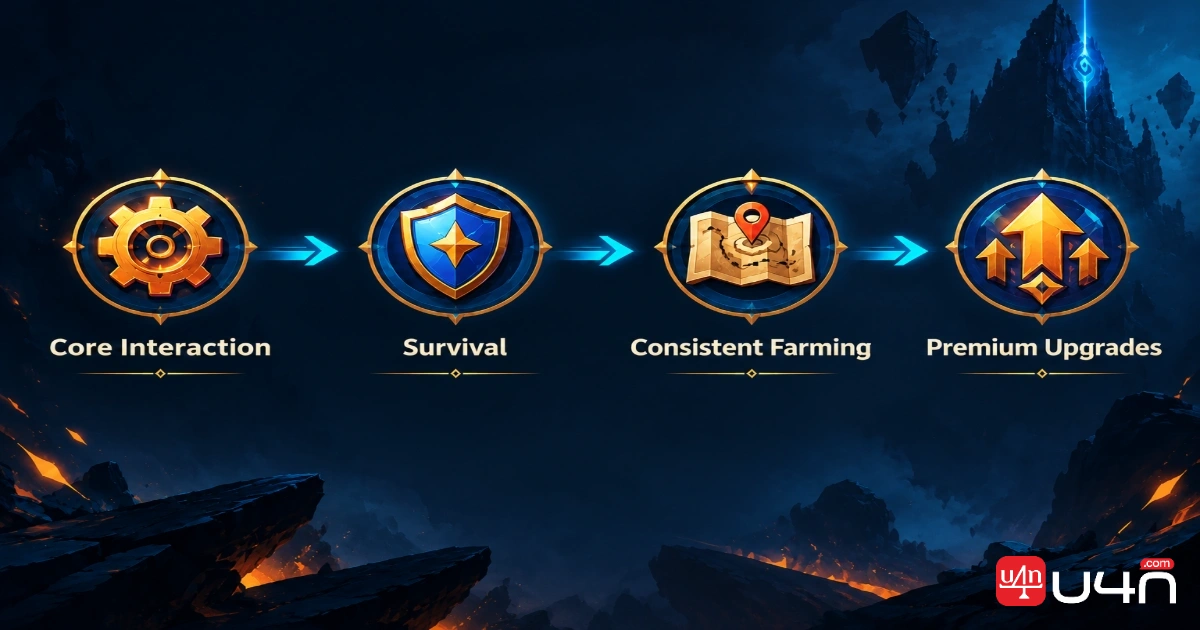
Our preferred upgrade order is simple:
- 1. Make the core interaction work.
- 2. Fix the reason encounters fail.
- 3. Establish comfortable, repeatable farming.
- 4. Buy premium damage upgrades afterward.
We would diagnose the problem before purchasing a solution.
| What you notice | What we would inspect first |
|---|---|
| Ordinary packs feel fine, but bosses stall | Single-target setup and damage uptime |
| Damage looks sufficient, but deaths interrupt progress | Defensive gaps and recovery |
| Skills feel inconsistent | Trigger conditions and resource requirements |
| The build works, but the next upgrade is expensive | Whether that upgrade is necessary for your current goal |
| You want to reroll after one difficult encounter | Whether the issue is configuration or playstyle |
We also recommend keeping part of the budget unspent. A finished shopping list is less useful than a working character with enough flexibility to correct a mistake.
Questions We Would Ask Before Locking In
Which Tartarus build should beginners research first?
We recommend starting with the playstyle you already understand. Among this shortlist, that might mean Rehan 1 for Whirlwind, Moto 2 for minions, or Gemma 2 for a guided cold setup. The deciding factor should be a complete progression guide—not the highest tier label.
Does "budget" mean no specific Pactspirits?
We would never assume so. Before adopting a guide, check equipment, Pactspirits, trait access, and any special components separately. Ask what changes if your account cannot reproduce its configuration.
When should we switch to an endgame build?
Our minimum requirement is a complete functional entry setup, a clear reason to switch, and some remaining adjustment budget. We would not dismantle a comfortable farmer just because another build has a more impressive showcase.
Our Verdict: Start Complete, Then Scale
For readers searching for cheap Torchlight Infinite FE, our advice remains the same: set a budget around a complete progression step, not one tempting item. We would prioritize a working rotation, dependable survival, and an upgrade that solves a specific problem.
Our Tartarus plan is to choose an understandable starter, establish repeatable farming, and then fund an endgame project with a clear upgrade path. The best build for us is not the one with the loudest ranking—it is the one we can finish, enjoy, and keep improving.