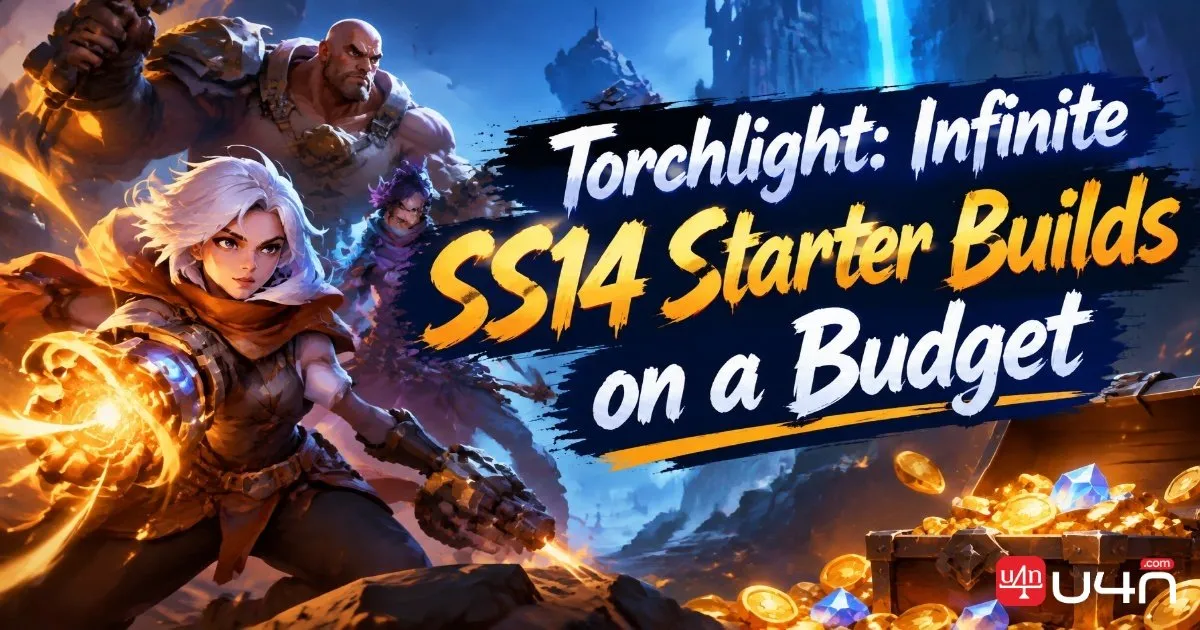
Starting a new season in Torchlight: Infinite is much easier when your first hero can clear content without demanding expensive gear. For SS14, our team recommends choosing a build around reliable early damage, manageable defenses, and a smooth path into the Netherrealm—not simply chasing the highest endgame damage numbers. Your early Torchlight: Infinite Flame Elementium budget is better spent supporting a build that already works than rescuing one that struggles to get started.
There is one important distinction: a strong endgame hero is not automatically a strong league starter. SS14's Tartarus season launches on October 16, 2026, and pre-season rankings are still estimates until players generate fresh data. The most useful starting point is to favor proven, low-investment traits while treating newly introduced options as less certain. The official SS14 update notes confirm the new season content and changes, while community starter rankings offer a provisional picture of which builds are worth testing.
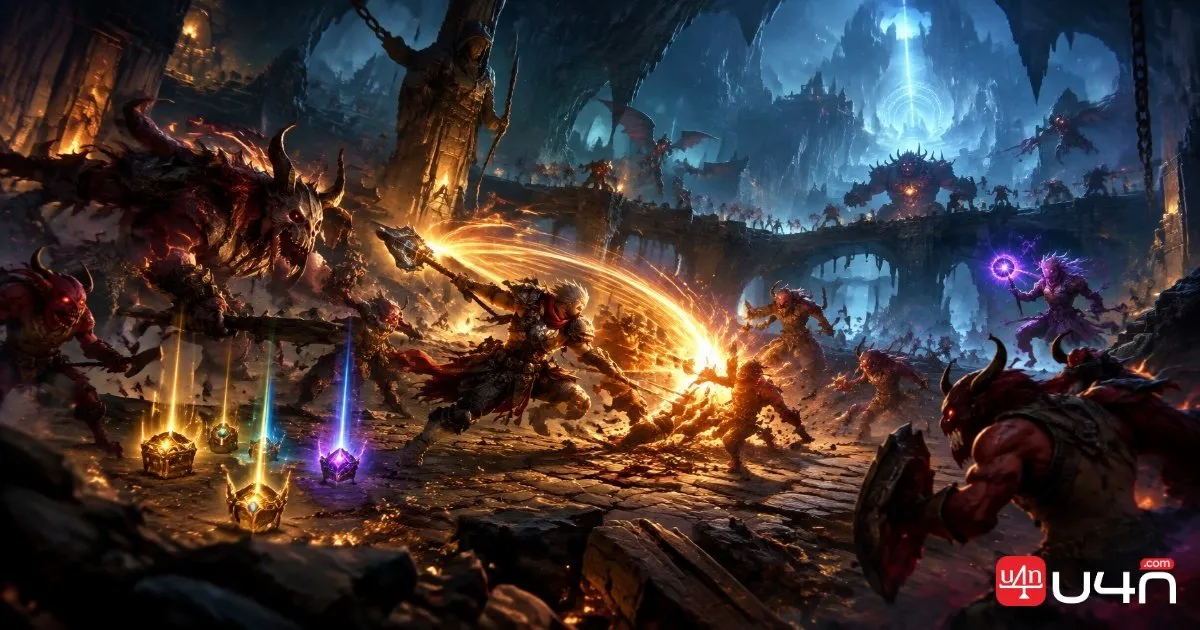
What Makes a Good SS14 Starter?
We evaluate a starter by how well it performs before the player has accumulated valuable gear, not by its theoretical damage ceiling. A forgiving build gives you time to learn enemy patterns, skill links, and progression systems without forcing you to solve several problems at once.
| Factor | What we look for | Why it matters |
|---|---|---|
| Early damage | Reliable damage with ordinary drops | Keeps campaign progression moving |
| Survivability | Room to make positioning mistakes | Reduces frustrating deaths and lost time |
| Mechanical complexity | A clear, repeatable combat loop | Makes the build easier to learn |
| Gear dependency | Few essential or expensive items | Leaves more currency for gradual upgrades |
| Scaling | A practical route into early Netherrealm farming | Helps the starter remain useful after the campaign |
A good starter does not need to excel in every category. It needs to perform consistently enough that you can earn currency, learn the game, and decide whether to keep investing in it.
A strong endgame hero is not automatically a strong league starter. For a low-budget start, prioritize reliable early damage, manageable defenses, and reasonable gear requirements over theoretical endgame damage.
Best Heroes to Consider for a Low-Budget Start
For SS14, our shortlist prioritizes traits with established starter potential. These are practical starting recommendations, not a definitive post-launch ranking; balance changes and early-season testing may shift the order.
| Hero and trait | Why consider it? | Best fit |
|---|---|---|
| Selena 2 — Dance of the Deep | A comfortable option for players who value smooth mapping and a less demanding combat rhythm | Players who want to clear content efficiently |
| Erika 1 — Wind Stalker | Rewards movement and offers a strong early farming profile when built around an appropriate skill setup | Active players who enjoy fast combat |
| Youga 2 — Spacetime Elapse | Damage-over-time gameplay can reduce the need to maintain constant direct attacks, including during boss encounters | Players who prefer a steadier, more controlled approach |
| Thea 3 — Blasphemer | An alternative for players interested in erosion damage and a build that can transition toward boss-focused progression | Players comfortable learning a more specialized setup |
| Gemma 2 — Frostbitten Heart | A cold-oriented option with an accessible core concept and room to develop as gear improves | Players who want a straightforward elemental playstyle |
These options are consistent with pre-season community starter assessments, but they are not guaranteed to remain in this exact order after SS14 launches. A current SS14 starter overview also separates early progression from endgame performance—a distinction we consider essential when recommending a first character.
Our practical advice is to start with Selena 2 or Erika 1 if your priority is efficient farming and a straightforward route into the season economy. Consider Youga 2 if you prefer damage over time and want a different approach to boss fights. Thea 3 and Gemma 2 are reasonable alternatives when their mechanics appeal to you more.
Heroes That Need More Careful Budget Planning
Not every viable hero is an equally comfortable first pick. Some traits introduce additional mechanics, depend on a more specific gear setup, or feel less rewarding until several parts of the build come together.
- Bing 2 — Creative Genius: Spellburst adds another layer to skill setup and combat timing. It can appeal to players who enjoy optimizing interactions, but it may be less intuitive when you are still learning the game's basic systems.
- Iris 2 — Vigilant Breeze: The Magus-centered playstyle offers a distinctive way to approach combat, but managing summons and understanding their role can increase the learning curve.
- Gemma 1 — Ice-Fire Fusion: Element conversion and build-specific requirements can make early progression less straightforward than a simpler elemental setup.
- Erika 2 or Erika 3: These traits may reward players who understand their movement, damage, and defensive requirements, but they are not automatically the easiest choices for a fresh account.
- Sage or other specialized traits: Avoid judging them by endgame showcases alone. If a build relies on a particular interaction or takes time to reach its intended damage pattern, its early experience may be noticeably less comfortable.
This does not mean these heroes are weak. It means the cost of learning and gearing them may be harder to justify when you have limited resources. If a complex playstyle is what makes the game enjoyable for you, it can still be the right choice—just follow a tested starter guide instead of copying an expensive endgame setup.
How to Spend Less and Progress More Smoothly
The biggest early mistake is treating a build guide as a shopping list. Endgame guides often show a character after substantial investment, when its weaknesses have already been covered by gear, skill links, and other systems. Copying that setup too early can leave you short on currency without fixing the real problem.
Use this progression plan instead:
- Choose one trait and one starter guide. Avoid mixing skill links, talent choices, and gear recommendations from several unrelated builds.
- Get the core skill working first. Prioritize the main damage skill, the support links that make it function, and enough defenses to survive ordinary encounters.
- Upgrade to solve a specific problem. If enemies take too long to defeat, improve your damage setup. If you die frequently, review defenses and positioning before spending heavily on damage.
- Keep early gear flexible. Replace items when a clear improvement appears rather than investing heavily in equipment you expect to discard soon.
- Use farming to fund the next stage. A starter's job is to generate resources reliably. Once your income and gear improve, you can decide whether to scale the build or switch to a higher-investment option.
When checking build rankings, pay attention to the stage they describe. Campaign performance, early Netherrealm farming, and endgame boss damage measure different things. A build that dominates a fully geared damage showcase may be an inefficient choice for a new player.
Summary
For a low-budget SS14 start, we would put Selena 2, Erika 1, and Youga 2 near the top of the initial shortlist, with Thea 3 and Gemma 2 as alternatives for players whose preferred mechanics better match those traits. Treat this as a starting framework rather than a permanent tier list: SS14 balance changes and actual player results should inform later decisions.
The key is to choose a build that functions on modest gear, learn its core loop, and spend resources only when an upgrade solves a real problem. A reliable starter also gives you more freedom to explore the economy and compare the cost of future upgrades—including whether cheap Torchlight: Infinite Flame Elementium fits your budget and progression plan—without assuming that spending more is the only way to improve.