No offers match these filters. Clear a filter to see more.
Buy POE 2 Currency at U4N
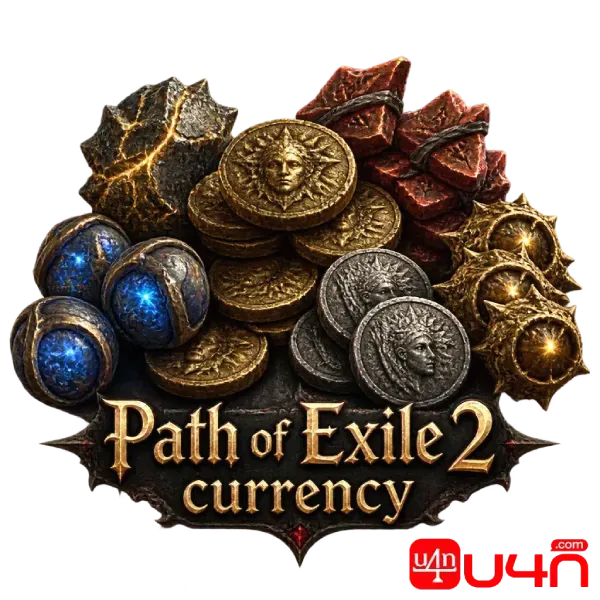
POE 2 Currency is the foundation of crafting, trading, and character progression in Path of Exile 2. Instead of relying on a single gold system, the game uses functional items such as Exalted Orbs, Chaos Orbs, Divine Orbs, Regal Orbs, and crafting materials. Each item has a different purpose, so the right choice depends on your build, gear, league, platform, and current stage of progression.
U4N provides a clear way to compare available POE 2 Currency offers before placing an order. Select the correct platform and league, review the unit price and quantity, then enter accurate delivery details at checkout. The guide below explains the major currency types, how delivery works, and what to check before buying.
What Is POE 2 Currency?
Currency in Path of Exile 2 consists of tradeable items that also perform practical actions. Some currencies upgrade an item's rarity, some add or reroll modifiers, and others improve quality or add sockets. Because these items are useful to both crafters and traders, they naturally become the economy's main units of value.
The value of POE 2 Currency is not fixed. Prices can change with league age, balance updates, popular builds, supply, and player demand. Before choosing an item, consider what it will do for your character rather than looking only at rarity. A common orb that solves an immediate upgrade can be more useful than an expensive currency saved without a plan.
Popular POE 2 Currency Types and Uses
Currency
Primary Use
Best For
Practical Tip
Exalted Orb
Adds a random modifier to eligible rare equipment
Advanced crafting and player trading
Use it on a strong base with room for another modifier.
Chaos Orb
Changes modifiers on eligible rare equipment
Gear experimentation and trade
Set a spending limit because the outcome is random.
Divine Orb
Rerolls the numerical values of eligible modifiers
Optimizing valuable late-game gear
Reserve it for an item whose modifier tiers are already worth improving.
Regal Orb
Upgrades eligible magic equipment to rare and adds a modifier
Step-by-step crafting projects
Start with a magic item that already has useful modifiers.
Orb of Alchemy
Upgrades eligible normal equipment to rare
Early progression and creating usable rare items
Choose a relevant base type before applying it.
Orb of Transmutation
Upgrades eligible normal equipment to magic
Low-cost early crafting
Useful when you need a quick improvement while leveling.
Orb of Augmentation
Adds a modifier to eligible magic equipment
Finishing a promising magic item
Check the existing modifier before committing the orb.
Orb of Annulment
Removes a random modifier from eligible equipment
High-risk crafting corrections
Only use it when you accept the chance of losing a valuable modifier.
Vaal Orb
Corrupts an item with an unpredictable result
Risk-reward upgrades
Corruption can prevent further modification, so treat it as a final step.
Artificer's Orb
Adds a rune socket to eligible martial weapons or armour
Rune-based equipment customization
Confirm that the target item is eligible before use.
Jeweller's Orbs
Add support gem sockets at the applicable progression tier
Expanding skill setups
Match Lesser, Greater, or Perfect versions to the skill's current sockets.
Item behavior and eligibility can change through game updates. Always read the current in-game description before using valuable POE 2 Currency on equipment.
How to Buy POE 2 Currency from U4N
The ordering process is designed to help you select the correct product and provide the information needed for delivery. Taking a minute to verify your choices can prevent the most common delays.
Step
What to Do
What to Check
1. Choose your game options
Select your platform, server or region, league, and game mode.
Make sure Standard, current league, Softcore, and Hardcore selections match your character.
2. Select a currency
Choose the orb or material you need and enter the quantity.
Review the product name, unit size, total quantity, and displayed price.
3. Enter delivery details
Provide the requested character and contact information.
Use your in-game character name when requested, not an unrelated account or forum name.
4. Complete checkout
Select an available payment method and review the order summary.
Confirm the final amount and make sure every order detail is correct before payment.
5. Follow delivery instructions
Watch for the order update and be ready to join the arranged in-game trade.
Keep enough inventory space and verify the trade-window quantity before accepting.
Information to Prepare Before Checkout
Platform: PC, PlayStation, and Xbox economies may be separate.
League: Seasonal league and Standard inventories are not interchangeable.
Game mode: Softcore and Hardcore characters use different economies.
Character name: Enter the exact name of the character that will receive the trade.
Quantity: Check whether the listing is sold per orb, stack, or another displayed unit.
Availability: Review the current product status and the delivery information shown during checkout.
How POE 2 Currency Delivery Works
POE 2 Currency is commonly delivered through an in-game player-to-player trade. Depending on the order instructions, you may receive a party invitation and meet the delivering character in a town or Hideout. Keep the character specified in your order online and available so the trade can be completed efficiently.
Delivery Checklist
Before the Trade
During the Trade
After the Trade
Log in with the correct character and clear enough inventory space.
Confirm the other character follows the order instructions.
Check that the received items appear in your inventory or stash.
Keep the order page or reference number available.
Read the item name and count in the trade window before accepting.
Contact support with the order reference if anything is missing.
Check messages through the contact channel used for the order.
Do not add unrelated items or change the agreed trade.
Store valuable currency before returning to combat.
Never share your game password, login code, or full account credentials for a normal currency trade. Accurate character information should be enough for an in-game delivery. If an order detail is wrong, contact U4N support through the official website instead of sending sensitive information to an unknown player.
How to Choose the Right Currency for Your Build
The best purchase is not always the rarest orb. Decide what problem you want to solve first: buying an upgrade from another player, improving a good item, adding skill support capacity, or funding several smaller changes. This keeps your POE 2 Currency budget focused on upgrades that have a visible impact.
Choose by Progression Goal
Your Goal
Currency Approach
Why It Helps
Improve leveling gear
Use lower-cost crafting items or trade for a direct upgrade.
Early equipment is replaced often, so controlled spending preserves resources.
Fix resistances or defenses
Compare the cost of crafting with the price of a finished item.
A ready-to-use upgrade can avoid repeated random crafting attempts.
Improve a strong rare item
Use advanced currency only when the item has a suitable base and open crafting potential.
High-value materials have better value when the starting item is already good.
Expand a skill setup
Choose the appropriate Jeweller's Orb tier for the skill gem.
More support options can improve damage, utility, or survivability.
Trade with other players
Keep commonly accepted currency in convenient stack sizes.
Liquid items make it easier to respond to a useful market listing.
Buy Only What You Can Use
Start with the upgrade you need now and leave room for market changes. League economies can move quickly, especially after balance changes or shifts in popular builds. Smaller, planned purchases can be easier to manage than holding a large amount without a specific purpose.
Farming and Trading Alternatives
Buying is only one way to obtain POE 2 Currency. Players can also build wealth through regular gameplay and the player economy. Combining several methods often creates steadier progress and helps you understand the value of each item.
Monster drops: Defeat enemies efficiently in content appropriate for your build.
Chests and containers: Explore areas thoroughly when the extra time is worthwhile.
Quest and activity rewards: Complete content that provides useful items or repeatable value.
Vendor interactions: Learn which items and exchanges can return crafting materials.
Player trading: Sell valuable drops that do not fit your build and use the proceeds for targeted upgrades.
Endgame farming: Choose mechanics your character can clear reliably instead of chasing the highest theoretical return.
Efficiency is not just the value of a single drop. Clear speed, survival, time spent trading, and the consistency of a farming route all affect the amount of usable currency you earn.
Smart Buying and Account-Safety Tips
Any third-party transaction may carry game-policy or account risk. Review the current Path of Exile 2 rules and make your own informed decision before purchasing. U4N customers can also reduce avoidable order problems by following a few practical checks.
Confirm the website domain and use only the payment options shown in the official checkout.
Do not disclose your password, one-time code, or other login credentials.
Verify the platform, league, mode, item, and quantity before submitting payment.
Read the delivery estimate and refund terms displayed for the order.
Inspect every item in the in-game trade window before accepting.
Keep the order reference until delivery is complete.
Use official U4N support channels if you need help with an order.
POE 2 Currency FAQ
Which POE 2 Currency should a new player choose?
New players should begin with a clear goal. If you need an immediate equipment upgrade, compare the cost of buying a finished item with the cost of random crafting. Lower-cost crafting currencies are useful while leveling, while rare orbs are often better saved for trading or carefully planned late-game projects.
Why do POE 2 Currency prices change?
Prices respond to supply, demand, league progression, build popularity, game updates, and platform-specific market conditions. The current price shown on the selected U4N product page is more relevant than an older guide or historical estimate.
Can currency be moved between leagues or platforms?
Usually, separate platforms, leagues, and game modes have separate economies. Select the exact environment where your receiving character exists. If you are unsure, confirm the details before checkout rather than assuming the items can be transferred later.
What character information is needed for delivery?
Follow the fields shown at checkout and enter the exact in-game character name requested for the trade. A normal delivery should not require your password or login verification code.
How long does delivery take?
Timing can depend on stock, order size, platform, league, payment confirmation, and whether the receiving character is online. Check the estimate displayed for the selected listing and monitor the contact information associated with your order.
What should I do if I selected the wrong league or character?
Contact U4N support as soon as possible and provide the order reference plus the correct non-sensitive details. Do not place a duplicate order unless support advises you to do so.
Should I craft with valuable orbs or trade them?
Compare the expected crafting outcome with the price of a finished upgrade. Crafting can be rewarding, but many results are random. Trading is often more predictable, while advanced crafting makes more sense when you understand item bases, modifier rules, and the amount you are prepared to spend.
Find the POE 2 Currency You Need
Use the U4N product filters to match your platform, league, and game mode, then compare the available quantities and prices. Whether you are preparing a new build, improving endgame equipment, or keeping flexible trade value, a clear upgrade plan will help you get more practical value from every order.
Grim Pillars is one of the most interesting cold-based skills in Path of Exile 2, especially when combined with a Spell Totem setup. Rather than relying on direct spell casting, the skill allows you to create icy crystal pillars that deal cold damage, freeze enemies, and eventually erupt for powerful area-of-effect burst damage.
The Disciple of Varashta offers a distinctive minion-focused approach to campaign progression in Path of Exile 2. Among the strongest options described for the ascendancy is the Djinn Minion and Navira’s Fracturing setup, a build centered around permanent, invulnerable Djinns that handle much of the character’s damage output.
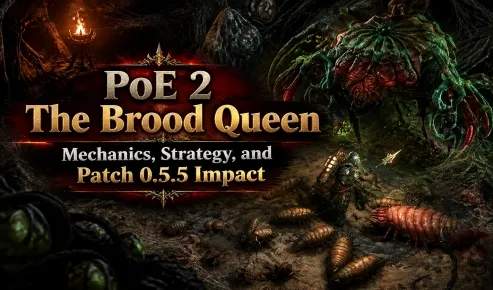
The Brood Queen is one of the early campaign bosses in Path of Exile 2, appearing in the Larva Hollow zone. While she arrives relatively early in a character's progression, the encounter introduces several mechanics that can punish players who rely on standing still and dealing damage from a fixed position.