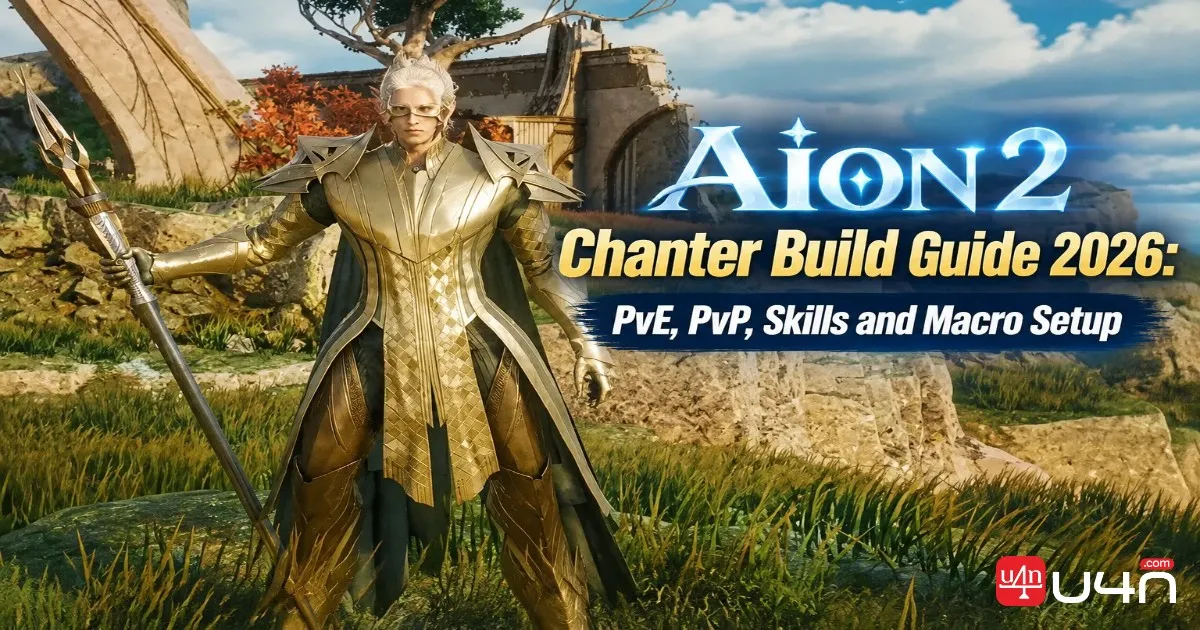
The Chanter remains one of the more interesting hybrid classes to build in Aion 2 Items because it is not locked into a single job. It can contribute damage, maintain party utility, provide recovery, and stay active in combat instead of standing at the back and only watching health bars. That flexibility is also what makes the class harder to optimize: the best setup depends heavily on whether you are leveling alone, running a dungeon, or entering PvP.
NC's live-service updates show that the Chanter has already received meaningful balance attention. In the January class update, several Chanter attacks were increased in damage, while Spinning Strike received a damage increase and specialization changes that can reduce its recast time or improve its offensive reliability.
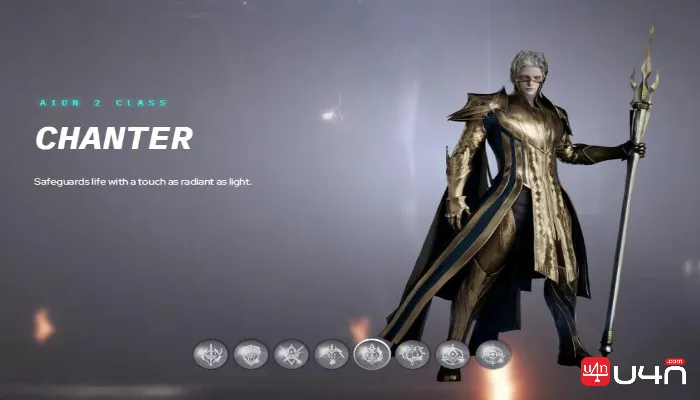
What Makes the Chanter Different?
The easiest way to understand the Chanter is to stop thinking of it as either a healer or a DPS class. It sits between those roles.
Its value comes from combining offensive skills with mantras, defensive utility and recovery tools. That makes positioning and timing more important than simply building as much damage as possible. A Chanter who maintains party utility while contributing steady damage is usually providing more practical value than one who focuses entirely on personal numbers.
The class has also continued to receive balance adjustments rather than remaining static. For example, NC's January notes changed the effects of Undefeated Mantra and Attack Preparation while increasing the damage of multiple Chanter attacks. Spinning Strike was specifically adjusted with higher damage, a shorter recast option through specialization, and an upgrade that can ignore block and evasion while dealing critical damage.

| Chanter role | Main priority | Practical focus |
|---|---|---|
| Solo PvE | Damage + sustain | Fast skill cycling and self-recovery |
| Dungeon PvE | Utility + damage | Mantra uptime and controlled DPS |
| Raid | Support + survival | Defensive timing and party protection |
| 1v1 PvP | Burst + control | CC windows and manual skills |
| Group PvP | Utility + pressure | Positioning, buffs and ranged opportunities |
PvE Chanter Build: Damage Without Losing Utility
For PvE, the Chanter should be built around consistent uptime rather than trying to turn every encounter into a short burst phase.
The first priority is keeping your important mantras active. This is particularly important in group content, where a Chanter's contribution is not fully represented by the personal damage meter.
For offensive specialization, prioritize effects that improve repeated attacks, critical damage and reliable skill availability. Spinning Strike deserves particular attention because the official January tuning improved both its damage and specialization options.
A practical PvE setup can be organized like this:
| Skill category | PvE priority | Why |
|---|---|---|
| Mantras | Very high | Maintain party-wide utility |
| Spinning Strike | High | Stronger damage after tuning |
| Multi-hit skills | High | Maintain consistent offensive pressure |
| Rushing Smash | Situational | Better handled manually for important moments |
| Recuperation | High | Recovery and debuff management |
| AoE attacks | Medium | Useful for groups of enemies |
| Defensive cooldowns | Manual | Save for dangerous mechanics |
One important macro principle is not to automate every available skill. Long animations or poorly timed defensive abilities can make an automated sequence less effective than a shorter rotation.
I would therefore use the macro as a foundation rather than a replacement for decision-making. Let it handle repeatable offensive actions while keeping emergency healing, defensive skills and major encounter mechanics on manual keys.
A Practical Chanter PvE Macro
A general-purpose sequence can follow this logic:
Spinning Strike → Impactful Crush → Marchutan's Wrath → Ensnaring Mark → Bursting Blow → Incandescent Blow → Auto-Attacks
The exact order should be adjusted when your specialization changes the behavior or cooldown of a skill. More importantly, do not allow the macro to consume every resource simply because an ability becomes available.
During a boss encounter, interrupt the macro when:
· a major defensive mechanic is approaching
· a party member requires immediate support
· a mantra needs attention
· a high-value manual skill is ready
· movement makes the automated sequence inefficient
That approach is particularly useful for Chanter because the class gains value from reacting to the fight rather than following a completely rigid script.
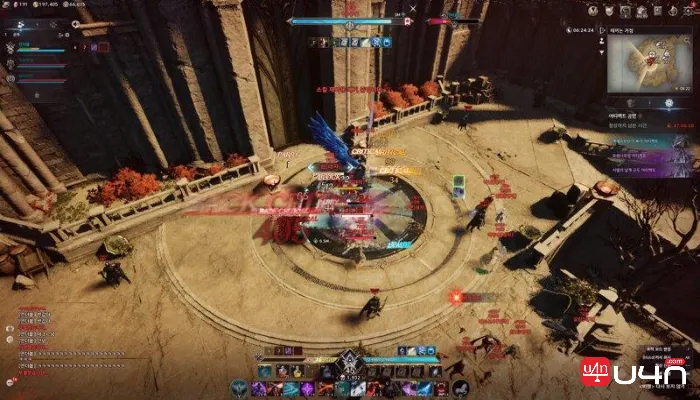
PvP Chanter Build: Control and Timing Matter More
PvP requires a different mindset.
Instead of maximizing uninterrupted DPS, build around accuracy, critical damage, crowd control, survivability and opportunities to punish an opponent's mistakes.
Spinning Strike is especially interesting here because its official specialization options include improved recast behavior and an effect that can bypass block and evasion while producing critical damage.
Your PvP priorities should therefore look like this:
1. Critical damage
2. Accuracy and offensive reliability
3. Multi-hit or repeated-hit effects
4. Survival and defensive utility
5. Crowd-control opportunities
6. Raw sustained damage
The Chanter's strongest PvP moments should be played manually. If an opponent has defensive immunity active, wasting a major control skill is usually more damaging than delaying the rotation for a few seconds.
Chanter vs Cleric: Which Role Fits Your Party?
Chanter and Cleric overlap in support, but they should not be treated as interchangeable.
The Cleric is designed around dedicated healing and recovery, while the Chanter combines support with offensive pressure. That distinction becomes more important in difficult group content, where the party may need both sustained support and dedicated healing.
NC's January update also shows that both classes receive separate balance attention. The same patch changed multiple Cleric healing skills while independently adjusting Chanter offensive and support abilities.
| Category | Chanter | Cleric |
|---|---|---|
| Damage | Stronger offensive focus | More limited |
| Party buffs | Major strength | More focused |
| Healing | Supplemental | Primary role |
| Solo play | Flexible | More support-oriented |
| PvP flexibility | High | More specialized |
| Skill management | Multi-role | Healing-focused |
Stigma and Skill Management in 2026
Stigma planning has also become more flexible. NC's July update preview expanded Stigma progression to level 25 and increased the number of equipped Stigma skills to six, giving players more room to tailor builds for different encounters.
For general PvE, use your Stigma slots to reinforce sustained damage and party protection. For raids, shift toward defensive utility and recovery. In PvP, replace slower PvE-oriented options with skills that improve control, survival and offensive reliability.
This is one reason I would avoid building a single “perfect” Chanter page and never changing it. A hybrid class benefits from having at least a PvE setup and a PvP setup ready to swap between.
Macro Rules That Actually Matter
The best Chanter macro is not necessarily the one with the most skills.
Keep these rules in mind:
· Put repeatable offensive skills into the macro.
· Keep emergency recovery manual.
· Keep major defensive cooldowns manual.
· Avoid unnecessary long animations.
· Refresh important mantras deliberately.
· Stop the macro when encounter mechanics demand movement or support.
· Recheck the sequence after every significant balance patch.
That last point matters in Aion 2. The official patch history already demonstrates that skill damage, recast times, specialization effects and Stigma systems can change.
Summary
The 2026 Chanter is best approached as a hybrid combat-support class, not a conventional healer with a few attacks. For PvE, build around sustained damage, mantra uptime and controlled recovery. For PvP, place greater emphasis on accuracy, critical damage, crowd control and manual timing.
The most important lesson is to treat macros as a tool rather than an autopilot. Your offensive loop can handle routine actions, but the Chanter's real strength appears when you manually decide when to heal, defend, reposition or commit to a burst window.
As you upgrade equipment and experiment with cheap Aion 2 Items, keep the build flexible rather than chasing one universal setup. The current official update history makes it clear that Chanter skills and Stigma options can be retuned, so a build that works today should be checked against the latest patch notes before becoming your permanent setup.
For players preparing for the global version, NC's official AION 2 site currently provides the English game information and registration materials, while the global support portal confirms PURPLE and Steam account access options.