

Reaching level 60 gives us a clear reason to rethink our equipment: we need a set that supports the content we want to run next. Blizzard describes WoW: Forever as a permanent home alongside modern and Classic WoW, set across the original continents with a level 60 adventure, new quests, and additional dungeons. That makes this a useful point to stop replacing gear at random and start planning upgrades around a specific role.
Our team's approach starts with three questions: Which equipped item is holding the character back? Where can we get a practical replacement? How much time or currency should we commit? When budgeting World of Warcraft Forever Gold, we recommend leaving room for repairs, preparation, and follow-up upgrades instead of spending everything on one impressive purchase.
This WoW Forever gear guide focuses on that decision process. We'll build a manageable upgrade list, compare acquisition routes, organize dungeon runs, and decide when a usable set is ready for the next challenge. The aim is to finish each session with measurable progress, even when the item we wanted never drops.
Start With a Gear Check at Level 60
Before joining another group, we recommend taking a few minutes to inspect every equipped slot. Write down the items that feel overdue for replacement, then check them against a current guide for the specialization you actually intend to play.
Keep the first pass simple. We want to identify obvious problems before debating tiny differences between two strong items.
A useful starting list looks like this:
| What we find | What we check next | Practical next step |
|---|---|---|
| A weapon carried through several leveling zones | Whether its damage or relevant stats still support our build | Find two realistic replacement options |
| An item chosen for a different role | Whether its bonuses contribute to our current abilities | Compare it with accessible role-appropriate gear |
| One noticeably weak armor slot | How much an available replacement improves it | Add the replacement to our short list |
| Several acceptable pieces | Whether any affordable upgrade offers meaningful value | Save currency while checking other slots |
| A desirable item with a demanding acquisition route | Whether a simpler alternative solves the same problem | Record both options before committing |

We suggest choosing three initial targets. A longer list can be useful for reference, but it makes daily decisions harder. Three priorities give us enough flexibility to find a group without turning every login into another planning session.
Record the source beside each target. "Get a better weapon" is an intention. "Finish this prerequisite, then run this dungeon for one of these two replacements" is something we can act on.
Choose the role before choosing the item
Our upgrade list should match the job we expect to perform. If we plan to heal in groups but spend our solo time dealing damage, we should make that distinction before buying or farming equipment.
We also recommend keeping useful alternate pieces until we understand how they fit. Selling an item immediately can create an avoidable problem when we change roles or need a different setup for a particular group.
Upgrade the Slots That Solve Real Problems
The weakest-looking item is a useful place to investigate, but our recommendation is to prioritize the upgrade that addresses the character's most immediate limitation.
Suppose our healer finishes difficult pulls with little room for error. We should examine the equipment and ability choices connected to that problem. If our tank struggles to stay stable during expected damage, we should investigate survivability alongside positioning, pull size, and cooldown use. Gear decisions become clearer when we connect them to something happening during play.
Tanks: build a stable foundation
For a tank preparing for unfamiliar content, we favor a dependable setup that gives the group room to recover from mistakes.
Compare potential purchases with the encounters you expect to handle. Ask whether an upgrade supports survival, reliable threat, or both, and check current specialization guidance before making a trade between those goals.
We would also review several recent deaths before blaming one armor slot. A missing defensive cooldown and an unsuitable item require different fixes.
Healers: check the whole pull
For healers, we recommend reviewing what happens from the opening cast through the recovery afterward. Are we struggling to answer damage quickly? Are we spending resources inefficiently? Are we preparing for a longer encounter than our current setup comfortably supports?
Use those observations to guide equipment comparisons. A piece that looks attractive in isolation still needs to fit the spells we use and the demands of the group.
Damage dealers: compare upgrades through the actual build
For DPS, our advice is to check how a candidate item interacts with the specialization before assuming that a higher listed number settles the comparison.
Weapon damage, relevant offensive stats, and special effects all deserve attention where the build uses them. We would rather compare two complete setups carefully than purchase an expensive item because its tooltip looks impressive.
For any role, we suggest asking: "What will this replacement let us do more reliably?" A clear answer makes the next farm easier to justify.

Compare Gear Sources Before Committing
We recommend checking several acquisition routes for every priority slot. Start with sources you can confirm in the current Forever client or an updated database, then compare their requirements.
Our preference is to keep one main target and one accessible fallback. This prevents the entire gearing plan from stalling behind a single drop.
| Route to investigate | What we compare | Reason to choose another route |
|---|---|---|
| Quest rewards | Prerequisites, reward suitability, and completion effort | The chain is lengthy and the reward offers little improvement |
| Dungeon loot | Available upgrades, group access, and run requirements | Only one minor upgrade remains |
| Crafted equipment | Finished-item price, materials, and expected usefulness | The expense crowds out more urgent needs |
| Auction House listings | Current price, binding rules, and available alternatives | The purchase solves no immediate problem |
| Reputation rewards, where available | Required standing and the exact reward | The commitment is large for a short-lived replacement |
| PvP rewards, where available | Current requirements and suitability for the intended activity | The equipment does not support the role we are preparing for |
Treat this table as a comparison framework. Confirm the actual item and its current source before adding it to the route.
Check quests before repeating a farm
Before scheduling repeat runs, we recommend reviewing unfinished quests connected to the area or dungeon. Check the rewards, prerequisites, and whether the objectives fit the route the group intends to take.
A guaranteed reward that fills a weak slot deserves a close look. We would usually compare that option before committing several sessions to a modestly stronger random drop.
Put a price on convenience
A crafted item or Auction House purchase can be useful when it removes a clear obstacle. Our team's preferred test is straightforward: would we still want this purchase if the more exciting item name and appearance were hidden?
Then check the replacement horizon. If another accessible reward is already within reach, the purchase needs a stronger justification. If the item fills a persistent gap and leaves our preparation budget intact, it may be a sensible way to move forward.
Plan Dungeon Runs Around Several Upgrades
Blizzard's launch overview lists nine new five-player dungeons spanning levels 13 through 60. It also identifies Barrow Deeps, Hyjal Summit, and Onyxia's Lair as raids scheduled to open on December 9, 2026. We therefore recommend checking Forever-specific dungeon information while planning pre-raid equipment.
For each possible run, we want to know what the trip offers beyond one desired item. Check the loot, relevant quests, prerequisites, and the route the group expects to complete.
Our planning sheet uses these fields:
| Planning field | What we write down |
|---|---|
| Main target | The upgrade that makes this run attractive |
| Secondary targets | Other items we would equip or keep |
| Quest objectives | Relevant tasks we can complete during the trip |
| Group requirements | Expected role, access conditions, and preparation |
| Alternative source | Another way to improve the same slot |
| Stopping point | What would make us switch to another dungeon |
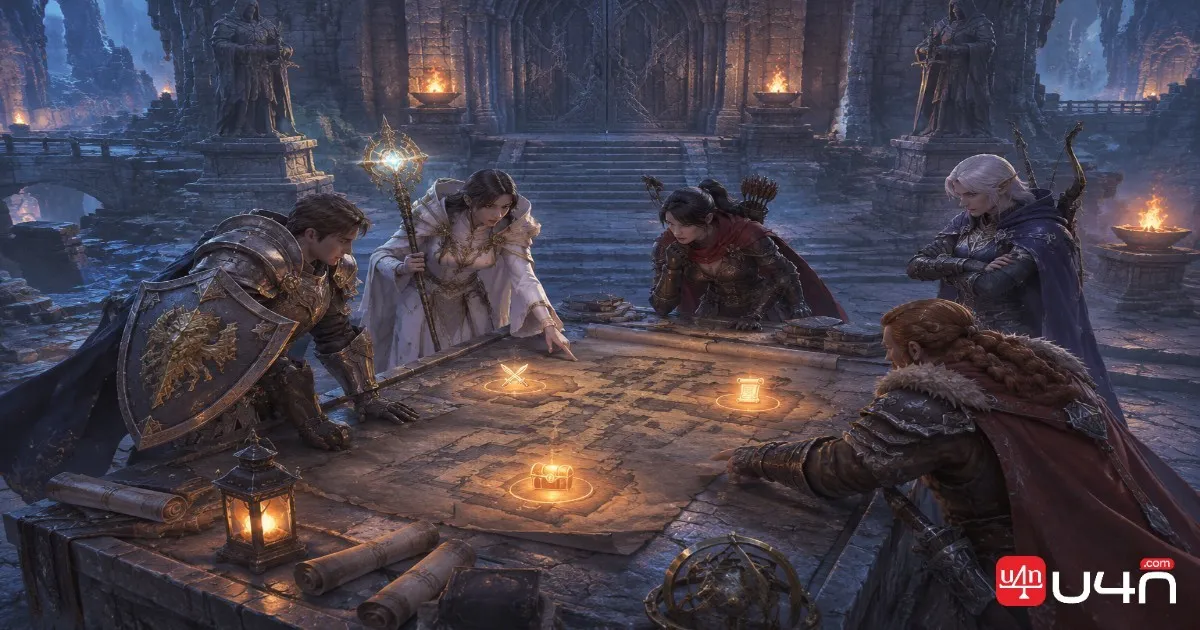
A dungeon with several useful outcomes is usually where we would begin comparing our options. Even if the main target stays out of reach, another upgrade or completed objective can keep the session productive.
Confirm the route before the group starts
We recommend mentioning relevant quests and target bosses while the party is forming. Keep it brief and specific. Ask about the intended route early enough for everyone to make an informed decision.
The same approach helps with loot expectations. If a piece could interest multiple roles, clarify how the group intends to handle it before reaching the drop.
Give every farm a stopping point
Before the first run, choose when to reassess. Our suggested checkpoint is after a few attempts, after obtaining a useful substitute, or after the dungeon no longer offers several meaningful outcomes.
At that point, compare the remaining target with the next item on the list. We should be able to explain why another run deserves the time.
This is where a gearing plan earns its value. It gives us a reason to change direction without feeling that the previous runs were wasted.
Build a Budget That Survives the Next Upgrade
We recommend dividing available currency into three working categories: routine expenses, immediate equipment needs, and optional improvements.
Routine expenses should remain accessible. Immediate needs should correspond to a problem identified in the gear check. Optional improvements can wait until the character is functioning comfortably.
We avoid setting a universal gold allowance because a useful budget needs current prices and the player's actual balance. Instead, we use a purchasing rule: after buying the item, can we still prepare for the content we intend to run?
Compare materials with the finished item
Before arranging a crafted upgrade, price both the completed piece and the materials required to make it. Include any agreed crafting fee.
Then check the item requirements carefully. Confirm that we can equip it, that it suits the intended role, and that we understand its binding behavior before paying.
We also suggest checking our bags, bank, and unfinished rewards. The cheapest useful replacement may already be available to us.
Match additional spending to expected use
Our team would spend more cautiously on an item we expect to replace soon. Before purchasing an expensive enhancement, check whether the item is likely to remain in the working set long enough to justify the cost.
This does not require predicting every future drop. We only need a reasonable plan for the next stage of progression.
If the purchase creates an immediate improvement and preserves flexibility, it deserves consideration. If it empties the budget for a small gain, we would keep looking.
Know When Your Pre-Raid Gear Is Good Enough
A pre-raid best-in-slot list gives us a set of targets to investigate. We recommend using it alongside the requirements of the actual team we want to join.
Ask the raid organizer what they expect from our role. Check entry requirements, required preparation, and any encounter-specific equipment requests early. This is more useful than trying to infer readiness from someone else's screenshot.
Our readiness review would cover the following:
- Our equipment supports the specialization and role we signed up to play.
- We have addressed the most obvious weak slots.
- We understand any remaining limitations in the set.
- We have completed the required access steps.
- Our equipment is repaired and our supplies are ready.
- We know the assigned responsibilities and relevant mechanics.
Compare the next upgrade with the next opportunity
When one desired item remains, we suggest comparing two uses of the same evening: another attempt at the drop, or practicing with the group that plans to raid together.
There is no need to invent a percentage difference between two items to make this decision. Identify what the missing piece changes and whether the group requires that change.
We also prefer keeping a short list of acceptable substitutes. This makes it easier to respond to unexpected drops and market prices without rebuilding the entire plan.
A workable set should let us participate effectively in the intended activity. Once the team's requirements are met, we can continue improving it while gaining experience in that content.
Follow a Focused Fresh 60 Gearing Route
For the first session at 60, we recommend a gear audit, a current specialization check, and three initial upgrade targets. Give each target a confirmed source and a fallback. Set aside routine expenses before considering purchases.
During the next few sessions, choose activities that address those targets efficiently. Combine relevant objectives where practical, communicate with the group, and update the list whenever an item changes. If an unexpected reward fills a gap, remove that gap from the plan.
Before the first raid, review the organizer's requirements and finish any outstanding access steps. Check repairs, supplies, equipment choices, and assignments. Leave enough time to resolve a missing prerequisite before the group is ready to pull.
When researching a difficult step, players considering buy World of Warcraft Forever Boosting should first identify the exact obstacle, whether it is an access requirement, difficulty finding a group, unfamiliar mechanics, or an equipment slot that needs improvement.
For the next login, we recommend writing down one attainable upgrade, its source, a fallback, and a spending limit. Take that small plan into the session, then revise it using what we actually earned.