

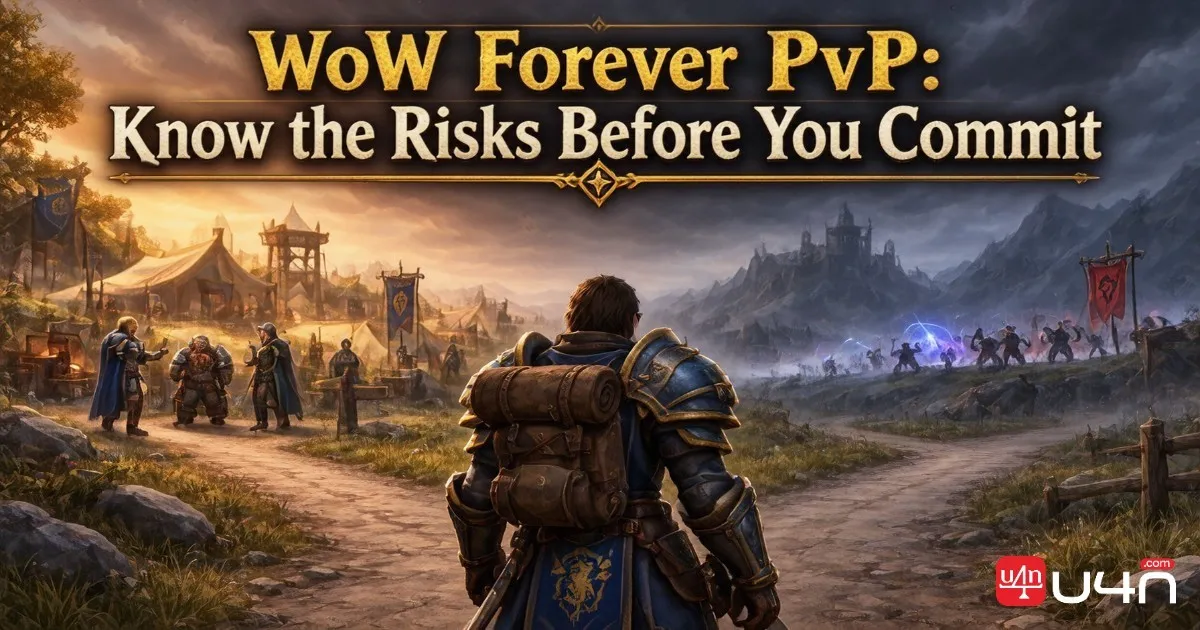
A quiet evening of questing can look very different once another player decides we are the next objective. That possibility should shape our server choice before we invest hours in a character. Our team's starting point is simple: choose a realm around the interruptions we can comfortably accept during an ordinary session.
We would settle that question before planning gear upgrades, comparing leveling routes, or searching for cheap WoW Forever Gold. Preparation deserves attention, but the larger decision concerns how we want to spend our time. Do we want steady progress through quests and dungeons, or do we want player conflict to regularly compete with those plans?
Open-world PvP can introduce several risks, including attacks during questing, dangerous approaches to dungeons, uneven fights, faction imbalance, and corpse camping. These factors are worth considering when choosing a server type. We recommend PvE for players who prioritize uninterrupted progression, while PvP is a better fit for those who enjoy spontaneous encounters and the added challenge of fighting other players.
Choose Around an Ordinary Evening
We recommend judging a PvP server by a routine weeknight. The spectacular battle outside a dungeon makes a compelling story. The evening when we have limited time, unfinished quests, and nobody available to help deserves just as much consideration.
Suppose we log in hoping to finish a quest chain before bed. Would an unexpected fight feel like welcome excitement? Would we enjoy gathering allies and returning to contest the area? Or would we spend the rest of the session watching the clock and wishing we had chosen somewhere quieter?
Those reactions tell us more than a general statement such as "we enjoy PvP." Enjoying an organized match does not automatically mean we want opponents interrupting travel, gathering, or leveling. We should separate our interest in combat from our willingness to have combat imposed on the evening.
Our suggested starting points look like this:
| What we want from a normal session | Where we would start | What to consider |
|---|---|---|
| Reliable quest progress with limited interruptions | PvE | Check the realm's current flagging rules |
| Mostly solo leveling after work | PvE | Consider how much recovery time we can tolerate |
| Frequent spontaneous fights while traveling | PvP | Expect some sessions to change direction |
| Regular outdoor activity with a coordinated group | Consider PvP | Confirm that the group shares our schedule |
| Occasional player combat alongside mostly PvE goals | Investigate PvE options first | Check which voluntary PvP activities are available |
| A tense world where we accept losing ground | Consider PvP | Be honest about repeated setbacks |

We use this table as a conversation starter. Before creating a character, we would still check the actual realm rules rather than assume every server uses the same definitions.
Decide How Much Interruption We Can Accept
The useful question is how much disruption we can absorb before the session stops being enjoyable.
A single defeat may barely register. Repeated interruptions can feel different, especially when we are trying to reach a specific objective. Our team would assess the whole recovery process: returning, regrouping, changing routes, and deciding whether the original plan still makes sense.
For a realistic self-check, we suggest a hypothetical evening with an hour available. We reach our quest area, encounter opposition, lose a fight, and then discover that returning immediately is unlikely to improve the situation. Would we happily spend the remaining time finding allies? Would switching activities feel acceptable? If both options sound frustrating, that is a strong reason to favor PvE.
We also recommend discussing expectations with friends before choosing together. One person may treat every encounter as an invitation to fight. Another may want to finish a dungeon prerequisite and log off. Neither preference is unreasonable, but sharing a server does not resolve that disagreement.
A sensible group agreement can be brief: how long we will contest an objective, when we will relocate, and whether everyone is comfortable postponing progression. We would rather establish those expectations early than argue about them while somebody waits at a corpse.
Treat Uneven Encounters as a Decision Problem
We would enter open-world PvP prepared to assess situations quickly. A strong character and good reactions are useful goals, but our decisions should account for opponents, nearby allies, terrain, and the task we were trying to complete.
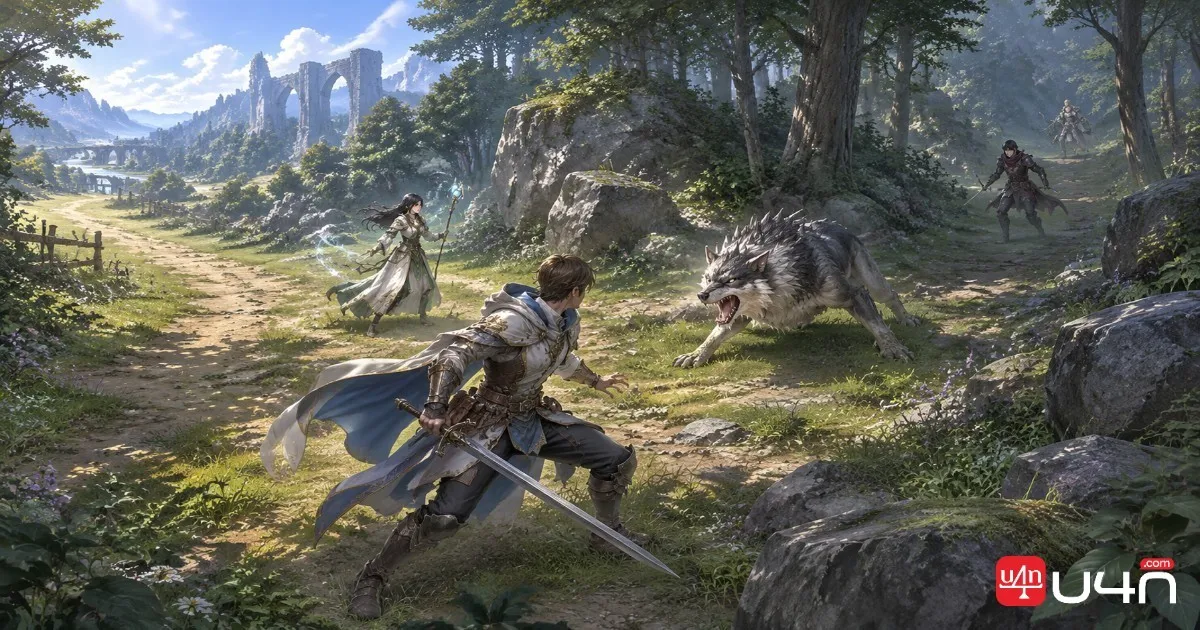
Consider an illustrative encounter near a quest objective. We notice an enemy player while already occupied with a creature. Immediately committing to another fight might leave us with fewer options. Our preferred response would be to create room, check the surroundings, and decide whether we have a reasonable way to continue or leave.
We suggest using three questions:
- What can we actually see, including nearby players and possible reinforcements?
- What do we gain by taking this fight right now?
- Where would we go if the situation turns against us?
That second question helps keep the evening on track. Fighting over an objective we need may be worthwhile. Chasing someone away from our route simply because they appeared on screen may have little connection to what we wanted to accomplish.
We would also avoid using one lost encounter as evidence that we need a completely different build. Before changing equipment or talents, review the circumstances. Did we commit while depleted? Did we overlook another opponent? Did we continue fighting after the original opportunity had disappeared?
Our advice is to treat retreat as an available decision. If we want PvP mainly because we expect to win most encounters, we should reconsider the server choice before making a substantial time investment.
Check the Realm During Our Actual Play Hours
Our team would research a realm at the times we expect to play. A busy weekend clip or an enthusiastic recruitment message gives us something to investigate, but we would want a clearer picture of an ordinary evening.
Useful questions include whether groups form during our schedule, whether our preferred faction has active communities, and whether newcomers can find people with similar leveling goals. We would ask for recent examples rather than accept a broad claim that a realm is "balanced" or "always active."
Population figures also need context. We would check when a number was collected, what it measures, and whether it represents active players. Without that information, a precise-looking percentage offers little help with a decision about where we will spend our evenings.
For us, practical support would carry considerable weight. A smaller community with compatible schedules may be more useful than a large roster whose members are offline when we need a group. We would ask prospective guilds how they organize outdoor activities and what participation they expect.
Server mechanics deserve the same scrutiny. Before committing, check the current rules for PvP flagging, territory, resurrection, and any available transfers. We would avoid planning around a mechanic remembered from another version of Warcraft. If moving later matters to our decision, we should confirm that option before treating it as a backup plan.
Plan the Journey Before Booking the Dungeon
We recommend including travel in the dungeon plan. When we organize a run, agreeing on a destination is only part of the preparation. We also need a workable way for the group to arrive.
Our preferred arrangement would be a meeting point, a shared departure time, and a fallback if the approach becomes difficult. That keeps the group's expectations clear. Nobody should assume that one player has agreed to make repeated attempts alone while everyone else continues questing elsewhere.

For an unfamiliar route, we would identify useful landmarks and possible alternatives before leaving. We would also check the group's supplies and readiness. Arriving together in a reasonable condition gives us more choices than approaching separately with different assumptions.
If opposition blocks the entrance, we would pause and assess what the group wants. Some players may welcome a fight outside. Others may have joined specifically for the instance and have a fixed departure time. We would make that tradeoff explicit rather than let the loudest person decide for everyone.
The same approach applies to solo objectives. Before committing to a long trip, we would choose another activity we could reasonably switch to. Having an alternative makes it easier to leave a stalled objective without feeling that the entire evening has been wasted.
We would also keep our character ready for a change of plan. Organized bags, accessible abilities, and an understood route are modest preparations. They support better decisions without requiring us to turn every journey into a complicated operation.
Have a Recovery Plan Before We Need It
Our team would set a stopping rule for repeated deaths before frustration takes over. The rule could be simple: when another immediate attempt offers no clear improvement, pause and choose a different response.
Pause before returning
We would take a moment to check what has changed. Are allies now nearby? Have the opponents moved? Is another route available? If we have no new information and no additional support, repeating the same approach deserves scrutiny.
We would avoid treating instant revenge as an obligation. It is easy to become attached to recovering pride when the original goal was merely to finish a quest. We suggest naming the objective aloud: are we trying to regain access, help a friend, or continue a fight because we are angry?
Ask for help clearly
A useful request should explain the location, visible opposition, and the task we want to complete. "We need help getting our group through this entrance" gives potential allies a clearer purpose than a vague complaint about being attacked.
We would also respect the answer. Guildmates may be occupied, and a quiet chat channel should not become the foundation of our escape plan. When assistance is unavailable, we need another option that we can carry out ourselves.
Move before frustration controls the session
Changing zones, choosing another objective, or taking a break are all reasonable responses. We would decide among them according to the time available and the activities we still want to do.
Afterward, we recommend reviewing the decision without turning it into a verdict on our ability. Perhaps we stayed too long, approached alone, or expected support that had never been arranged. Those observations give us something specific to change. "We are terrible at PvP" does not.
Prepare for PvP, Then Reassess the Commitment
We would prepare a character around the situations we actually expect to encounter. That means understanding our abilities, keeping relevant supplies accessible, and practicing decisions such as when to engage or leave. We would check current item descriptions and server rules before recommending a particular consumable, equipment combination, or escape technique.
Our spending priorities would follow that preparation. Before chasing an expensive upgrade, we would ask what problem it addresses. Are we struggling to use our abilities under pressure? Are we taking fights without checking the surroundings? Is our group arriving in pieces? Those questions deserve answers before we assume that another purchase will make the experience enjoyable.
We also recommend reviewing early sessions while the details are fresh. We would record what interrupted our plans, how we responded, and whether we enjoyed the result. A rough evening does not settle the issue, but a repeated pattern of resentment deserves attention. We should give ourselves permission to choose a calmer environment.
If we find ourselves searching for World of Warcraft Forever Boosting for sale after another frustrating night, we would pause to identify the actual goal. Wanting help with progression is different from wanting fewer interruptions, and we should evaluate those needs separately. Our realm decision still needs to reflect the activities we want to do once that progression is complete.
We would choose PvE for a schedule built around questing, leveling, and dependable group preparation. We would consider PvP when we actively want outdoor conflict and can accept the evenings when it takes over. Before creating the character, we should be able to say plainly what happens if tonight's quest route becomes tonight's battlefield.