


A Fire Mage leveling build should keep quests moving without leaving us empty after every pull. Our team's approach centers on Heating Up: build toward a shorter Pyroblast cast, spend that opportunity where it matters, and preserve enough mana and space to handle the next enemy.
We favor a practical setup over a damage rotation that only works against a stationary target. That means choosing talents around the spells we actually cast, treating movement as part of combat, and adjusting our priorities when a mob is already close to dying.
We also keep a sensible budget. While saving WoW Forever Gold for training, supplies, and useful upgrades, we would rather solve a positioning problem than buy equipment to compensate for it. The build should function before every desirable enchant or gear piece is available.
Understand What Heating Up Actually Changes
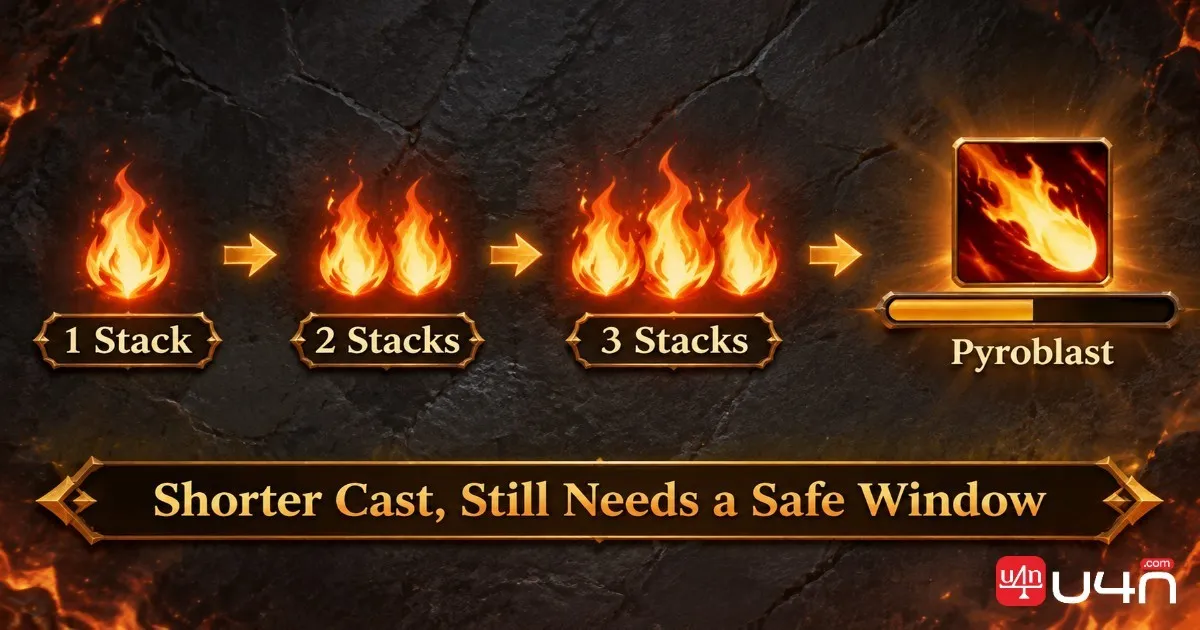
Blizzard's Mage class preview describes Heating Up as a Fire talent requiring Pyroblast. Direct critical strikes from Fireball, Frostfire Bolt, Fire Blast, and Scorch reduce the next Pyroblast's cast time by 25% per stack, up to three stacks. The preview gives a 1.5-second Pyroblast at maximum stacks. It also describes Wake of Fire as improving Fire Blast after qualifying kills, rather than promising a critical strike on every use. Improved Scorch benefits the casting Mage rather than every Fire caster in the group.
Those details shape our recommendations. We treat three stacks as a strong casting opportunity, but we still check the target's health, our position, and the buff timer before committing. A shortened cast can still be interrupted by poor timing.
We would also avoid building our habits around the assumption that Fire Blast always supplies a stack. Watch the result. If the stack appears, adjust the next cast; if it does not, continue with the filler plan.
Our preferred rhythm is straightforward: create a safe opening, use suitable direct spells, recognize the accelerated Pyroblast window, and spend it on a target with enough health to justify the cast.
The mistake we would watch for is staring at the stack counter while an enemy closes the gap. A proc is useful only when we have room to use it.
Build the Talent Foundation Before Branching Out
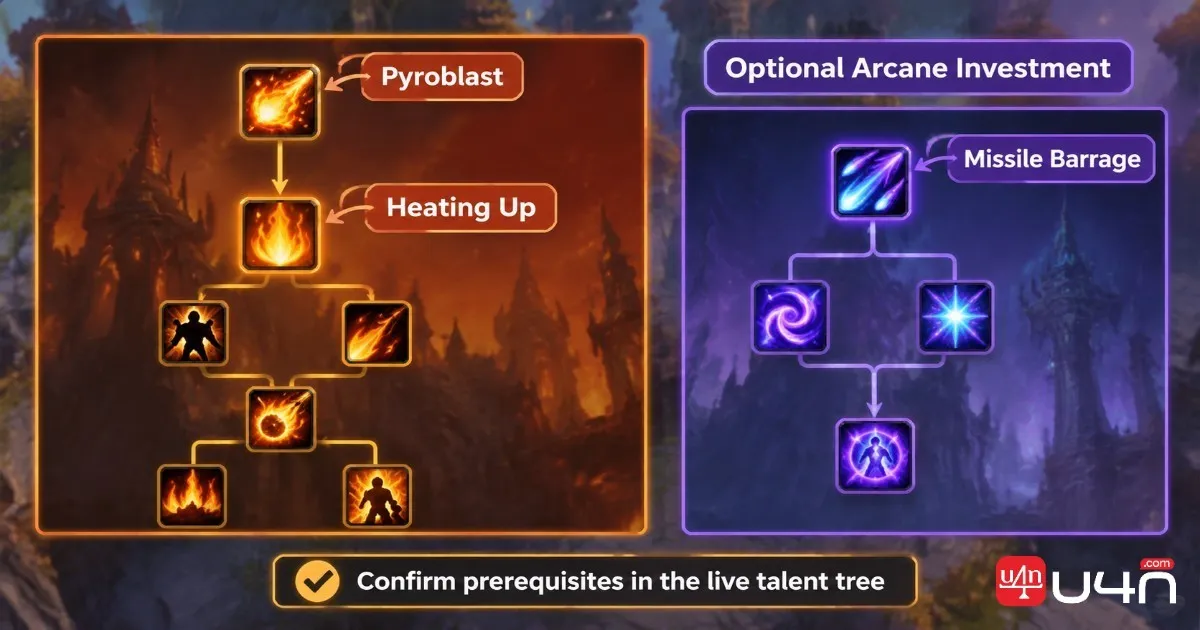
Our recommended progression starts with a clear destination: reach Pyroblast and Heating Up through a coherent Fire foundation. We would avoid scattering early points across several trees simply because each offers something attractive.
The following is a planning framework rather than a fixed point allocation. Use the live talent tree to confirm prerequisites and available ranks before spending.
| Progression stage | Our recommended focus | What we want to improve |
|---|---|---|
| Before Heating Up | Support the main filler and establish reliable pulls | Consistent damage without elaborate setup |
| Heating Up available | Practice recognizing and spending stacks | Fewer missed casting opportunities |
| Solo questing adjustments | Consider range and casting protection | More completed casts under pressure |
| Longer encounters | Evaluate personal damage debuffs | Better returns from setup time |
| Later hybrid investment | Consider the Arcane route deliberately | Resource efficiency without delaying essential Fire tools |
For solo questing, we would examine Burning Soul when repeated incoming hits disrupt our casts. Before committing points, however, we would check whether starting farther away or using control earlier fixes the same problem.
Range deserves similar attention. Our team values the extra room to finish a spell and choose the next action. We would consider it especially useful on routes where enemies repeatedly reach us before our planned burst.
Improved Scorch belongs in a more selective conversation. We would consider it for targets that survive long enough to repay the setup. Against ordinary enemies that die quickly, we would avoid maintaining a debuff simply because a longer encounter rotation includes it.
We would make one meaningful talent change at a time, then repeat a familiar quest loop. That makes it easier to judge whether the change improved the fights we actually encounter.
Add Arcane Support and Revelation With Clear Expectations
Missile Barrage is an Arcane talent, not a Fire passive. Blizzard describes it as enabling a faster, mana-free Arcane Missiles channel after qualifying spell triggers. The same preview places Frostfire Bolt at level 40 and describes its slow and dual-school interactions. We would verify that enchant's live tooltip and behavior before planning around them.
Our recommendation is to treat the Arcane investment as a later build decision. Map the full route to Missile Barrage before spending the first supporting point. An attractive talent can become an awkward leveling detour if reaching it postpones the Fire tools we wanted first.
Once the talent is available, we would use its proc as a resource-conscious option when the target will survive the channel and our position is secure. We would not force Arcane Missiles into a dangerous moment just because the cast is free.
Revelation deserves a small verification session before a major purchase. We would test what activates the effect, which spell consumes it, and whether the expected interaction appears consistently in the combat log. Keep the test simple enough to identify the cause of each result.
Without the enchant, continue practicing the basic Fire loop. We would rather learn the build's ordinary rhythm than postpone using it while assembling every supporting component.
For Frostfire Bolt, our suggested comparison is practical: try it on a familiar route and watch how comfortably we maintain distance. We would assess the complete pull, including movement and recovery, before changing our default filler.
Use a Conditional Single-Target Priority
Our team would teach this build through decisions rather than a fixed sequence. The next cast should respond to the enemy in front of us.
Before pulling, choose an open line and identify where we can move if another enemy joins. Avoid beginning a long cast beside a patrol route or with our back against terrain.

| Situation | Our recommended action | What to check |
|---|---|---|
| Three Heating Up stacks and a healthy target | Favor Pyroblast when the cast is safe | Target health, buff duration, and incoming pressure |
| Missile Barrage active | Consider the empowered Arcane Missiles channel | Whether we can remain stationary |
| Fire Blast available | Evaluate it for damage, movement, or a finishing hit | Whether spending it improves this pull |
| No immediate proc opportunity | Use the chosen filler | Distance, mana, and remaining target health |
| Enemy nearly dead | Choose a proportionate finish | Avoid unnecessary overkill |
| Unexpected add or unsafe position | Control or reposition | Restore a manageable fight before resuming damage |
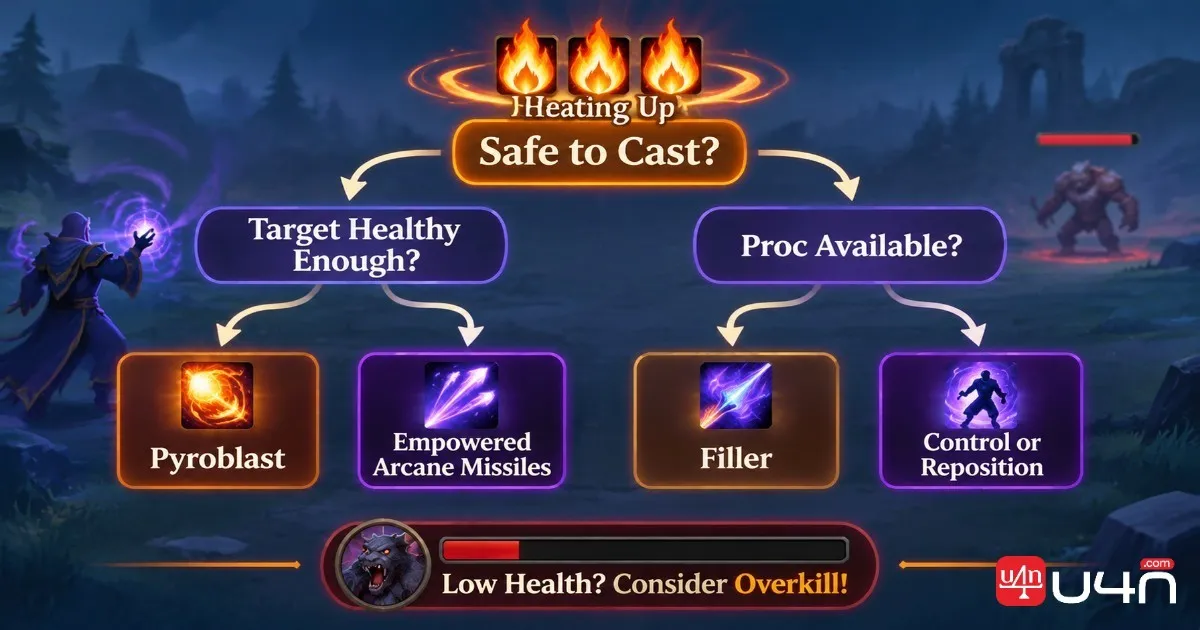
We would usually plan around spending Heating Up at three stacks, then allow exceptions when the buff is about to expire or the encounter is ending. Waiting for an ideal state should not become a reason to lose a usable opportunity.
Consider a pull where our filler produces the third stack just as the enemy reaches low health. We would check whether Pyroblast can contribute before the target dies. If the fight is effectively finished, we would choose a cheaper finish and assess whether the buff can serve the next pull.
Now consider a healthier target with clear space between us. That is the kind of opening where we would favor the accelerated Pyroblast.
Fire Blast also deserves more thought than "press on cooldown." We would weigh its immediate value against the need to move or finish an enemy shortly afterward. The aim is a smoother pull, not perfect cooldown usage at any cost.
We would track a recurring problem after each short session: wasted casts, missed procs, or enemies reaching us too early. Fixing the most frequent issue gives us a clearer practice goal than trying to improve everything at once.
Adapt the Build for Packs and Dungeon Pulls
Our default recommendation is to become comfortable with single-target pulls before adding enemies. We would increase pull size gradually and keep an escape direction available.
For a small pack, decide which enemy must be controlled and which should die first. We would avoid spreading damage without a plan if doing so leaves every enemy alive and approaching together.
Close-range area damage requires a deliberate commitment. Before moving in for Arcane Explosion, we would check health, mana, control options, and nearby respawns. We would also keep enough resources available to recover if the pack survives longer than expected.
A rule our team would use during practice: if the escape plan requires several things to go perfectly, reduce the pull.
In dungeons, we would give the tank time to establish the pack and choose our opening around the group's pace. Arcane threat reduction should never be treated as permission to ignore positioning or target selection.
Short trash pulls and durable enemies also deserve different treatment. We would avoid lengthy setup on a pack that the group is already finishing. On a longer encounter, we would evaluate personal debuffs and plan more carefully around proc windows.
After a messy pull, check the decision that caused it. Did we enter melee too early, open before the tank was ready, or spend our recovery mana on extra damage? That answer is more useful than changing the entire build after one bad fight.
Manage Mana, Gear, and Recovery as One System
We judge leveling recommendations by the full quest loop: combat, drinking, looting, travel, and recovery. A spectacular individual kill would not persuade us to keep a setup that repeatedly interrupts the route.
Our team would compare changes on similar enemies with similar starting resources. Note how often we stop to drink, whether our health falls dangerously low, and how many pulls require an emergency response.
| Gear consideration | Our leveling approach |
|---|---|
| Intellect and available mana | Evaluate whether the upgrade supports a more comfortable route |
| Spell damage | Compare its contribution with the resources we give up |
| Stamina | Keep enough room for mistakes and unexpected adds |
| Critical strike chance | Consider it without assuming one upgrade completes the build |
| Spirit and recovery | Assess it alongside actual downtime |
| Enchant cost | Consider how long we expect to retain the weapon |
We would avoid publishing a rigid stat ranking without a defined level, equipment set, and testing method. While leveling, our preferred upgrade is one that addresses a problem we can identify.
If enemies repeatedly reach us with substantial health remaining, we would review damage, spell ranks, and opening distance. If we win comfortably but drink after nearly every pull, we would examine spell spending and recovery instead.
We also suggest leaving mana for the unplanned part of the fight. Spending everything to finish one enemy can leave us poorly prepared for its neighbor.
Training visits are a useful checkpoint. Review the spells we actively use, clear outdated action-bar habits, and test whether a new option changes the pull. We would make those adjustments before spending heavily on equipment.
Track the Few Signals That Change Our Next Cast
Our recommended interface is deliberately small: Heating Up stacks and remaining duration, Missile Barrage when talented, Fire Blast availability, and mana. Add Revelation only when it is part of the equipped setup.
We would place those signals near the area we already watch during combat, while keeping the enemy and surrounding terrain visible. The purpose is to reduce searching, not cover the screen with reminders.
Start with the tracking tools available in the client, then add an addon only if it solves a specific visibility problem. We would favor an obvious stack count and readable timer over decorative effects.
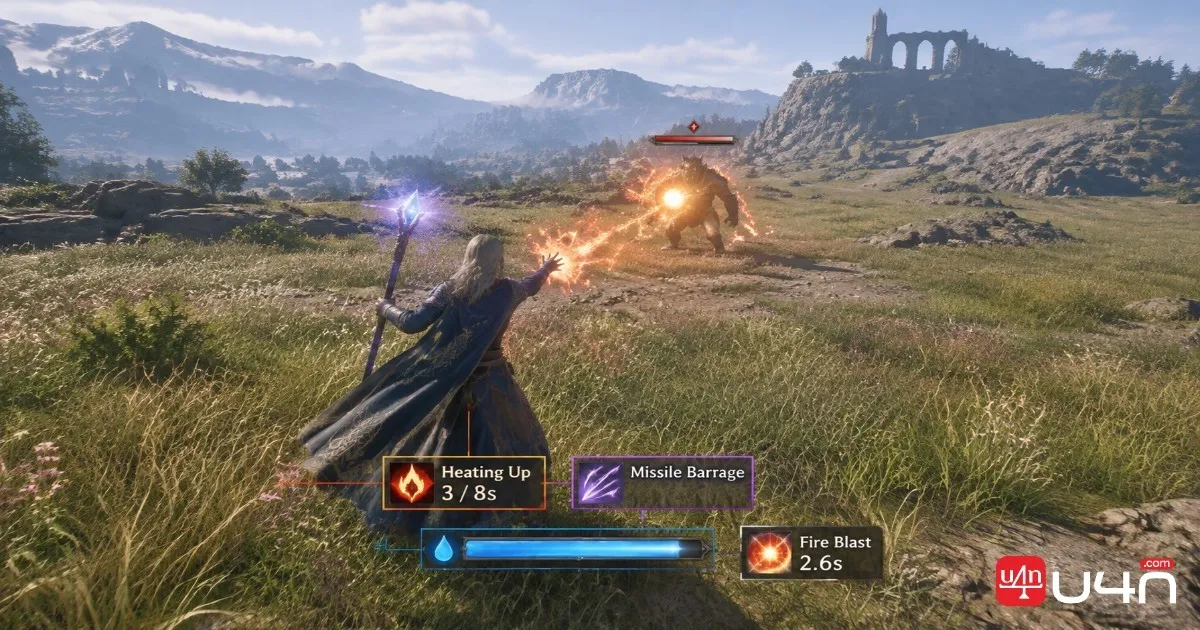
When comparing WoW Forever Items, we would keep that same practical standard: identify the problem an upgrade addresses, then check the next quest loop. We would look for easier finishes, more comfortable mana reserves, or fewer forced recovery stops.
Our suggested practice route uses familiar enemies and enough space to repeat pulls safely. Keep the build stable for a short session, observe how we spend Heating Up, and change one variable when a pattern becomes clear. That gives us a useful basis for the next talent, gear, or rotation decision.