


WoW Forever's latest reported changes raise a practical question for players: does reaching level 60 as quickly as possible still provide the advantage it once did? The answer is becoming less straightforward. Increased dungeon experience, adjustments to high-level quest rewards, reported limits on rare-item prices, and fixes to the Riverglades zone all point toward a different progression model, one that gives ordinary leveling routes more room to compete with a fast rush to the level cap.
Our team reads these changes as an attempt to reduce the pressure to keep pace with the earliest players. Leveling is still a time investment, and reaching 60 can open up new activities. But when dungeons provide more experience and the economy becomes less favorable to concentrated high-level farming, the gap between fast and steady progression may narrow. Players who compare their options, including services advertised as buy WoW Forever Gold, should also consider how these systems affect the value of in-game currency and the rewards available through normal play.
The central issue is not whether fast leveling has become pointless. It has not. The question is whether speed should dictate every decision a player makes. The reported changes suggest that the developers want players to feel less compelled to postpone quests, skip zones, or grind one route simply because other players reached 60 first. That shift can make progression feel more flexible, provided the changes work as intended and the economy remains stable.
The reported changes suggest that reaching level 60 first no longer guarantees the same economic and progression advantage. Players still benefit from efficient leveling, but ordinary questing, dungeon runs, and lower-level content now deserve a closer look.
Why Leveling Speed Is Being Reconsidered
The most direct change described in the article is a 50% increase to experience from dungeon enemy kills. That is a substantial adjustment to a familiar leveling option. Players who enjoy group content can earn more experience while completing dungeons, and groups can become a more appealing alternative to repeating outdoor quests or grinding the same enemies.
The effect is not identical for every character. A player with an active group, a suitable dungeon nearby, and enough time for full runs can benefit more than someone leveling alone or playing at irregular hours. Dungeon experience also depends on group pace, waiting time, wipes, and whether the group completes useful quests along the way. A higher reward per kill does not automatically make every dungeon run the fastest route.
Still, the increase changes the calculation. Before, some players may have viewed dungeons mainly as a social activity or a way to collect gear. More experience gives them a stronger progression reason to queue or form a group. It can also make dungeon runs more attractive for characters that want to break up a long stretch of questing.
For experienced players, the main difference can be route planning. A level-by-level guide built around older experience values might no longer be efficient. If players rely on outdated estimates, they can spend more time traveling between zones when a nearby dungeon offers comparable or better progress. The useful response is not to assume that dungeons now dominate every level range, but to reassess the route using current group availability and travel time.

The Trade-Off Between Speed and Reward
The article connects leveling changes with adjustments to how high-level characters earn gold. It reports that extra gold from quests at the level cap has been removed or restricted, while quest rewards for characters below the cap have been adjusted. The intended effect seems to be reducing the ability of high-level players to accumulate large sums through a particular questing pattern.
That matters because gold is not separate from progression. It affects access to consumables, equipment, crafting materials, repairs, and other services. When a small group of players can generate currency at a much higher rate than the rest of the population, their purchasing power can influence prices across the market. Limiting one source of concentrated income can reduce that advantage, though the actual result depends on how players respond.
The official hotfix information describes changes to quest-related gold and explains how quest rewards are handled for characters at different levels. Players can review the original update through Blizzard's WoW Forever hotfix notes.
There are several possible outcomes. Players can shift to farming materials, completing other repeatable activities, or selling crafted goods. If those routes generate similar amounts of gold, the adjustment can change where currency comes from without reducing the overall supply. If the alternative routes are less efficient, the market can see lower spending power among high-level players. Either way, the impact should be judged by observing prices and player behavior over time, rather than assuming that one change has already solved inflation.
| Reported change | Likely immediate effect | What players should watch |
|---|---|---|
| More experience from dungeon kills | Dungeons become more attractive for leveling | Group wait times and experience per hour |
| Changes to high-level quest gold | Less benefit from a concentrated questing strategy | Gold income from other activities |
| Reported rare-item price limits | A possible constraint on listed prices | Item availability and actual sale prices |
| Riverglades fixes | More reliable access to zone content | Quest completion time and combat difficulty |

Rare-Item Prices Need Closer Observation
The article also refers to price limits on rare items. This is potentially the most sensitive economic change because a cap can affect both buyers and sellers. Buyers can face lower listed prices, but sellers can respond by withholding items, trading through other channels, or prioritizing different goods. A price ceiling does not guarantee that an item will become easier to obtain.
For a reliable assessment, players need to know which items are covered, how the ceiling is calculated, and whether it applies to listing prices or completed trades. Without those details, the price-limit claim should be treated as a reported change rather than a complete picture of the market rules. The same caution applies to claims about inflation: they describe a plausible goal, not a proven result.
Riverglades and the Value of a Normal Route
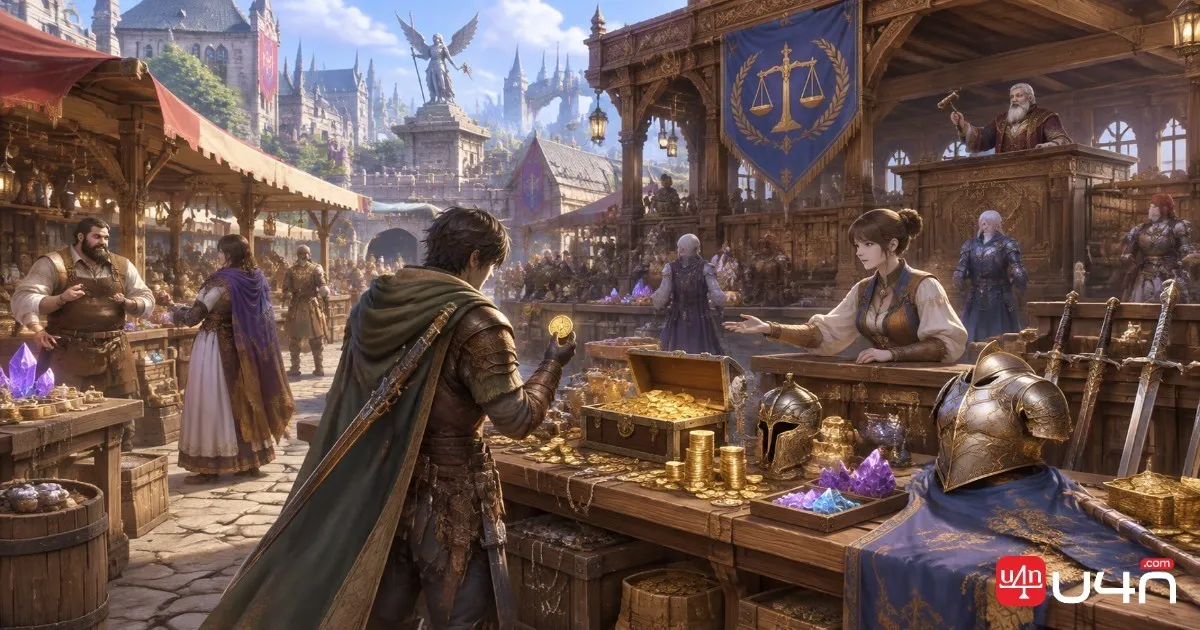
Riverglades receives attention because the article describes fixes to quests, enemies, and other zone issues. Repairs to NPC behavior or quest objectives can have an outsized effect on leveling. A quest that repeatedly fails, an enemy that deals excessive damage, or an objective that cannot be completed reliably can turn a promising route into a frustrating detour.
When a zone works as intended, its value is easier to judge. Players can estimate how long quests take, decide whether to group for difficult objectives, and compare the rewards with nearby alternatives. These improvements do not necessarily make Riverglades the best zone for every character. They do make it more reasonable to include in a route instead of avoiding it because of technical problems.
This supports the wider theme of the reported changes. If dungeons offer more experience and zones become more dependable, players have more than one reasonable path through the leveling process. A flexible route can be better for players who prefer variety, play with friends, or have limited sessions. The benefit is measured through experience per hour, reliable objectives, and fewer interruptions that make a play session feel productive even when the raw numbers are similar.
There is a limit to what zone repairs can accomplish. Travel time, enemy density, quest rewards, and competition from other players still shape the experience. If Riverglades remains slower than nearby options after the fixes, players will continue to choose other routes. The important point is that a zone should be judged on its current state, not on a remembered version where tasks were broken or combat was overtuned.
Low-Level Gear Can Still Matter
The article's gear example challenges the idea that all low-level content becomes irrelevant once a character advances. It mentions First Mate Band and Band of the Better Half as items that can work together effectively in some circumstances. This is a useful counterpoint to the rush-to-60 mindset, but it needs careful framing.
Equipment value depends on class, specialization, level, available alternatives, and the content a player plans to tackle. A combination that performs well for one build can be unremarkable for another. An item can also be valuable because it is rare or convenient to obtain, not because it remains a top choice at every stage of progression.
Players should compare actual stats and effects instead of relying on a broad claim that a low-level item is close to endgame quality. If the combination is based on player testing, it should be presented as a community-discovered option and accompanied by the conditions under which it works. That keeps the example useful without turning a niche interaction into universal advice.
The larger lesson is that early content can retain value beyond its place on a leveling route. A dungeon can provide experience, equipment, crafting materials, or a useful group activity. A quest chain can reward an item that suits a particular character. Players who enjoy collecting gear or completing zones can make progress without treating every detour as wasted time.

What Players Should Monitor
These changes will be easier to evaluate through a few practical measures: time to level across comparable routes, the availability of dungeon groups, gold earned from different activities, and the price and supply of commonly traded items. Players do not need a formal market spreadsheet to make a useful comparison. Even a short record of session length, level gained, and major expenses can reveal whether a new route is working for them.
It also helps to distinguish personal efficiency from server-wide effects. A dungeon group can be the fastest choice for one player while remaining inconvenient for someone who cannot find a group. A reduction in one source of gold can help prices on one server and have little effect on another. The experience of a single character is valuable, but it does not establish the behavior of the entire economy.
For players still considering a fast push to 60, the decision should reflect what they want to do after reaching the cap. If endgame content, organized groups, or high-level farming is the main goal, a focused route can still make sense. If the goal is to enjoy the world and collect useful rewards along the way, the reported experience increase and zone fixes give more room to progress at a measured pace. Paid offers like cheap World of Warcraft Forever Boosting should be compared with that choice, including the time saved, the cost, and the parts of the game the player can skip.
Our team's reading is that the rush to 60 is losing some of its automatic appeal, not all of its value. Faster leveling still matters to players with a specific endgame target, while dungeon experience and more reliable zones can make ordinary progression feel less punishing. The economic changes might support that balance, but their real effect will depend on item supply, alternative gold sources, and how the player community adapts.
The clearest advice is to treat the reported changes as a reason to review your route, rather than as proof that one strategy now wins everywhere. Compare a few dungeon runs with your usual questing pace, revisit zones that have received fixes, and check market behavior before making assumptions about gold or rare-item prices. That approach keeps the decision grounded in the version of the game you are actually playing.
A level cap is still a milestone, but it does not need to define the value of every session before it. Players can pursue 60 quickly, build a more varied route, or spend time on gear and content that remain useful to their character. The recent changes, if they perform as described, make those options easier to weigh on their own merits.