


Mage PvP in WoW Forever is entering a very different era from the one Vanilla players remember. The class still revolves around control, positioning, burst windows, and making melee players miserable, but the addition of new talents and abilities has created a much more complicated balancing problem. Some of the new tools are powerful enough that Blizzard has already had to change how low-rank spells interact with class mechanics.
For players interested in building a Mage around PvP, the biggest question is no longer simply whether Frost, Fire, or Arcane is strongest. It is how much control you are willing to sacrifice for damage, and whether your build can realistically manage its mana, cooldowns, and limited talent points.
That matters even if your main goal is simply building enough wealth to fund your character. Players who regularly trade materials and equipment for WoW Forever Gold will quickly notice that a strong PvP build can require a very different gear and consumable budget from a conventional leveling setup.
Here is a closer look at the major Mage changes, the best races, and the PvP builds that currently make the most sense.
Mage PvP Changes You Need to Know
The most controversial change concerns low-rank spells.
Spells cast using ranks significantly below your current level now receive less benefit from spell damage and healing. More importantly for PvP, these low-rank spells also have a reduced chance to activate class abilities and talents.
At level 60, for example, Rank 1 Frostbolt can no longer reliably be used as a cheap way to trigger Frostbite. Rank 1 Frostbolt at level 60 has a 0% chance to activate Frostbite.
This fundamentally changes one of the classic Mage decisions.
Previously, a Mage could use a low-rank Frostbolt to get a fast slow while still fishing for additional effects. With the new system, you have to decide whether you want the immediate utility of a low-rank spell or the possibility of triggering your stronger talents with a higher-rank cast.
The same problem affects mechanics such as Winter's Chill and Fingers of Frost.

Why Blizzard Had to Make This Change
The change makes more sense once you consider the new Mage toolkit.
Fingers of Frost gives Chill effects a chance to make your next two spells behave as though the target were frozen. Combined with Ice Lance, this can create extremely powerful burst sequences.
Without restrictions on low-rank spells, a Mage could potentially spam cheap Rank 1 Frostbolts or Blizzard casts to trigger these effects before unloading Ice Lance. Against melee classes, that would make the Mage's already-powerful control toolkit even harder to overcome.
The change is therefore understandable, even if it feels very different from traditional Vanilla Mage gameplay.
| Mage Change | PvP Impact |
|---|---|
| Low-rank spells have reduced proc chances | Makes Rank 1 spell abuse much less reliable |
| Rank 1 Frostbolt cannot proc Frostbite at level 60 | Removes a classic cheap-control option |
| Rank 1 Blizzard no longer provides the same proc value | Weakens old AoE control setups |
| Cone of Cold reduced from 8 to 6 seconds | Slightly reduces Mage kiting uptime |
| Improved Blizzard reduced | Lowers the strength of Blizzard-based control |
| Fingers of Frost added | Creates new burst opportunities |
| Ice Lance added | Gives Frost much more serious frozen-target damage |
The important takeaway is that Mage PvP is moving away from the old mentality of using Rank 1 spells to generate an endless chain of control.
Cone of Cold and Improved Blizzard Are Also Nerfed
Cone of Cold has also been adjusted, with its slow duration reduced from eight seconds to six.
The reasoning is straightforward: Blizzard wants Mages to have an actual vulnerability window rather than being able to chain slows indefinitely.
With Permafrost increasing the duration, the effective gap between Cone of Cold's control window and its cooldown is still relatively small. Against a melee player without important cooldowns available, a skilled Mage can still maintain a tremendous amount of distance.
So, while this is technically a PvP nerf, it does not fundamentally destroy the Mage's ability to kite.
Improved Blizzard has taken a more noticeable hit.
With three talent points, the movement reduction is now only 40%. Combined with Permafrost, the resulting slow is significantly weaker than the old Rank 1 Blizzard setup.
This is probably one of the healthier changes for PvP.
Rank 1 Blizzard was simply too efficient at controlling opponents for its cost. Removing its ability to freely generate effects such as Frostbite and Fingers of Frost also means Mages have to think more carefully about when they use their AoE tools.
Ice Lance Changes the Mage's PvP Identity
The most controversial addition is arguably Ice Lance.
The problem is not simply that Ice Lance is powerful. The bigger issue is that it introduces another source of mobility and instant pressure into a class that already has Blink, Ice Block, Frost Nova, slows, and Polymorph.
The concern is that adding more mobility to one class eventually forces other classes to receive equivalent gap closers or movement tools just to keep up.
That risks pushing WoW Forever PvP toward class homogenization.
For a Vanilla-inspired PvP environment, that is a legitimate concern. Mages traditionally have strong control, but they also rely heavily on positioning and casting. Giving them too many instant tools changes what makes the class distinctive.
For now, though, Ice Lance is an important part of the Mage meta, particularly for Frost and Elemental builds.
Arcane Blast and Frostfire Bolt Add More Options
Mages also gain access to Arcane Blast.
This version works differently from the familiar TBC implementation. Each Arcane Blast increases the damage of your other spells by 10%, while its mana cost increases by 175%. The effect can stack up to four times.
That makes Arcane Blast more of a setup tool than a spell you simply spam for its own damage.
Frostfire Bolt is another major addition. It combines elements of Fireball and Frostbolt, dealing damage while also slowing the target and applying a small damage-over-time effect.
For an Elemental Mage, that makes traditional Fireball much less attractive. If Frostfire Bolt gives you comparable offensive value while also providing control, there is little reason to give up that utility.
Comprehension and Mage Scrolls
Mages also gain access to Comprehension, a profession-like ability that allows them to use specialized scrolls.
These scrolls can provide different combat benefits, including:
Hit
Critical strike
Intellect
Spell damage
Spell penetration
Special weapon effects
Utility effects such as opening locked chests or doors
Some scrolls can even provide weapon-based effects, such as temporarily enchanting a dagger to occasionally freeze enemies.
This system adds another layer of customization that could become increasingly important as the WoW Forever ecosystem develops.
Best Mage Races for PvP
Race choice matters more than it might initially appear.
Because WoW Forever currently does not have plans for competitive arenas or rated Battlegrounds, the main PvP environments are expected to be Battlegrounds, world PvP, and duels.
That changes how you evaluate racials.
For example, a racial that looks powerful in a general PvP environment might lose value against the specific classes and races you are likely to encounter.
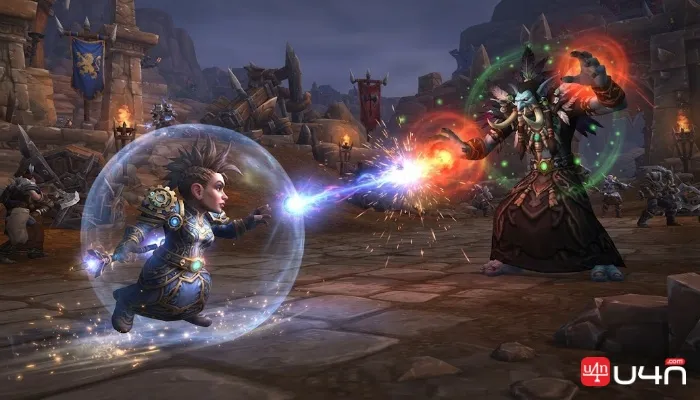
Horde: Troll vs. Undead vs. Orc
For Horde Mages, Troll is the standout choice. Berserking provides 10% haste for 10 seconds, which is extremely valuable for a Mage. More importantly, Troll also has Rapid Regeneration, allowing the Mage to recover 50% of maximum health over six seconds while channeling.
Because Mages already have exceptional control tools, they can often create the distance necessary to safely channel the regeneration effect.
| Horde Race | Strongest Mage PvP Trait | Overall Value |
|---|---|---|
| Troll | Berserking + Rapid Regeneration | Excellent |
| Undead | Touch of the Grave + Will of the Forsaken | Good |
| Orc | Blood Fury | Situational |
| Orc | Hardiness | Lower Mage value |
Orc is less impressive for Mage specifically.
Blood Fury provides useful spell power, but Hardiness is less valuable because Mages already have Blink and Ice Block for dealing with many forms of crowd control. Axe Specialization is obviously irrelevant because Mages cannot use axes.
Undead remains perfectly viable. Touch of the Grave can provide additional sustain, while Cannibalize is useful in Battlegrounds and open-world situations.
However, the nerf to Will of the Forsaken reduces one of the race's biggest advantages.
My Horde pick would be Troll.
Alliance: Gnome Is the Clear Favorite
Alliance has a much more obvious choice: Gnome.
Escape Artist is extremely valuable for a Mage because it removes movement-impairing effects and provides immunity to them for three seconds.
The ability also has a shorter cooldown than Will to Survive, making it especially attractive for a class that already lives and dies by positioning.
Engineering specialization also fits the Mage extremely well, making Gnome even more appealing for players committed to PvP.
Humans remain a solid second choice.
Perception is particularly useful in open-world PvP, especially when combined with additional stealth detection. The downside is that Humans are somewhat more restrictive when it comes to weapon choices, and the value of their other racials is less dramatic for Mage.
Skyborn is further behind. The additional haste is useful, but the overall racial package is much more situational.
Recommended Alliance Ranking
| Rank | Race | Why |
|---|---|---|
| 1 | Gnome | Escape Artist is exceptionally valuable |
| 2 | Human | Strong stealth detection and useful utility |
| 3 | Skyborn | Some useful bonuses, but less PvP impact |
If you are choosing purely based on PvP performance, Gnome is the race I would take.
There is also a practical meta reason: you would rather be the Gnome Mage than fight another Gnome Mage. Escape Artist is exactly the kind of racial that makes the Mage mirror matchup more annoying.
The Elemental Mage Build Is the Most Interesting PvP Option
Among the available builds, the Elemental Mage is arguably the most exciting.
The concept is simple: combine Fire and Frost to create a Mage that can exploit frozen targets while maintaining strong fire-based burst.
The problem is talent pressure.
There are simply too many attractive talents in both trees.
In Fire, you want talents such as:
Incineration
Wake of Fire
Ignite
Flamethrowing
Impact
Fire Blast improvements
Heating Up
Blast Wave
Critical Mass
But you also need to invest heavily in Frost to reach Fingers of Frost and Shatter.
That creates the core identity of the build: freeze the target, then abuse the increased critical-strike chance with Fire spells.
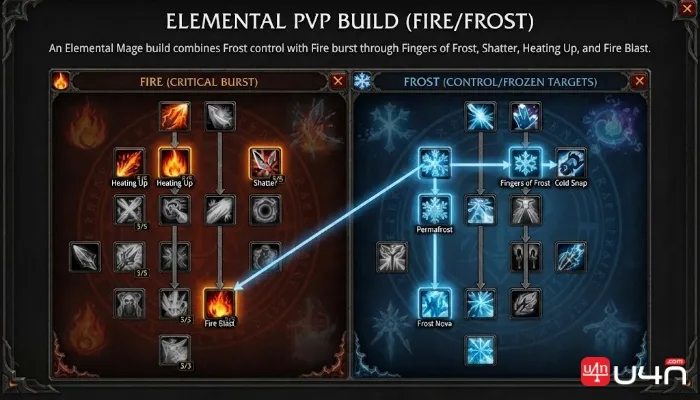
Why Fingers of Frost + Shatter Works
Fingers of Frost gives Chill effects a chance to treat your next two spells as though the target were frozen.
Shatter then massively increases your critical-strike chance against frozen targets.
The combination becomes particularly dangerous when paired with Heating Up.
According to the source build, the interaction can push a fresh level 60 Mage toward roughly 75–80% critical chance against frozen targets with Fire spells, depending on gear.
That is the real reason the Elemental build is so appealing.
You are not simply stacking Fire damage. You are creating a sequence:
Control → Frozen target → Shatter → High crit chance → Heating Up → Burst
That is much closer to the classic Mage gameplay loop than simply standing at range and repeatedly casting Arcane Blast.
Heating Up Is Different Now
Heating Up has also been changed.
Instead of two consecutive critical strikes making the next Pyroblast instant, non-periodic Fire critical strikes reduce the cast time of your next Pyroblast.
The effect can stack three times, producing up to a 75% cast-time reduction.
That is obviously weaker than a guaranteed instant Pyroblast, but it is also considerably easier to balance.
For the Elemental build, this creates another reason to maximize opportunities to hit frozen targets.
You are essentially building multiple layers of pressure rather than relying on one guaranteed instant burst.
The Biggest Problem With Elemental: Mana
There is a major downside.
The Elemental build does not have access to the strongest mana-regeneration talents in the Arcane tree.
That means your sustained PvP uptime can suffer.
A Mage who runs out of mana is not merely doing less damage. You lose the ability to maintain pressure, control, and defensive options at the same time.
This is why the remaining talent points are genuinely difficult to allocate.
Possible alternatives include:
Ice Shards
Burning Soul
Improved Cone of Cold
Improved Blizzard
Master of Elements
The correct choice may ultimately depend on how severe mana problems become at level 60.
Frost Mage Builds Have More Flexibility
A more traditional Frost build is easier to understand but even more difficult to finalize because of talent competition.
Several Frost talents are effectively mandatory:
Improved Frostbolt
Improved Frost Nova
Frostbite
Permafrost
Ice Lance
Ice Block
Arctic Reach
Shatter
Fingers of Frost
Cold Snap
Once those points are committed, there is surprisingly little room left.
You then have to decide whether to invest in Arcane for:
Arcane Concentration
Arcane Meditation
Improved Counterspell
Missile Barrage
Improved Channeling
Arcane Geometry
Or spend more points in Frost and Fire for additional control and damage.
This is where Frost becomes less of a single build and more of a family of variations.
Frost Build Variations
| Variation | Main Focus | Main Advantage | Main Weakness |
|---|---|---|---|
| Frost + Arcane | Mana + utility | Better sustain and Counterspell options | Less control investment |
| Frost + Blizzard | AoE control | Stronger group PvP pressure | Loses some Arcane utility |
| Frost + Fire | Fire Blast burst | More damage and stun potential | Less Arcane utility |
| Frost + Missile Barrage | Additional burst | More offensive pressure | Mana remains a concern |
Personally, the pure Arcane investment does not look particularly attractive unless the level-60 environment proves that Missile Barrage is overwhelmingly strong.
Six-Second Fire Blast Is a Serious Threat
One of the more interesting hybrid possibilities comes from Wake of Fire.
Reducing Fire Blast's cooldown to six seconds gives a Frost-based Mage a remarkably frequent instant-damage option.
That has several consequences.
First, Fire Blast becomes easier to pair with frozen-target mechanics.
Second, Impact can potentially add a two-second stun.
Third, Incineration increases the critical-strike chance of Fire Blast and Ice Lance.
That creates a very different Frost playstyle from the traditional version.
Instead of relying exclusively on Frost spells, you can use Frost to create the conditions under which Fire Blast becomes exceptionally dangerous.
Why I Would Skip Pure Arcane for PvP
Arcane is probably the most straightforward damage-oriented option.
A Mage can stand at range, build Arcane Blast stacks, and combine them with Arcane Missiles and Missile Barrage.
In a coordinated Battleground group, this could produce impressive ranged pressure.
But there is one enormous problem:
You do not have Ice Block.
That alone makes the build difficult to recommend for serious PvP.
Once a melee player reaches you, your options become dramatically narrower. Your control is also weaker, and your entire character begins to resemble a glass cannon.
That is not what I want from a Mage.
A Mage's biggest advantage is not simply damage. It is the ability to decide where and when a fight happens.
Pure Arcane gives away too much of that advantage.
What About Arcane Power + Presence of Mind Pyroblast?
The classic Arcane Power + Presence of Mind + Pyroblast combination is still capable of producing spectacular burst.
With strong PvE gear, an appropriate spell-damage trinket, and Berserking, the burst potential can be enormous.
The problem is consistency.
You are essentially building around a long cooldown window. Outside of that window, the character becomes much less threatening.
That can work in certain Battleground compositions where you are protected by teammates and allowed to free-cast.
For open-world PvP or dueling, however, I would rather have the control offered by Frost or Elemental.
Combustion Needs Help
Combustion is another ability that looks increasingly awkward in the current Mage environment.
It was recently reduced from four non-periodic Fire critical strikes to three.
On paper, that makes the cooldown more reliable.
In practice, Fingers of Frost combined with Shatter and Heating Up can produce enormous critical-strike opportunities throughout a fight.
That makes it difficult to justify a three-minute cooldown for Combustion when a Frost-oriented Mage can potentially generate several powerful burst windows naturally.
This is especially noticeable in group PvP.
The current Mage landscape appears to be pushing toward:
Frost = PvP control
Arcane = PvE damage
Fire = caught between the two
That is not necessarily where Fire should remain.
If Fire does not receive additional incentives, it risks becoming the least compelling specialization for both PvP and PvE.
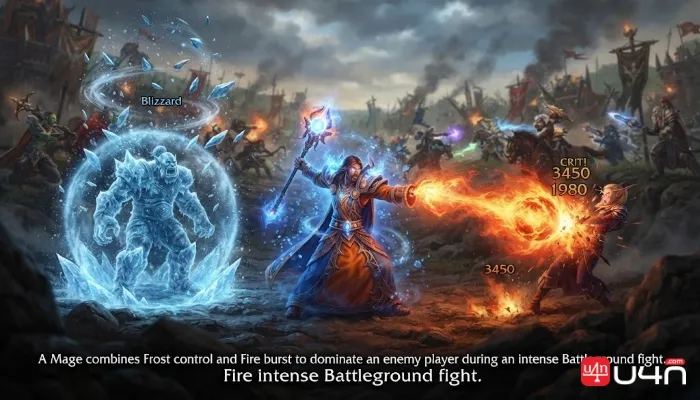
Final Verdict
If I were starting a Mage specifically for WoW Forever PvP, I would not choose the build with the biggest theoretical damage number.
I would choose the build that preserves what makes Mage unique.
That means control, positioning, burst windows, and the ability to force melee players to fight on your terms.
For Alliance, Gnome would be my first choice.
For Horde, Troll is the strongest overall option.
For specialization, the Elemental Fire/Frost build is the one I would be most interested in playing. It combines the traditional Mage control game with the new Fingers of Frost, Shatter, Heating Up, and Fire Blast interactions.
A conventional Frost build is also extremely competitive and gives you more room to adjust your talents around the final level-60 meta.
Pure Arcane looks fun in Battlegrounds, especially from the back line, but I would not want to sacrifice Ice Block and so much control for it.
Ultimately, the biggest question is not which talent build looks strongest on paper. It is how the new abilities perform once real players start exploiting them.
The Mage has received enough new tools that Blizzard is already having to restrict old mechanics such as Rank 1 Frostbolt and Rank 1 Blizzard. That alone tells you how explosive the class could become.
For players planning to spend heavily on gear, consumables, and professions, it is also worth remembering that your PvP setup can become an ongoing investment. If you are looking for WoW Forever Gold for sale, make sure your spending supports the build you actually intend to play rather than simply chasing the most expensive gear available.
For now, though, my choice is simple: Gnome Elemental Mage for Alliance, Troll Frost or Elemental Mage for Horde, and plenty of practice with your control rotation before worrying about squeezing out the last point of theoretical damage.
Summary
WoW Forever Mage PvP is shaping up to be less about finding one perfect talent build and more about balancing control, burst, mana efficiency, and talent pressure. The changes to low-rank spells remove some of the old Rank 1 Frostbolt and Blizzard tricks, while Fingers of Frost, Ice Lance, Heating Up, and the new hybrid talents create entirely new ways to build pressure.
For Alliance players, Gnomestands out because Escape Artist complements the Mage's reliance on positioning and control. On Horde, Trolliss is the strongest overall choice thanks to Berserking and Rapid Regeneration.
Among the available builds, the Elemental Fire/Frossetup isis the most interesting option for players who want to combine Frost control with Fire burst. Traditional Frost remains highly competitive and offers more flexibility. At the same time, pure Arcane can deliver impressive ranged damage but gives up too much defensive utility and control for my preferred PvP playstyle.
The final level-60 meta will ultimately determine which variations perform best. For now, the safest approach is to build around what makes Mage strong in the first place: controlling the battlefield, creating favorable burst windows, and forcing opponents to fight on your terms.
FAQ
What is the best Mage race for PvP in WoW Forever?
For Alliance, Gnome is the strongest overall choice because Escape Artist is extremely valuable for a Mage that depends on positioning. For Horde, Troll is the preferred option because Berserking provides significant haste, and Rapid Regeneration adds another source of survivability.
Is Elemental Mage good for PvP?
Yes. The Elemental Fire/Frost build is one of the most interesting PvP options because it combines Frost control with Fire's burst potential. Fingers of Frost and Shatter create opportunities for extremely high critical-strike chances against frozen targets, while Heating Up adds another layer of burst pressure.
Is Frost still the best Mage PvP specialization?
Frost remains one of the strongest PvP-oriented options because of its control toolkit. However, the new talents and abilities mean that a hybrid Elemental build can compete by combining Frost's control with Fire-based burst.
Can Rank 1 Frostbolt still proc Frostbite at level 60?
Rank 1 Frostbolt has a 0% chance to activate Frostbite at level 60. The broader change also reduces the ability of low-rank spells to activate other class abilities and talents.
Is Arcane Mage good for PvP?
Arcane can produce serious ranged damage, particularly in organized Battleground situations where the Mage can safely cast from the back line. However, losing Ice Block and much of the traditional Mage control makes pure Arcane considerably less attractive for open-world PvP and dueling.
Why is Ice Lance controversial in WoW Forever?
Ice Lance adds another powerful instant offensive tool to a class that already has extensive control and mobility. The concern is that giving Mage additional instant pressure and mobility can make the class harder to balance against melee opponents while potentially encouraging other classes to receive more movement tools of their own.
Does the Elemental Mage build have a weakness?
Its biggest weakness is mana management. Because the build invests heavily in both Fire and Frost, it has limited access to Arcane mana-regeneration talents. Long fights can therefore become significantly more difficult if the Mage cannot maintain enough mana.
Is Combustion worth taking for Mage PvP?
Combustion is difficult to justify compared with the burst opportunities generated naturally by Fingers of Frost, Shatter, and Heating Up. The current version has also been reduced from four to three non-periodic Fire critical strikes, making the talent less compelling for the PvP builds discussed in this guide.
Should I choose Frost or Elemental Mage?
Choose Frost if you want a more traditional control-focused Mage with greater flexibility in your talent variations. Choose Elemental if you want to combine Frost's freezing mechanics with Fire Blast, Heating Up, and Fire-based burst. For the playstyle described in this guide, Elemental is the more interesting choice.