A short hotfix can change a mapping session more than its length suggests. For our team, the useful question is how each adjustment affects the decisions between entering an encounter, committing damage, and collecting rewards. If we are spending POE Currency on a farming setup, we want to know which risks have changed before increasing the investment.
These two updates deserve that practical reading. We would separate their impact into damage pressure, character control, reward reliability, and encounter pacing. That gives us a clearer way to reassess existing setups without turning a handful of fixes into a reason to rebuild a character or abandon an established farming route.
What the Two Hotfixes Actually Changed
The first 3.30.0d hotfix addressed three issues: physical damage over time from Abyssal monster modifiers, an Abyssal rare modifier that immobilised players when stolen through Headhunter, and cases where player-inflicted Blind failed to remain permanent while wielding The Covetous Dark. GGG reduced the relevant damage category and blocked the problematic modifier from being stolen. The announcement dates to November 20, 2026 UTC, or November 19 in US Pacific time.
Hotfix 2 covered a different set of problems. It repaired the Fate transformation governing Resistance modifiers on Shields dropped by Empowered Monsters, reduced the Witch of the Woods' Life and teleport frequency, and fixed duplicated rare monsters appearing at the same position. The Witch entry concerns the monster spawned after killing a Unique monster while affected by an Evolving Shrine. This announcement also dates to November 20 UTC, November 19 Pacific time.
We would use the following priorities when deciding what to revisit:
| Area | Our recommended follow-up | What to avoid assuming |
|---|---|---|
| Abyss damage | Reassess sustained damage pressure in familiar content | Every Abyss encounter is now comfortable |
| Headhunter interaction | Check character movement during relevant encounters | Every modifier-stealing interaction received a fix |
| The Covetous Dark | Review setups that expect permanent Blind | The item received a general damage increase |
| Shield Fate rewards | Verify the reward condition and inspect eligible drops | Every Shield now has desirable defensive rolls |
| Witch of the Woods | Reassess fight pacing and damage uptime | Every Evolving Shrine encounter changed |
| Duplicated rare placement | Watch for reproducible positioning problems | Rare monster duplication itself was removed |
For us, this is the right scale of response: revisit the affected interaction, then decide whether anything larger needs to change.
Abyss Damage: Reassess Pressure Before Raising Investment
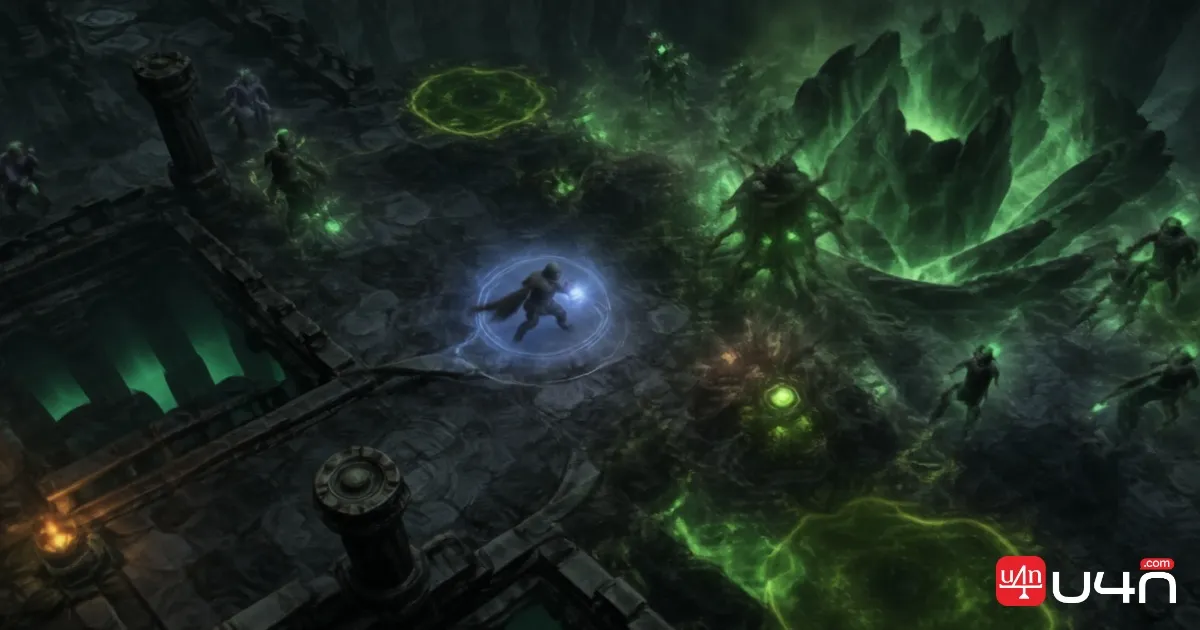
The damage category matters here. A reduction to physical damage over time gives us a reason to revisit encounters where sustained pressure was the limiting factor. It does not provide a numerical answer to how much harder we should push our maps.
Our preferred starting point would be a familiar setup. Keep the character, map tier, and encounter investment as consistent as practical, then observe whether there is more room to recognise danger and reposition. Changing several variables at once makes the result difficult to interpret. A smoother run tells us little about the hotfix if we also added substantial recovery or removed dangerous map modifiers.
We would pay attention to three things: how quickly the resource pool falls during exposure, how reliably it recovers after leaving danger, and whether the encounter allows enough time to make that move. These observations are more useful than judging a patch through the largest damage number on a character sheet.
A single comfortable encounter would not persuade us to increase investment immediately. We would want a small run of comparable attempts, especially if the previous problem appeared only under particular combinations of monsters and map conditions. The aim is to establish a workable margin, not to claim a statistically precise damage reduction.
We would also resist changing defensive gear after one encouraging map. Keep the current setup intact while checking the new baseline. If the encounter becomes manageable, that is useful evidence for continuing the route. If it remains unstable, record the circumstances before deciding whether the remaining problem is encounter pressure, positioning, or a weakness elsewhere in the build.
That is a less exciting response than declaring Abyss solved. It is also a more useful basis for the next set of maps.
Headhunter and Blind: Check the Specific Interaction
For Headhunter users, our first concern would be reliable control of the character. A mapping setup becomes difficult to evaluate when an unexpected interaction interrupts movement, because the resulting death or failed encounter says little about normal defensive performance.
The implementation detail in the first announcement deserves attention. Blocking a problematic modifier from being stolen changes what we should test. We would focus on whether the immobilisation scenario returns during the relevant encounters, rather than trying to confirm that the stolen effect now behaves correctly.
We would avoid extending that result to other items or mechanics without separate evidence. Similar-looking interactions deserve their own checks. The patch entry gives us a defined issue to revisit; it does not establish a universal rule for every source of stolen monster modifiers.
If movement still fails, we would try to preserve a short recording and note the surrounding circumstances: the last rare monster killed, visible effects, active map conditions, and whether the failure repeats. A reproducible report is much more informative than a general statement that the character felt stuck.
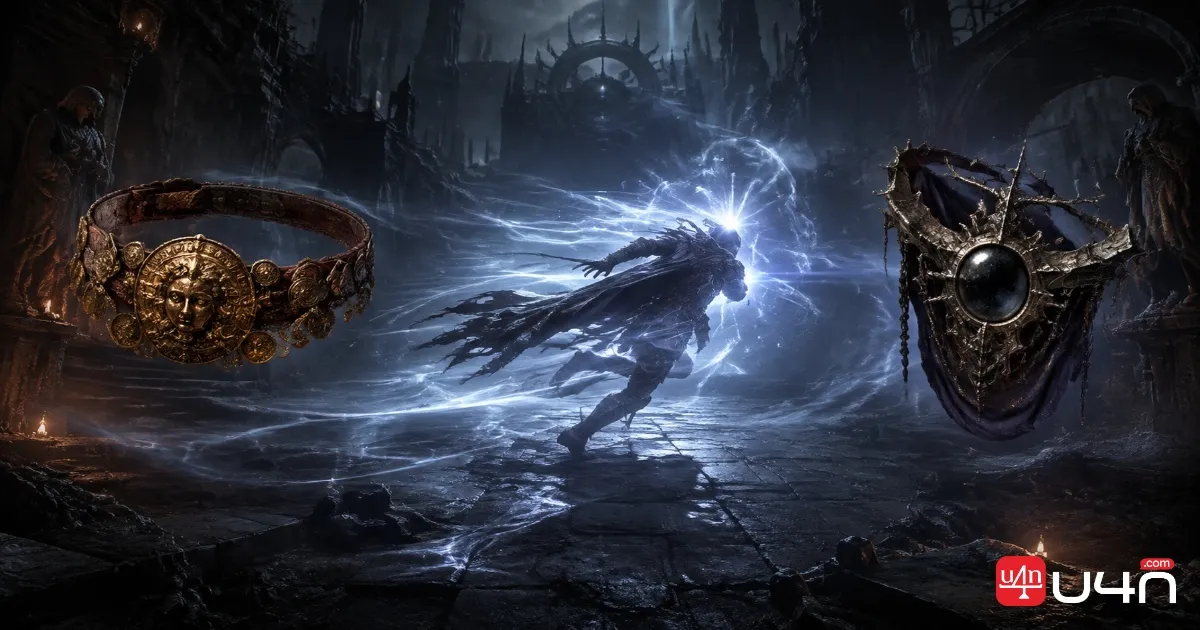
The Covetous Dark calls for a similarly focused approach. If our setup expects permanent Blind, we would review the affected interaction without changing several supporting pieces at the same time. Otherwise, an apparent improvement becomes difficult to attribute.
We would also separate reliability from build strength. A previously inconsistent interaction working as intended may matter greatly to a particular setup, but it does not automatically justify changing our ranking of the item. Before recommending a purchase or respec, we would ask whether that interaction was actually limiting the character.
Shield Fate Rewards: Verify Eligibility Before Value
The Shield reward issue needs a different kind of review. Our first question would be whether the reward condition was satisfied, followed by whether the eligible item received the promised property. Only then would we evaluate whether the Shield is useful.
That order prevents an easy mistake: treating an undesirable reward as proof that the mechanic failed. A guarantee concerning one property does not answer every question about the finished item. We would still inspect the complete result before deciding to equip, craft, retain, or discard it.
For a suspected failure, we would record the Fate description before the encounter, identify the relevant monster, and inspect the associated Shield drop afterward. Keeping those steps together gives us a much stronger basis for assessment than looking through a pile of loot after several encounters.
We would keep the filter and inspection process straightforward during this check. If an item is hidden or overlooked, the absence of a visible reward is difficult to interpret. The purpose of a verification run is to follow the condition through to its outcome with as little ambiguity as possible.
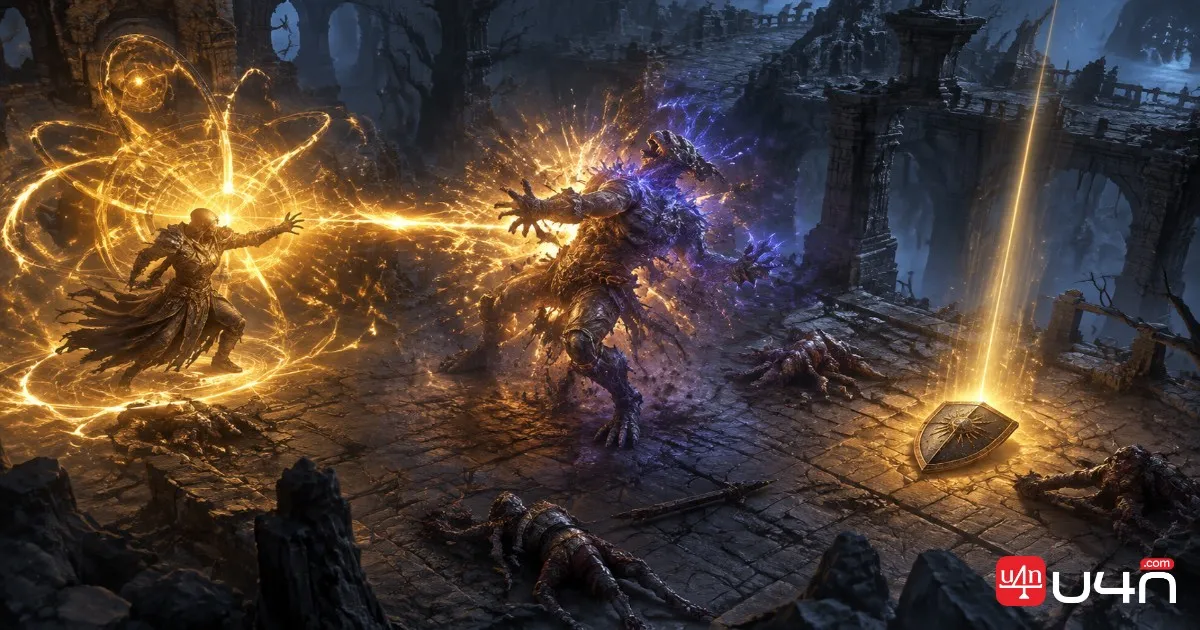
Our team would also keep farming expectations modest until there is enough observation to support a change. A repaired reward condition gives us a reason to revisit the mechanic. It does not supply a forecast for sale prices, upgrade frequency, or profit per map.
For progression, our decision would remain concrete: does the resulting Shield improve the character we are playing? We would compare the actual item against the equipped one, then consider crafting only if the base result supports a sensible next step. A functional reward mechanic and a worthwhile crafting project are separate decisions.
Witch of the Woods and Rare Spawn Reliability
We would approach the Witch of the Woods changes through encounter pacing. The useful measure is how often the character gets a clean opportunity to deal damage, followed by how much repositioning is required before the next opportunity.
That makes the encounter worth revisiting with an existing build before spending on upgrades. If repeated interruptions were the main frustration, another damage purchase may have been addressing the wrong constraint. We would first observe whether the current character can now complete its normal attack or casting sequence more comfortably.
Our review would include movement time, interrupted actions, and the length of usable damage windows. We would keep those observations separate from a claim about the exact size of the adjustment. A fight feeling smoother does not reveal the underlying Life reduction or teleport timing.
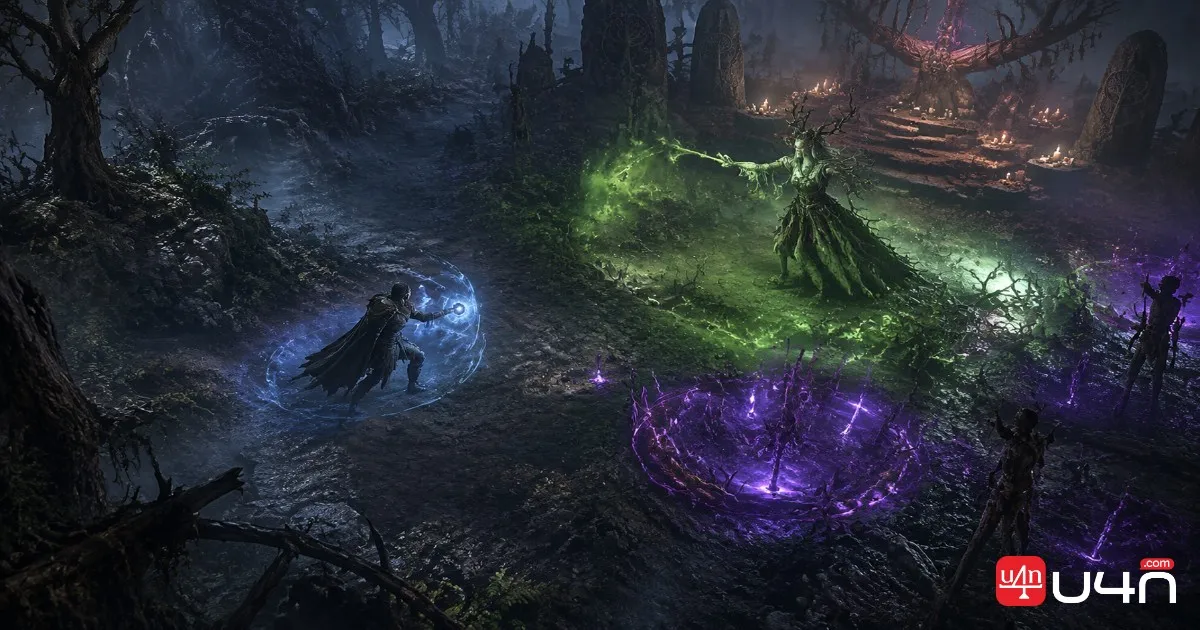
We would still respect the encounter while learning its revised rhythm. Easier access to damage windows is a reason to reassess opportunities, not to abandon positioning discipline. For a character with limited room for error, one unnecessary commitment can still invalidate an otherwise clean attempt.
The rare spawn correction calls for equally careful interpretation. If we encounter another suspicious overlap, we would try to capture the spawn itself. Footage showing monsters sharing a position later in a fight gives us less information about how they originally appeared.
Our broader recommendation is to change one decision at a time. Revisit the encounter with the current character, identify the remaining obstacle, and spend only when there is a clear reason. That approach gives each observation a purpose and keeps a small hotfix from turning into an expensive series of guesses.
Our Team's Assessment
We would prioritise retesting the content that previously failed for a specific, recognisable reason. Start with the same character and a manageable version of the encounter, keep brief notes, and look for consistency across several attempts. The result should guide the next adjustment.
Before we buy POE Items to address a frustrating run, we would check whether the remaining problem is damage pressure, recovery, lost control, or time spent chasing the target. A purchase makes more sense when it solves something we can still reproduce after the hotfix.
We would retain the current build while establishing that baseline. Once we understand what still limits the encounter, we can make a focused choice about gear, investment, or which content to run next.
FAQ
Should we immediately return to heavily invested Abyss maps?
We would begin with a familiar, manageable setup and increase investment only after several stable attempts. Our threshold would be practical: enough time to recognise danger, reposition, and recover without relying on an unusually favourable encounter. One clean map is encouraging, but we would want repeatable results before committing more resources.
How would we check the Headhunter movement issue?
We would revisit relevant encounters while keeping other variables consistent, then watch for the specific loss of movement. If it returns, we would preserve footage and record the last rare monster killed and the surrounding conditions. We would treat a different movement failure as a separate issue until there is evidence connecting the two.
How should we review a Shield Fate reward?
We would capture the condition before combat and inspect the eligible drop afterward. That lets us evaluate whether the promised property appeared before judging the item's usefulness. We would then compare the complete Shield with our current equipment, rather than assuming that a successful reward must also be an upgrade.
Does the Witch adjustment justify changing our build?
Our first step would be to replay the encounter with the current setup. We would look at usable damage windows, time spent repositioning, and whether our normal skill sequence now fits more comfortably. Only a remaining, identifiable limitation would give us a reason to consider a gear change or respec.
What evidence would persuade us that another bug remains?
We would look for a clear condition, a visible failure, and a way to reproduce it. A short recording paired with the relevant item, encounter, or reward description gives a report substance. We would keep unexplained deaths, unusual positioning, and missing rewards as observations until the conditions support a more specific diagnosis.