Path of Exile: Covens of Umbra launched on November 13, 2026, introducing a new approach to endgame investment through Threads. By November 16, Grinding Gear Games had outlined early balance work addressing difficult Thread modifiers, Fate empowerments, and the steep challenge in early maps. The studio said the changes would arrive as individual hotfixes when ready, rather than as one confirmed weekend patch.
For players spending POE Currency on their mapping setups, the central question is straightforward: does adding another Thread offer enough potential reward to justify the extra danger and time? The proposed direction is encouraging, but the answer will vary by mechanic and by how the changes are implemented.
The source material for this analysis describes a broader set of possible adjustments, including changes to modifier guarantees and individual league mechanics. We have not independently confirmed every detail in an official patch note, so we treat those figures and mechanic-specific changes as reported proposals, not features that are already live. That distinction matters before we build a farming plan around them.
Why Thread Investment Needs a Clearer Return
Threads change the economics of a map in two ways. They determine which encounters we invest in, and they make those encounters more demanding. A successful setup needs to account for both effects.
The problem is not that high investment creates danger. Difficult content is part of the appeal. The problem appears when an encounter gains enough monster life or damage to slow us down substantially, but its rewards do not provide a reliable reason to take that extra risk.
A map can look productive because it contains more monsters, Rare enemies, and reward opportunities. Yet if those encounters take much longer to finish, the value per hour may fall. Deaths make the calculation worse: they consume time, interrupt momentum, and can prevent us from completing the most valuable part of the map.
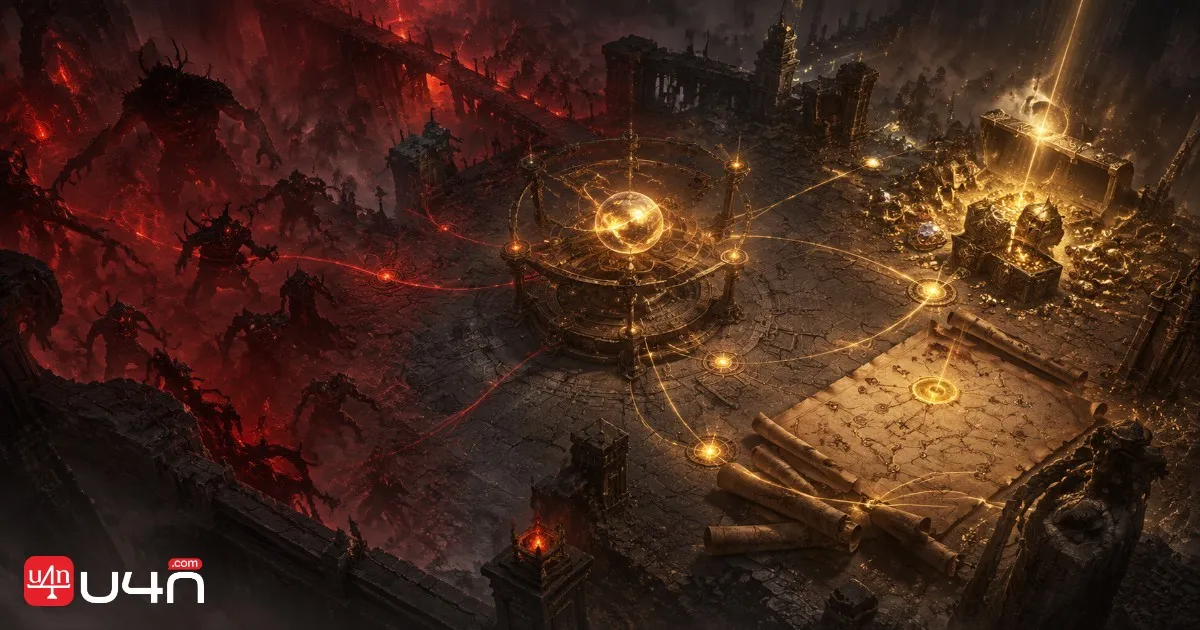
GGG's early post-launch plans acknowledge that Thread difficulty needs attention. The team has discussed reducing the difficulty of lower-Thread maps, reviewing dangerous modifiers and Fate empowerments, and examining whether demanding modifiers need less punishment, better rewards, or both.
The source article goes further, describing a proposed minimum number of active modifiers at high Thread counts and direct bonuses attached to each mechanic. Those details would make investment easier to evaluate if implemented as described. Until we can verify them in the relevant update, we would avoid assuming that a specific Thread count guarantees a particular reward.
What We Would Look for in the Patch
A useful balance pass should make a map's cost, danger, and potential return easier to compare. It does not need to make every run profitable, nor should it remove the excitement of a strong modifier combination.
We would watch for three kinds of change:
- Smoother monster scaling. Additional Threads should make content harder without turning ordinary Rares into prolonged boss fights.
- A more dependable reward floor. Investment should offer some identifiable benefit even when the random modifiers are not ideal.
- Clearer mechanic-specific incentives. Players should be able to choose between density, reward selection, item rarity, and other outcomes with a reasonable understanding of the tradeoff.
These benefits are not interchangeable. More monsters create more opportunities for drops, but they also require more clear speed and defensive recovery. More Item Rarity changes the rarity of eligible item drops; it is not the same thing as more items or guaranteed currency.
A larger reward selection has another limitation: we still need the resources and judgment to claim what appears. Ritual, for example, can offer an attractive item that we cannot immediately afford. More choices are valuable, but they do not eliminate those decisions.
| Reported adjustment | Potential benefit | Question for testing |
|---|---|---|
| Lower Thread-related monster scaling | Faster, safer completion at higher investment | Does the build still handle dangerous modifier combinations? |
| More monsters in an encounter | More opportunities for drops | Does the added density improve rewards per hour? |
| Higher Item Rarity | Better rarity on eligible drops | Are the resulting items useful or saleable? |
| More reward-window choices | More chances to find a desirable item | Can we afford and identify the best options? |
| More control over reward categories | Greater focus on a chosen strategy | What opportunity do we give up by blocking another category? |
The source article describes a minimum of three Thread modifiers at eight Threads. That is a meaningful claim, but we could not independently confirm it in the official material available for this rewrite. We would check the deployed patch notes before using it as the foundation of an expensive setup.
Breach, Bestiary, and Ritual
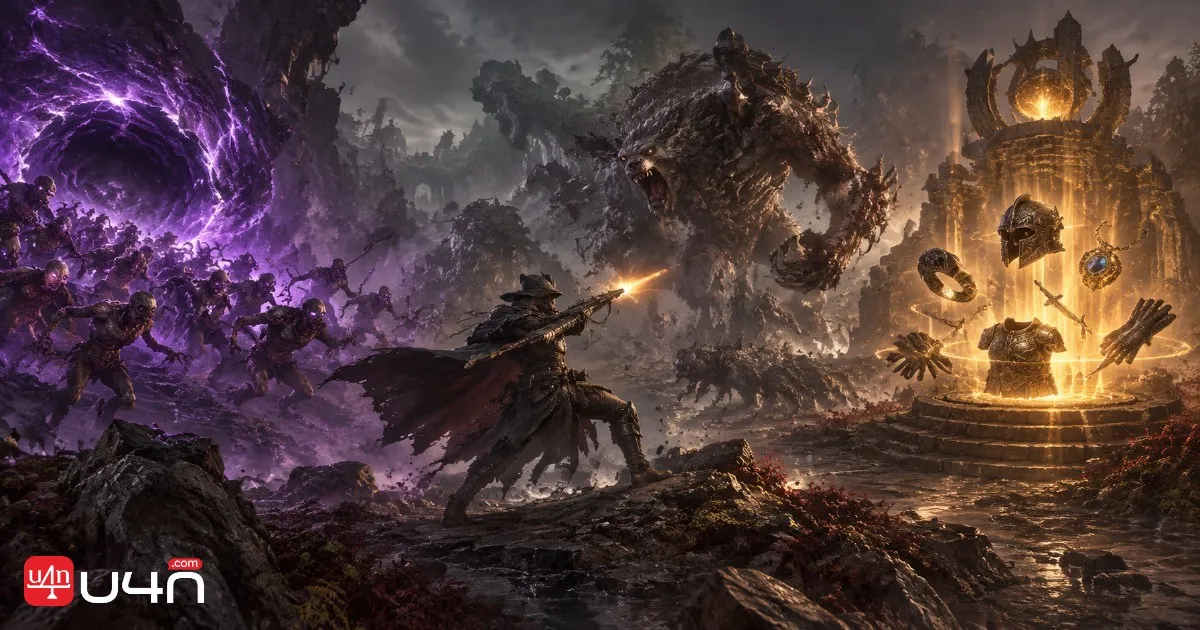
Breach: Density has to translate into speed
The source describes Breach changes centered on additional Magic and Rare monsters, with further modifiers affecting the toughest parts of certain encounters. If those changes arrive as written, Breach would become an attractive testing ground for builds that clear dense packs quickly.
We would be careful with the difference between clearing ordinary packs and handling several Rare monsters at once. A character can feel fast through most of a Breach, then lose that advantage when enemies with overlapping defenses or dangerous modifiers appear together.
Our first test would be a small batch at a comfortable investment level. We would record how often we complete the encounter, how long it takes, and whether the additional enemies create noticeable pauses. Increasing investment only makes sense once the build can handle the existing density consistently.
Visual pressure matters too. More enemies bring more effects on screen, making it harder to identify attacks and safe positions. A modest increase in map speed on paper is not attractive if it comes with frequent deaths or failed encounters.
Bestiary: Rewarding the time spent on beasts
According to the source, Bestiary modifiers are expected to apply less generic toughness while granting more Item Rarity. It also describes a possible modifier that adds another Bestiary modifier to Red Beasts.
The important point is that reduced toughness is not the same as removing toughness. If beasts become less time-consuming but still retain meaningful modifiers, the encounter may feel more balanced without becoming trivial.
We would evaluate each setup by looking at the entire interruption. How long does it take to locate, fight, and capture the beast? Does the character stay safe while handling it? Are the drops and captured beasts useful enough to compensate for time away from the rest of the map?
A particularly valuable result can distort a short test. We would keep that result in the record, but also compare the session without it. That gives us a better sense of how the strategy performs when nothing exceptional happens.
Ritual: More options are not guaranteed profit
The source describes Ritual changes that would add more items to the Favours window as Thread investment increases. It also reports improvements to drops and experience from revived monsters, along with modifiers that expand the reward selection or provide rerolls.
If implemented, these changes would address a familiar frustration: completing a dangerous Ritual only to find a narrow reward window. More choices and rerolls give us more chances to see an item worth taking.
Our tribute budget remains the constraint. Before committing to an expensive setup, we would check whether the character can complete the encounters reliably and generate enough tribute to act on the better choices. A larger window is less helpful if the best item repeatedly appears out of reach.
We would also account for the time spent evaluating rewards. Learning which bases and items deserve a closer look makes a larger window more useful without turning every map into a long inventory review.
Betrayal, Ultimatum, Incursion, and Expedition
Betrayal and Ultimatum: Know what improves
The source reports that stronger Betrayal targets and targets carrying Syndicate Equipment would receive more Item Rarity. It also describes increased chances of extra targets and a modifier that adds Rare Bodyguards.
These are separate forms of investment. Additional targets create more fights and potential drops. Increased rarity affects eligible items from those fights. We should not turn either change into a fixed promise of profit without testing the actual encounters and market.
The article also mentions a fix for Parasite-Filled Chests that were failing to drop items. That would restore an expected reward source rather than add a new bonus. We would confirm the fix is present in the live version before counting those chests in our estimates.
For Ultimatum, the source describes a proposed system in which choosing a Downside also grants an Upside, alongside increasing monster Item Rarity as rounds are completed. That would give us a clearer incentive to continue, but only if we can survive the accumulating pressure.
Our test would focus on completed encounters. A build that reaches a later round but fails regularly may earn less than one that stops earlier and finishes consistently. The most tempting option is not automatically the most efficient one.
Incursion: More enemies under a timer
Incursion is particularly sensitive to changes in monster density because time is already part of the encounter. The source describes larger packs, more Rare monsters, and possible modifiers involving Tempests, Rare guards, and Architects.
More enemies could improve the value of a successful Incursion, especially for a build with strong area damage. But the extra fighting also competes with the objectives that brought us there. If a character cannot reach and defeat its priority target in time, added density can undermine the strategy.
We would track successful objectives alongside rewards. A setup that produces impressive individual fights but regularly misses the desired room outcome needs another look. Damage against priority targets, movement through the temple, and defensive stability all matter.
Expedition: Separate rewards from danger
The source describes improved Runic monster returns, more chances for reward suffixes on Remnants, and an Atlas option that can block a category of Remnant reward modifier.
That last point needs precise wording. A choice affecting monster-related or chest-related reward modifiers should not be treated as a blanket option to remove dangerous monster modifiers. We would still inspect the Remnants before placing explosives and avoid effects that our build cannot safely handle.
Expedition rewards preparation. Before increasing Thread investment, we would identify which remnants and targets support the intended strategy, then check whether the added difficulty changes our completion rate. A valuable-looking chain is not useful if a single overlooked modifier makes the encounter unmanageable.
A Practical Way to Test Thread Returns
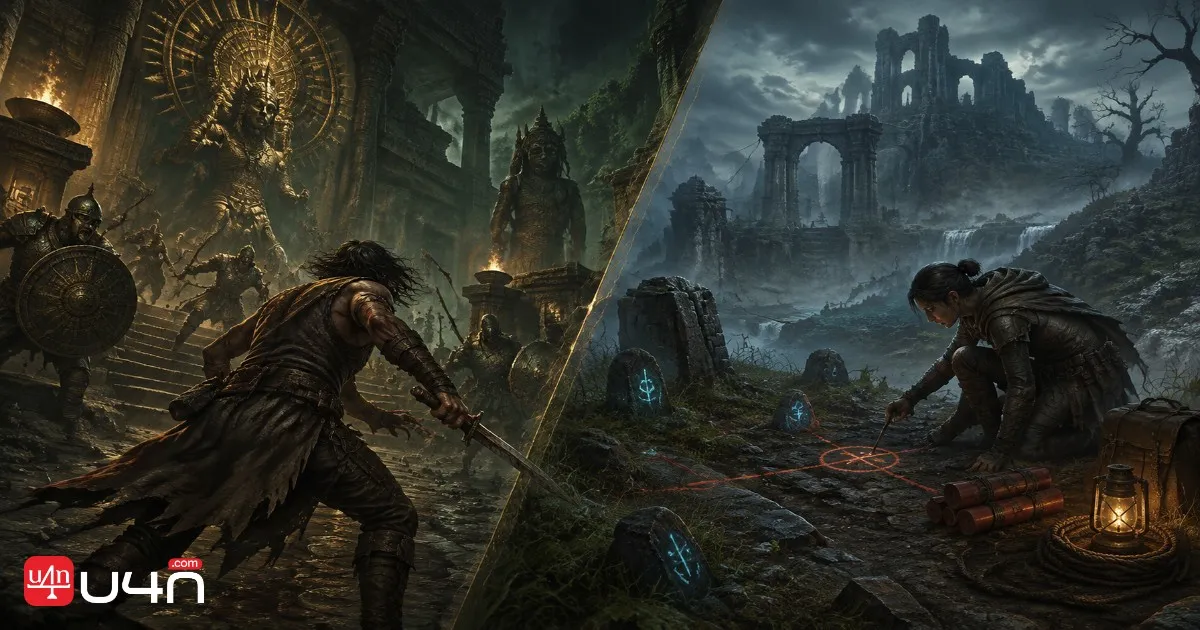
Once the relevant changes are live, we would test one mechanic at a time. Combining several new modifiers immediately can produce an exciting map, but it makes the result difficult to interpret.
Keep the surrounding setup as consistent as practical: similar map tiers, a stable Atlas configuration, and the same general approach to preparing maps. Run one batch at an investment level the character already handles, then compare it with a higher-Thread batch.
For each batch, record the cost of maps and Threads, the time spent, deaths, failed encounters, and the estimated value of rewards. We would include time spent sorting and selling when comparing longer sessions. A strategy that fills several tabs with low-value items can look stronger than it feels in practice.
A few maps cannot establish a dependable average. Large drops are part of the game, but they can dominate a small sample. We would record them separately and review the session both with and without the exceptional result before deciding to scale up.
The quality of the character matters as much as the mechanic. If Rare monsters take too long to kill, more density may expose a damage problem. If deaths occur when effects overlap, the limiting factor may be recovery, mitigation, or movement rather than damage.

We would make one adjustment at a time. Change the Thread investment, test again, and then decide whether the character needs an upgrade or the strategy needs a different mechanic. That process gives us a more useful answer than copying an expensive setup and hoping the returns appear.
What the Changes Could Mean for Farming
The confirmed direction is a review of Thread difficulty and rewards, delivered through changes as they become ready. The source article's more specific proposals suggest how individual mechanics could benefit, but those details need patch-note confirmation before we treat them as live rules.
Our priority would be a repeatable map that the character completes without frequent deaths or extended delays. From that baseline, higher investment becomes a measurable decision: what did it cost, what did it add, and how much extra time did it require?
Market research can help us estimate the value of drops, including when checking POE Items for sale, but an asking price does not prove an item sold. We would use realistic sale estimates and keep the actual returns from our own maps in view.
FAQ
When did Covens of Umbra launch?
The expansion launched on November 13, 2026. GGG outlined early post-launch work on November 16, with changes intended to arrive as separate hotfixes when ready. The available announcement does not establish the source article's proposed weekend deadline as a confirmed release time.
Are all the changes described in the source article live?
We cannot confirm that. The source describes specific changes to several mechanics, but we have not independently verified each one in a deployed patch note. Check the latest official notes before investing around a particular modifier.
Does using eight Threads guarantee three modifiers?
The source article reports that guarantee as a planned change. We could not independently confirm it in the official material reviewed for this rewrite, so we would not assume it is active without checking the current patch notes.
Does Item Rarity mean more currency drops?
Not directly. Item Rarity is different from item quantity, and an increase in rarity does not guarantee valuable items. More enemies, better reward choices, and higher rarity should be evaluated separately.
Will the Expedition Atlas option remove dangerous monster modifiers?
The source describes an option affecting categories of Remnant reward modifiers. It does not establish a general option to remove all dangerous monster effects. Read the active Remnants before setting the explosion chain.
Which mechanic should we test after the update?
We would start with one the character already completes reliably. Breach is a natural candidate for strong area clear, while Ritual or Ultimatum may suit a build with sustained encounters. Compare costs, completion time, and actual returns before increasing investment.