Finishing an eight-Thread map should feel like the payoff for getting your build and Atlas setup right. In the opening days of Covens of Umbra, the jump from six Threads to eight could turn an otherwise comfortable encounter into a slog, and a difficult boss could still leave you staring at an Orb of Alchemy. For players farming POE Currency to fund their next upgrade, those were two separate problems that made the same decision harder. How much should you spend on the next map?
Grinding Gear Games is tackling those problems in two steps. The published 3.30.0c notes detail smoother Thread scaling, guaranteed modifier counts, and new bonuses for individual league mechanics. The studio outlined changes to high-rarity currency drops in a separate announcement. As of November 19, 2026, we can use the patch notes to plan our Thread spending. The core loot changes below describe GGG's announced plans.
Why High-Rarity Currency Drops Hit a Ceiling
At launch, monster rarity helped determine which currency pool a drop came from. Once a monster had enough rarity to reach the highest pool, piling on extra rarity stopped improving the currency selection. That pool covered a wide range of outcomes, including an Orb of Alchemy at one end and a Mirror of Kalandra at the other. A tougher fight could therefore send you back to the same selection of currency.
GGG's example puts the problem in perspective. Roughly one in three top-category currency drops from a very difficult boss was an Orb of Alchemy. The figure applies only after a drop has qualified for that category. GGG plans to remove low-value outcomes from the highest pool as additional rarity is applied to monsters that are already highly rare. Core Item Drops announcement covers new Exalted Orb variants, Foulborn currency entering the core drop pool, higher drop rates for Cluster Jewels and Simulacrum Splinters, and loot from Sacred Flora monsters gathering around the tree.
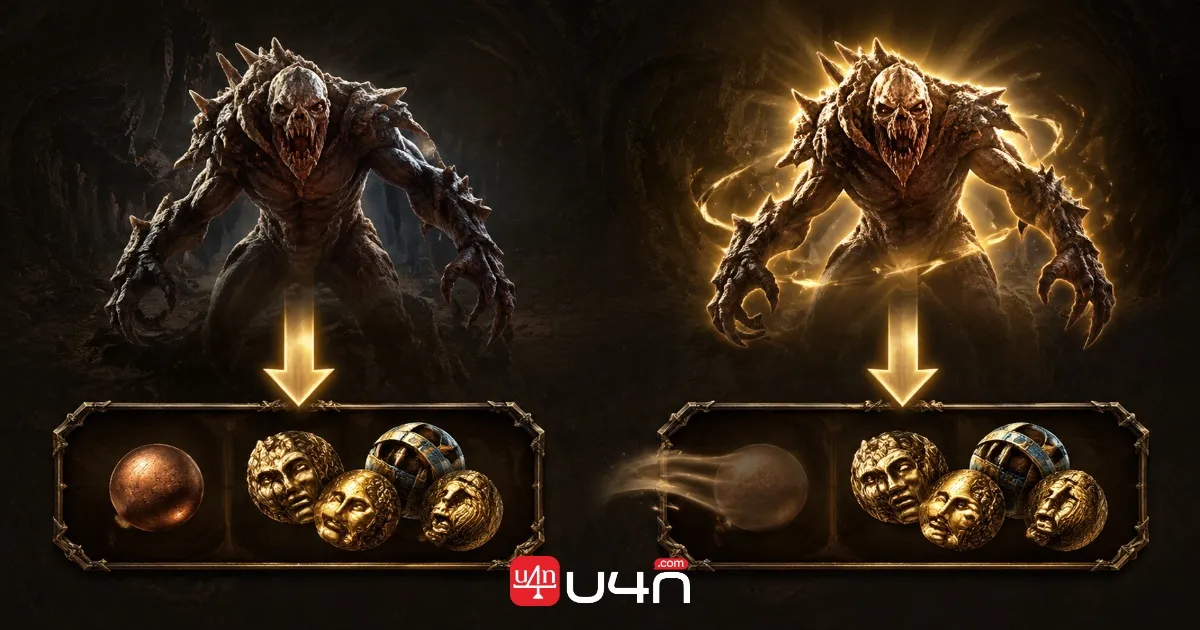
We read that as a change to the quality of eligible drops. A boss can still give you a forgettable clear, and a Divine Orb remains a chance outcome. The change we care about is whether the extra rarity on an encounter we already farm can improve the currency roll when it happens. That's a better question for a batch of maps than for a single boss kill.
There's a practical difference between a farming route that puts you in front of many eligible monsters and one that gives you a handful of long fights. If a boss takes most of the time you spend in the map, even a better potential drop has to justify those minutes. We'd keep track of boss time separately from the rest of the clear so we can see where the investment is going.
What More Threads Buy You in 3.30.0c
Threads of Creation took over the role Scarabs filled in map preparation. You use them to bring league encounters into a map and scale those encounters. The 3.30.0c notes flatten the monster toughness curve, especially at higher counts, and trim the extra monster damage at the high end. They also list lower damage for most Fate effects, particularly in high-level areas. Alongside those changes, Thread investment now sets a minimum number of rolled modifiers and unlocks separate bonuses for individual mechanics at three, six, and eight Threads.
| Threads applied | Minimum Thread modifiers | League-specific bonus thresholds |
|---|---|---|
| 1 to 3 | 1 | First bonus at 3 |
| 4 to 7 | 2 | Next bonus tier at 6 |
| 8 or more | 3 | Third bonus tier at 8 |
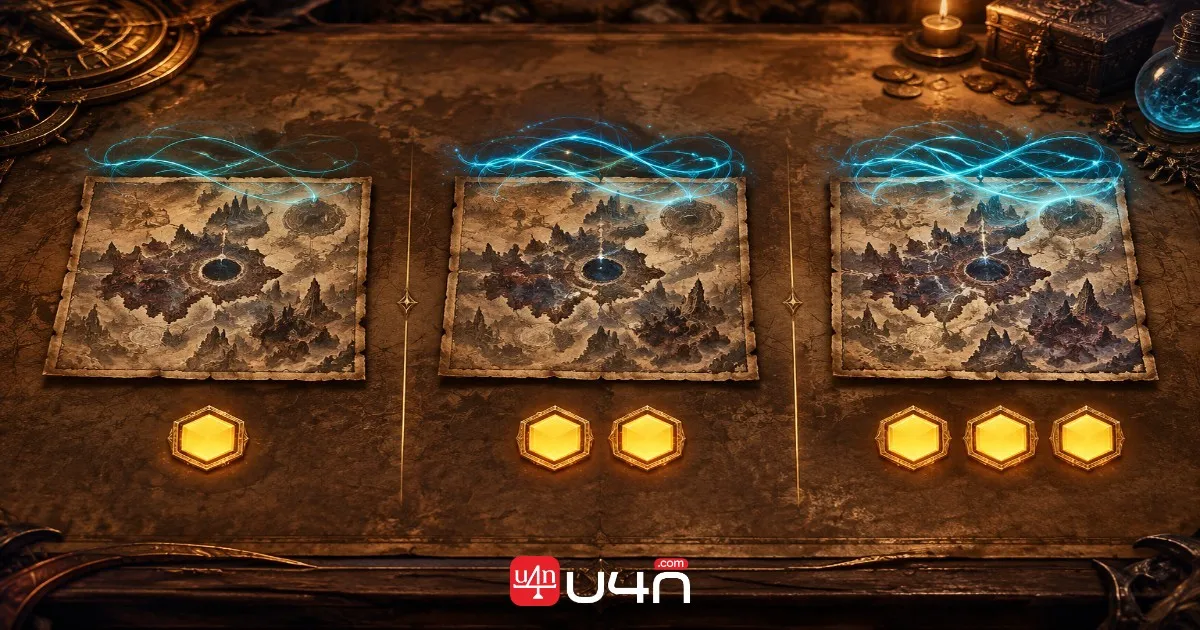
The two columns answer different questions.
- Going from three Threads to four raises the minimum number of modifiers.
- Going from four to six reaches the next league-specific bonus while keeping the same modifier floor.
- At eight, you reach the third bonus tier and the floor rises again.
Individual rolls still vary, so two maps opened with the same setup can play quite differently.
We'd use six Threads as a comparison point if that's where your build already clears comfortably. Pay attention to what slowed the run down. If you can kill rares quickly in open space but have trouble when they spawn together inside an Incursion room, a smoother toughness curve only addresses part of the problem. The modifier roll, the layout, and the way your build handles dense packs still matter.
Which League Mechanics Are Worth Retesting?
Breach and Incursion
Breach gets more magic monsters at its Thread thresholds, and the last wave of a Hive encounter gets more rares as you invest. One of the new modifiers can duplicate rare monsters that spawn during the final Hive wave or when a Breach stabilizes. We'd keep an eye on how consistently you reach those stages. A build with good coverage can make use of the added density, especially if it can clear the edges of the encounter without repeatedly doubling back.
Incursion gets larger packs at the same investment thresholds, with rare monster counts rising as you add Threads. The patch notes also list random Tempests and a modifier that adds rare guards to Architects based on Incursions already completed in the area.
For us, the check is simple.
If the extra packs regularly leave you rushing the Architect or missing the door you meant to open, record those misses alongside whatever the room dropped. They're part of the cost of running that setup.
Expedition and Ultimatum
Expedition gets both stronger Runic Monster rewards and a chance at extra Remnant suffixes as you spend more Threads. The Runic Distortion Atlas notable lets you prevent reward suffixes from affecting either chests or monsters. We'd choose which side to favor before opening the map and build the explosive chain around it. If Runic Monsters are the point of the run, it makes sense to check how many your route actually reaches before spending extra time trying to include one more chest.
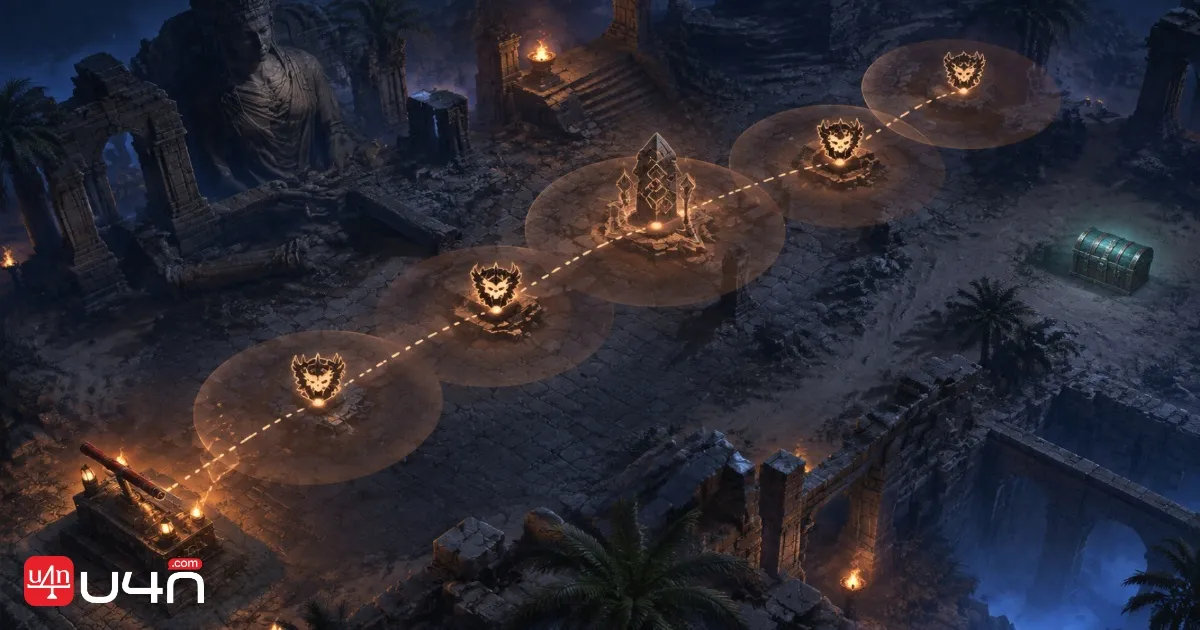
Ultimatum now pairs each downside with an upside by default. Monsters gain rarity as you complete rounds, and the six- and eight-Thread bonuses grant rewards as though you had completed an extra round. Those changes give us a reason to revisit the encounter on a build that can handle sustained pressure. When checking our returns, we'd include every failed attempt and every early cash-out. Counting only the runs that reach the later rounds gives a misleading picture of what the setup earns.
Bestiary, Betrayal, and Eldritch Altars
Bestiary adds red beasts at its Thread thresholds, and beast modifiers grant more rarity and experience while adding less toughness. Betrayal gives Syndicate targets extra rarity based on rank and equipped items, while higher investment makes reinforcements more likely. We'd start with the mechanic whose rewards already have a purpose for the character or whose encounters we can finish consistently. Extra targets are appealing until chasing them starts to dominate the run.
The Celestial Presence Atlas notable lets you choose which category of Eldritch Altar option you want to see whenever the map can offer it. The categories cover players, influenced monsters, and the map boss. We see this as a way to make a specific farming route easier to repeat. If the route is built around killing influenced packs, the relevant Altar category is worth considering before you commit points elsewhere on the Atlas tree.
What the New Orbs and Other Drops Change
The Originator's Exalted Orb is a map-crafting tool. It adds a rare-only map modifier, with a modifier that makes the area contain a Mirage among GGG's examples. We'd look at the map's existing rolls before using one. If a map already has a modifier you'd like to keep and can comfortably clear, adding another rare-only effect has an obvious use. The exact modifier you add is still a roll.
The Primordial Exalted Orb has a different job. Using it turns it into a random special Exalted Orb, with the Originator's version among the possible results. In trade league, we'd check the value of the unopened orb before converting it. In Solo Self-Found, we'd ask how many possible results we can use for a craft or map we actually want to run.
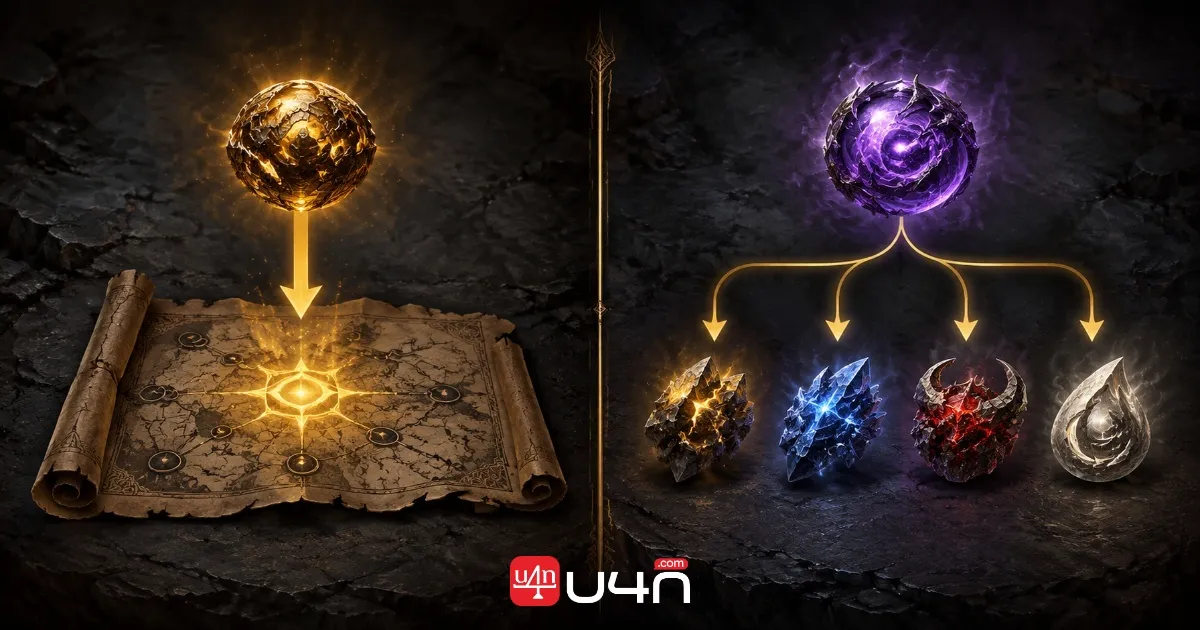
GGG also plans to add Foulborn currency to the general drop pool while increasing the chance of getting it from Wombgifts through the Genesis Tree's currency branch. If we're farming those crafting materials on purpose, Breach is still the route we'd start with. Finding some while running another mechanic is useful for a different reason. You can pick them up during normal Atlas progression without making Breach the focus of that session.
Two smaller changes are worth watching when the loot update arrives. Cluster Jewels are set to drop more often and scale with map difficulty, while Simulacrum Splinters are also slated to appear more frequently. Sacred Flora's loot collection change is easier to judge. Gathering the spawned monsters' drops around the tree should reduce the time spent retracing the encounter to pick up Lifeforce.
How We'd Compare Six- and Eight-Thread Maps
Start with one mechanic and a layout you know. Keep the map tier, Atlas tree, and loot filter fixed across both batches. We also like to keep unusually punishing map rolls out of the comparison. If one batch contains a modifier that directly interferes with your build, the time difference will tell you as much about that roll as it does about the extra Threads.
When reviewing the Path of Exile Items we picked up, we'd separate drops we can use or readily sell from everything else the filter showed. Track raw currency, mechanic-specific rewards, and standout drops in separate columns. A rare jackpot belongs in the record, but we'd also look at what the batch earned before that drop. That second figure gives us a better sense of what another session on the same setup might look like.
Record the Threads spent, time from opening the map to leaving it, deaths, and encounters you fail to finish. Include the time it takes to loot. Eight Threads can look good on a per-map basis while losing ground across a whole session if we're using extra portals, spending longer on the boss, or leaving late-stage encounters unfinished.
If both setups feel close, run another batch before changing your Atlas tree. We'd keep the higher investment when the extra rewards recur, and the encounter still fits the build. If six Threads give us cleaner runs and more completed encounters in the same window, that's where we'd put the next batch of maps.
Where We'd Start on the Atlas
We'd give the first pass to a mechanic we already know well. Breach gives us a straightforward way to test how the build handles denser packs. Expedition is a good choice if we already know how to route explosives and want to judge the Runic Monster and Remnant changes. A familiar mechanic makes it easier to spot what the patch actually changes about each run.
For the currency update, we'd wait for deployment to judge the new pool. Once it's available, use a route you already know, keep the same filter, and compare what you bring back across several runs. A faster clear and a better loot pool can both improve a session. Measuring the two changes separately helps you decide where your next upgrade or stack of Threads will do the most good.
FAQ
Do eight Threads guarantee three useful modifiers?
Eight or more Threads guarantee at least three Thread modifiers. Which modifiers appear still varies, and each one can affect a build differently. The league-specific bonus at eight Threads is a separate part of the investment.
Will high-rarity bosses stop dropping Orbs of Alchemy?
GGG's plan is to remove lower-value outcomes from the top currency pool as additional rarity is applied to monsters that already have high rarity. The adjustment applies under those conditions. Orbs of Alchemy remain part of the game's broader currency drops.
Is Breach still the place to farm Foulborn currency?
Yes, it's where we'd focus a dedicated farm. GGG plans to let Foulborn currency drop from the core pool, while the Genesis Tree's currency branch is set to improve the chance of obtaining it from Wombgifts.