
Rebuilding a familiar farming setup starts with understanding what each part of that setup actually accomplished. Our team approaches Threads by separating encounter access, Atlas support, and spending decisions. That gives us a practical way to protect our POE Currency budget while adapting an old Scarab strategy.
We recommend starting with one mechanic and a modest investment. Establish a reliable clear, check what the loot actually sells for, and increase spending only after the extra content earns its place in the run.
What Threads Change About Map Preparation
The core rules give us a clear starting point:
- Scarabs have been removed and replaced by Threads.
- Ten Thread types correspond to specific league mechanics.
- Spending Threads through the Map Device adds the associated mechanic.
- Each Thread spent, up to the normal maximum of eight, increases the chance of powerful random effects associated with that mechanic.
- Frayed Threads produce a random Thread when used or vendored.
- Existing Scarabs convert into an associated Thread or a Frayed Thread.
- Many former Scarab effects have moved partly or fully into the Atlas passive tree.
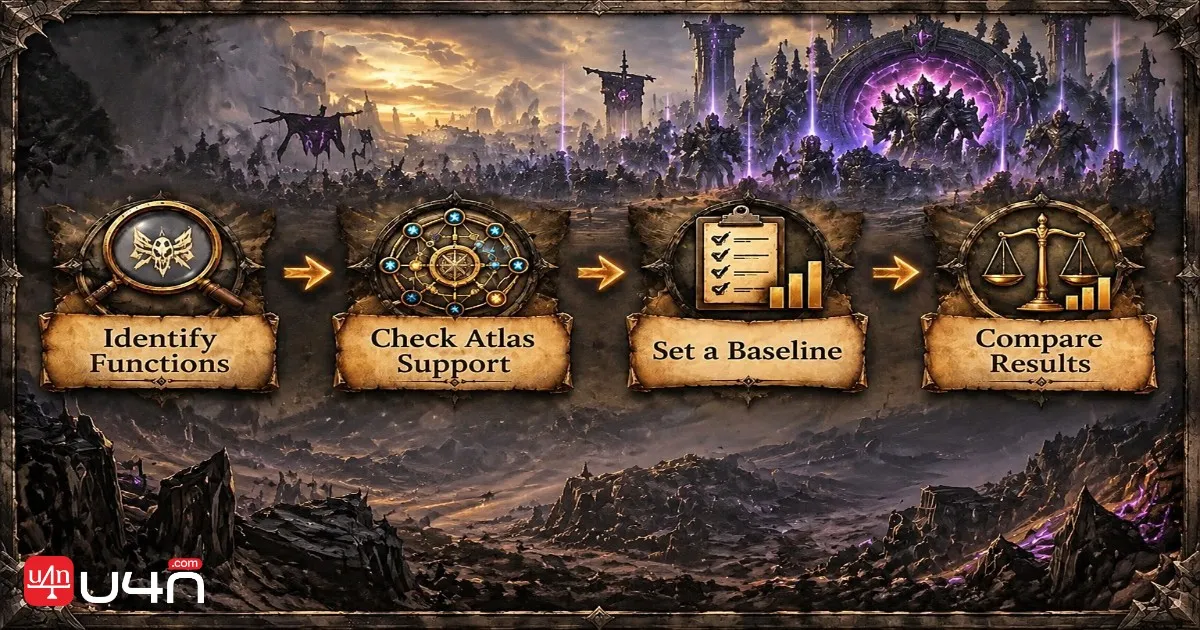
Our planning starts with the encounter we want to run. We then inspect its Atlas support and decide how much additional investment the character can handle. We would avoid rebuilding an old shopping list item by item, because its original functions need to be checked separately.
Set Up Threads Before Opening the Map
We recommend using the same preparation order throughout a testing session. Consistent preparation makes expensive mistakes easier to catch.
- Choose the mechanic you want to farm.
- Check that your Atlas allocation supports that mechanic.
- Prepare a map your character can clear comfortably.
- Review the Thread configuration shown in the Map Device.
- Check the resulting content and investment before opening portals.
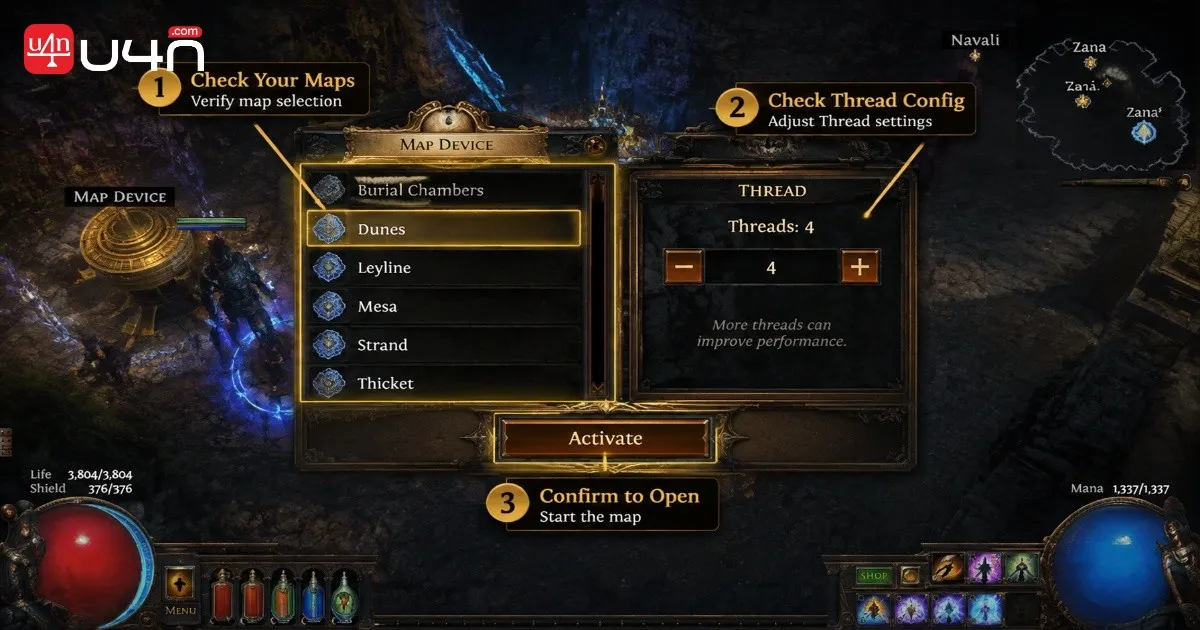
At the confirmation stage, we focus on three questions: are we adding the intended mechanic, are we spending the intended amount, and does the map contain a modifier that compromises the build?
A repeatable setup deserves particular attention after a strategy change. Before opening the next map, we recommend checking the configuration again rather than relying on what we remember selecting.
We also prefer to keep the map roll conservative during early tests. Changing the Thread investment and map difficulty together makes it harder to identify what caused a slower clear or failed encounter.
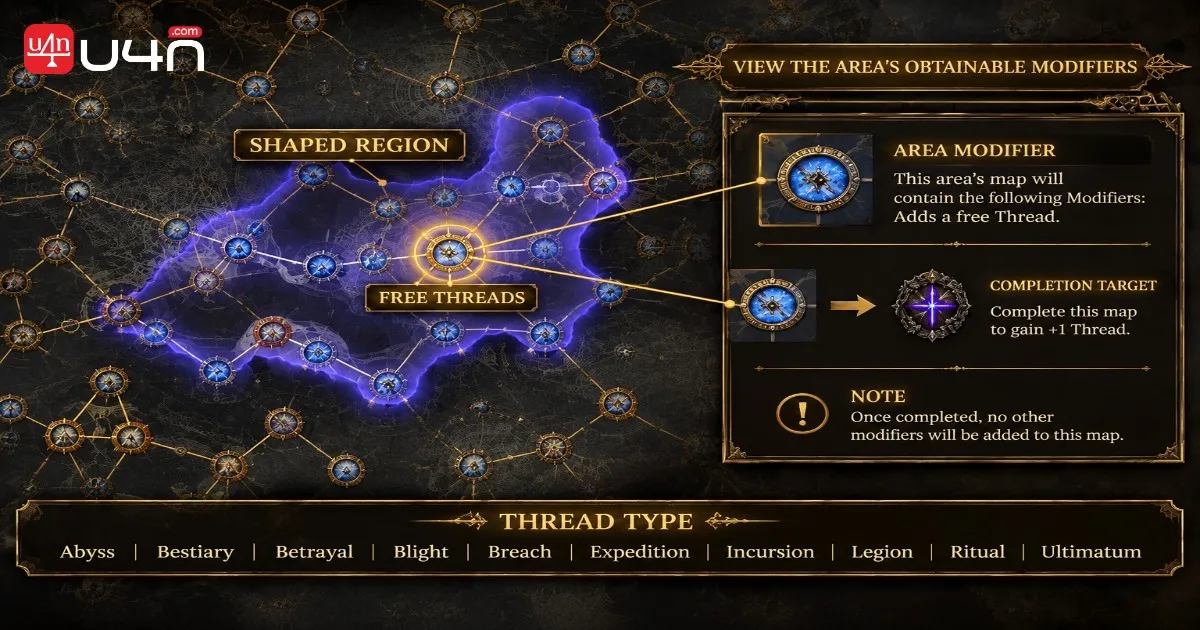
Use Frayed Threads and Shaped Regions Deliberately
We treat Frayed Threads as a source of random Threads when planning supplies. For a focused farming session, our recommendation is to sort the resulting types before preparing the map batch. This keeps the farming plan consistent instead of letting the next random result dictate the encounter.
Shaped Regions deserve a separate check. GGG confirms that their free Threads apply automatically, and that the map leaves the region after being run even if its mechanic is skipped. Mechanics associated with Threads appear through Thread spending or a matching Shaped Region rather than ordinary random spawns.
Our advice is to inspect the Atlas before buying a large batch of supplies. Include any displayed regional contribution in the setup you intend to test, and record changes between runs. A comparison becomes less useful if one batch receives different support without that difference appearing in the notes.
Rebuild a Scarab Strategy Around Its Original Functions
Before replacing an old setup, we recommend writing down what each Scarab contributed. An item name is less useful than the job it performed.
| Function in the old setup | What we check in the replacement plan |
|---|---|
| Access to the target encounter | Whether the intended mechanic is applied |
| Additional encounter rewards | Relevant Atlas support and current mechanic rules |
| Greater encounter intensity | Thread investment and the character's clear consistency |
| Extra supporting content | Its additional cost, time, and practical contribution |
| Improved map efficiency | Layout, routing, looting, and preparation time |
A Practical Legion Migration
For a former Legion strategy, we would begin with a map layout that gives the build room to reach targets efficiently. We would then allocate the intended Legion support and establish a modest Thread configuration as the baseline.
During that baseline batch, we would record whether the character reaches and clears the targets we want, how long the encounter adds to the map, and which rewards sell. A setup that produces impressive screenshots still needs a repeatable route from encounter to sale.
The next test should change only the Thread investment. Keep the build, map preparation, and Atlas allocation as consistent as practical. We want to measure the contribution of the added spending.
If the encounter starts leaving valuable targets uncleared, our recommendation is to address damage, coverage, or movement before increasing investment again. Paying for content the character cannot finish is a poor foundation for a farming strategy.
Increase Investment Only After Comparing Results
We recommend tracking completed sessions instead of judging the strategy from its luckiest map. The useful comparison includes preparation, looting, failed encounters, and selling time.
| Metric | What we record | Decision it supports |
|---|---|---|
| Entry cost | Maps, Threads, rolling currency, other consumed resources | Whether the session remains affordable |
| Total time | Preparation, mapping, sorting, and trading | Whether higher spending improves hourly return |
| Completion | Deaths, abandoned maps, unfinished encounters | Whether the character handles the setup |
| Realized revenue | Actual sales and currency collected | Whether the rewards cover the investment |
| Unsold stock | Loot still waiting for a buyer | Whether the strategy ties up too much capital |
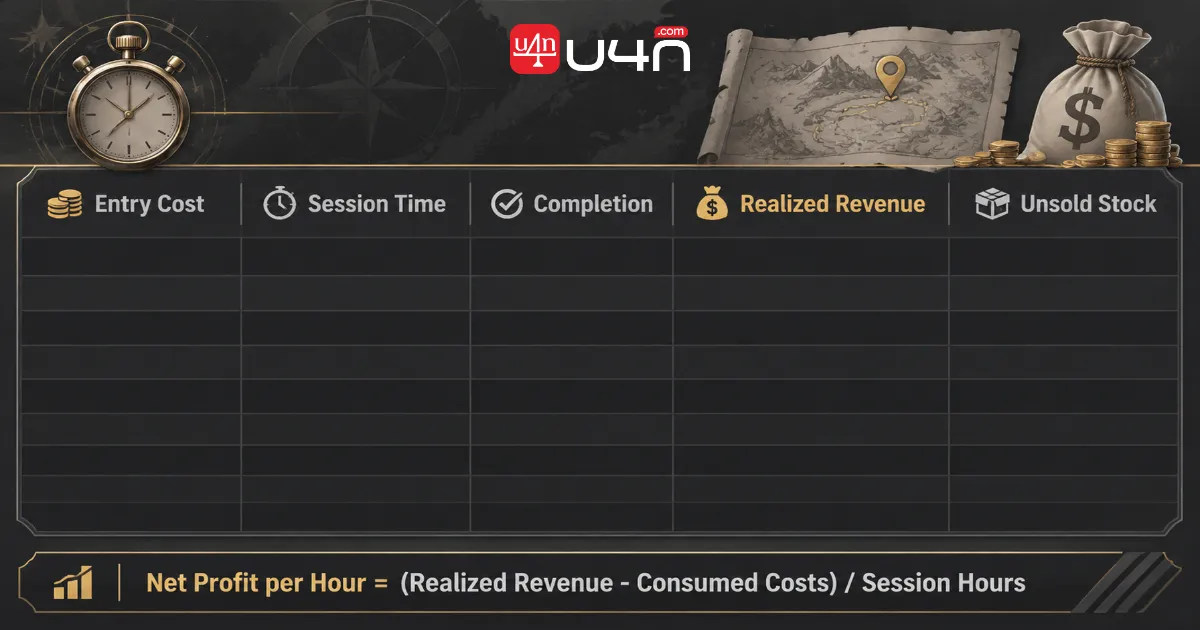
For the comparison, we use net profit per hour = (realized revenue − consumed costs) ÷ total session hours. We keep unsold stock visible in a separate column so that optimistic valuations cannot conceal a shrinking currency reserve.
Consider a hypothetical change that adds 10 chaos to the entry cost and 15 chaos to realized revenue per map. The additional margin is 5 chaos. If that change also makes the session much slower, we would compare hourly results before keeping it. These figures illustrate the calculation; they are not a claimed farming result.
We recommend reducing investment when repeated deaths, unfinished encounters, or supply costs interrupt the next batch. A lower setting gives the character room to improve while preserving enough capital to continue testing.
When reviewing Path of Exile Items for sale, we use listings only as an initial price check. For our farming ledger, we would record completed sales and the time required to obtain them, including any discount needed to move a batch.
Our Recommended Mapping Routine
We recommend choosing one mechanic, preparing a consistent map batch, checking regional contributions, and establishing a modest baseline. Increase Thread spending one step at a time, then compare completion, realized profit, and total session time. Keep the setting that funds the next batch without recurring failures or a growing pile of unsold loot.
FAQ
Should We Recreate Every Scarab Effect?
We recommend listing the functions that made the old strategy work, then prioritizing encounter access and reliable completion. Rebuild the remaining functions only when their current contribution justifies the cost.
How Many Threads Should We Start With?
Our recommendation is to begin with a modest setting and keep it consistent across the baseline batch. Raise it after the character completes the intended content reliably and the session leaves enough currency for another batch.
Should We Convert Frayed Threads Before a Farming Session?
We recommend resolving and sorting them during preparation. That gives us a clearer supply count and avoids interrupting a focused session to decide what to run next.
Should We Count Unsold Loot as Profit?
For a spending decision, we recommend keeping it separate from realized profit. Record a conservative estimate if useful, but fund the next session from currency and sales already secured.
When Should We Reduce Thread Investment?
We would step back when added spending causes repeated failures, slows the session enough to weaken hourly returns, or leaves insufficient capital for the next batch. Resume testing after addressing the specific limitation.