


The Atlas Passive Tree is receiving one of its biggest overhauls in Path of Exile 3.30 Covens of Umbra. Instead of simply adding a few new passive nodes, the update changes the overall structure of the endgame progression system. Players will have more points to allocate, a new starting position, and additional ways to influence which league mechanics appear during mapping. For anyone planning to farm efficiently, understanding these changes is just as important as preparing their POE Currency and equipment before entering the endgame.
The new Atlas Tree also changes how players approach farming strategies. Some mechanics can now be influenced through dedicated passive clusters, while others depend more heavily on Threads selection and map configuration. Our team has taken a closer look at the main changes and the new Strategy Planner to explain what players should pay attention to before building their next Atlas setup.
A Completely Reworked Atlas Passive Tree
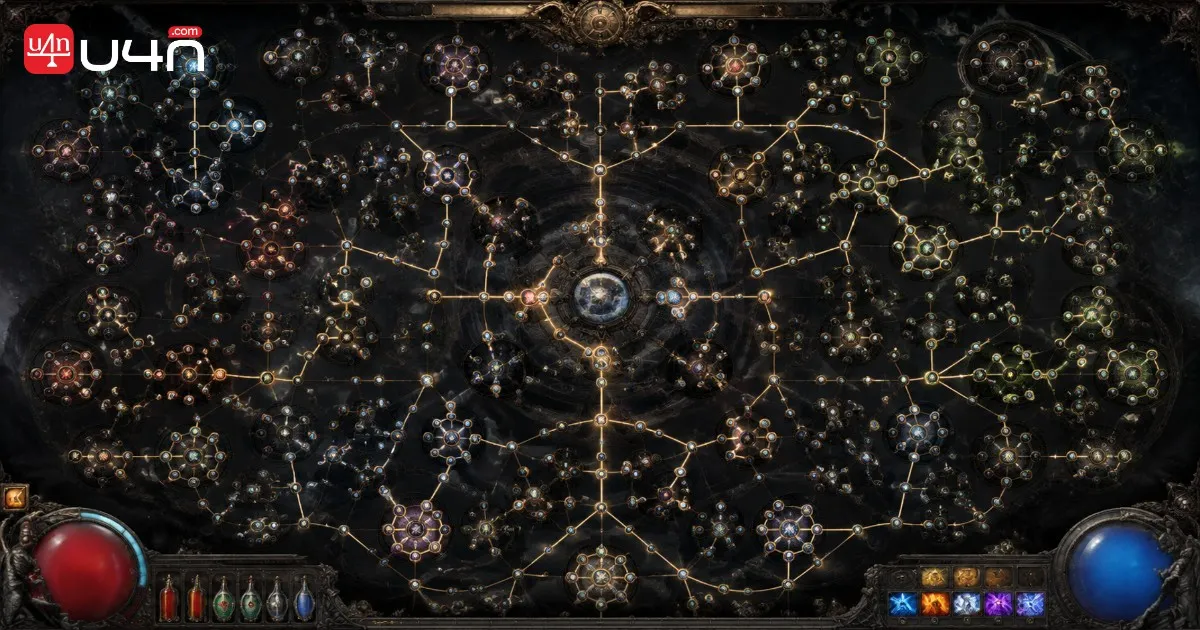
The first noticeable change is the number of available Atlas Passive Points. The new tree offers 150 points, compared with the previous 132. These additional points come from endgame progression, including defeating endgame bosses and completing Maven's Invitations.
Another major difference is the starting position. Players now begin in the center of the Atlas Passive Tree rather than following the previous starting structure. This creates a different approach to allocating points, especially when players want to reach specific outer clusters.
| Atlas Feature | Previous System | 3.30 Changes |
|---|---|---|
| Passive Points | 132 | 150 |
| Starting Position | Previous starting structure | Center of the tree |
| Node Layout | Existing arrangement | Reorganized clusters |
| Endgame Progression | Existing point sources | Additional points from endgame content |
Most familiar Atlas nodes have not disappeared. Many have simply moved to different positions, meaning returning players will need some time to become familiar with the new layout.
One detail worth watching is the availability of map modification effect nodes. These nodes are now relatively scarce and distributed across different areas of the tree. Players who previously built their strategies around map modifiers may need to reconsider their passive routes.
How Secondary League Mechanics Affect Mapping
One of the most important changes involves Secondary League Mechanics. These are mechanics that do not have associated Threads, and their appearance in maps can be influenced by dedicated Atlas Passive Tree nodes.
To reach the outer sections of the new tree, players need to allocate several nodes that increase the chance of encountering these secondary mechanics. This means that passive allocation is no longer just about reaching a powerful cluster. Players must also consider which encounters they want to see more frequently while mapping.
The available secondary mechanics include:
- Ore Deposit
- Strongbox
- Mercenary
- Rogue Exile
- Essence
- Sacred Flora
- Tormented Spirit
- Imprisoned Monster
- Shrine
With enough passive points invested, players can guarantee at least one Secondary League Mechanic encounter in their maps.
From our team's perspective, this creates an interesting opportunity for more specialized farming setups. Rather than spreading points across unrelated bonuses, players can prioritize mechanics that match their preferred mapping style and loot targets.
However, increasing the appearance chance of a mechanic should not be confused with directly improving its rewards. Players still need to consider their overall Atlas configuration and how each encounter fits into their farming plan.
Threads and Multi-Choice Nodes Explained
Threads are another important part of the redesigned Atlas system. The new tree includes multiple-choice nodes that allow players to influence which Threads are more likely to drop.
This gives players more control over their farming direction. Instead of treating every map encounter as an isolated opportunity, they can plan their Atlas allocation around the types of Threads they want to obtain.
The important distinction is that these nodes influence drop chances rather than guaranteeing a particular Thread. Players should therefore avoid building an entire strategy around the assumption that a specific Thread will always be available.
Tertiary League Mechanics work differently. The Atlas Passive Tree allows players to increase their chance of encountering these mechanics, but it cannot guarantee their appearance through passive allocation alone.
Some of the listed tertiary mechanics include:
- Mirror of Delirium
- Demonic Evocator
- Viridian Wildwood
- Mirage
- Buried Sentinel

For players planning specialized farming routes, this distinction matters. Secondary mechanics offer a more predictable encounter structure once enough points are invested, while tertiary mechanics retain an element of uncertainty.
Our recommendation is to build around the mechanics you can influence consistently first, then treat additional encounters as potential bonuses rather than guaranteed parts of your farming income.
New Keystone: Steadfast Conviction
One of the more interesting additions to the Atlas Passive Tree is the new Keystone named Steadfast Conviction in the supplied update information.
Its effects introduce a different way to manage Threads:
- Adds two free Threads to your map.
- Allows you to apply only one type of Threads.
- Converts 75% of found Threads into Gold.
The main attraction is the additional Threads provided without requiring the same type of selection as a conventional setup. However, the restriction on applying Threads types means players need to think carefully before allocating this Keystone.
The Gold conversion is another important consideration. Players who value Gold accumulation may find the effect useful, but the conversion also changes how they approach collecting and managing Threads.
We would not recommend treating this Keystone as an automatic choice for every farming strategy. Its value depends on whether the additional map Threads and Gold conversion fit your preferred progression goals.

Building Better Farming Strategies With Strategy Planner
A redesigned Atlas Tree is only useful if players can turn its available options into a workable farming strategy. This is where the updated Strategy Planner becomes particularly helpful.
The tool allows players to explore the new Atlas layout, experiment with passive allocations, and share their farming plans with the community.
Some of its main features include:
| Feature | Purpose |
|---|---|
| Edit and View Modes | Switch between modifying a strategy and previewing its final appearance |
| Auto-pathing | Automatically optimize the route between selected passive nodes |
| Leveling Path | Display passive allocations step by step |
| Public or Private | Choose whether other players can access the strategy |
| Save Strategy | Keep your farming configuration for later use |
| Strategy Rating | Provide an objective rating for a published strategy |
Players can also add a short introduction explaining what their strategy is designed to accomplish.
When creating a farming plan, we suggest paying attention to three additional details:
Recommended Maps
Choose maps that fit the mechanics and farming approach you want to prioritize.
Threads and Eldritch Altars
Include your preferred selections so other players can understand how the strategy is intended to work.
Expected Loot
Explain what players can realistically expect to collect. This makes a strategy more useful to people deciding whether it matches their goals.

The ability to switch between Edit and View modes is especially useful. A strategy might look organized while you are allocating nodes, but the final presentation is what other players will actually use when following your setup.
For players comparing different farming approaches, a well-organized planner can save considerable preparation time. It also makes it easier to compare community strategies before investing valuable passive points.
The updated Build Planner is another useful improvement, with a more user-friendly interface. The development team is also working on updating its Build Guides and League Starter Tier List ahead of the league launch. Players who are still preparing their characters can use these resources alongside their Atlas planning, while those looking for cheap Path of Exile Items should make sure their equipment choices support the farming strategy they intend to follow.
Summary: Prepare Your Atlas Strategy for 3.30
The Path of Exile 3.30 Atlas Passive Tree overhaul changes more than the number of available passive points. The new central starting position, reorganized clusters, secondary mechanic allocation, Threads selection, and Steadfast Conviction Keystone all create new considerations for endgame mapping.
Our team recommends familiarizing yourself with the new tree before committing to a farming route. Start by identifying the mechanics you want to prioritize, then consider how Threads and additional Keystone effects fit into your setup.
Most importantly, do not assume that every increased encounter chance represents a guaranteed spawn. Understanding the difference between secondary and tertiary mechanics will help you build a more realistic strategy and avoid wasting passive points.
The updated Strategy Planner should also make preparation easier, especially for players who want to test different Atlas configurations or share their setups with other members of the community.
FAQ
How many Atlas Passive Points are available in Path of Exile 3.30?
The new Atlas Passive Tree provides 150 points, compared with 132 in the previous system. Additional points come from endgame activities such as defeating endgame bosses and completing Maven's Invitations.
Where do players start on the new Atlas Passive Tree?
Players now start from the center of the tree. They need to allocate connecting nodes to reach different outer sections and specialized passive clusters.
Can the Atlas Passive Tree guarantee Tertiary League Mechanics?
No. Players can increase the chance of encountering tertiary mechanics, but passive allocation alone cannot guarantee that they appear in a map.
What does Steadfast Conviction do?
The Keystone adds two free Threads to maps, restricts players to applying one type of Threads, and converts 75% of found Threads into Gold.
What is the Strategy Planner used for?
It allows players to create, edit, save, and share Atlas farming strategies. It also includes Auto-pathing, Leveling Path, map recommendations, Threads selections, and Eldritch Altar configuration.