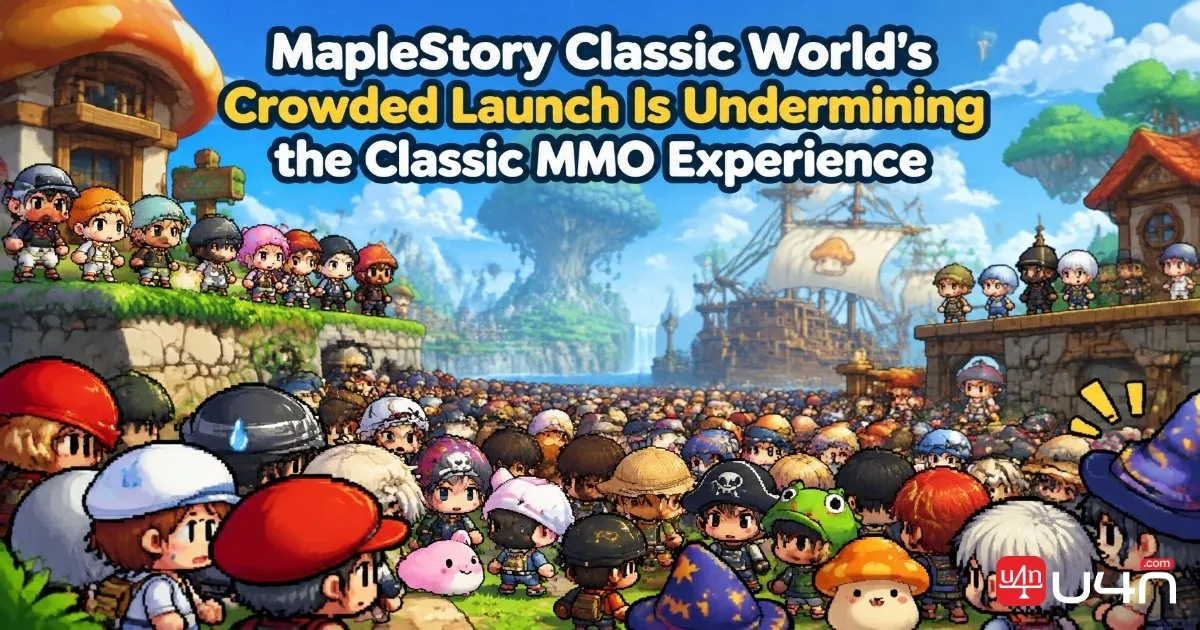
We've waited a long time for MapleStory Classic World to bring back the slower progression, familiar maps, and social adventures that made the original game memorable. Founders Access finally made that possible, but the early experience has exposed a frustrating problem: a game can attract plenty of players and still struggle to deliver the experience those players came for. Even the appeal of building wealth through MapleStory Classic World Mesos loses some of its charm when crowded maps make basic progression feel like a constant competition.
The problem isn't that the game feels too much like old-school MapleStory. In many ways, its familiar quests, monster hunting, and progression systems are exactly what returning players wanted. The issue is that these systems depend on having enough room to play. When nearly every viable training map becomes contested, the freedom to explore and progress at your own pace starts to disappear. Our team sees this as more than a rough launch: it's a test of whether the game's infrastructure can support the classic experience it promises.
High player numbers can make an MMO feel alive, but when players cannot find enough room to hunt, quest, or socialize, population becomes a bottleneck instead of an advantage.
When Every Training Map Becomes a Bottleneck
The biggest frustration during Founders Access is the lack of breathing room on Victoria Island. Popular training spots are crowded, but even smaller connecting maps and less obvious hunting areas can struggle to accommodate the number of players looking for monsters and quest items.
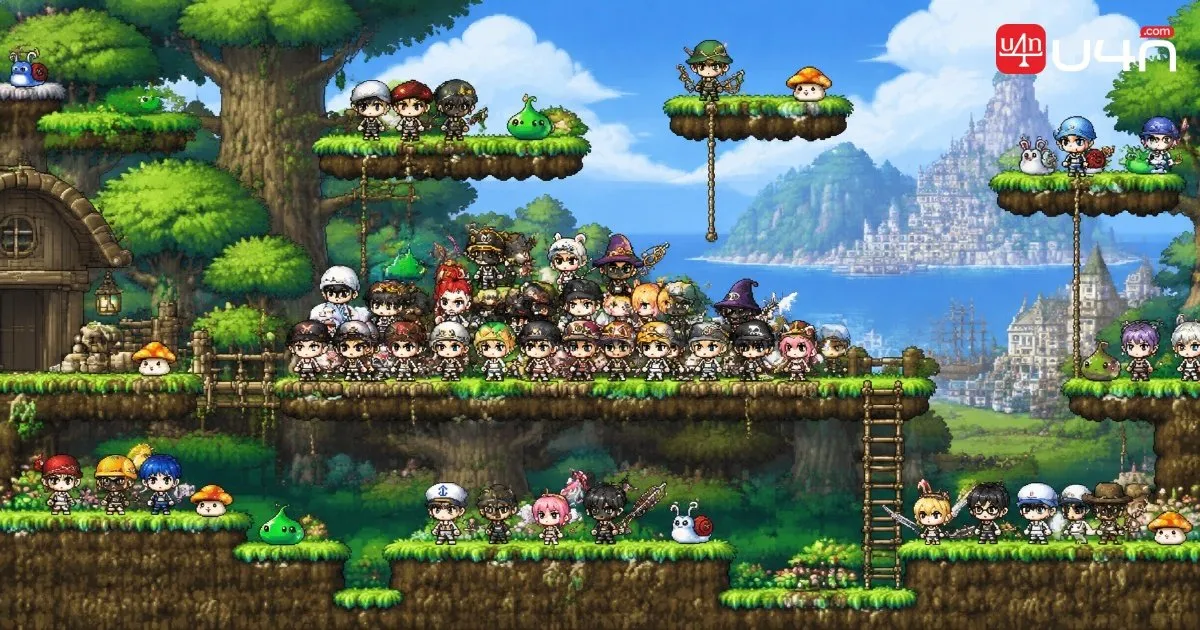
This creates a problem that simple channel switching cannot always solve. Moving to another channel only helps when that channel has enough available space. If the same areas are packed everywhere, players end up repeating the same cycle: search for a map, compete for spawns, lose time, and move again. Nexon explains that channels are separate game instances and that players can switch to a less-populated channel when one is crowded in its guide to worlds and channels.
The impact varies by class. Characters with ranged attacks or tools that make tagging monsters easier may have an advantage, while classes that depend on closer positioning can struggle to secure kills. That difference matters because early progression is supposed to teach players how their characters work, not force them to fight other players for every available monster.
| Problem | Impact on players | What needs attention |
|---|---|---|
| Crowded training maps | Fewer uncontested monsters and slower progression | Population distribution and available hunting space |
| Limited channel relief | Switching channels fails to solve the problem | Channel capacity and player distribution |
| Contested quest targets | Longer waits for required drops | Quest accessibility and target availability |
| Class-dependent tagging | Some classes secure kills more easily than others | Map layouts and practical class balance |

The important distinction is that population alone does not determine whether a map is playable. Monster density, spawn rates, map layout, player distribution, and the number of viable alternatives all contribute to the experience.
A crowded town can make an MMO feel alive. A crowded training map can make it feel broken when players spend more time waiting for an opportunity to attack than actually fighting.
Why More Players Can Mean Less Social Interaction
Classic MapleStory has always involved waiting, grinding, and sharing maps. Veteran players remember crowded hunting grounds, informal parties, and conversations between respawns. That nostalgia is part of the appeal, but there is a meaningful difference between sharing a map and competing for nearly every monster on it.
When players have enough room to move, they can explore different platforms, adjust their routes, experiment with their skills, and occasionally stop to chat. These small interactions make repetitive grinding feel less mechanical.
When every monster becomes a contested resource, the incentives change. A player who pauses to answer a message risks losing kills and experience. Someone looking for a party may discover that everyone is too focused on maintaining their position to socialize.
This creates a feedback loop:
- Crowded maps increase competition for monsters.
- Competition makes uninterrupted grinding feel more valuable.
- Players become less willing to pause, explore, or interact.
- The game becomes busier without necessarily becoming more social.
Our team believes this is one of the most important distinctions between a healthy MMO population and overcrowding. High player numbers can support a lively community, but only when the underlying systems give players room to interact without constantly sacrificing progression.
Party play illustrates the same issue. Groups can improve experience efficiency, but their advantage depends on the map and the number of competing players. If several parties are fighting over a small number of spawns, the benefits of grouping can quickly diminish.
The goal should not be to eliminate competition. Competition is part of the classic experience. The goal is to prevent it from becoming the only meaningful activity available on a map.
The In-Game Economy Needs More Than Time to Stabilize
Population pressure is not the only concern during a new MMO launch. The early economy can also change quickly as players accumulate currency, valuable equipment, and tradable items.
At first, many players have limited funds and few established trading routes. As progression continues, more currency enters circulation, demand for important items increases, and prices begin to reflect the priorities of a growing player base. That process is normal in a developing economy, but it can become harder to manage when abnormal currency generation, bots, or unauthorized selling enter the picture.
The original player account raises concerns about suspected currency inflation and the growing influence of real-money transactions. Those concerns deserve attention, but individual price increases do not establish the cause. A convincing assessment would require broader market data and confirmation of any reported currency-related bug.
| Economic pressure | Why it matters |
|---|---|
| Currency inflation | Rising prices can reduce the purchasing power of ordinary players |
| Valuable consumables and scrolls | Higher costs can make equipment progression more difficult |
| Botting and unauthorized currency sales | Automated farming and external trading can distort supply and demand |
| Tradable cash-shop items | Real-money purchases may create additional routes into the in-game economy |
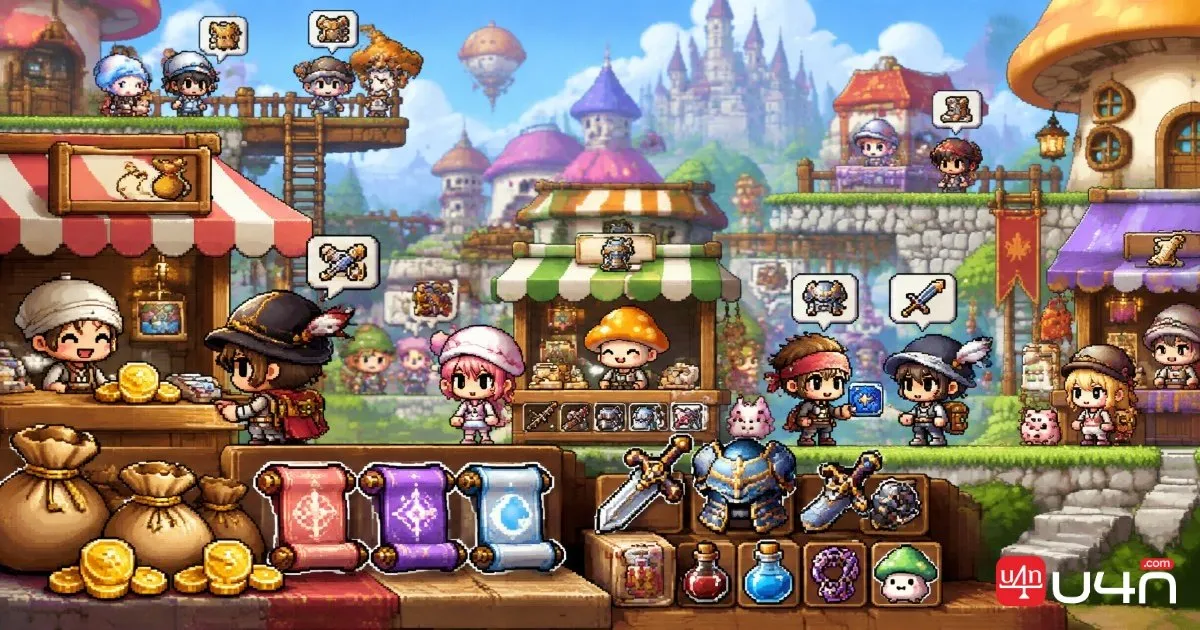
The key question is whether players can still make meaningful progress through normal gameplay. A functioning economy should reward farming, trading, and market knowledge without making essential upgrades feel inaccessible to anyone who does not spend heavily.
Nexon should monitor unusual currency creation, investigate suspicious trading patterns, and communicate clearly when economic issues are confirmed. If a bug has affected the currency supply, correcting the underlying cause matters more than simply reacting to individual price movements.
The early market will naturally evolve. The challenge is ensuring that its development does not undermine the progression loop that makes classic MapleStory rewarding in the first place.
Cash-Shop Cosmetics Should Respect the Classic Visual Identity
The Founders Access cosmetics raise a different question: how much visual change can a classic game absorb before it stops feeling classic?
The concern is not simply whether a particular outfit looks attractive. Players can disagree about fashion without either side being wrong. The more practical issue is the intensity of the visual effects surrounding certain cosmetics, including prominent glow effects and oversized decorative elements.
MapleStory's pixel-art presentation relies on relatively simple silhouettes, readable environments, and recognizable character designs. When cosmetic effects dominate the screen, they can compete with the scenery and make the world feel visually busier than intended.
This does not mean the game should avoid premium cosmetics. Monetization and visual consistency can coexist, provided players retain some control over how those cosmetics appear.
Three considerations are especially important:
- Visual readability: Effects should not unnecessarily obscure characters, monsters, platforms, or combat information.
- Player choice: Optional settings to hide or reduce other players' cosmetic effects would help accommodate different preferences.
- Artistic consistency: New outfits can be distinctive without overwhelming the original pixel-art style.
Founders have paid for access and cosmetic rewards, so there is a legitimate reason to let those items stand out. However, visual prominence should not come at the expense of the shared game world. A well-designed option to reduce cosmetic effects could address much of this tension without removing the items themselves.

What Nexon Should Prioritize Next
The most effective response is not necessarily to add as many channels as possible. More channels can help, but only if they meaningfully distribute players and give them access to viable training areas.
We would prioritize the following measures.
First, improve population distribution. Monitor where players are concentrated, identify persistent bottlenecks, and make sure channel changes provide a realistic chance of finding available maps.
Second, expand practical training options. Alternative maps need to offer appropriate monster levels, useful experience rates, and accessible routes. Simply directing players toward less popular areas will not work if those areas are inefficient or unsuitable for their level.
Third, review early-game progression. Quests that depend on specific monster drops should remain reasonably accessible under heavy population pressure. Where necessary, Nexon should evaluate whether target availability and quest design are creating avoidable bottlenecks.
Fourth, protect the economy. Investigate confirmed currency exploits, enforce rules against bots and unauthorized selling, and provide clear communication about material economic disruptions.
Finally, preserve player choice in presentation. Cosmetic effect controls would help players enjoy the rewards they want without forcing everyone to accept the same visual intensity.
These measures address different problems, so they should not be treated as interchangeable. More training space will not fix currency inflation, and stronger bot enforcement will not resolve a map that simply cannot support its population.
The priority should be to identify the most severe bottlenecks, measure whether changes improve the actual player experience, and adjust accordingly.
Summary
MapleStory Classic World has the familiar foundations that returning players hoped to see, but its early Founders Access experience shows how easily those foundations can be undermined by problems surrounding them.
Overcrowded training maps reduce the freedom to move and progress. Constant competition can discourage the casual conversations and spontaneous group play that make an MMO feel like a community. Meanwhile, economic uncertainty and visually intrusive cosmetics raise separate questions about fairness, monetization, and the preservation of the classic identity.
None of these concerns proves that the game is doomed. Early-launch conditions can change, and a growing player base can become an advantage when the game provides enough space and stable systems to support it.
What matters now is how Nexon responds. The strongest outcome would not be a less populated world, but one where players can find suitable training spots, earn currency through meaningful gameplay, socialize without constantly sacrificing progress, and enjoy the original visual style on their own terms.
That is the standard a classic MMO should aim for: not simply recreating the appearance of the past, but making its core gameplay work for the players who have returned.
FAQ
Can adding more channels solve MapleStory Classic World's overcrowding?
It can help by distributing players across more instances, but it is not a complete solution on its own. Results depend on how players are distributed, whether alternative maps are viable, and whether popular training areas can support the demand.
Why does overcrowding affect some classes more than others?
Classes differ in attack range, mobility, attack speed, and how easily they can secure monster kills. In a heavily contested map, those differences can become more significant because players have fewer opportunities to attack uncontested monsters.
Does a crowded launch mean the game's economy will become pay-to-win?
No. A crowded launch and an unstable economy are separate issues. Determining whether monetization creates a meaningful competitive advantage requires examining cash-shop trading rules, currency supply, item prices, and how much progression depends on paid resources.
What should players do while popular maps remain crowded?
Explore alternative training areas, consider party play where it improves overall efficiency, and prioritize quests that can be completed without prolonged competition. Players should compare actual progression rates rather than assuming the most popular map is automatically the best choice.
For returning players comparing the evolving classic economy with the broader market surrounding MapleStory GMS Mesos, the important distinction is that each game environment has its own progression rules, supply conditions, and trading dynamics. The real measure of success for Classic World will be whether its own systems let ordinary players progress without making every session feel like a race for scarce resources.