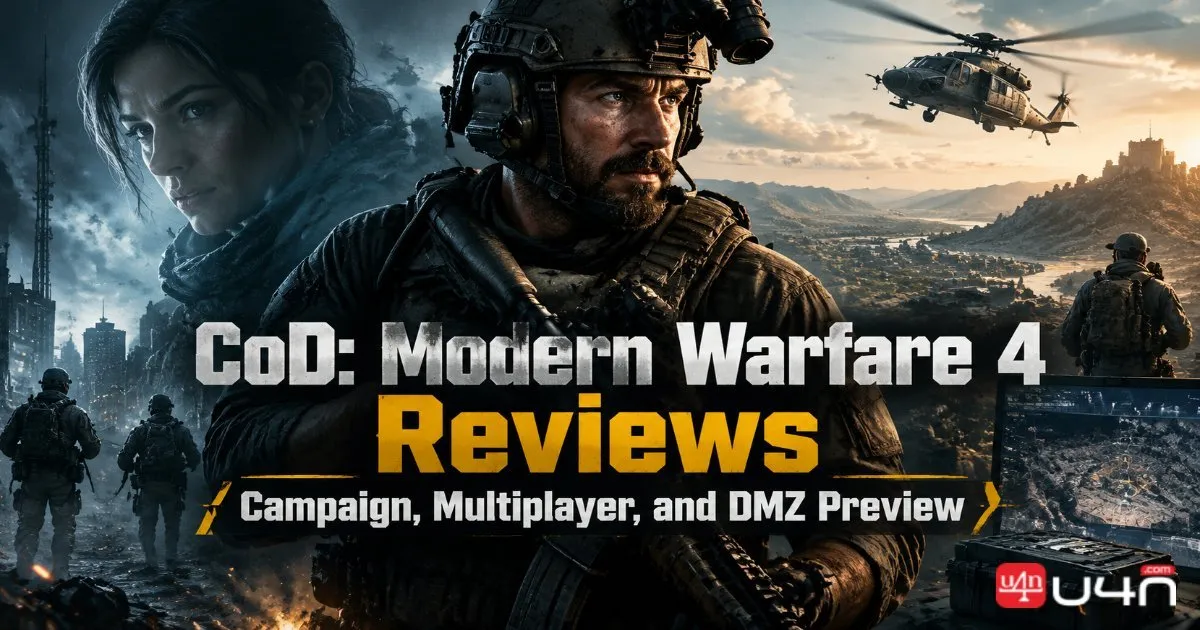
Call of Duty: Modern Warfare 4 (MW4) is generating strong interest ahead of its October 23, 2026, launch. Based on the supplied early review coverage, beta feedback, and developer previews, the game appears to be making significant improvements to the single-player campaign while expanding multiplayer and DMZ into more distinct gameplay experiences.
The campaign has attracted praise for its cinematic storytelling, dual narrative structure, and darker tone. Multiplayer has received positive feedback for its responsive gunplay and weapon customization, although controversial map designs and unpredictable spawns remain concerns. Meanwhile, the revamped DMZ mode is emerging as one of the game's most promising features, with persistent progression, crafting, and dedicated extraction-shooter mechanics.
For players deciding whether to buy Modern Warfare 4, the central question is whether its strong core gameplay can deliver a consistent experience across all three major modes.
Modern Warfare 4 Campaign Reviews: Early Critical Reception
The MW4 campaign is being described in the supplied review summaries as a substantial improvement over Modern Warfare III and a strong successor to the 2019 Modern Warfare reboot.
Reviewers have highlighted the campaign's pacing, cinematic presentation, and willingness to explore darker moral themes. Its two interconnected storylines provide different perspectives on the conflict, helping the narrative move beyond a conventional military action plot.
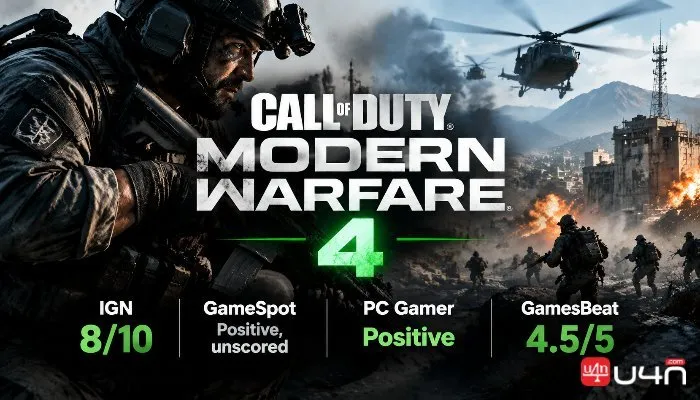
Modern Warfare 4 review scores and verdicts
| Reviewer or outlet | Rating | Main takeaways |
|---|---|---|
| IGN | 8/10 | Strong mission variety and consistency; criticized melee mechanics and the absence of a standout mission comparable to “All Ghillied Up” |
| GameSpot | Positive, unscored | Praised the interwoven storylines and South Korean perspective; found the final boss encounters underwhelming |
| PC Gamer | Positive | Appreciated the blockbuster action and recommended playing the campaign; noted weaknesses in Captain Price's storyline |
| GamesBeat | 4.5/5 | Praised Infinity Ward's willingness to take risks; observed that some open-world elements did not integrate smoothly with the narrative |
Editorial note: These ratings and review summaries reflect the supplied material and have not been independently verified.
The overall picture is encouraging. MW4 appears to prioritize mission variety, emotional stakes, and narrative cohesion rather than relying entirely on familiar Call of Duty action sequences. However, criticism of the final encounters suggests that the campaign's execution may weaken as it approaches its conclusion.
MW4 Campaign Story: Two Interconnected Narratives
One of the most notable changes in Modern Warfare 4 is its dual narrative structure. The campaign follows two major storylines, each offering a different perspective on the wider conflict.
Captain Price's hunt for Makarov
Captain Price continues his increasingly personal pursuit of Makarov. The storyline adopts a darker tone, exploring revenge, difficult decisions, and the consequences of operating in morally ambiguous circumstances.
This approach appears to build on the grounded atmosphere of Modern Warfare (2019). However, some early criticism suggests that Price's chapters occasionally feel more procedural than emotionally compelling, with familiar story beats taking precedence over character development.
Park and the North Korean invasion
The second storyline follows Park, a South Korean soldier caught in a brutal North Korean invasion.
This perspective has emerged as one of the campaign's most distinctive elements. It broadens the narrative beyond the familiar central cast and introduces a more immediate focus on survival, loyalty, and civilian suffering.
The North Korean chapters reportedly include difficult moral decisions involving civilians and suspected traitors. Rather than immediately ending the mission when players make uncomfortable choices, the game allows those decisions to remain part of the experience.
This design could make the campaign more emotionally challenging than a traditional military shooter. It also creates an opportunity for MW4 to explore the difference between following orders and making independent moral judgments.
Open Missions: A Different Approach to Open Combat
Modern Warfare 4 reportedly introduces a large, bespoke open mission area that combines exploration with more structured objectives.
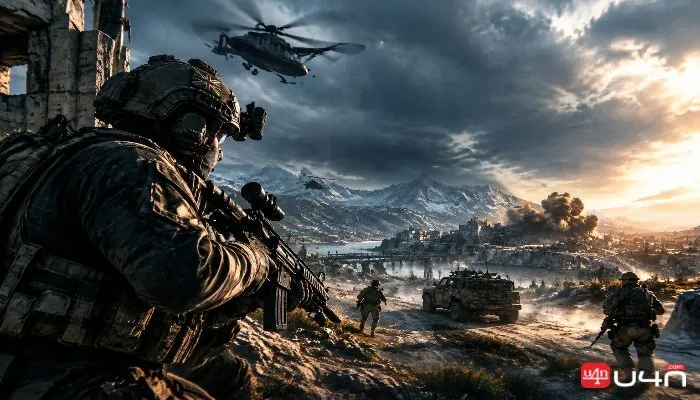
Unlike the open combat missions criticized in Modern Warfare III, the new design centers on a substantial map with a safehouse serving as the player's operational base. Players can gather equipment, search for resources, and approach three major objectives in different orders.
| Open-mission feature | Reported implementation |
|---|---|
| Mission structure | Three major objectives |
| Objective order | Player-selected |
| Starting base | Safehouse cabin |
| Exploration | Foraging and equipment collection |
| Navigation | Optional fast travel |
| Design approach | Open-ended gameplay combined with a directed story |
The ability to tackle objectives in a preferred order could improve replayability and allow players to experiment with different tactical approaches.
Optional fast travel is also a useful design decision. Players who enjoy exploring can spend more time searching the map, while those who prefer a tightly paced campaign can move between objectives more efficiently.
The key challenge will be ensuring that the open environments feel connected to the narrative. As the supplied GamesBeat assessment suggests, open-world mechanics can undermine dramatic momentum when they feel disconnected from the story.
Mads Mikkelsen as The Archer
Another major talking point is the reported appearance of Mads Mikkelsen as The Archer, a secondary antagonist.
Known for portraying calculating and unsettling characters, Mikkelsen appears well suited to a villain who relies on psychological pressure as much as direct confrontation. Early impressions describe his performance as menacing, with comparisons to the theatrical antagonists of spy thrillers.
However, reports that the character receives limited screen time raise questions about how fully the campaign develops him.
A compelling antagonist can strengthen a military shooter's narrative by providing a clear ideological and emotional counterpoint to the protagonist. If The Archer's role is too brief, even a strong performance may struggle to achieve its full impact.
Modern Warfare 4 Multiplayer: Gunplay, Weapons, and Map Concerns
Multiplayer appears to be one of MW4's most divisive components. Early beta feedback points to responsive shooting mechanics and extensive customization, but concerns about map layouts and spawn behavior remain prominent.
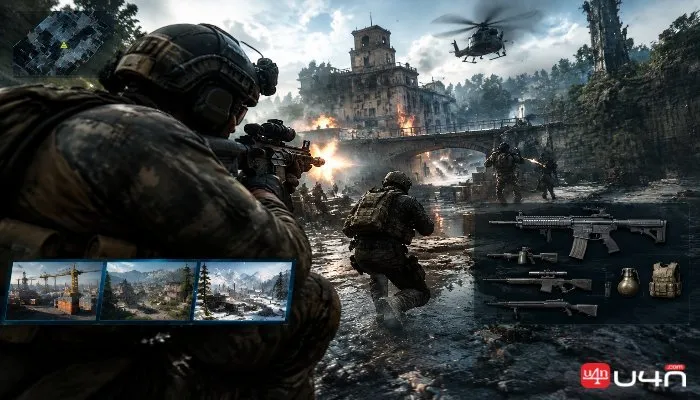
The reported removal of randomized hipfire bloom is particularly significant. More predictable weapon behavior can make gunfights feel consistent and reward player accuracy, positioning, and recoil control.
Reported multiplayer features
| Feature | Reported details |
|---|---|
| Launch weapon roster | 33 weapons |
| Gunsmith | More than 500 attachments |
| Hipfire mechanics | Randomized bloom removed |
| Balance changes | Weapon damage, movement speed, and aim assist adjusted |
| Map concerns | Chaotic layouts and inconsistent spawns |
| Dynamic map | Kill Block changes its physical layout during matches |
The large attachment pool could support a wide range of builds, from close-range configurations to precision-focused weapons. However, customization depth is only valuable when the underlying balance allows different setups to remain viable.
Infinity Ward's reported adjustments to damage, movement, and aim assist suggest an effort to address beta feedback before launch.
Why multiplayer map design is controversial
Several maps, including Transit 213, have reportedly drawn criticism for chaotic combat flow and spawn points that can expose players to immediate elimination.
Poor spawn logic can undermine even excellent gunplay. When players repeatedly die before they have a meaningful opportunity to react, matches feel random rather than competitive.
The reported claustrophobic layouts are another concern. Small, congested environments can encourage constant engagements, but they may also reduce the importance of positioning and tactical decision-making.
Kill Block introduces a different design challenge. Its modular layout changes during matches, forcing players to adapt to new sightlines and routes.
Supporters may appreciate the unpredictability, while players who prefer learning consistent map layouts may find the changing geometry frustrating. Its success will depend on whether the changes create meaningful tactical decisions rather than unnecessary confusion.
MW4 DMZ: A Standalone Extraction-Shooter Experience
The revamped DMZ mode may be Modern Warfare 4's most ambitious addition.
According to the supplied preview material, Infinity Ward is treating DMZ as a substantial game mode with its own progression systems, persistent equipment management, crafting, and narrative-driven missions.
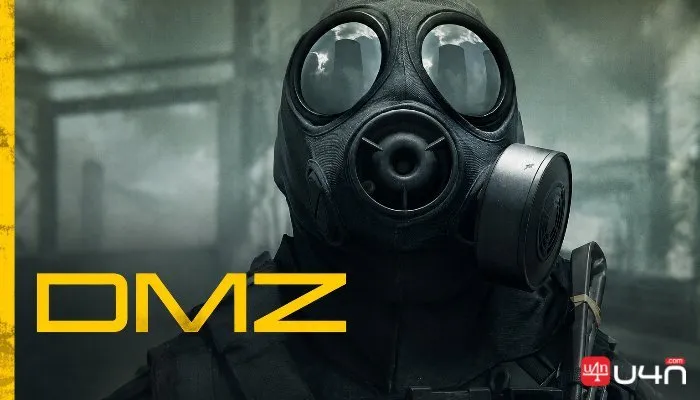
The experience takes place in the Hajin Exclusion Zone, where players operate behind enemy lines and attempt to complete objectives while managing the risks of hostile encounters.
Rather than functioning as a lightweight companion to multiplayer, this version of DMZ reportedly aims to provide a dedicated extraction-shooter loop.
DMZ gameplay features
| Feature | How it works |
|---|---|
| Main location | Hajin Exclusion Zone |
| Progression | Independent leveling and Prestige systems |
| Player hub | Personalized Forward Operating Camp |
| Equipment management | Persistent stash |
| Crafting | In-game materials used to manufacture equipment |
| Crafting station | 3D printer |
| Character development | Talent trees |
| Missions | Narrative-driven objectives |
| Combat | PvP and PvE encounters |
The Forward Operating Camp acts as a personalized hub where players can prepare for deployments and manage their resources. The persistent stash gives collected equipment longer-term value, while the crafting system encourages players to search for specific materials during missions.
Reported craftable equipment includes plate carriers, medkits, and ammunition. This creates a meaningful connection between exploration and survival: resources are not simply optional collectibles but potential inputs for future deployments.
Why DMZ could have the longest lifespan
Extraction shooters depend on risk and reward. Players must decide whether to pursue additional objectives, search for valuable supplies, or leave the map before losing important equipment.
Talent trees and narrative-driven missions could add further reasons to return, while separate progression systems give DMZ an identity beyond standard multiplayer matches.
The PvP and PvE combination could also create unpredictable encounters. Players may need to cooperate temporarily, avoid other squads, or engage in combat while dealing with AI-controlled enemies.
These features could make DMZ a major long-term attraction. Nevertheless, the quality of its launch experience will depend on server stability, matchmaking, progression balance, and whether losses feel challenging rather than unfair.
Modern Warfare 4 Campaign vs. Multiplayer vs. DMZ
Each major mode appears to target a different audience.
| Category | Campaign | Multiplayer | DMZ |
|---|---|---|---|
| Main attraction | Cinematic storytelling | Competitive gunfights | High-risk extraction |
| Progression focus | Story and missions | Weapons and customization | Persistent gear and independent progression |
| Main strength | Narrative variety | Responsive gunplay | Survival and resource management |
| Primary concern | Underwhelming finale | Map design and spawns | Long-term balance and stability |
| Best suited for | Story-focused players | Competitive players | Tactical, cooperative, and extraction-focused players |
The campaign appears to be the most immediately polished component based on the supplied reception. Multiplayer has a strong mechanical foundation but faces questions about map design, while DMZ has substantial potential if its progression and extraction systems work as intended.
For players who mainly want a single-player experience, the campaign's pacing and darker narrative may be the strongest reason to consider MW4. Competitive players should pay particular attention to launch map adjustments, while extraction-shooter fans may find DMZ the most compelling feature.
Is Modern Warfare 4 Worth Watching Before Launch?
With the official launch scheduled for October 23, 2026, the supplied early assessments suggest that MW4 could deliver a stronger overall package than its predecessor.
The campaign's dual storylines and more flexible missions offer meaningful changes to the familiar formula. Multiplayer appears to retain the responsive gunplay associated with the series, although map flow and spawn reliability need close attention. DMZ could become the game's most enduring mode if its crafting, progression, and survival mechanics deliver sufficient depth.
Players researching launch impressions, loadouts, and progression guides may also encounter searches such as COD4 Boosting. Before using any boosting service, players should review the game's official terms and account-security guidance, since unauthorized account access, third-party software, or prohibited progression manipulation may risk account penalties.
What to Expect From Modern Warfare 4 on October 23
Modern Warfare 4 is shaping up to be a potentially significant entry in the franchise, with three distinct pillars: a darker single-player campaign, skill-focused multiplayer gunplay, and a more comprehensive DMZ extraction experience.
The campaign's emotional stakes and mission variety are promising, although the reported shortcomings of its final encounters deserve attention. Multiplayer's success may depend on how quickly the developers address problematic maps and spawn behavior. DMZ, meanwhile, has the potential to offer a more persistent and replayable experience than earlier versions of the mode.
The October 23, 2026, launch will provide the opportunity to assess these elements in the complete game. Until then, the most useful approach is to treat early impressions as a guide to the game's direction rather than a substitute for verified launch reviews and sustained player feedback.