

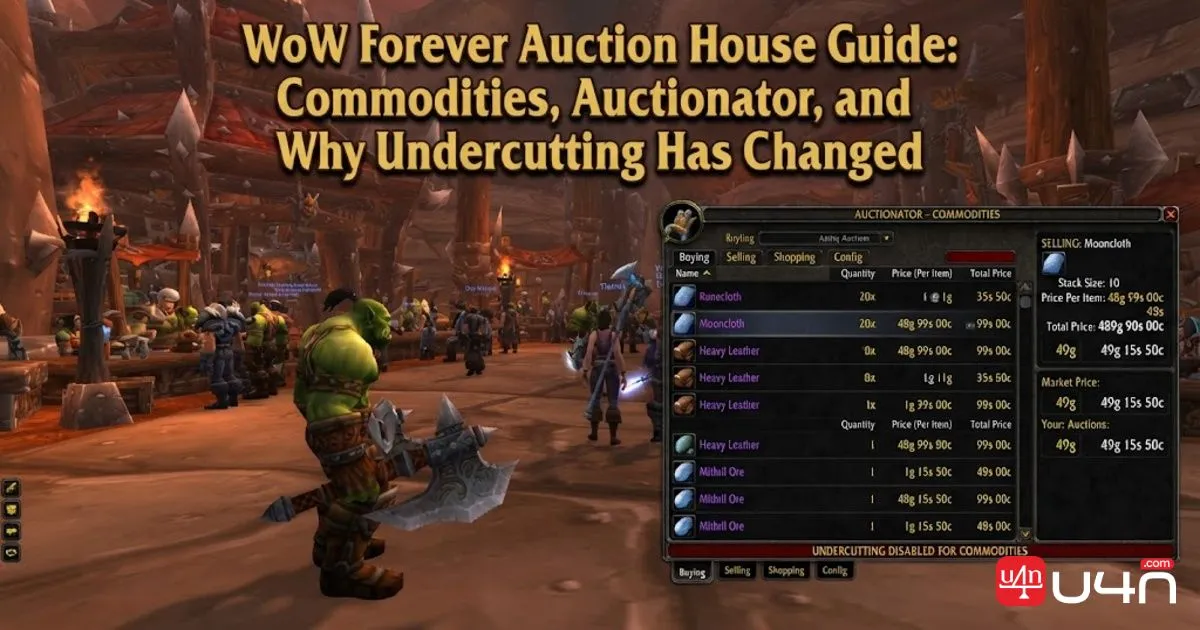
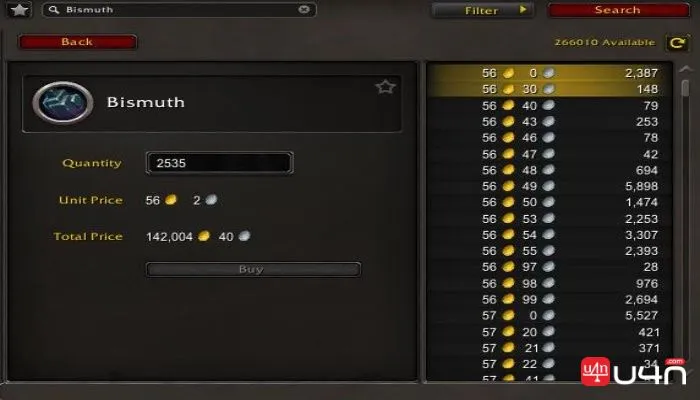
The Auction House in World of Warcraft: Forever is much closer to the modern WoW trading model than longtime Classic players may expect. If you are trying to build up WoW Forever Gold, the biggest adjustment is understanding that stackable commodities and traditional equipment auctions no longer behave the same way. Stackable goods are purchased by quantity, with the system automatically selecting the cheapest available auctions.
That matters because many old Classic Auction House habits simply don't translate. The familiar routine of posting an item one copper below everyone else, watching seller names, and carefully arranging stacks is much less important here. The new system rewards understanding the market rather than winning an undercutting race.
Commodities and Equipment Are Two Different Markets
The easiest way to understand the new Auction House is to split everything into two categories:
| Auction type | Typical examples | How buying works | What sellers should focus on |
|---|---|---|---|
| Commodities | Stackable materials and consumables | Buy the quantity you need at the available prices | Total price and market demand |
| Equipment | Weapons, armor and other non-stackable items | Browse individual listings | Item stats, item level and price |
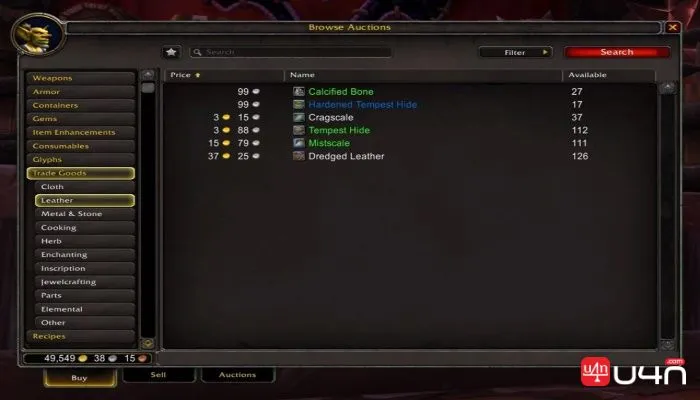
This isn't a completely new direction for World of Warcraft. Blizzard's Auction House overhaul introduced the idea that commodities should be purchased by quantity, while equipment remains individually listed. Blizzard specifically described commodities as stackable items and explained that the Auction House automatically selects the cheapest available auctions when a buyer specifies how many they want.
For players coming directly from Classic, that distinction is the first thing worth learning.
When you're buying materials, you generally don't need to hunt through dozens of differently sized stacks. You tell the Auction House how much you want, and the system works through the cheapest available supply.
That makes the buying experience considerably cleaner, but it also changes how sellers should think about pricing.
Stop Undercutting by One Copper
This is probably the most important lesson for anyone who still approaches the Auction House like the old Classic market.
Undercutting by the smallest possible amount isn't automatically useful anymore.
With commodities, buyers are looking for a quantity at the lowest available price. If you post slightly below another seller, you're competing on price, but shaving off a tiny amount simply means you earn less for your goods.
The better question is not:
"How little can I undercut the other seller?"
It is:
"What price gives me a realistic chance of selling without giving away unnecessary margin?"
That is a major difference in mindset.
The old Auction House rewarded players who constantly watched listings and reacted faster than everyone else. The commodity system pushes more of that work into the Auction House itself. Blizzard previously explained that its commodity design was intended to remove the need for buyers to dig through stacks to find the best deal.
For a casual player selling materials after questing or gathering, that's good news. You don't need to treat every stack like a miniature stock market.
For serious gold-makers, however, it means market timing and crafting margins become more important than mechanical undercut speed.
Selling Equipment Requires a Different Approach
Equipment is where the Auction House still feels more familiar.
If you're selling a weapon, armor piece, or another non-stackable item, don't blindly copy the lowest price and call it a day. Look at the actual item you're selling and compare its price with the alternatives available.
This becomes especially important for randomly generated suffixes.
An item with a suffix such as "of the Monkey" can have slightly different stat combinations even when the base item is the same. That means two listings that look identical from the search results may not necessarily be equally attractive once you inspect their actual stats.
Always compare the item itself, not just the name and price.
This is also useful when buying upgrades. A cheap item isn't necessarily a bargain if its stats are poorly suited to your class. Sorting by price can find the cheapest listing, but comparing that price with item level and useful stats is where the real value comes from.
Why Auctionator Makes Sense Right Now
For players who want more information without building a complicated gold-making setup, Auctionator is a particularly useful companion to the new Auction House.
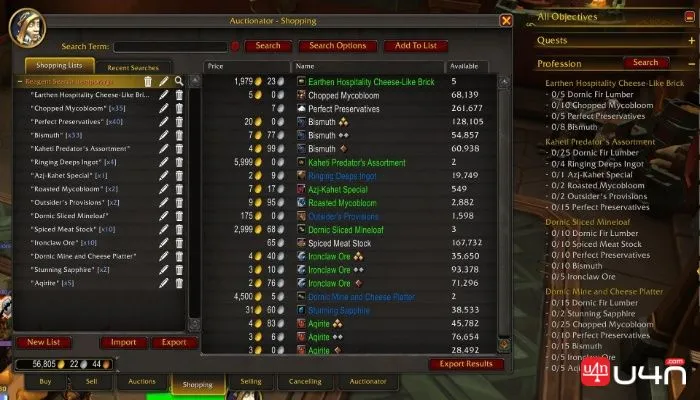
One of its most practical features is the ability to search for the materials needed by a crafting recipe directly from the profession interface. That turns a potentially annoying process into something much faster:
1. Open the profession recipe.
2. Check the required materials.
3. Search for those materials through the Auction House.
4. Compare the material cost with the potential value of the finished item.
5. Decide whether crafting makes sense before spending your gold.
That last step is more important than it sounds.
Classic professions often tempt players into crafting whatever is currently yellow or orange, but a guaranteed skill-up doesn't automatically mean the recipe is economically efficient. If the materials are expensive and the finished item has weak demand, you're essentially paying for skill points.
A good Auction House routine therefore isn't just buy low and sell high. It's checking whether the entire crafting loop makes sense before committing your gold.
Auctionator Is Useful, But It Isn't TSM
Players coming from TradeSkillMaster should also adjust their expectations.
Auctionator is excellent for straightforward buying, searching,g and posting. It can make the basic Auction House experience much quicker, particularly if you're constantly moving materials and crafted items between your bags and the market.
What it doesn't provide is the same level of customizable pricing analysis that experienced TSM users may expect.
That's an important distinction if you're trying to become a serious market player.
Auctionator can help you answer:
"What does this cost right now?"
A more advanced market-analysis setup tries to answer:
"Is this actually a good price compared with the market over time?"
Those are very different questions.
For most players, the first one is enough. You don't need a complicated spreadsheet every time you want to sell a stack of materials. But if you're investing heavily in crafting or trying to build a large gold reserve, historical pricing and broader market trends become much more useful.
Cancelling and Reposting Is No Longer About Panic
The new Auction House also changes how you should think about cancelled auctions.
If you're selling commodities, constantly cancelling and reposting because someone priced an item slightly below you can quickly turn into wasted effort. The goal isn't to win every individual refresh.
Instead, ask whether the current market price still gives you a reasonable return.
For equipment, cancelling can make more sense when your listing has been overtaken by substantially better-priced alternatives or when your item has been sitting at an unrealistic price.
For commodities, however, volume, demand, nd and margin matter more than being the absolute cheapest seller every second.
That is a healthier approach for anyone who doesn't want their entire play session to become an Auction House refresh simulator.
Don't Ignore Crafting Costs
One of the easiest mistakes new players make is looking only at the final selling price.
Suppose a crafted item sells for more than the raw materials. That sounds profitable, but you still need to account for every ingredient and the fact that some materials may have a vendor component.
The important number is your real crafting cost, not simply the number shown on the recipe.
A simple calculation is enough for most players:
Material cost + other required costs = crafting cost
Then compare that with the realistic selling price.
If the difference is tiny, the recipe may not be worth your time even if it technically produces a profit.
This is especially relevant during the early economy, when prices can move quickly as players level professions, discover recipes, pes and begin preparing for endgame content.
What the New Auction House Means for Gold-Making
The biggest change isn't actually a button or interface element. It's the behavior the system encourages.
| Old Classic habit | Better WoW Forever habit |
|---|---|
| Undercut by the smallest amount possible | Choose a price that protects your margin |
| Constantly watch individual commodity sellers | Think about total market price and demand |
| Post carefully arranged stacks | Sell the quantity you actually want to move |
| Judge crafted items by selling price | Calculate material cost first |
| Buy the cheapest gear automatically | Compare stats and item value |
| Refresh the AH endlessly | Spend more time playing and less time fighting listings |
The Auction House is still an economy, and players can still make plenty of gold from it. But the mechanical advantage has shifted.
Knowledge beats frantic clicking.
That is particularly important in WoW: Forever because Blizzard is positioning the game as a long-term version of Azeroth rather than a temporary Classic season. The official roadmap describes Forever as a permanent home designed to keep expanding over time, with the game launching globally on November 4, 2026.
A long-lived economy will naturally reward players who learn how their market behaves instead of relying on one Auction House trick.
The Bottom Line for WoW Forever Players
If you're returning to Classic-style WoW, don't approach the new Auction House expecting the exact same game you remember. Commodities are the biggest adjustment, while equipment still rewards careful comparison and knowledge of what makes an item valuable.
Auctionator is a strong practical choice for players who want faster searches, easier posting, and useful crafting-cost information without immediately diving into a complicated trading setup. And while advanced traders may eventually want more sophisticated market data, most players can get a lot done simply by understanding the new buying and selling flow.
Most importantly, stop treating every listing as a race to undercut the person above you. The smarter gold-maker knows when to sell, what a craft actually costs, and when a few extra silver or gold is worth more than getting an auction sold immediately.
As World of Warcraft: Forever moves from its current beta toward the November launch, the Auction House economy will be one of the systems worth watching closely. Blizzard has already confirmed that the beta runs through October 21 before the full launch, giving players more time to learn how this new market behaves. If you're building your bankroll ahead of launch, focus on learning the market first rather than blindly trying to buy cheap WoW Forever Gold.