


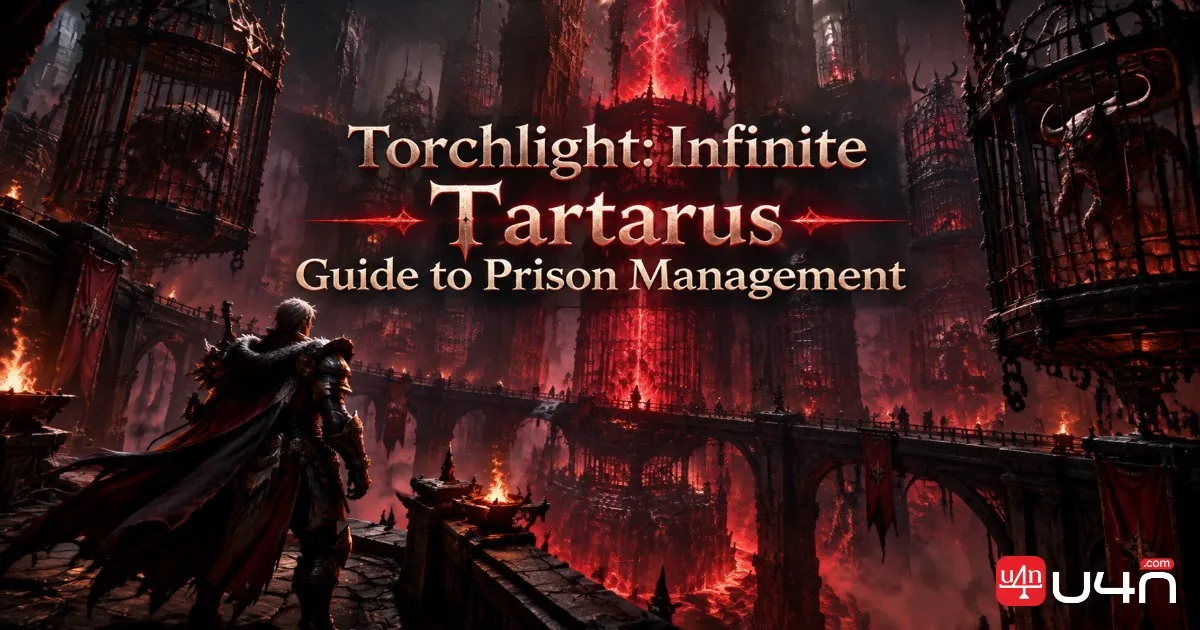
Tartarus is one of the central activities in Torchlight: Infinite Season 14, combining prisoner management, strategic encounters, and a challenging final battle. Unlike traditional seasonal mechanics that mainly reward fast monster clearing, this activity asks players to build a prison population and then fight the consequences of their own decisions. Players looking to improve their seasonal progression and collect more Torchlight: Infinite Flame Elementium should understand how its management and reward systems work together.
The biggest challenge is the 20-turn Warden's Duty phase. You need to arrange prisoners, take advantage of their creature matchups, and develop higher-rarity inmates without leaving yourself an unnecessarily difficult Riot. Our team recommends learning the prisoner food chain before spending management opportunities, as a poorly planned board can limit your options later.
How the Tartarus Mechanic Works
Tartarus follows three connected stages. Each one contributes to the final reward, so understanding the overall progression is more useful than treating every stage as a separate activity.
| Stage | What You Do | Main Purpose |
|---|---|---|
| Netherrealm Phase | Defeat escaped inmates | Collect Prisoner Nameplates |
| Warden's Duty | Manage prisoners for 20 turns | Develop higher-rarity inmates |
| Endgame Phase | Fight the prison Riot | Reveal and collect Warden's Caches |
During the Netherrealm Phase, escaped inmates appear in regular stages. Defeating them provides Prisoner Nameplates, which allow you to access Warden's Duty.
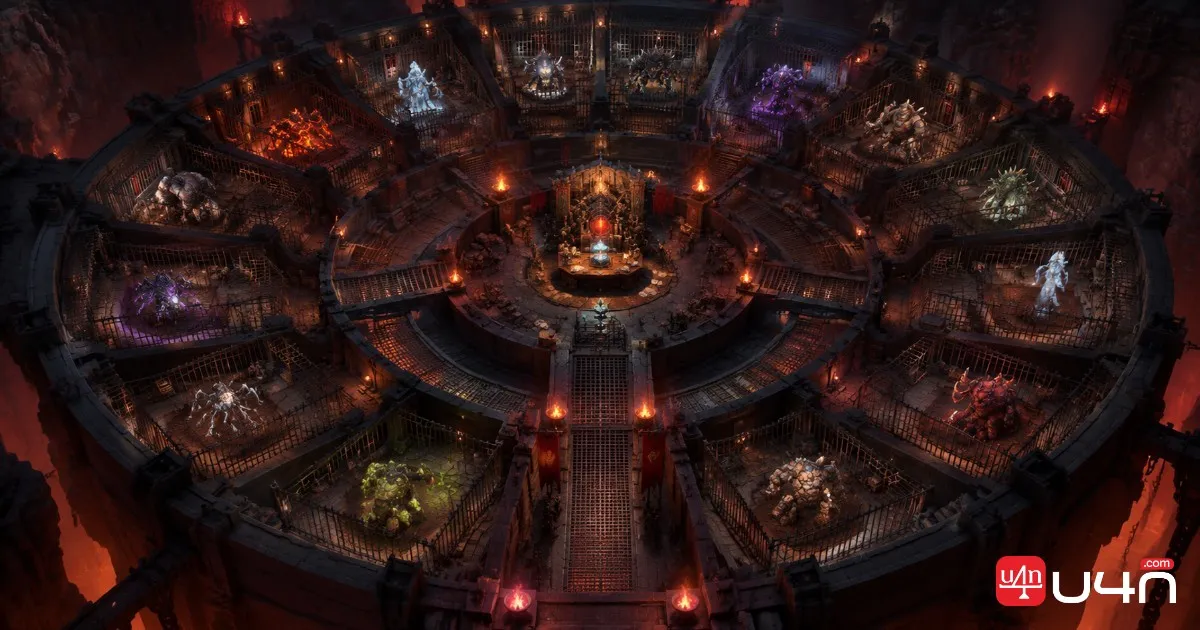
The management stage takes place on a prison board containing 16 cells. You use available prisoners, management options, and special effects to influence the prison population. The objective is to create valuable inmates before the 20-turn limit expires.
Afterward, the prison enters the Riot phase. The prisoners you developed become part of the enemy lineup, including Chromatic Inmates and inmates remaining on the board.
This connection is important: better prisoner development can create better reward opportunities, but it can also make the final encounter more demanding. We recommend considering both sides before committing to a management decision.
How to Manage Prisoners During 20 Turns
Warden's Duty is where most of your strategic decisions happen. With a limited number of turns, the goal is not simply to develop as many prisoners as possible. You need to make useful matches while keeping the final enemy lineup manageable.
Understand the Prisoner Food Chain
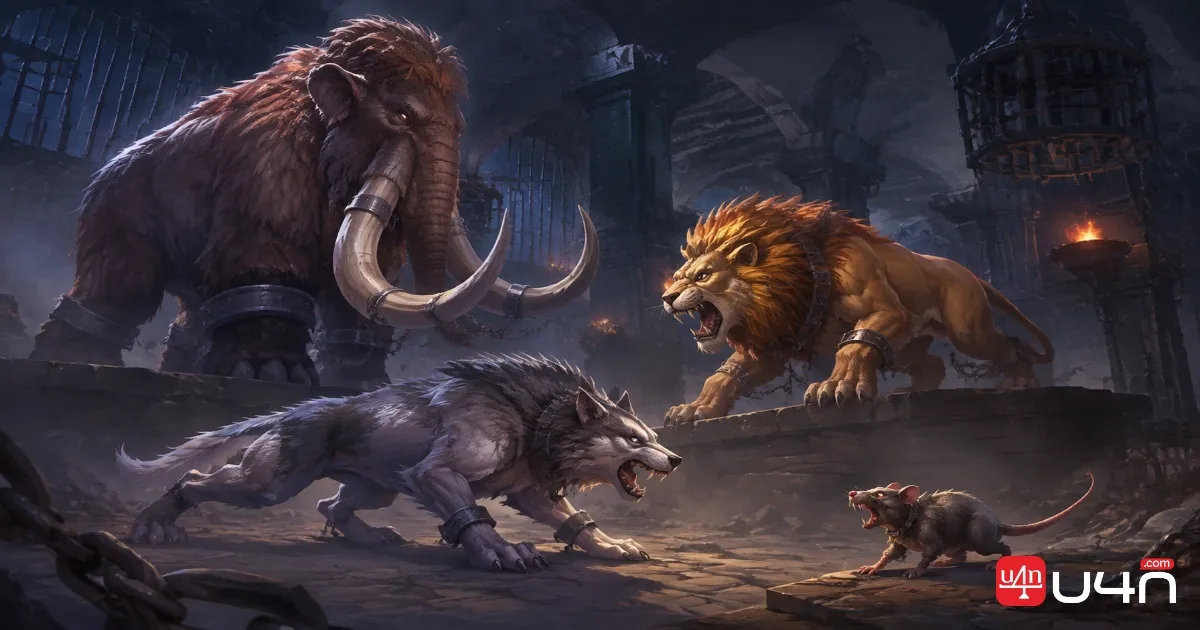
Tartarus uses a creature-based consumption system involving four main prisoner types:
| Prisoner Type | Management Role |
|---|---|
| Mammoth | Participates in the creature matchup system |
| Lion | Has a designated relationship with other inmate types |
| Wolf | Can consume its corresponding countered target |
| Rat | Completes another part of the matchup system |
The most important requirement is that a valid consumption action must satisfy two conditions:
- The selected prisoners must have the correct counter relationship.
- Both prisoners must have the same rarity.
Do not assume that any two different creatures can consume one another. The matchup indicator in the game should be your reference before confirming an action.
Our team suggests checking the available targets first instead of immediately selecting the highest-rarity prisoner. A valid matchup that advances your development plan is more valuable than an attractive-looking option that cannot actually be completed.
Prioritize Chromatic Inmates
Chromatic Inmates are an important management milestone. Once a prisoner reaches Chromatic rarity, it leaves the main prison board and is contained separately.
This gives you a clear objective during the 20 turns. Rather than spreading every opportunity across unrelated inmates, look for combinations that can help you develop Chromatic prisoners efficiently.
However, there is one detail that players should not overlook: prisoners remaining on the board also contribute to the final Riot.
We recommend balancing three considerations:
- Development potential: Which prisoners can reach a higher rarity through valid matchups?
- Available opportunities: How many useful management actions remain?
- Final combat pressure: Will your remaining prisoners create an enemy lineup that your character can handle?
A strong management run is not necessarily the one with the most developed prisoners. It is the one that creates worthwhile reward opportunities without making the final encounter unnecessarily difficult.
Use Prison Incidents and Torture Instruments Wisely
Prisoner matching is only one part of Warden's Duty. Prison Incidents, Tartarus Rumors, Torture Instruments, and Warden's Treasure can all influence your available choices.
Adapt to Prison Incidents and Rumors
Prison Incidents introduce unexpected situations during management, while Tartarus Rumors add further variation to the experience.
We recommend reviewing the current prison conditions before committing to your next action. If an incident changes your available options, reconsider your original plan instead of following the same sequence automatically.
This is particularly important when you are trying to develop a specific prisoner. A previously useful matchup may no longer be the best option after the board changes.
Select Torture Instruments Based on Your Plan
Torture Instruments provide additional effects that can influence prisoner development and management opportunities.
Before choosing one, consider:
- Does its effect support your current prisoner development strategy?
- Can it improve the remaining opportunities during Warden's Duty?
- Will you have enough turns to benefit from its effect?
We would not recommend choosing an instrument simply because its description sounds powerful. Its actual value depends on your current board and how much management time remains.
Check Warden's Treasure
Warden's Treasure provides another decision point during prison management. Review its available effects and compare them with your current objectives.
If you are close to developing a Chromatic Inmate, prioritize options that support that goal. If your board is already in a good position, consider whether an alternative effect can improve the remaining stages.
The general rule is simple: choose effects that solve a current problem rather than selecting them without considering your prison arrangement.
Final Riot: Combat Preparation and Difficulty
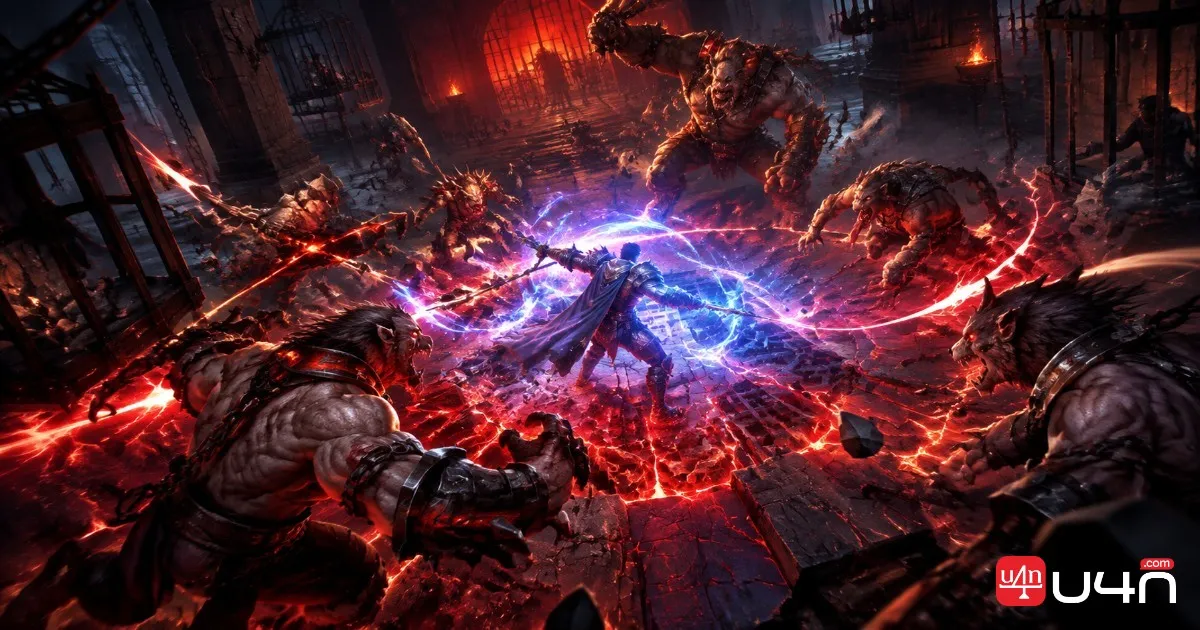
When the 20-turn management period ends, the prison enters its final Riot phase. Your developed inmates become enemies, and you must suppress the uprising to access the reward room.
The SS14 season announcement describes three prison levels and six difficulty levels. The enemy lineup includes Chromatic Inmates and prisoners that remain on the management board.
Understand the Three Prison Levels
The Riot takes place across three prison levels. As you defeat groups of inmates, you reveal Warden's Caches corresponding to the rarity of the defeated enemies.
This means that combat progression directly affects your available rewards.
We recommend building around reliable area damage rather than focusing exclusively on single-target burst. Multiple enemy groups can create situations where clear speed and survivability matter just as much as peak damage.
Choose a Difficulty Your Build Can Handle
Higher difficulty options can increase the challenge, but selecting the highest available level is not automatically the best farming decision.
| Character Attribute | What to Check |
|---|---|
| Damage | Can you defeat higher-rarity inmates efficiently? |
| Defense | Can you survive attacks from several enemy groups? |
| Recovery | Can you maintain Life or Energy Shield during extended fights? |
| Clear Speed | Can your skills handle groups without excessive downtime? |
For players still improving their equipment, we suggest starting with a manageable difficulty and increasing it once the character becomes more reliable.
The suppression phase ends when all Riot inmates have been defeated or available revival attempts have been exhausted. Afterward, you can enter the reward room and open the Warden's Caches already revealed.
An important distinction is that revealed caches do not require you to defeat every remaining inmate before collecting them. However, clearing additional groups can provide more opportunities to reveal rewards.
How to Maximize Warden's Cache Rewards
The Warden's Cache is the main reward target of Tartarus. Its rarity is connected to the enemies defeated during the Riot, making prisoner development and combat preparation equally important.
Compare the Three Tartarus Compasses
Tartarus offers three seasonal compasses that increase Warden's Cache drop quantity, but their additional monster effects are different.
| Compass | Cache Drop Quantity | Monster Damage Reduction |
|---|---|---|
| Darkiron Shackles | +10% | None |
| Mercury Shackles | +30% | 45% |
| Redgold Shackles | +80% | 70% |
These options represent different approaches to reward farming.
- Darkiron Shackles: A suitable option when you want a smaller quantity bonus without the additional monster damage reduction.
- Mercury Shackles: A middle option for players willing to accept tougher encounters in exchange for improved cache quantity.
- Redgold Shackles: Offers the largest listed quantity increase, but its damage reduction modifier makes the Riot considerably more demanding.
Our team recommends choosing a compass according to your actual combat performance. A larger quantity bonus is not particularly useful if the added difficulty prevents you from clearing enough enemy groups.
Consider Twin Inquisitors Pactspirit
Twin Inquisitors is worth considering if Tartarus is one of your main seasonal farming activities.
Its listed effects include:
- Minor nodes that increase Warden's Cache drop quantity.
- A chance to duplicate items obtained from opened Warden's Caches.
- Additional Torture Instrument refresh opportunities during Warden's Duty.
- A chance to open a Warden's Cache again.
What makes this Pactspirit interesting is that its benefits extend beyond the final reward room. Additional Torture Instrument refresh opportunities can also improve your management options.
For regular Tartarus farming, we consider this a useful specialization to investigate, especially when your character can already handle the Riot consistently.
Collect All Revealed Caches
Once suppression ends, enter the reward room and collect every available Warden's Cache.
It sounds obvious, but reward collection is an easy step to overlook when players focus entirely on combat progression.
Before starting another run, review how your previous management decisions affected the final enemy lineup and how many caches you managed to reveal. Players who also plan their wider seasonal economy and choose when to buy Torchlight: Infinite Flame Elementium should consider the time and difficulty involved in each run rather than judging farming efficiency by cache quantity alone.
Build a Better Tartarus Farming Strategy
Tartarus rewards players who understand the relationship between prisoner management and combat performance. The 20-turn Warden's Duty phase is the foundation of a successful run, while the final Riot determines how many of your potential rewards you can actually unlock.
Our team's recommended approach is to learn the prisoner counter relationships, confirm the same-rarity requirement before every consumption action, and prioritize useful Chromatic development opportunities. At the same time, keep an eye on the remaining prisoners because they will affect your final encounter.
During the Riot, choose a difficulty that matches your damage and survivability. Darkiron, Mercury, and Redgold Shackles offer different reward and difficulty trade-offs, while Twin Inquisitors can support both management and cache collection.
Ultimately, the best Tartarus strategy is not about creating the strongest possible prison population. It is about creating a valuable enemy lineup that your character can defeat efficiently.
Tartarus FAQ
1. How many turns does Warden's Duty last?
The prison management phase lasts 20 turns. Players use these turns to arrange encounters, develop prisoners, and make decisions that influence the final Riot.
2. How many cells are available in Tartarus?
The prison management board contains 16 available cells.
3. What is required for prisoner consumption?
The selected prisoners must have the correct counter relationship and matching rarity. Always check the in-game matchup indicator before confirming an action.
4. What happens when a prisoner reaches Chromatic rarity?
A Chromatic Inmate is removed from the main prison board and contained separately. It also becomes part of the final Riot enemy lineup.
5. Which Tartarus Compass provides the highest cache quantity bonus?
Redgold Shackles provides the highest listed bonus at +80%. However, monsters also receive 70% damage reduction, making the final encounter more difficult.
6. Is Twin Inquisitors useful for Tartarus farming?
Yes. Its listed effects include increased cache quantity, item duplication chances, additional Torture Instrument refresh opportunities, and a chance to reopen a Warden's Cache. It is particularly relevant to players who regularly farm Tartarus.