


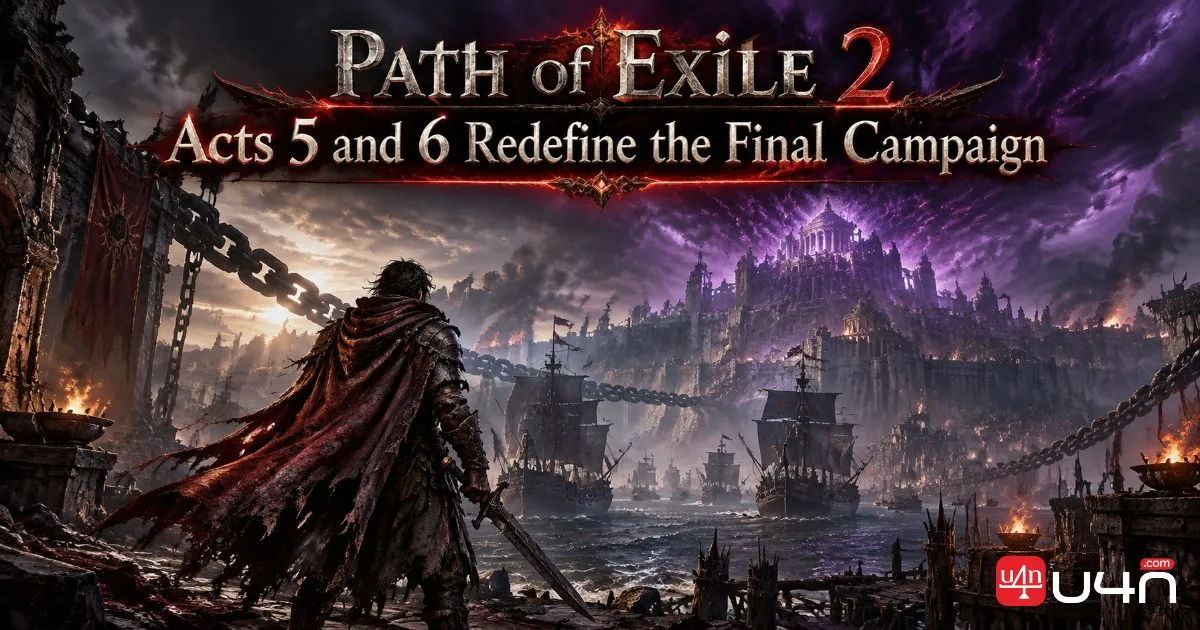
Path of Exile 2 is approaching the point where its campaign finally becomes a complete six-act journey. Version 1.0 is scheduled for December 11, 2026, and the full release will make the game free to play. For our team, the most important part of that launch is not simply the transition out of Early Access. It is the arrival of Acts 5 and 6, the chapters that bring the story back to Oriath and settle the conflict involving the Twilight Order and the Beast.
The scale of the two acts is also substantial. Players will receive 24 new areas, 18 unique bosses, and more than 20 special encounters built around stronger rare enemies. That is a large amount of campaign content, yet the numbers only tell part of the story. The real question is how these additions shape exploration, combat pacing, and the final dramatic push toward the end of the campaign. Players preparing their POE 2 Currency will also want to understand how much of the experience is likely to come from deliberate exploration rather than simply rushing from one quest marker to the next.
A Six-Act Campaign Finally Gets Its Proper Ending
Path of Exile 2 has spent its Early Access period presenting only part of the intended campaign structure. Acts 5 and 6 change that relationship with the game. They are not side chapters placed beside the existing story. They complete the main route and give the narrative a clear destination.
That distinction matters for both new and returning players. A campaign feels different when its final objective is known, even if many details remain hidden. Earlier chapters establish the world, introduce its factions, and teach players how the combat system expects them to respond. The closing acts need to do something more demanding. They must resolve the central conflict while also testing the habits players built during the earlier journey.
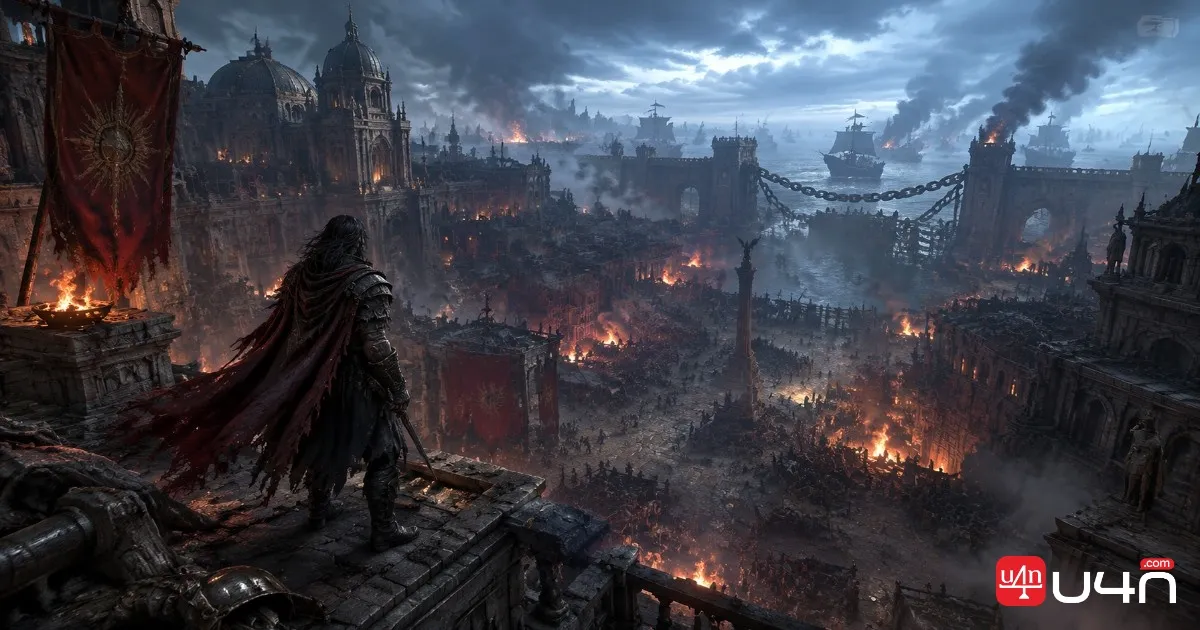
The return to Oriath gives Grinding Gear Games a strong setting for that purpose. The city is not presented as a quiet location waiting to be revisited. It has become a contested battlefield, shaped by ruined districts, hostile forces, and a larger assault taking place beyond the player's immediate path.
The harbor chains create a clear military objective
The campaign's main objective is tied to the harbor defenses. Massive chains prevent allied forces from attacking Oriath by sea, so the player must enter the island from another direction, cross the damaged city, and lower the chains from within.
This setup gives the campaign a practical sense of movement. The player is not simply clearing maps because the next objective happens to be located nearby. Every district crossed brings the wider assault closer to a possible breakthrough. The character's personal progress becomes part of a larger military operation.
That kind of structure has worked well in action RPGs because it turns level progression into visible world progress. We can see why we are moving through Oriath, and the city itself becomes a series of obstacles between the player and the opening of the harbor.
Oriath Offers More Than a Familiar Name
The choice to return to Oriath carries obvious emotional weight for long-time Path of Exile players, but familiarity alone is not enough to support a six-act finale. The city needs to feel different from the place players remember, and the revealed districts suggest that it will.
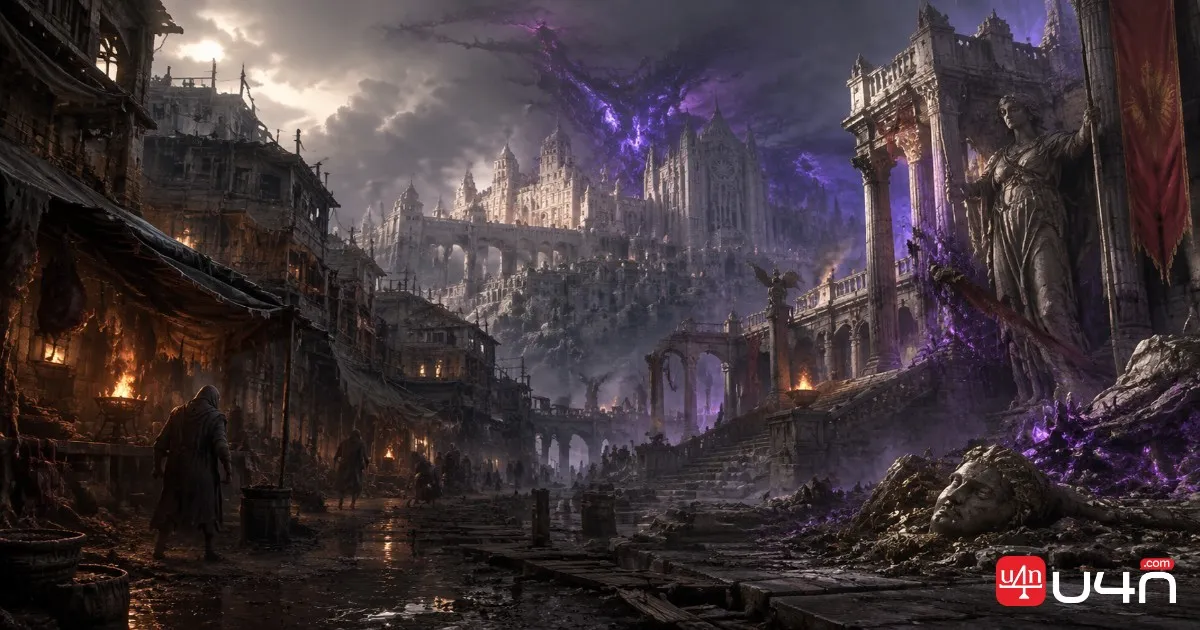
The announced environments include twisted slums, wealthy estates, the Temple District, and the Grand Arena. Each location points toward a different side of Oriath. The slums can represent collapse at street level. The estates can show what survived behind walls and privilege. The Temple District brings the city's religious and political history back into focus, while the Grand Arena offers a natural space for staged combat and spectacle.
| Area type | Likely gameplay function | Thematic value |
|---|---|---|
| Twisted slums | Dense encounters and dangerous close-range fights | Shows urban decay and social collapse |
| Wealthy estates | More controlled spaces with stronger visual contrast | Highlights the divide between power and desperation |
| Temple District | Story-heavy exploration and faction tension | Connects the city's past to its current corruption |
| Grand Arena | Memorable combat set pieces | Creates a natural stage for elite enemies and bosses |
The exact distribution of these locations between Acts 5 and 6 has not been publicly established. We should not assume that one act will focus entirely on the city's poor districts while the other moves through elite areas. The more useful observation is that Oriath gives the developers room to change the mood from one section to the next without leaving the central setting.
That variety can help prevent a final act from feeling visually flat. A city destroyed by conflict should not look identical from one checkpoint to the next. If the environments are paired with different enemy groups and encounter rules, the player may feel that each district has its own identity rather than functioning as another stretch of campaign terrain.
Eighteen Bosses Can Shape the Campaign Rhythm
The 18 new unique bosses are the most direct sign that Acts 5 and 6 are designed around frequent combat milestones. Path of Exile 2 already places considerable pressure on players during boss encounters, especially when attacks require positioning, timing, and recognition of visual signals. A large group of new bosses gives the final campaign enough room to introduce distinct combat problems instead of repeating one general template.
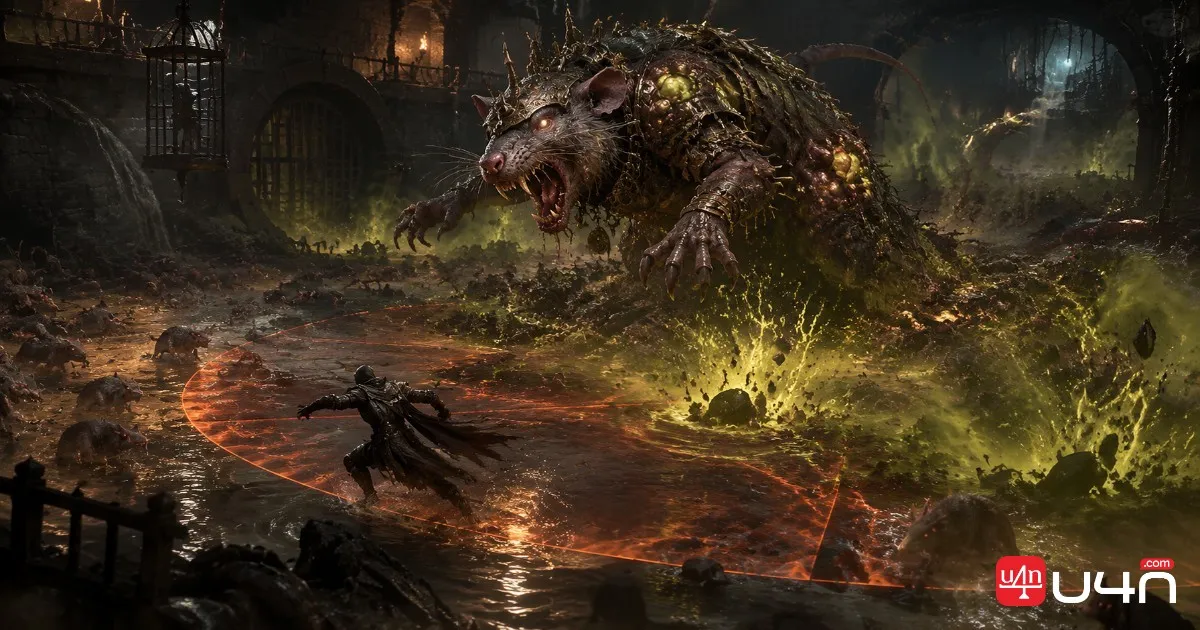
The revealed examples point toward strong thematic identities. A giant rat king in the sewers connects the fight to the city's infestation. Corrupted Twilight Order priests tie combat to the faction conflict. Plague-themed enemies reinforce the idea that Oriath is suffering from more than ordinary military damage.
For experienced players, recognizable identity matters. A boss becomes easier to remember when its attacks, arena, and visual design all communicate the same idea. A sewer boss should make the player think about cramped space, swarming threats, or contamination. A corrupted priest should feel different from a giant beast even before the first attack lands.

Multi-phase fights raise the cost of mistakes
Reveal coverage describes encounters with multiple phases and distinct attack patterns. That design can create more memorable battles, but it also changes how players prepare.
A single-phase fight often allows a strong build to solve the encounter through damage output and basic positioning. Multi-phase encounters ask for more. Players need enough damage to progress before resources run dry, enough defense to survive pattern changes, and enough mobility to respond when the arena becomes more dangerous.
The pressure is especially relevant in a campaign environment. Players are still upgrading equipment, changing support gems, and learning how their build performs against unfamiliar threats. A boss that changes behavior halfway through the fight can expose weaknesses that ordinary monster packs never reveal.
That does not mean every new boss will be difficult in the same way. Some may test movement. Others may punish poor resistance coverage, careless flask usage, or overreliance on close-range damage. The value of the roster will depend on how clearly each encounter communicates its rules and how fairly it gives players time to react.
Champion Rare Encounters May Change Ordinary Exploration
Bosses receive most of the attention in a campaign reveal, but the more subtle addition may be the group of 20-plus Champion Rare encounters. These enemies are positioned between standard monsters and major bosses, which gives them a different role in the player's progression.
A campaign with ordinary packs and occasional bosses can become predictable after several hours. Players learn a route, identify the safest way to clear a room, and start treating most rare enemies as routine interruptions. Champion encounters can challenge that habit by giving regular exploration more moments of uncertainty.
The design value comes from variety. If each Champion Rare has its own mechanics, players may need to pause before committing to a fight. A dangerous modifier combination, an unusual movement pattern, or a battlefield hazard can force a temporary change in approach.
That kind of friction is useful when balanced carefully. Players should not feel that every corridor contains a random wall blocking progress. They should feel that the game occasionally asks for attention outside of boss arenas.
What this means for builds
Champion Rares can also expose weaknesses in campaign builds earlier than a boss would. A character with excellent area damage but poor single-target pressure may clear regular packs quickly and then struggle against a durable rare. Another build may survive most encounters but lack the mobility required to avoid layered hazards.
That gives players useful feedback before the endgame. A failed encounter can reveal a defensive gap while the character still has time to adjust equipment, passives, or skill support. In a well-tuned campaign, these enemies become small build checks rather than simple damage sponges.
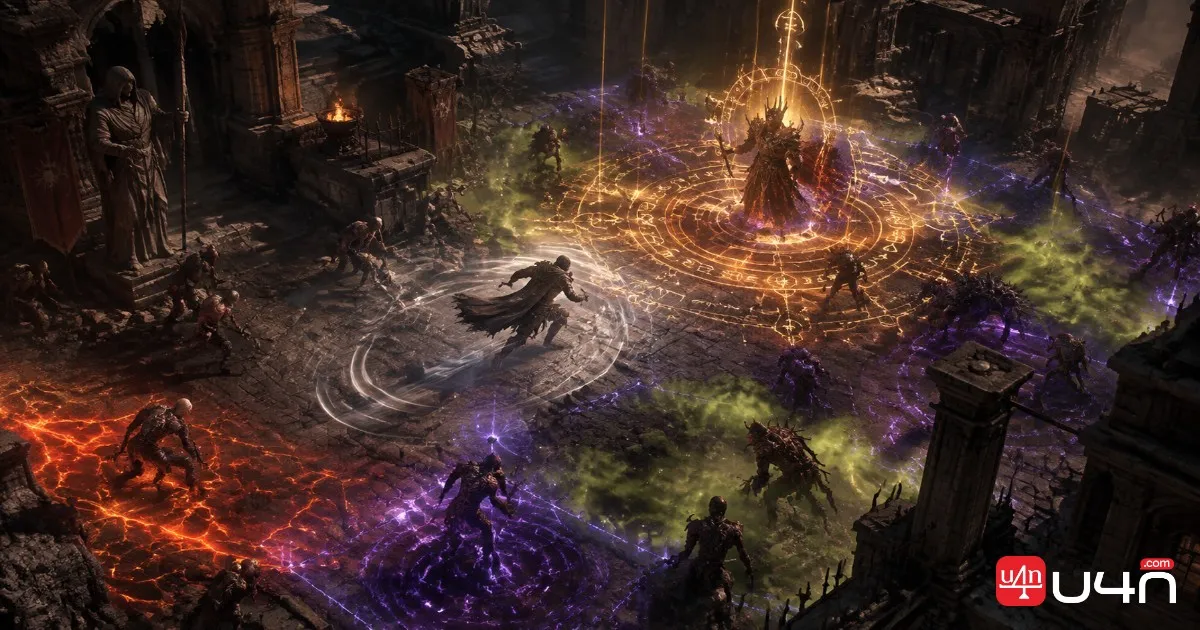
The mention of additional rare monsters in earlier acts also suggests a broader attempt to improve combat variety across the campaign. Acts 5 and 6 may introduce the most visible changes, but the goal appears to extend beyond the new chapters. Players replaying the story with another character may encounter more situations that demand active decision-making instead of uninterrupted clearing.
The Final Acts Need to Balance Story and Progression
A six-act campaign has to maintain momentum while still giving players space to explore. Acts 5 and 6 face a particular challenge because they must feel like a climax without turning every room into a dramatic set piece.
- The harbor objective provides the main direction.
- Oriath's districts provide the visual changes.
- Bosses provide the major combat peaks.
- Champion Rares fill the space between those peaks.
These elements can support a strong rhythm if they are placed with enough variation.
A useful progression might move from pressured street-level encounters into more controlled faction strongholds, then toward larger arenas and final confrontation spaces. The campaign does not need to follow that exact pattern, but the player should feel that each stage brings the conflict closer to resolution.
The same balance matters for exploration rewards. If players are encouraged to search every corner, the areas need to offer enough visual or mechanical distinction to justify that time. If the story expects players to move quickly, important objectives should remain readable despite the density of enemies and environmental detail.
Campaign design becomes especially sensitive near the end because players often have different priorities. Some want to follow the story at a steady pace. Others want to test a new skill setup, search every side path, or prepare their character for endgame content. The best version of Acts 5 and 6 will give both groups room to play without making either approach feel inefficient.
What Acts 5 and 6 Mean for Path of Exile 2
Acts 5 and 6 give Path of Exile 2 the structure it needs to present itself as a complete action RPG rather than an unfinished campaign with future chapters attached. The return to Oriath supplies a recognizable location, but the real attraction lies in how that location is transformed into a military objective and a sequence of layered combat spaces.
The numbers are impressive: 24 areas, 18 unique bosses, and more than 20 Champion-style encounters. Their success will depend on execution. Areas need distinct identities. Bosses need readable mechanics and meaningful phase changes. Rare encounters need enough variety to make exploration feel active without turning every room into a damage check.
For our team, the most promising part is the combination of scale and focus. Acts 5 and 6 are not being presented as disconnected content drops. They are designed to complete the campaign's central conflict while expanding the game's combat vocabulary at the same time. Players who plan to buy Path of Exile 2 Items before entering the final acts should still pay attention to defensive coverage, single-target damage, and movement options instead of relying on equipment alone.
The final advance through Oriath should give players a stronger sense of purpose, and the new enemies should make that advance demanding enough to feel earned. If the areas, bosses, and Champion Rare encounters maintain clear identities, Acts 5 and 6 can provide a campaign finale that feels carefully built rather than simply extended.
FAQ
When will Path of Exile 2 Acts 5 and 6 release?
Acts 5 and 6 are scheduled to arrive with Path of Exile 2 Version 1.0 on December 11, 2026. The full release will also move the game out of Early Access and make it free to play.
How many new areas are included in Acts 5 and 6?
The two acts will add 24 new areas in total. Public information has not confirmed an equal division between Act 5 and Act 6.
How many bosses will the new acts add?
The campaign expansion will include 18 new unique bosses. Some revealed encounters feature multiple phases and distinct attack patterns, though full mechanical details are not available for every boss.
What are Champion Rare encounters?
Champion Rare encounters are stronger rare-monster battles with their own mechanics. They are intended to add more varied combat moments during exploration, rather than concentrating all major challenges inside boss arenas.
Are the new acts set in Oriath?
Yes. Acts 5 and 6 return players to Oriath, where the campaign conflict involving the Twilight Order and the Beast reaches its climax. The story objective includes lowering the harbor chains so allied forces can attack the city by sea.
Should players prepare a new build before reaching the final acts?
Players should expect to review their defenses, single-target damage, movement options, and resource management. The exact requirements will vary by build, but multi-phase bosses and stronger rare encounters are likely to expose weak points that ordinary monster packs may not reveal.