U4N is an online marketplace where players can buy and sell PoE 2 items in a simple and direct way. The platform is designed for everyday use, whether you are looking for specific gear, extra currency, or a place to sell items you no longer need. Everything is organized clearly so you can find what you want without wasting time.
Buying PoE 2 items on U4N is straightforward. Listings show item details and prices clearly, helping you compare options and make informed choices. The process is built to be fast, so you can spend less time trading and more time playing the game.
For sellers, U4N provides a practical way to reach players who are actively looking to trade. You can list items easily and manage your offers without complicated steps. This makes it suitable for both regular traders and casual players who only sell items from time to time.
Security and reliability are core parts of the platform. Trades are handled through controlled processes to reduce risk and keep transactions smooth. Support is available if issues come up, helping trades finish properly.
Overall, U4N focuses on clarity, speed, and safe trading, making it a useful place for players who want to buy and sell PoE 2 items with confidence.
PoE 2 Item Rarity System
In Path of Exile 2, the item rarity system determines how many modifiers (affixes) an item can hold. However, it also introduces a massive structural evolution from the first game: Unidentified Item Tiering.This new mechanic shifts the focus of the endgame away from pure currency crafting and back to finding powerful gear directly on the ground.
The 4 Rarity Tiers & Modifier Caps
Rarity dictates the mechanical ceiling of an item's stats:
Normal (White): Has 0 modifiers. It only possesses base item properties (such as physical damage, armour, or evasion). These serve as blank slates for crafting.
Magic (Blue): Can hold a maximum of 2 modifiers —exactly 1 Prefix and 1 Suffix.
Rare (Yellow): Can hold a maximum of 6 modifiers —up to 3 Prefixes and 3 Suffixes. These represent the highest potential peak power for raw stats in the game.
Unique (Orange): Possesses a fixed, custom set of modifiers specific to that item name. They offer build-altering mechanics that cannot be found on rare items, but their stats cannot be randomly rolled or traditionally altered.
The New Endgame Feature: Item Tiering
The most defining change in PoE 2's loot system is Item Tiering (Tiers 1 through 5). When unidentified rare items drop in endgame content, they can roll with a visible drop tier designation:
Modifier Filtering: Higher item tiers (with Tier 5 being the absolute best) eliminate lower-level modifier rolls from the item's pool before it is identified.
Guaranteed Quality: For example, a Tier 5 rare item completely blocks weak, low-level stats from appearing. When identified, it is statistically guaranteed to roll exclusively top-tier, high-value modifiers.
Loot-First Philosophy: This system solves the problem of ground loot feeling worthless by giving players an instant visual indicator of high-potential gear before using an scroll of wisdom.
How Rarity Impacts Crafting & Economy
Permanent Upgrades: You can use currency to upgrade an item's rarity (e.g., normal to magic, or magic to rare), but items can never be downgraded. Dropping an item back to a white base is impossible.
The "Increased Item Rarity" (IIR) Meta: Stacking "Increased Rarity of Items Found" on your gear is highly influential in PoE 2. High IIR not only upgrades white items into magic and rare drops, but it directly multiplies the chance of dropping higher Item Tiers (T2 to T5), drastically boosting your chances of finding god-roll endgame gear.
PoE 2 Most Expensive Items
The value of items fluctuates based on the league economy and current balance patches, but the absolute most expensive items in Path of Exile 2 trade leagues fall into distinct "chase" categories.
The Ultimate Currency Anchor
Mirror of Kalandra: The Mirror of Kalandra is the most valuable raw currency drop in the game. Worth thousands of Divine Orbs, it creates a perfect duplicate of any non-unique, non-corrupted rare item. The items worth "more than a Mirror" are typically the original Tier 5 perfect rare weapons or rings used to run Mirror services.
Tier 0 "Chase" Uniques (Belts & Jewelry)
Unlike regular drops, these items completely warp build mechanics and easily command hundreds of Divine Orbs:
Mageblood: A heavily reworked version of the iconic PoE1 belt. In PoE2, it randomly rolls and stacks four ultra-powerful modifiers from a massive custom pool. Getting high-tier matching rolls makes it astronomical in price.
Ingenuity: A premier utility belt that drops from endgame bosses. Its multifunctionality makes it one of the most consistently expensive items to buy to push characters into the absolute endgame.
Original Sin: Returning as an incredibly rare ring that converts all elemental damage to Chaos damage and forces nearby enemy Chaos Resistance to 0, completely bypassing traditional boss defenses.
Headhunter: The classic mapping belt that steals modifiers from Rare monsters. It remains exceptionally rare (Tier 0 drop rate) and highly priced for speed-clearing builds.
Perfect Corruptions & God-Roll T5 Rares
Due to the new Item Tiering system, the ceiling for rare gear values has skyrocketed:
Double-Corrupted "Uber" Uniques: A standard high-tier unique like The Vertex or Temporalis might cost several Divines. However, if a player successfully corrupts it to hit elite modifiers—such as +4 to all Skill Levels or a perfect combination of global critical strike and resistances—the item becomes a one-of-a-kind treasure valued at 1 Mirror or more.
Tier 5 Perfect Influence Rare Weapons: Finding a Tier 5 unidentified rare item blocks low-level mods from rolling. If identified with perfect high-end physical damage or casting speed suffixes, these bases become the prime targets for Mirror crafting.
Max-Quality 21/20 Skill Gems: Because skill gems are leveled independently on their own screen, a max-level corrupted Level 21 Gem with 20% Quality provides immediate massive power spikes, pulling premium prices early in a league.
Path of Exile 2 Item Level Requirements
In Path of Exile 2, understanding gear requirements means separating a hidden mechanic from a visible restriction. The game relies on two entirely different systems: Item Level (ilvl), which determines the potential power of the item, and Character Level & Attribute Requirements, which dictate if your character can actually equip it.
1. Item Level (ilvl) vs. Level Requirement
These two numbers serve entirely separate purposes and are often confused:
Item Level (ilvl): You can see this by holding Alt while hovering over an item. It is determined strictly by the level of the zone or monster that dropped it. Item level does not restrict your ability to equip the item ; instead, it acts as a gatekeeper for what modifier tiers can roll on it during drop generation or crafting.
Required Level: This is the visible character level displayed on the item's tooltip. You must be at or above this level to wear it. High-tier modifiers can push the level requirement of an item up, meaning a stat requiring an ilvl of 83 might only require a character level of 72 to wear.
2. Base Type Tiers (Normal, Advanced, Expert)
PoE 2 splits its item bases into three distinct overarching tiers as you progress:
Base Gear: Drops early in the campaign and requires low character levels and minimal attributes.
Advanced Gear: Drops mid-campaign. It features significantly higher base stats (e.g., physical damage or armour) but demands character levels generally ranging from 40 to 60.
Expert Gear: The definitive endgame bases. These yield the highest base defense and damage scaling but enforce strict, high-level character requirements (often Level 60–65+ ).
3. Attribute Requirements
To equip gear, you must also fulfill its stat requirements across Strength, Dexterity, and Intelligence. These requirements match the defensive focus of the item base:
Item Archetype
Attribute Required
Defensive Type Provided
Pure Strength
Strength
Armour (Mitigates Physical Hit Damage)
Pure Dexterity
Dexterity
Evasion Rating (Chance to Avoid Attacks)
Pure Intelligence
Intelligence
Energy Shield (Extra Protective Health Buffer)
Hybrid Bases
Dual Stat Blend
Dual Defensive Blend (e.g., Armour + Evasion)
Note: While Expert endgame bases demand high stat alignment, patch updates have lowered overall gear requirements by roughly 25% to make building cross-attribute characters significantly more flexible.
4. Key Item Level Breakpoints for Crafting
When hunting for endgame bases to roll elite explicit modifiers, these are the most critical item levels (ilvl ) to watch for:
ilvl 55+: Gates the crucial 30% Movement Speed modifier on boots.
ilvl 65+: Unlocks core build modifiers like +2 to Minion levels on Helmets or global Critical Hit Chance.
ilvl 71+: Allows all gear slots to roll maximum elemental resistances (up to 40% single resistance ).
ilvl 75+: Necessary to roll the maximum flat physical or elemental damage prefix tiers on weapons and rings.
ilvl 86: The ultimate ceiling for rolling elite modifiers, required for maximum tier stats like 35% Movement Speed on boots.
PoE 2 Item Modifier Prefix Suffix Limits
In Path of Exile 2, item modifiers (often called affixes) are divided into two distinct pools: Prefixes and Suffixes. Prefixes generally govern defensive and raw offensive stats (like flat damage or life), while Suffixes handle utility, speeds, and resistances (like attack speed or elemental resistances).An item's rarity determines its strict affix limits.
The Rarity Cap Limits
No matter how you craft an item, it cannot exceed the following structural caps:
Magic (Blue) Items: Maximum of 2 modifiers. It is restricted to exactly 1 Prefix and 1 Suffix. It can never have 2 Prefixes or 2 Suffixes.
Rare (Yellow) Items: Maximum of 6 modifiers. It is restricted to a maximum of 3 Prefixes and 3 Suffixes.
Key Exceptions and Rules
Jewelry Alterations: Unlike Path of Exile 1 where most jewelry followed the standard 6-mod rule, certain accessory types in PoE 2 (like specific belt types) naturally have lower implicit or explicit modifier caps depending on their base archetype.
Uniques and Corruptions: Unique (Orange) items ignore the standard 3-and-3 rule entirely; they have fixed, pre-determined lists of modifiers. Furthermore, using a Vaal Orb or corruption mechanic to add a corrupted implicit modifier does not count toward your 3-prefix or 3-suffix explicit limit.
The Unveiling / Meta-Crafting Shift: Because items can never be downgraded in rarity (e.g., a Rare item can never be scoured back into a Normal white base), managing your prefix and suffix slots during the crafting process requires careful planning with Exalted Orbs, Regal Orbs, and Annulment Orbs.
PoE2 Uncut Skill Gems Explained
In Path of Exile 2, your character's abilities do not come from a class skill tree or armor sockets; they are governed entirely by the Uncut Gem System. Items no longer drop with skill sockets. Instead, you manage and customize your abilities on a dedicated Skills Menu (accessed by pressing G). When an ability drops in the world, it drops as a blank, unformed item called an Uncut Gem.
The Three Types of Uncut Gems
You will loot three distinct categories of raw gems from enemies, chests, and quests:
Uncut Skill Gems: Used to create or level your main active attacks, spells, or minion summons (e.g., Ice Nova, Spark, Cleave).
Uncut Support Gems: Used to modify and augment how those active skills behave (e.g., adding extra projectiles or widening an area of effect).
Uncut Spirit Gems: Used to obtain passive buffs, permanent auras, and defensive reservations.
How Engraving Works
When you right-click an Uncut Gem in your inventory, it opens the Engraving Window.
Select an Ability: The game displays a catalog of every skill available in the game. While the interface defaults to showing skills relevant to your current class and equipped weapon, you can switch tabs to pick any skill from any archetype.
Confirm the Cut: Selecting a skill permanently converts that blank uncut item into a usable, slotted skill gem.
Assign to Hotbar: The newly engraved gem sits within your Skill Panel. From there, you simply assign it to your hotkey controls to cast it in combat.
The Leveling and Upgrade System
Gems in PoE 2 do not passively gain experience points as you clear maps. Instead, they level up strictly through new drops:
Zone Scaling: The raw level of an Uncut Gem is determined entirely by the level of the zone or monster that dropped it. A zone level 5 monster drops a level 5 Uncut Gem, while endgame maps drop level 18, 19, or rare level 20 uncut items.
The Upgrade Shortcut: If you already have an active skill (for example, a Level 5 Fireball) and you drop a Level 12 Uncut Skill Gem, you don't need to choose a new skill. You can select your existing Fireball inside the engraving menu to instantly upgrade it to Level 12.
No Down-scaling: You can only use an Uncut Gem to upgrade a skill if the uncut item's level is equal to or higher than your current skill level. You cannot use a level 5 gem to alter or upgrade a level 10 skill.
Sockets and Support Links
Once an active skill is placed in your skill menu, it acts as its own independent gear piece:
Each active skill gem has its own built-in socket framework to house support gems.
You expand these slots using Jeweller's Orbs directly on the gem icon inside the menu.
This removes the frustration of the original game, meaning you can swap out your body armor or weapons whenever you find an upgrade without worrying about breaking your 5-link or 6-link ability combinations.
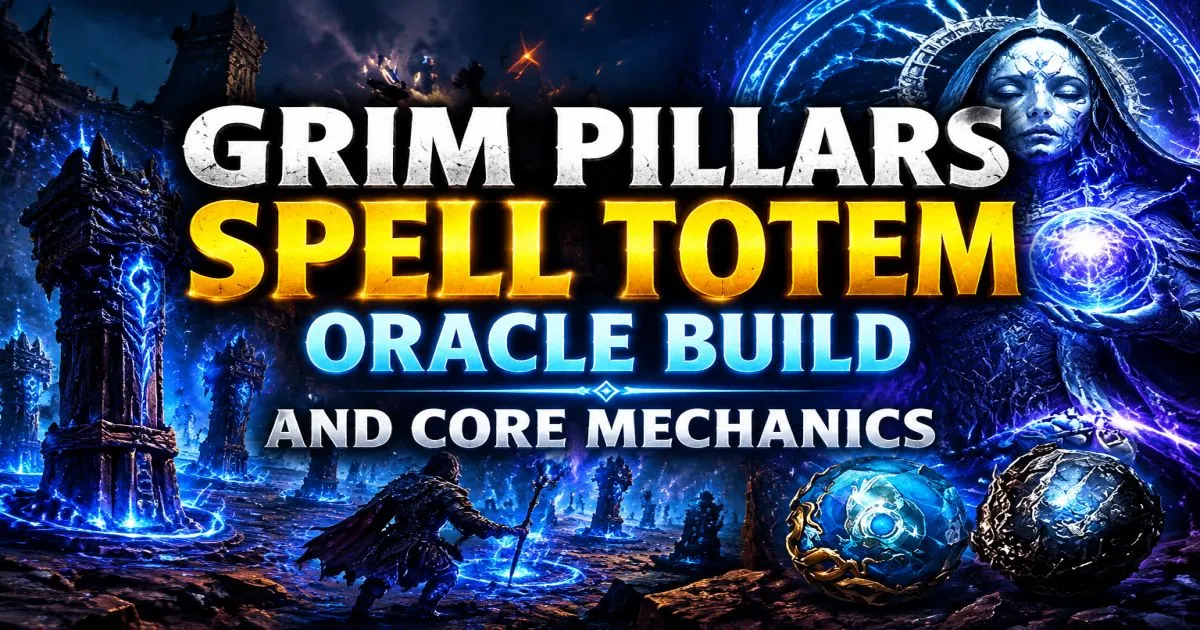
Grim Pillars is one of the most interesting cold-based skills in Path of Exile 2, especially when combined with a Spell Totem setup. Rather than relying on direct spell casting, the skill allows you to create icy crystal pillars that deal cold damage, freeze enemies, and eventually erupt for powerful area-of-effect burst damage.
The Disciple of Varashta offers a distinctive minion-focused approach to campaign progression in Path of Exile 2. Among the strongest options described for the ascendancy is the Djinn Minion and Navira’s Fracturing setup, a build centered around permanent, invulnerable Djinns that handle much of the character’s damage output.
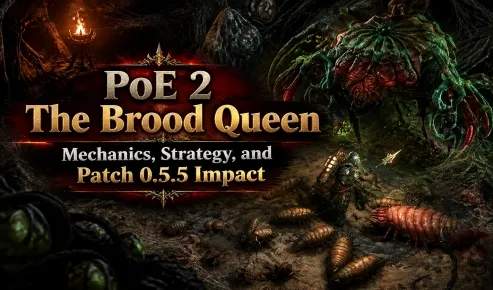
The Brood Queen is one of the early campaign bosses in Path of Exile 2, appearing in the Larva Hollow zone. While she arrives relatively early in a character's progression, the encounter introduces several mechanics that can punish players who rely on standing still and dealing damage from a fixed position.