
Cold Snap deserves another look if your weapon attachment collection has stalled. The supplied Buried City footage shows several valuable blueprint finds, including tier-three attachments, alongside a steady stream of keycards. Our team's reading is straightforward: this is a promising condition for targeted blueprint runs.
For players sorting through ARC Raiders Items, the distinction between valuable loot and useful progression matters. A backpack full of furniture designs, duplicate blueprints, and saleable trinkets can look impressive while doing little to unlock the attachment you actually need. We would judge these runs by missing recipes recovered and safely extracted, rather than inventory color alone.
Our approach below turns the searches into a practical farming plan. We focus on search order, container coverage, keycard detours, and the point at which another building stops being worth the risk. Our team supplies the route and inventory recommendations.
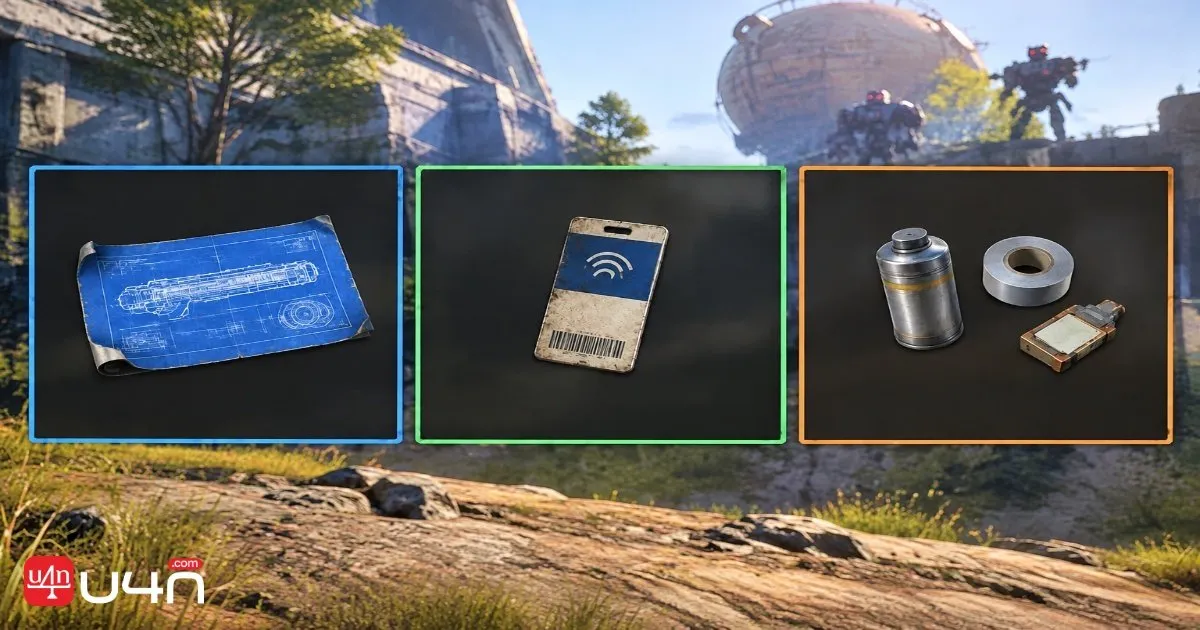
What the Cold Snap Footage Actually Shows
The early searches are uneven. Plaza Rosa produces components and valuables, but the desired blueprints do not immediately appear. Other containers turn up ordinary supplies, duplicate collectibles, or nothing relevant to the run. That slow opening matters because it keeps the later discoveries in perspective. This was not a sequence where every drawer delivered an upgrade.
As the sessions continue, we identify several worthwhile attachment blueprints, collect multiple keycards, and report finding a Jupiter blueprint in a drawer. A later hospital search also produces a tier-three vertical grip find. These moments explain the enthusiasm around Cold Snap without turning every pickup into evidence of a universal loot bonus.
Our team would separate the findings like this:
| Observation | What we take from it |
|---|---|
| Several desirable attachment blueprints appear | Cold Snap is worth considering for missing attachment recipes |
| Keycards appear across the searches | Keycards can provide useful secondary value |
| Some buildings yield little relevant loot | A promising condition still produces disappointing stops |
| Several areas have already been searched | Competition changes the value of an otherwise sensible route |
| The last session ends before normal completion | Discovered loot should not automatically count as extracted profit |
The strongest result is the range of useful finds across the recording. The biggest limitation is the lack of a complete run log, container count, and equivalent comparison with other conditions.
Why We Would Target Missing Attachment Blueprints
A blueprint farm needs a specific objective. "Find something rare" is too loose to guide route choices or backpack decisions.
For this route, we would enter with a short list of missing weapon attachment recipes. The recording's most relevant discoveries are the high-tier magazine and recoil-control options, because those were among the items we had struggled to locate elsewhere.
This also explains why ordinary weapon drops repeatedly receive little attention. During a dedicated blueprint run, a weapon can be valuable without being the right pickup. It may occupy space, add sorting time, or encourage a fight that does nothing to advance the original objective.
We would use three categories:
- Primary targets: missing weapon attachment blueprints.
- Secondary targets: useful keycards and other unlearned recipes.
- Replacement loot: components, medical supplies, and valuables worth carrying when space permits.
That order prevents a common mistake: filling the backpack early, then repeatedly opening the inventory when the meaningful drops finally arrive.
We would also distinguish furniture designs and weapon stencils from combat progression. Frozen Trail introduced lootable furniture designs and weapon stencils, according to the official Frozen Trail update notes. Their presence does not, by itself, establish that attachment blueprint probabilities were reduced.
We suspect a reduction in useful drops after the update. We would retain that as an observation to investigate, rather than present it as a confirmed change.
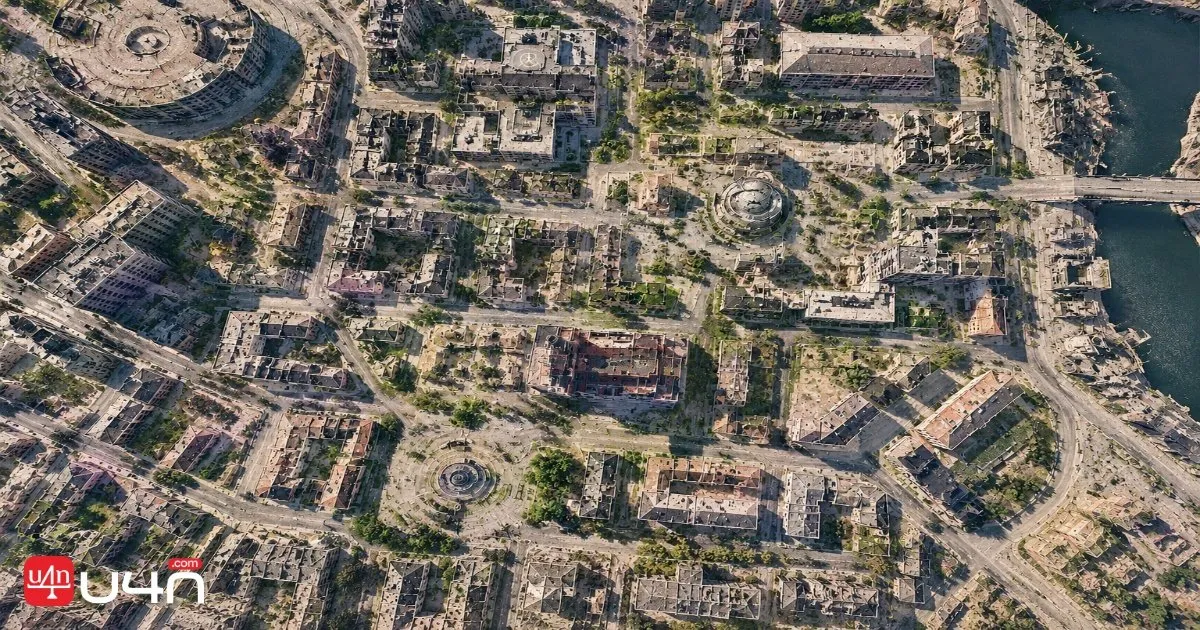
Build the Buried City Route Around Your Spawn
Plaza Rosa, Red Tower, Space Travel, residential key access, and the hospital. Our team would use those locations as flexible stops rather than force the same full circuit from every spawn.
A route becomes inefficient when we spend too long crossing the map to reach a favorite building. The nearest intact search area often deserves attention before a distant destination with a stronger reputation.
Plaza Rosa and Nearby Buildings
Plaza Rosa is a reasonable opening candidate when the spawn makes it convenient. It provides components and valuables, but its initial searches do not immediately solve the blueprint shortage.
We would search it with a clear exit plan. Check accessible containers methodically, avoid repeated inventory sorting, and move on once the building's remaining value becomes unclear.
Nearby buildings can extend the opening without requiring a major relocation. Red Tower appears in that role, though its unremarkable results do not justify ranking it above other stops.
A short, complete search is more useful than drifting through several buildings and forgetting which floors remain unchecked.

Space Travel as a Major Search Stop
Space Travel receives repeated attention and becomes part of the more rewarding searches. That makes it a sensible destination when the approach is manageable, and the interior has not already been stripped.
Our priority would be coverage. Finish a room or floor before climbing to another section, and use recognizable doorways or stairwells to track progress.
We discovered additional drawers and containers after thinking a section was finished. That is a useful lesson: familiarity with a building should improve search discipline, not encourage assumptions about which corners can be skipped.
Hospital as a Conditional Extension
The hospital offers another search opportunity, both exhausted areas and productive later finds. We would treat it as an extension when the backpack, supplies, and route still support one.
Arriving at a recognizable building does not make its contents available. Opened containers and missing loot are reasons to reassess the stop.
| Route situation | Our recommended response |
|---|---|
| Spawn near Plaza Rosa | Search it and convenient nearby interiors before committing to a long crossing. |
| Reach an intact Space Travel building | Complete a systematic interior sweep |
| Find a partly searched building | Check a limited untouched section, then reassess |
| Reach the hospital with room and supplies | Add a controlled search |
| Already carry a priority blueprint | Reconsider every remaining detour against the extraction route |
Search Thoroughly Without Chasing Every Container
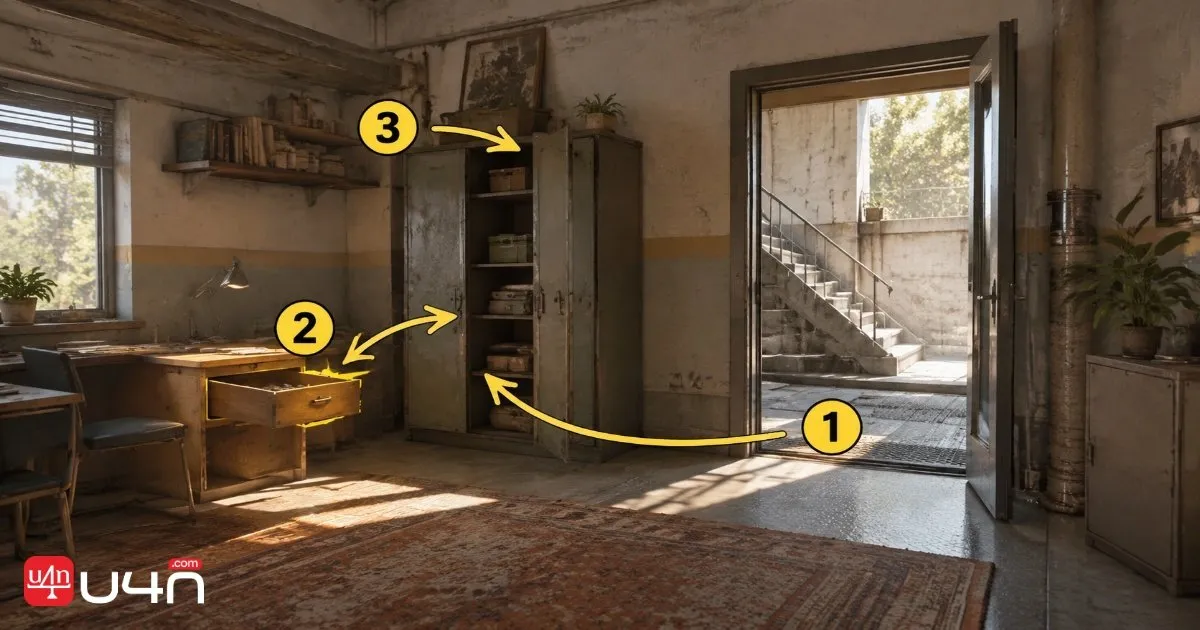
We check drawers, lockers, backpacks, medical storage, ordinary containers, and weapon cases. The useful takeaway is broad search coverage.
We would avoid rules such as "this drawer always pays" or "industrial containers never contain blueprints." An unexpected find can overturn either assumption, while one empty container tells us very little.
The same caution applies to item counts. We frequently react to containers holding three, four, or five items. More visible loot can make a search feel promising.
Our search routine would stay simple:
- Complete the accessible containers in the current room.
- Check overlooked corners and secondary storage.
- Confirm which nearby section remains untouched.
- Sort the backpack once the immediate area is clear.
That last step saves attention. Constantly opening the inventory turns a compact building search into a slow sequence of interruptions.
We would give weapon cases lower priority when the sole objective is attachment recipes, while still checking convenient ones if ammunition or equipment needs justify the stop. The point is to keep each interaction connected to the run's purpose.
A container across a safe room is a different decision from a container that requires another exposed crossing. Both offer uncertainty; only one asks for much additional commitment.
Treat Keycards as Options, Not Obligations
Keycards are a recurring secondary reward. Their value is easy to understand: they create access opportunities beyond the current search. The temptation is to use every card immediately.
We would resist that impulse.
The recorded locked-area searches are mixed. Some produce several blueprints or useful materials; others feel underwhelming to us. A locked door therefore deserves the same practical assessment as any other detour.
Before using a keycard during a blueprint run, we would ask:
- Is the room already close to our route?
- Do we have space for a worthwhile find?
- Can we leave without committing to another large crossing?
A newly acquired card can be a successful pickup even if it stays unused for the rest of the raid. Forcing its associated room into the current route may add travel, exposure, and inventory pressure.
Our preference would be to separate two objectives where possible. A blueprint run concentrates on searchable interiors and missing recipes. A planned key-room run begins with the access item and a route built around that destination.
Those objectives can overlap, but the overlap should be convenient. We would not carry a valuable attachment blueprint across Buried City simply because a fresh keycard made another room available.
Protect the Finds With Better Backpack and Movement Decisions
Several moments where the search becomes less controlled: a nearly exhausted mobility tool, uncomfortable stamina behavior after skill changes, server delay, and repeated decisions about what to discard.
Those details affect the usefulness of the route. A farming plan needs enough margin to leave after a good discovery.
Decide What Gets Replaced Before You Enter
We would make room for a missing attachment blueprint before finding one. That means identifying expendable pickups early, rather than debating every item beside an open container.
| Pickup | Our priority during a targeted blueprint run |
|---|---|
| Missing attachment blueprint | Highest |
| Other unlearned blueprint relevant to current goals | High |
| Keycard with a planned future use | High |
| Supplies needed to finish the route | Keep an adequate reserve |
| Materials required for an active upgrade | Keep selectively |
| Duplicate recipe or incidental collectible | Replace when better loot appears |
| Weapon unrelated to the run | Take only when its value justifies the space |
This is deliberately based on usefulness. A visually impressive collectible may be the first item we discard if it blocks a recipe we have been seeking for days.
We would also clear stash space before launching. We're comments about a crowded stash show how storage pressure can distort pickup decisions long before the backpack is full.
Check Mobility Before Committing to the Route
A movement tool near the end of its usable condition should change the plan immediately. We would save its remaining use for a difficult exit or emergency crossing, rather than continue traveling as though the reserve were unlimited.
Uncertainty after changing the skill setup. Our recommendation is to test movement behavior before taking a valuable farming loadout into a long search.
The official update notes describe a substantial skill-tree revision and changes to mobility equipment. That makes assumptions carried over from an older setup particularly worth checking.
High latency deserves the same practical response. We report server delay and struggles during encounters. Our team would shorten the route under those conditions, preserve more escape room, and avoid unnecessary contests over another building.
The run becomes easier to manage when movement and supplies are predictable. We want the difficult decision to be which recipe to keep searching for, rather than whether the next crossing is still possible.
When We Would Keep Farming and When We Would Leave
Cold Snap earns a place on our blueprint shortlist because of several relevant successes, including attachment finds we had previously struggled to obtain. It also contains enough empty searches and ordinary loot to rule out any promise of effortless progression.
We would continue farming when the missing-recipe list is meaningful, the route remains efficient, and repeated sessions produce useful results. We would change the plan when most finds become duplicates or the time spent searching stops translating into progress.
For our own comparison, we would record session duration, relevant blueprints found, useful keycards, and what actually reaches the stash. Keeping route length and search effort reasonably similar would make that record more informative than comparing one spectacular raid with one disappointing raid elsewhere.
Our team would also keep searches such as buy ARC Coins separate from the question being tested here. They do not provide evidence about Cold Snap container rewards; this route is evaluated through the missing recipes and useful keys recovered during play.
Once a priority blueprint is secured, we would reduce the remaining route to searches that are convenient and manageable. Another floor may produce something excellent, but the recipe already in the backpack is the reason to leave. The next Cold Snap run can handle the rest of the wishlist.