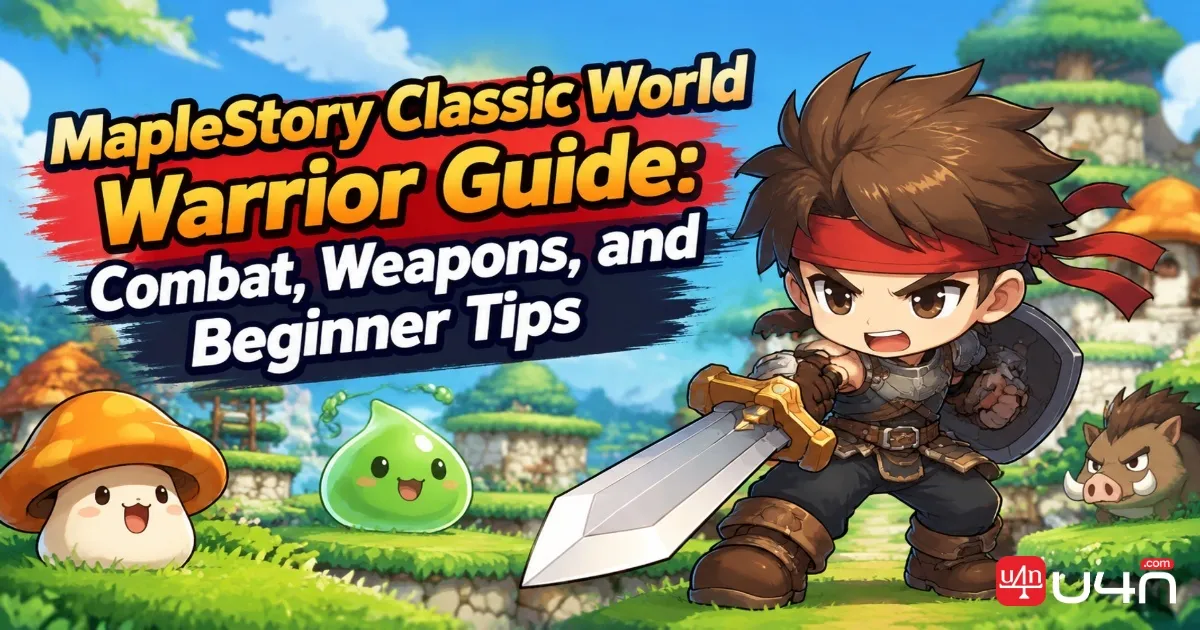
MapleStory Classic World brings a slower, more deliberate style of combat that makes every attack, movement, and monster encounter feel meaningful. After spending time with the early-game experience, our team found that its appeal goes beyond nostalgia. Weapon reach, defensive stats, positioning, and resource management all influence how smoothly a character progresses, making even basic training sessions feel like small tactical decisions. Managing MapleStory Classic World Mesos is also part of that experience, since equipment upgrades and consumables can affect how comfortably we handle each new training area.
For players starting as Warriors, these mechanics create an interesting balance between durability and efficiency. A sword-and-shield setup offers a defensive playstyle, while longer weapons can make it easier to reach monsters across crowded platforms. Neither approach is automatically the best choice for every situation. The key is understanding how weapon characteristics, skill usage, and personal preferences work together throughout the leveling process.
Why Classic World Combat Feels More Meaningful
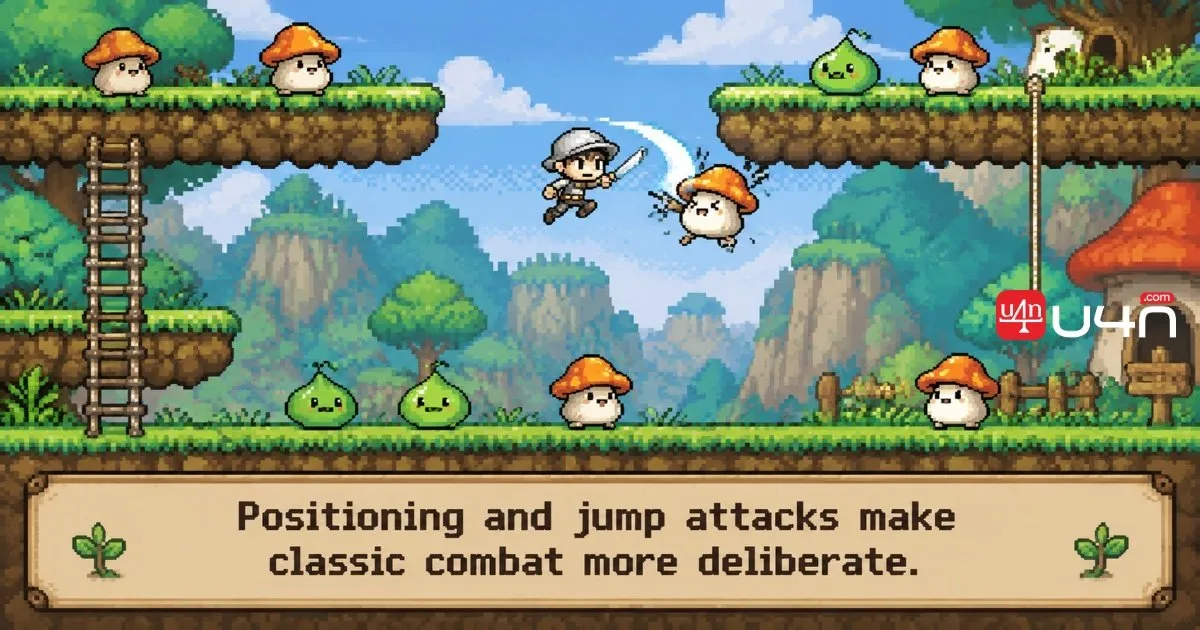
One of the biggest differences between Classic World and modern MapleStory is the pace of combat. Attacks generally feel more deliberate, and monsters are not always cleared in a single skill rotation. Instead of moving through a map almost automatically, we need to pay attention to enemy positions, attack timing, and the damage we are taking.
This slower rhythm creates opportunities for small decisions to matter. Jumping over a Slime before attacking, choosing which monster to engage first, or positioning ourselves to avoid unnecessary hits can make a noticeable difference. When a monster finally goes down after several attacks, the result feels earned rather than routine.
The combat system is relatively simple compared with modern MapleStory, but simplicity is not necessarily a weakness. For players who enjoy gradual progression, the combination of movement, positioning, and resource management provides a satisfying gameplay loop.
That said, the experience will not appeal to everyone. Players who prefer rapid movement, frequent skill changes, and large-scale mob clearing may find the early game restrictive. Classic World is better approached as a slower adventure in which learning the fundamentals is part of the reward.
Warrior Weapons: One-Handed Swords vs Polearms
Weapon choice has a greater impact on the Warrior experience than new players might initially expect. Our team found that attack reach can influence training efficiency, especially on maps with several platforms or many players competing for monsters.
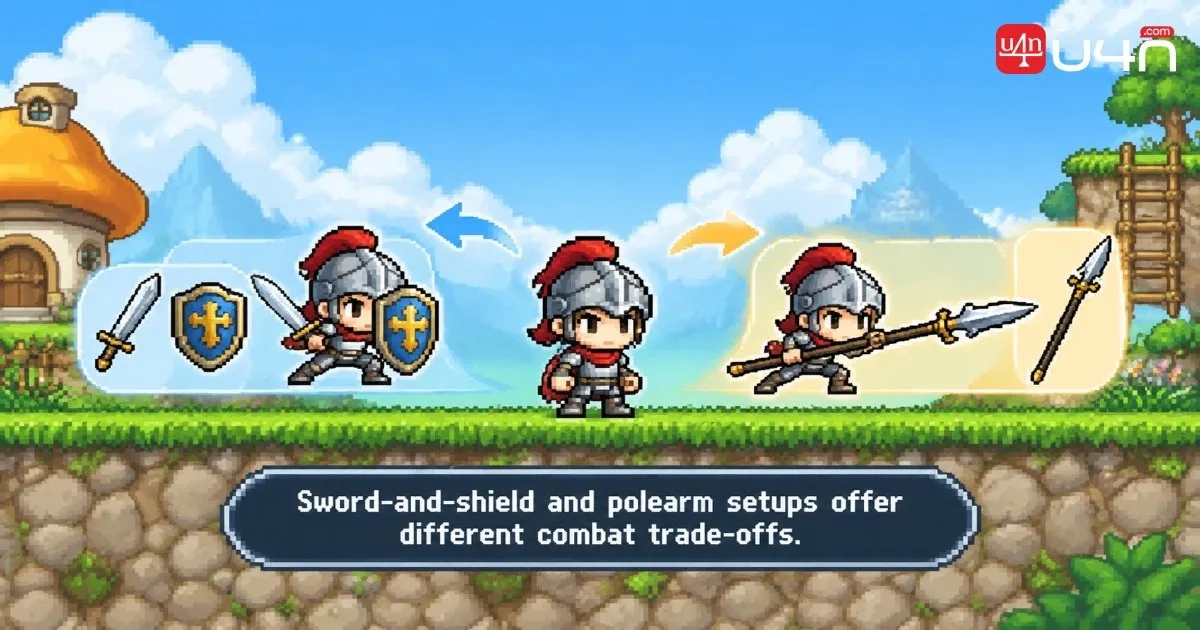
One-handed swords and shields
A one-handed sword paired with a shield supports a defensive setup. The shield adds another source of defense, which can help reduce incoming damage and make encounters more manageable.
However, attack reach deserves attention. Some one-handed swords can feel noticeably shorter in practical combat, requiring closer positioning before an attack connects. This can become frustrating when monsters are spread across a platform or when a character needs to engage enemies quickly.
A shield is not automatically a reason to choose this setup in every situation. Its value depends on the defensive benefit, the weapon's characteristics, and the demands of the map.
Polearms and spears
Longer weapons can offer a different experience. Their reach may allow Warriors to connect with monsters from positions that would be awkward with a shorter weapon. On suitable maps, jumping attacks can also help cover enemies near adjacent platform heights.
During early training around Kerning City, the Octopus map stood out as an example of why weapon reach matters. A well-positioned jump attack could reach monsters on an upper platform, potentially reducing the need to reposition before every encounter.
This does not mean every polearm attack will hit monsters above the character. The result depends on the attack animation, hitbox, character position, and platform layout. Players should test these interactions in their actual training areas rather than assume all long weapons behave identically.
| Factor | One-handed sword and shield | Polearm or spear |
|---|---|---|
| Defensive setup | Supports shield-based defense | Depends on the available equipment configuration |
| Attack reach | Varies by weapon and attack | Longer reach may help cover more space |
| Platform combat | May require closer positioning | Some attacks can reach nearby platform heights |
| Best consideration | Survivability and defensive preference | Reach and practical mobbing efficiency |
For Warriors training in crowded areas, we recommend testing both configurations when practical. A weapon that feels slightly slower may still perform well if its reach allows more reliable hits. Conversely, additional reach is less valuable when the map is compact, or the attack pattern does not suit the terrain.
Is the Page-to-Paladin Path Worth Choosing
Choosing a class is not only about damage output. It is also about the type of character we want to develop and whether its combat style remains enjoyable over many hours of progression.
For players drawn to a durable frontline character, the Page-to-Paladin path has an obvious appeal. The defensive theme, shield-based equipment options, and later elemental abilities offer a clear identity. If surviving monster encounters and steadily building a resilient character are priorities, this path can be rewarding.
The main concern is skill variety. Early Warrior combat relies heavily on core attacks such as Power Strike and Slash Blast. If the available skills do not change the combat loop often enough, leveling can begin to feel repetitive, particularly for players who prefer frequent ability unlocks.
Our advice is to distinguish between two questions: Do you enjoy the Warrior's basic combat, and are you comfortable with its expected progression pace? A class can suit your preferred fantasy while still demanding patience during certain leveling stages.
Before committing to a long-term plan, consider the following:
- Choose for the playstyle: If defense and close-range combat appeal to you, the Warrior remains worth considering.
- Expect repetition: Do not assume every job advancement will completely transform your skill rotation.
- Evaluate the actual version: Check current skill descriptions and advancement requirements before planning around a specific ability.
- Avoid restarting over small doubts: A few frustrating training sessions do not necessarily mean you chose the wrong class.
We would rather see players choose a character they genuinely enjoy than abandon it because another class appears more efficient in a short gameplay clip. Class performance matters, but so does the willingness to keep playing.

Beginner Tips for Skills, Mesos, and Efficient Training
Efficiency still matters in Classic World, especially when potions, equipment, and travel consume resources. The goal is not to eliminate optimization, but to use it where it improves the experience without turning every session into a chore.
Use skills according to the situation
Power Strike and Slash Blast serve different purposes, so it is worth evaluating when each is useful. A stronger single-target attack may be preferable when dealing with one durable monster, while an area attack can be more convenient when several enemies are within range.
The correct choice depends on the current skill values, MP costs, target count, and time needed to finish the encounter. Do not assume that using the highest-damage skill on every monster is always the most efficient option.
Balance defense against consumable costs
Defensive equipment can improve survivability, but its value should be judged by its actual effect. If an upgrade reduces the damage taken from common monsters, it may lower potion consumption over repeated training sessions.
However, one damage comparison is not enough to establish a universal rule. Monster attacks, character stats, and equipment differences can all affect the result. When comparing upgrades, observe incoming damage across several encounters and consider both the purchase cost and the expected savings.
Make training routes practical, not perfect
Grouping nearby quests and choosing suitable monster maps can save travel time. Yet there is no need to treat every detour as a mistake. Exploring a town, completing an interesting quest, or visiting a different area can provide variety without seriously undermining progression.
We recommend focusing on a few straightforward habits:
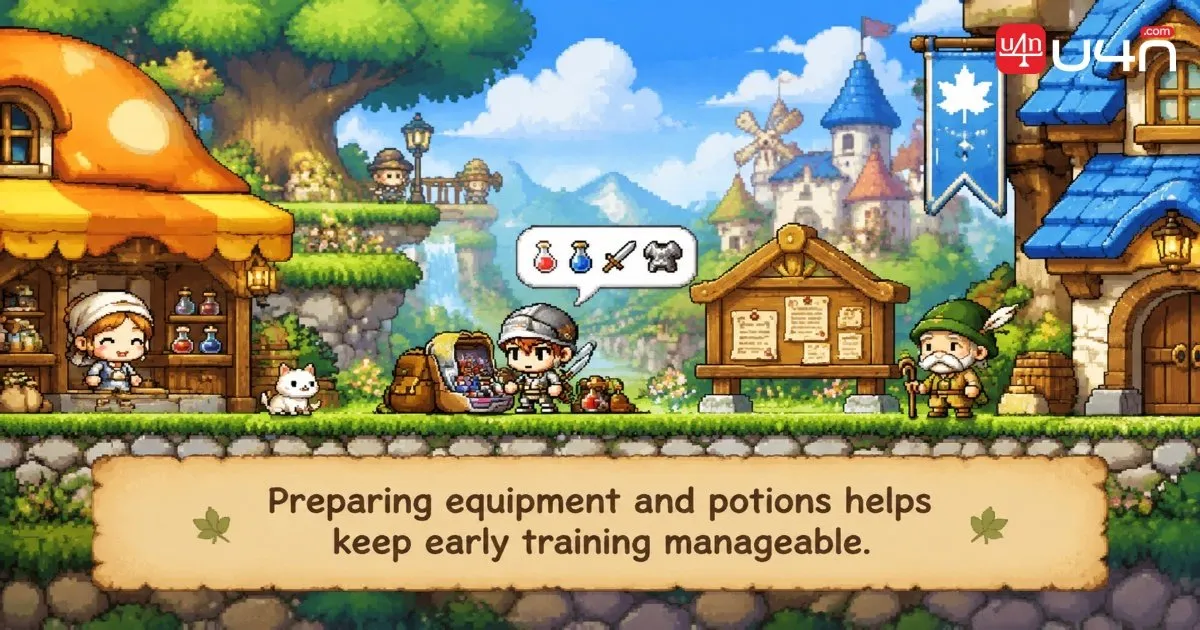
- Check your equipment before moving to a new training area.
- Carry enough potions for the expected encounter difficulty.
- Use attacks that fit the number and placement of nearby monsters.
- Review your remaining quests and rewards when returning to town.
- Adjust your route when the map is too crowded, or the monsters are inefficient to fight.
These habits help maintain steady progress without requiring constant calculations.
Summary: Enjoy the Journey, Not Just the Levels
MapleStory Classic World works best for players who appreciate gradual progression, deliberate combat, and the small decisions that shape a character's development. For Warriors, weapon reach, defensive equipment, and attack selection can all affect the feel of early training. The Page-to-Paladin route is worth considering if its defensive identity matches your preferences, although players should be prepared for periods of skill repetition.
Our team recommends optimizing the basics without chasing perfect efficiency in every situation. Better equipment and sensible training routes can make progression smoother, but quests, exploration, and the game's soundtrack are also part of the experience. There is no need to rush through every early milestone just to reach the next stage.
The same principle applies when planning your wider progression and managing MapleStory Global Mesos: understand what your character needs, prioritize upgrades that make a meaningful difference, and avoid spending resources simply because a popular guide says you should. A steady approach leaves more room to enjoy the game on your own terms.
FAQ
Are Warriors good for beginners in MapleStory Classic World?
Warriors can suit beginners who prefer close-range combat and a durable character. However, movement limitations, attack reach, and resource management can make some training areas more demanding. Your preferred combat style matters more than a general class ranking.
Is a polearm better than a one-handed sword?
Not in every situation. A polearm's reach may help with platform coverage and crowded maps, while a one-handed sword paired with a shield supports a defensive setup. Compare the actual weapon characteristics and your intended training area before deciding.
Does a Page-to-Paladin build become repetitive?
It can, particularly if you prefer frequent changes to your skill rotation. Early Warrior combat relies on a relatively small set of core attacks, so it is important to enjoy the basic gameplay loop rather than depend entirely on future abilities.
Should beginners prioritize leveling speed or saving Mesos?
Neither goal should dominate every decision. Efficient training and sensible spending are useful, but occasional exploration or a less optimized quest route can still be worthwhile. Choose the balance that makes progression enjoyable and sustainable.