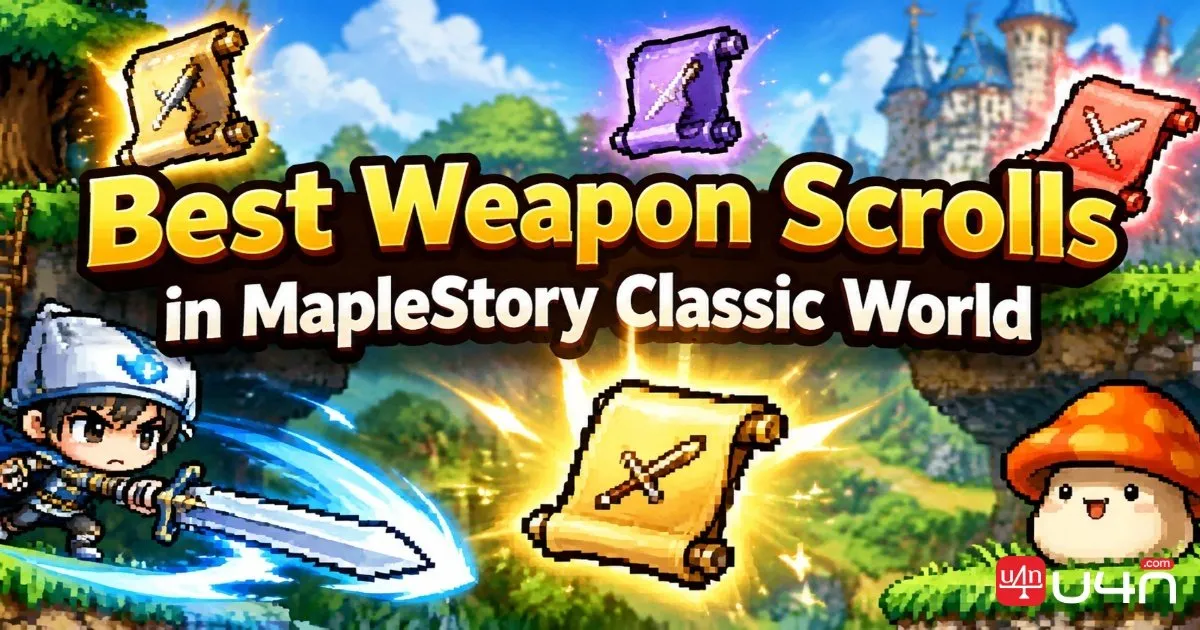
Weapon upgrades are one of the most direct ways to improve your damage in MapleStory Classic World, but spending Mesos on the wrong scroll at the wrong time can slow down your progress. For most players, 100% weapon scrolls offer a reliable way to strengthen a good weapon without gambling on repeated failures. The real question is when that investment starts paying off.
Our team recommends looking beyond the scroll's success rate. Your weapon's level, the price difference between 100% and 60% scrolls, your next equipment upgrade, and the monsters you plan to farm all affect the decision. Whether you're saving up MapleStory Classic World Mesos or trying to push through tougher training maps, the goal is the same: spend only when the extra damage makes a meaningful difference.
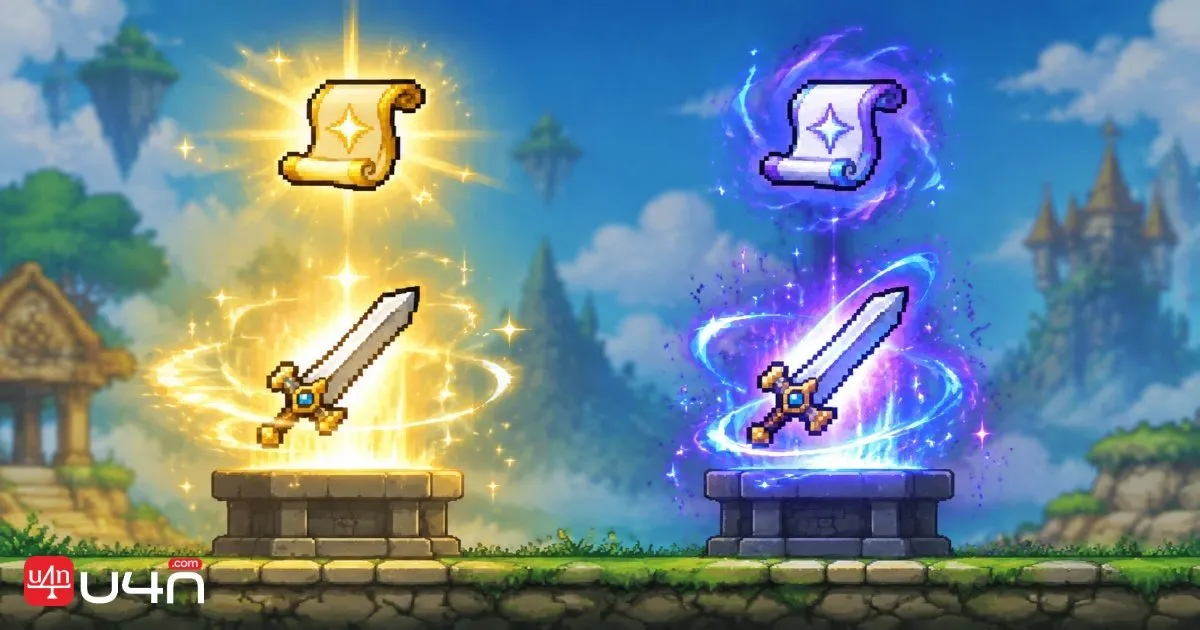
100% vs. 60% Weapon Scrolls: Which Is Better
The main difference is certainty versus risk. A 100% weapon scroll provides a predictable upgrade, while a 60% scroll gives you a chance to improve your weapon at a potentially lower initial cost.
| Factor | 100% Weapon Scroll | 60% Weapon Scroll |
|---|---|---|
| Success rate | Guaranteed, assuming the scroll works as described | 60% per attempt |
| Cost per scroll | Usually higher | Varies by weapon and market demand |
| Upgrade outcome | Predictable | Random |
| Budget planning | Easier | Requires a failure budget |
| Best use case | Reliable upgrades on weapons worth keeping | Cheap scrolls when you're comfortable with risk |
A 60% scroll can look like a bargain until several attempts fail. You may spend less on the first scroll, but the total cost of achieving your desired upgrade can quickly climb. Successful upgrades can also increase an item's market value, making a failed follow-up attempt more painful if it consumes another upgrade slot.
For newer players, we generally favor the 100% option when the price is reasonable, and the weapon will remain useful for a while. It removes uncertainty from the upgrade itself, allowing you to plan your Mesos around other needs such as potions, equipment, and travel.
For most players, the best scroll is the one that improves a weapon worth keeping without putting essential progression expenses at risk. A guaranteed upgrade is valuable, but timing and total investment matter just as much.
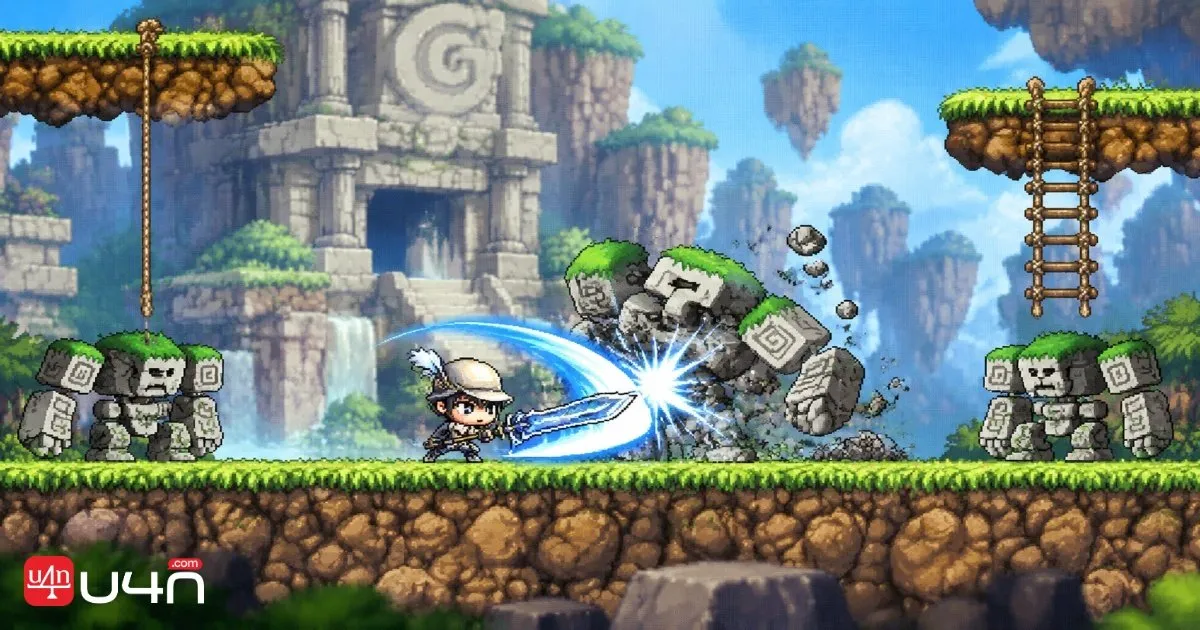
Where to Get 100% Weapon Scrolls
We find an NPC vendor in Ellinia as a source of 100% scrolls for different weapon types. To find the vendor, head toward the upper-left section of Ellinia and climb the tree platforms until you reach the shop on the right.
Don't assume every crafting or profession system sells weapon scrolls. The guide notes that Arc Forge offers armor-related components rather than the weapon scrolls players are looking for. Check the current in-game vendor inventory before spending time gathering crafting materials.
The original guide lists these prices:
| Weapon category | Reported 100% scroll price |
|---|---|
| One-handed weapons | 30,000 Mesos |
| Two-handed weapons | 60,000 Mesos |
Treat these figures as a snapshot of the version covered by the current version, not permanent prices. Vendor inventories, quest rewards, and player-market conditions can change as the game develops. Before buying, compare the vendor price with any available quest rewards and current player listings.
When Is a Weapon Worth Scrolling
Timing matters more than many players expect. A weapon that you replace after a few levels may not justify a large investment, even if the upgrade itself is guaranteed. We prefer to save expensive scrolls for a weapon that can carry us through a meaningful part of the leveling process.
Avoid overspending on early weapons
Before roughly levels 30–35, your base weapon is often sufficient for routine training, and upgrades can become obsolete quickly. These levels are a general guideline from the original guide, not a strict rule for every class or server.
As you approach higher-level training, reassess your damage instead of following a fixed character-level threshold. If your current weapon still lets you kill monsters efficiently, you can keep saving. If tougher monsters turn every fight into a long exchange of attacks, a weapon upgrade becomes more attractive.

Prioritize weapons with a longer useful life.
We highlight a potential problem with investing heavily in weapons around the current level cap: stronger equipment and additional crafting options may arrive later. That makes expensive upgrades less appealing when an item could soon be replaced.
Before scrolling, ask yourself three questions:
- How long will I use this weapon? The longer it remains useful, the more time you have to benefit from the upgrade.
- What will I farm next? A weapon that improves your performance against your intended training targets is more valuable than one that only raises your displayed damage.
- What other expenses are coming? Keep enough Mesos for potions, essential gear, and future upgrades.
Our rule of thumb is simple: don't fully upgrade every weapon you equip. Upgrade when the weapon is good enough to keep and your current damage is starting to hold you back.
How Weapon Upgrades Improve Training Efficiency
Weapon scrolling is not just about a bigger damage number. The important question is whether that increase changes how quickly you kill monsters.
Consider a monster that takes three hits to defeat before an upgrade. If the extra weapon damage reduces that to two hits, you eliminate one attack from every kill. Across hundreds of kills, that can mean less time spent attacking, fewer opportunities for incoming damage, and potentially lower potion consumption.
The benefit depends on your class, skill multipliers, damage range, and the monster's HP. An upgrade that increases damage but leaves your hit count unchanged may provide a much smaller training improvement than one that crosses a kill threshold.
Use hit count to evaluate the upgrade
| Before upgrading | After upgrading | Practical implication |
|---|---|---|
| Three hits per kill | Still three hits | Damage improves, but the training benefit may be modest |
| Three hits per kill | Two hits | Fewer attacks per kill can improve farming pace |
| Two hits per kill | One hit | Potentially substantial gains in clear speed |
These are illustrative scenarios, not measured results for a specific weapon or monster. Actual performance also depends on damage variance and how consistently your character reaches the required damage threshold.
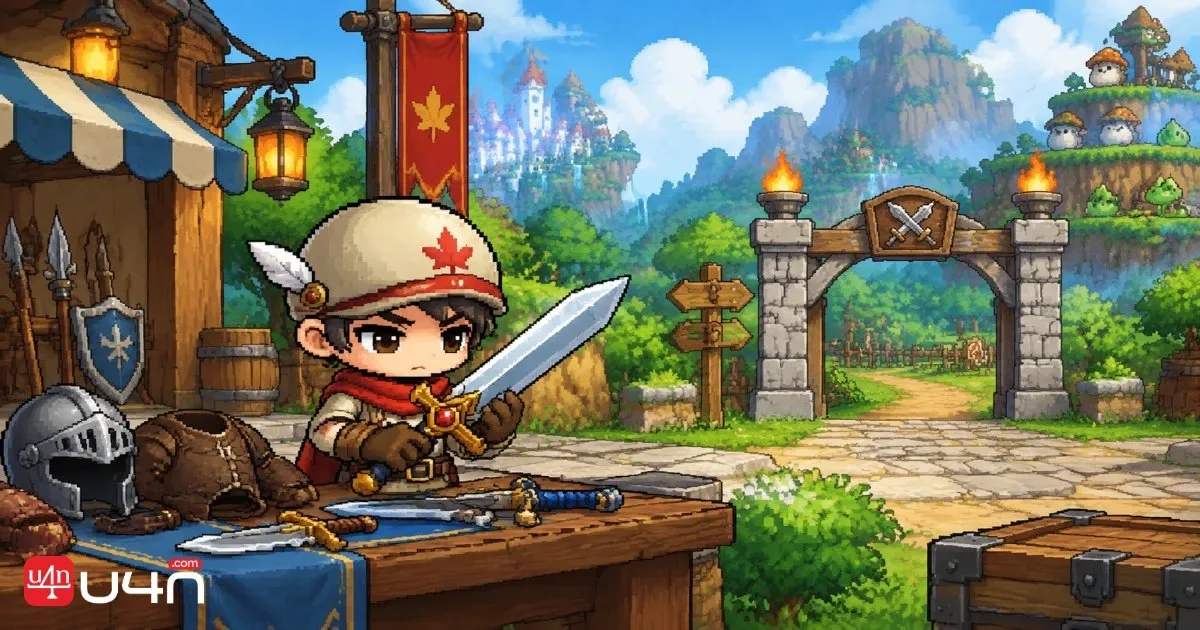
Choose training targets that match your damage.
We discuss monsters such as Fire Boars and Dark Stone Golems when explaining why weapon upgrades become more valuable later. The broader lesson is to assess your actual farming route rather than chasing the highest-level monster available.
A monster with more HP may offer attractive rewards, but if it takes too long to kill or forces you to spend heavily on potions, a lower-level target can produce better overall results. Test your kill count, track your potion use, and compare your experience and Mesos gains over a reasonable training session.
Don't upgrade simply because a monster is high-level. Upgrade when the improvement makes your chosen training route more efficient.
When 60% Scrolls Make More Sense
Although 100% scrolls are easier to budget for, they are not automatically the best financial choice. Some weapon types may have cheaper 60% scrolls because demand is lower or fewer players use those weapons. In those cases, the price gap can make a riskier approach worth considering.
Some guides specifically point to less popular Warrior weapon options as potential examples. However, market prices are dynamic, so check the actual scroll for your weapon rather than assuming every weapon in a class follows the same pattern.
Compare expected costs before committing.
If each 60% scroll costs C60, and attempts are independent with a 60% success rate, the expected number of attempts to obtain one success is approximately 1.67. The expected scroll cost for that one success is therefore:
E(C) = C60 / 0.60
This calculation covers only the cost of obtaining one successful attempt. It does not account for remaining upgrade slots, the value of the weapon after failure, or the full sequence needed to reach your target.
Use the following checklist before choosing the 60% option:
- The scroll is substantially cheaper than its 100% alternative.
- You can afford several failed attempts without compromising essential expenses.
- The weapon is worth upgrading, and you understand how failure affects its remaining upgrade potential.
- You have compared the expected cost with the certainty of using 100% scrolls.
If the price difference is small, the guaranteed upgrade is usually easier to justify. If the 60% scroll is unusually cheap and you have enough Mesos to absorb the risk, it deserves a closer look.
Should You Scroll Earrings and Capes Instead?
Weapon upgrades deserve special attention because weapons directly affect offensive performance. Earrings and capes should be evaluated separately, based on the stats they provide, how long you plan to use them, and whether they can be traded between characters or classes.
An accessory may remain useful for much longer than a leveling weapon, which can make a successful upgrade valuable over time. However, a longer lifespan does not automatically make a 60% scroll worthwhile. The price, potential stat gain, and failure consequences still matter.
For early progression, our priority is to avoid spreading your Mesos across too many upgrades at once. First establish whether your weapon is limiting your training efficiency. Then compare accessory upgrades against other needs, including potions and replacement equipment.
Later-game critical damage accessories may become attractive investments, but future item availability and release timing should be treated as unconfirmed until supported by current game information. Don't sacrifice a useful weapon upgrade today based solely on speculation about future gear.
Summary
For most players, 100% weapon scrolls are a sensible choice when upgrading a weapon that will last and when the extra damage can improve real training performance. Their main advantage is predictability: you know what you're paying for, without having to budget around repeated failures.
We recommend delaying expensive upgrades on short-lived weapons, checking current scroll prices, and using hit count as the practical measure of damage improvement. A cheaper 60% scroll can still be worthwhile for certain weapon types, but only when the price gap and your risk tolerance justify it.
If you're planning your next upgrade, prioritize the weapon that supports your current training goals rather than chasing the highest possible damage number. Keep enough currency for the rest of your progression, and compare the cost of improving your current gear with the cost of replacing it. Players comparing broader currency options, including buying MapleStory Global Mesos, should also evaluate the applicable game rules and service terms before making a purchase.
FAQ
Are 100% weapon scrolls always better than 60% scrolls?
No. They guarantee a successful scroll application under the stated rules, but their price may be too high compared with a discounted 60% alternative. Compare expected costs, failure consequences, and your budget.
What is the best level to scroll a weapon?
There is no universal level. The original guide suggests waiting until roughly levels 30–35 or later, when weapons may last longer, and tougher monsters make damage more important. Your class, equipment options, and training route should determine the actual timing.
Should I scroll a weapon as soon as I buy it?
Not necessarily. First check how long you expect to use it and whether the upgrade will improve your kill count. If you will replace the weapon soon or can already farm efficiently, saving your Mesos may be the better choice.
How can I tell whether an upgrade is worth the cost?
Compare your attacks per kill, experience gained over a consistent training period, potion consumption, and net Mesos earned. An upgrade is more compelling when it crosses a damage threshold that measurably improves your farming efficiency.