

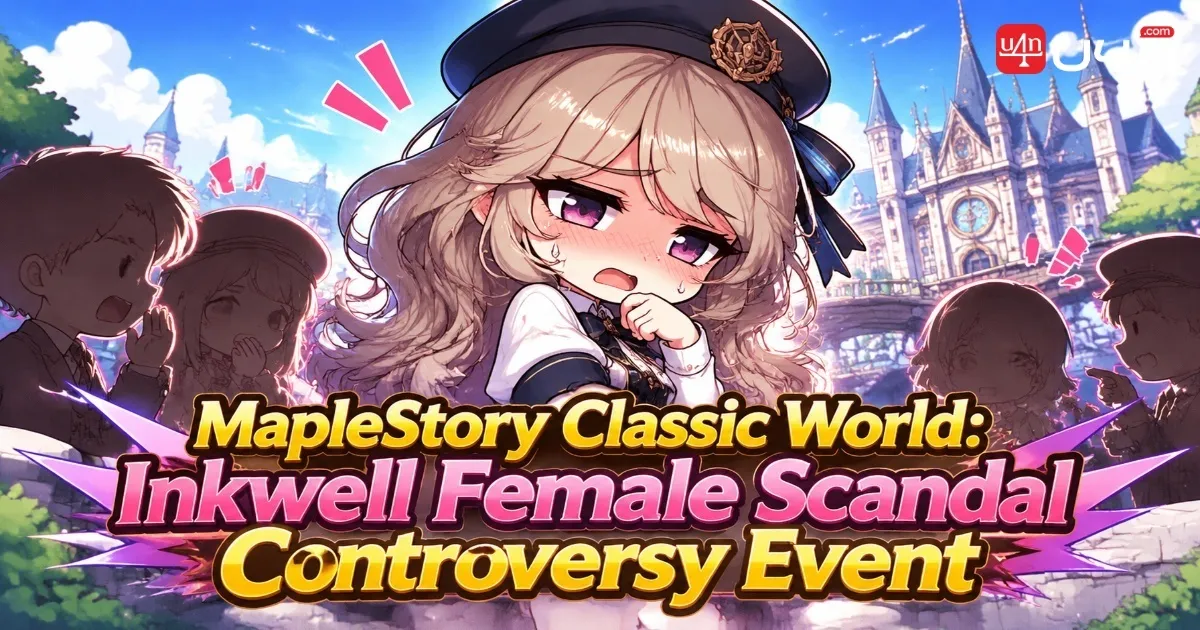
A boss summon should have been a brief community moment. Instead, a recent video has raised a thorny issue for MapleStory Classic players: why was an operator bringing monsters to a streamer while ordinary players were struggling to reach those same encounters? The argument quickly spread beyond one visit, pulling account restrictions, compensation, and staff conduct into the same dispute.
Our team sees resource access as the thread connecting those complaints. Discussions about MapleStory Classic World Mesos usually center on earning currency through familiar gameplay loops. Staff intervention changes that conversation. If an operator can create encounters that might produce valuable drops, players need to understand who can participate and what rules govern those rewards.
Nexon's explanation, which deserves to be read alongside the accusations. It describes community events, an account detection error, and monster summons offered as an apology. Those details complicate the initial story. They do not automatically settle the fairness question, but they give us a better starting point than rumors about the streamer or assumptions about why individual players were banned.
Why the Boss Summons Upset Players
The footage at the center of the dispute showed Inkwell summoning monsters during a visit to a streamer's in-game home. The immediate objection was straightforward: players associated those encounters with waiting, competition, and the possibility of useful loot.
For someone who has spent an evening checking spawn locations, a staff-created encounter can look like a shortcut around the entire process. That reaction does not require jealousy toward the recipient. It can come from a reasonable concern that access to an operator carries benefits unavailable through normal play.
The footage's commentary reinforces that concern by mentioning valuable drops and crowded boss encounters. We would treat its specific price examples cautiously. Market values need a server, a date, and a reliable record. A possible reward also cannot be presented as an item someone actually received.
Even without a price tag, the design question remains. Did these summoned monsters use ordinary loot rules? Could their drops be traded? Was the visit open to other players, or did participation depend on being in the right place with the right person?
Those details determine the scale of the issue. A harmless spectacle and an encounter that distributes progression resources can look similar in a short clip. Their consequences are different.
Our concern would therefore begin with the event settings. Before deciding whether the summons created an unfair advantage, we need to know what the encounter could award and who had a realistic opportunity to join.

What Nexon's Response Actually Addresses
According to the official response, the Classic World team, including Inkwell, had been running buff events and boss summons since Founders Access. The stated purpose was to interact with players and recreate some of the spontaneity associated with earlier MapleStory experiences.
That explanation provides context. It suggests the summons belonged to an existing staff practice rather than an entirely new activity created for one streamer. The account also describes earlier public invitations, which complicates the claim that this kind of access was exclusively reserved for her.
However, an activity can be established and still need clearer rules. Saying that staff has done it before answers a question about precedent. Players are also asking about eligibility, rewards, frequency, and oversight.
| Disputed point | Explanation | Question still worth answering |
|---|---|---|
| Staff summoned bosses | Summons were part of community interaction | What participation and reward rules applied? |
| A player received special attention | The visit was connected to an apology | Was the same remedy available to comparable cases? |
| Accounts were restricted | Some restrictions involved a detection error | Which cases did that explanation cover? |
| Critics penalties | Staff distinguished feedback from harassment | What conduct triggered each individual action? |
Our team would judge the response by how well it closes those gaps. A statement can accurately explain an operator's intention while leaving the practical fairness concerns unresolved.
Continuing community events may be reasonable. Continuing them under rules that players cannot see invites the same argument whenever another clip appears.

Keep the Different Account Restrictions Separate
The original commentary moves between game account restrictions, allegations of punishment for criticism, and bans or removals on community platforms. That makes the story feel increasingly severe, but it also makes individual cases harder to assess.
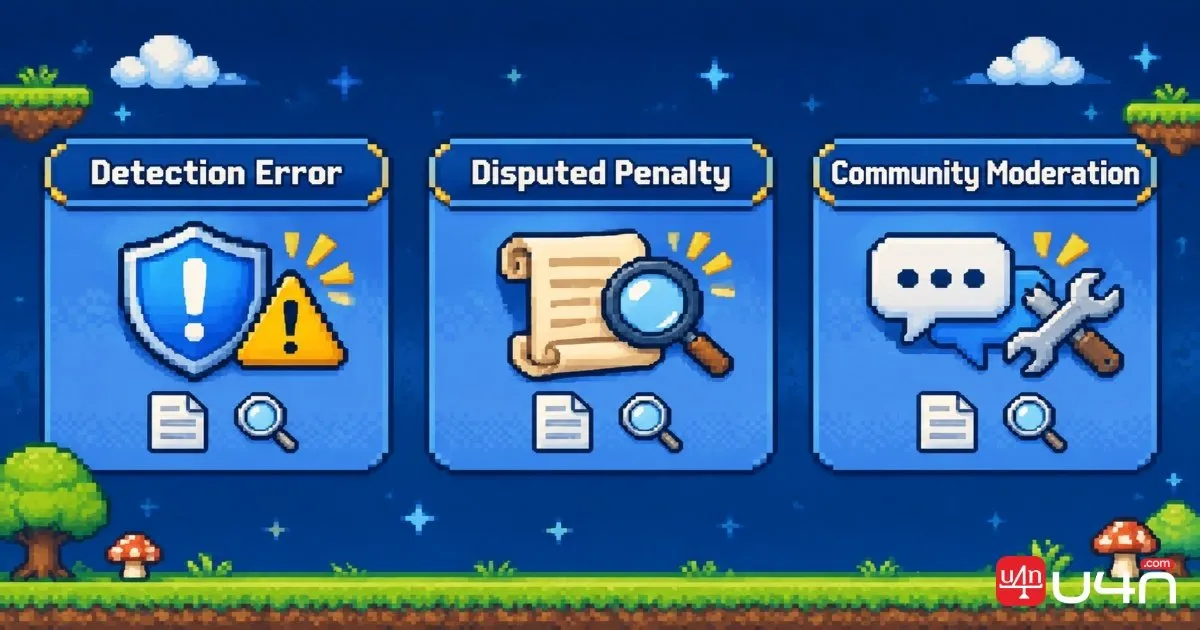
The response reproduced in the account attributes some restrictions to a detection error involving housing dummy monsters. It says the affected restrictions were lifted after the issue was identified. The commentary connects the streamer's experience to that explanation and describes the later summons as an apology.
That sequence should be presented clearly: a detection error, a restriction, a reversal, and a disputed response afterward. It should not be silently combined with every separate claim about moderation.
A player who says they were banned for criticizing staff presents a different evidence problem. We need the complete message, the surrounding conversation, the platform involved, and the stated enforcement reason. A cropped screenshot may show that a penalty happened without establishing why.
The same standard should apply to staff explanations. Labeling a message as harassment does not remove the need for a consistent rule and an understandable reason.
For our team, a useful case record would contain:
- The exact restriction and the platform where it occurred.
- The relevant messages with enough surrounding context.
- The rule cited in the notice.
- Any appeal result or later correction.
That approach gives legitimate complaints a stronger foundation. It also prevents an automated error from being used as proof of retaliation when the available evidence does not establish that connection.
Compensation Needs a Repeatable Rule
The apology explanation changes the context of the summons. It also raises the strongest practical question in the story: what should an operator give a player after an incorrect restriction?
Correcting the restriction is the immediate priority. Compensation may also be appropriate, depending on what the player lost. The difficulty begins when that compensation involves monsters with potentially valuable rewards.
A personal visit can feel considerate. An improvised reward can be much harder to defend across a whole server.
Our preferred standard would be simple enough for players to understand before they need it. Comparable errors should receive comparable remedies, with adjustments tied to documented losses. A person's audience size or access to staff should not determine the outcome.
Boss summons make that consistency difficult if rewards depend on random drops. Two players could receive the same number of monsters and walk away with very different compensation. Open participation introduces another question: are nearby players also receiving benefits from someone else's account error?
None of this establishes that valuable loot was distributed in the disputed visit. It explains why the event settings matter.
If the monsters could not produce normal rewards, staff could address a large part of the concern by saying so. If they could, players deserve an explanation of why that method was chosen and how equivalent cases were handled.
A compensation policy should remain defensible when its recipient is an ordinary player whose ticket never becomes a public discussion.

Keep Accountability Focused on Staff Decisions
The streamer's gender adds nothing to the mechanics of the dispute. Neither do unsupported suggestions about a private relationship. Those details attract attention while making the central questions harder to answer.
Receiving an operator's visit does not establish wrongdoing by the recipient. Claims that a player knowingly participated in misconduct would require separate evidence.
Staff decisions, meanwhile, are open to scrutiny. Players can reasonably ask why a particular remedy was used, whether the event followed internal rules, and how mistakes will be prevented. Those questions remain valid even when parts of the surrounding discussion become hostile.
Our team would also separate criticism from targeted abuse more carefully. Disagreeing with an operator, questioning a policy, or requesting an explanation should not automatically be treated as harassment. Threats, repeated personal targeting, and abusive messages require a different response.
Enforcement becomes easier to trust when notices identify the conduct and the applicable rule. Vague warnings leave room for both inconsistent moderation and misleading claims about what happened.
The community does not need to agree on Inkwell's personality to evaluate this incident. It needs enough information to assess the decisions made through his staff access.
Why Boss Access Made the Reaction Stronger
The wider complaints about field bosses help explain why this footage landed so badly. Players describe long waits, competition from stronger characters, and difficulty completing boss-related objectives.
That background matters because the disputed visit appeared to bypass a bottleneck players were already frustrated with. An operator might see a quick community interaction. A player who has repeatedly missed a spawn might see proof that the system becomes flexible for certain people.
Our reading is that the summons acted as a trigger for an existing access complaint. Removing the clip from circulation would not answer that complaint.
The account also mentions a summoning-bag system that had been disabled following abuse. Without further documentation, we would avoid claiming exactly how that system worked or why every restriction was introduced. The useful design question is narrower: what legitimate route remains for players who need those encounters?
Possible changes should match the underlying problem. If a quest requires participation, a quest-specific encounter could reduce pressure without distributing the same rewards as an unrestricted field boss. If rewards are the contested resource, scheduled events or clearer participation rules might be more relevant.
We would assess any proposal against four practical concerns: access, reward supply, abuse opportunities, and the amount of waiting it creates.
Simply adding more summons may move the dispute elsewhere. A workable change should help ordinary players reach their objectives while preserving understandable limits on valuable rewards.

What Players Should Expect From the Next Response
The next useful response would make the disputed event understandable from start to finish. Players should be able to see why the visit happened, what was summoned, what those monsters could award, and which policy authorized the remedy.
Our team would look for a small set of concrete disclosures:
- Confirmation of whether the summoned monsters used normal drop rules.
- An explanation of who could participate in staff-run summon events.
- A consistent remedy for comparable account detection errors.
- A clear distinction between game restrictions and community moderation.
- A documented route for appealing an incorrect penalty.
Those details would be more useful than another broad assurance that community interaction is intended to be fun. Intent matters, but players experience the rules through access, rewards, and enforcement.
A correction would also help where early discussion exceeded the evidence. If claims about loot, private relationships, or retaliatory bans cannot be supported, they should not continue circulating as established parts of the story. The same discipline applies if later records show that a staff decision was mishandled.
For players tracking MapleStory Classic World Items, the unresolved issue is whether staff-created encounters followed the same reward boundaries that govern everyone else's progression. Clear drop rules and a consistent compensation policy would give that discussion something firmer than speculation.
Our team would assess any follow-up against those commitments. Staff should be able to host community moments, correct account errors, and moderate abuse under rules that remain understandable when the footage reaches people who were never present.