Warlock is one of the most versatile classes to explore in World of Warcraft: Forever. With damage-over-time spells, demonic companions, powerful drains, and a wide range of combat tools, the class rewards players who understand more than just their damage rotation. Our team believes the real appeal of Warlock lies in its ability to control the pace of a fight while turning careful resource management into a genuine advantage. Whether you're starting a new character or planning your next build with World of Warcraft Forever Gold, choosing the right specialization is the first step toward a smoother journey through Azeroth.
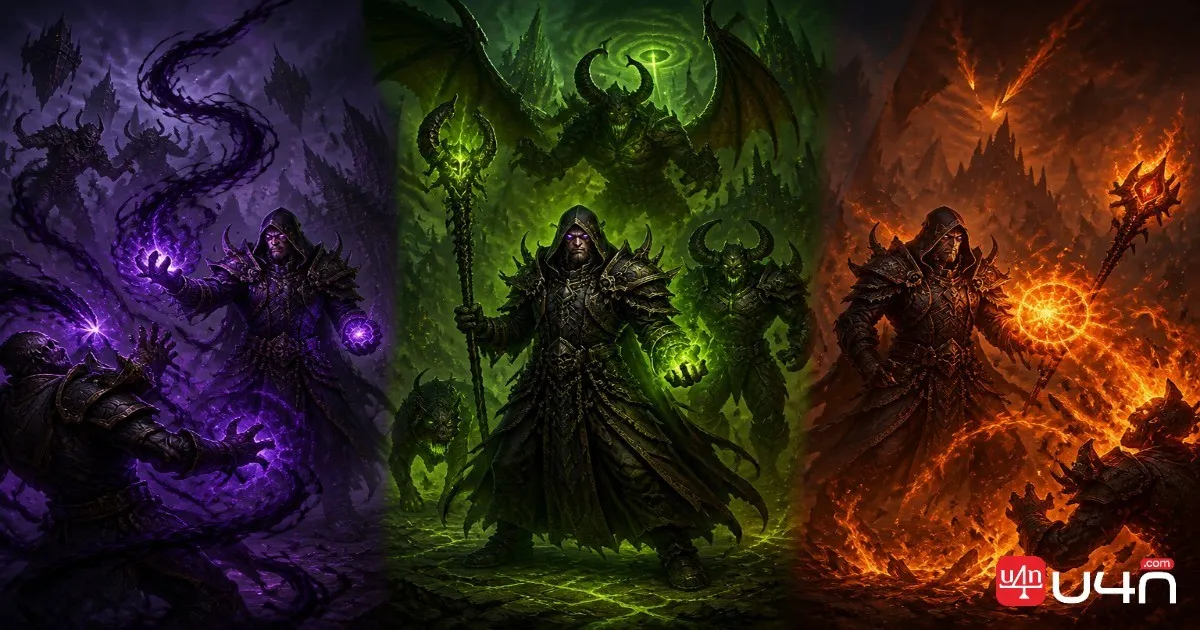
Unlike classes that rely primarily on direct attacks, Warlock combines personal spell damage with the utility of summoned demons. The three specializations—Affliction, Demonology, and Destruction—offer different approaches to combat, from wearing enemies down over time to empowering pets or unleashing powerful Fire and Shadow spells. However, no single build automatically solves every encounter. Understanding your strengths, managing your weaknesses, and adapting to the situation will make a much bigger difference than blindly copying a talent setup.
Is Warlock Good in WoW Forever?
Warlock is an appealing choice for players who enjoy strategic combat, solo progression, and flexible spellcasting. Its damage-over-time effects can continue working while you reposition or prepare your next cast, while demon pets provide additional damage, utility, or protection depending on the situation.
The class also offers tools that help it recover from difficult encounters. Life Tap converts health into mana, while Drain Life can help restore health during combat. Used thoughtfully, these abilities reduce downtime and give Warlocks more control over their resources. Used carelessly, however, they can leave you vulnerable when an enemy closes the distance.
Warlock Strengths and Weaknesses
| Strengths | Weaknesses |
|---|---|
| Strong damage-over-time potential | Requires attention to spell and debuff management |
| Demon pets provide useful combat options | Pet control adds another layer of responsibility |
| Health and mana management offer flexibility | Poor resource timing can create dangerous situations |
| Multiple specializations support different playstyles | Builds need to match the content and encounter |
| Useful control and utility in group combat | Vulnerable when positioning and defensive tools are neglected |
For beginners, we recommend learning how your pet, damage spells, and resource tools interact before attempting complicated rotations. Warlock becomes much more comfortable once you stop treating every fight as a race to deal maximum damage.
Best Warlock Specialization: Affliction, Demonology, or Destruction?
Your specialization determines how you approach combat. Although each tree can contribute damage, their strengths and decision-making patterns differ considerably.
Affliction: Damage Over Time and Sustained Pressure
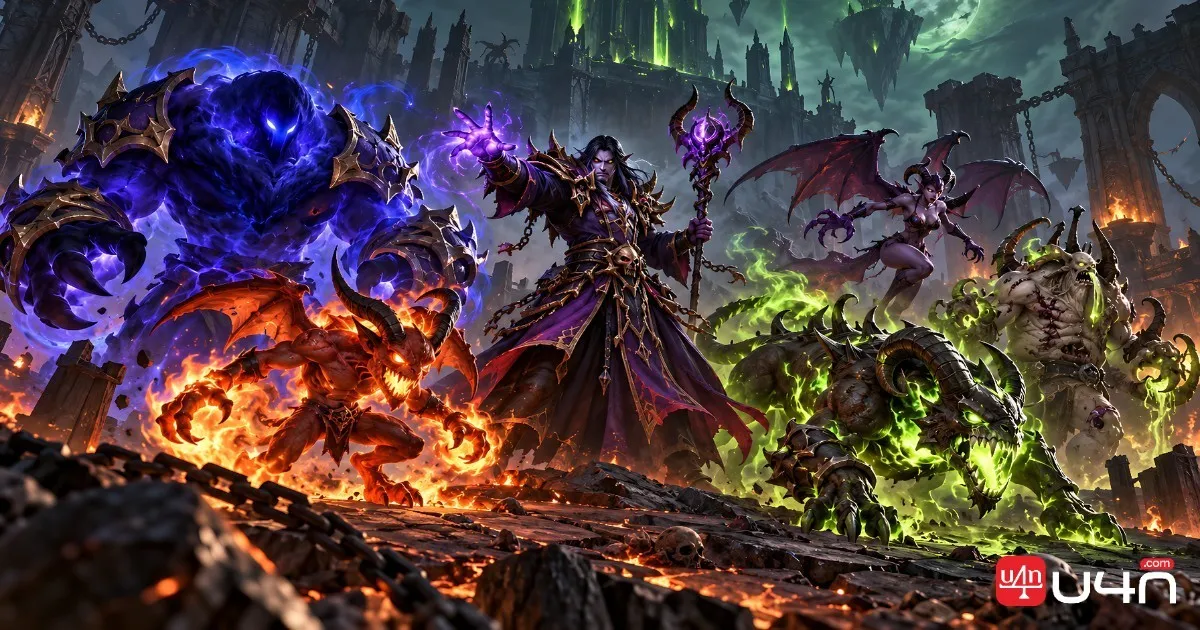
Affliction focuses on applying damaging effects and maintaining pressure over time. Rather than relying entirely on a single large spell, you build damage through effects such as Corruption and Bane of Agony, then use drain-style abilities to support your offensive rhythm.
This specialization suits players who enjoy planning several steps ahead. You need to recognize when an enemy will survive long enough for your damage-over-time effects to pay off and when refreshing an effect would waste valuable time.
Affliction is worth considering if you prefer sustained pressure, efficient target management, and a playstyle that rewards patience. In longer encounters, the ability to maintain damage while responding to changing conditions can be especially valuable.
Demonology: Empower Your Demons
Demonology places greater emphasis on the relationship between Warlock and pet. Instead of treating a summoned demon as a disposable source of extra damage, this approach builds around demonic synergy, pet performance, and abilities that strengthen the Warlock's overall combat package.
Pet management is particularly important here. You need to understand when your demon should hold an enemy's attention, when to use its abilities, and when keeping it alive matters more than squeezing out another attack.
We recommend Demonology to players who enjoy commanding a companion and building their character around several connected systems. It can also be an attractive option for solo players who value a more controlled approach to difficult encounters.
Destruction: Direct Fire and Shadow Damage
Destruction is the natural choice for players who enjoy direct spellcasting and more immediate damage feedback. Its revised toolkit creates opportunities to combine Fire and Shadow abilities rather than relying on a single, repetitive sequence.
This specialization rewards good timing. Casting a powerful spell is only part of the process; you also need to recognize when an enemy is vulnerable, when a damage bonus is available, and when movement or incoming attacks make a long cast too risky.
Destruction is worth exploring if you prefer a more direct offensive style. However, do not assume that larger individual hits always translate into better overall performance. Mana consumption, casting time, target movement, and encounter length all influence your results.
Which Specialization Should You Choose?
| Your preferred playstyle | Specialization to explore | Main learning priority |
|---|---|---|
| Sustained damage and resource control | Affliction | Damage-over-time management |
| Pet-focused combat and demonic synergy | Demonology | Pet commands and survival |
| Direct spell damage and offensive timing | Destruction | Cast timing and damage windows |
| Flexible group and solo gameplay | Test multiple builds | Adaptation to encounter demands |

Treat this table as a starting point rather than a permanent ranking. Your preferred content, equipment, and comfort with each rotation should ultimately determine your choice.
Best Warlock Talents and Pet Strategies
A good Warlock build should solve a specific problem. A leveling build needs reliable progression and manageable downtime, while a dungeon build must account for group threat, target switching, and encounter mechanics. A PvP setup places more value on control, survival, and the ability to respond when an opponent interrupts your plan.
Building Your Talent Tree
When choosing talents, prioritize abilities that improve your chosen specialization's central mechanic. Affliction players should look at talents that strengthen periodic damage and drain effects. Demonology players should evaluate pet bonuses, survivability, and interactions between their demon and personal spells. Destruction players should focus on how their Fire and Shadow abilities complement one another.
Avoid spending points simply because a talent sounds powerful. Ask three questions before committing:
- How often will this talent contribute during my usual encounters?
- Does it improve my main damage source, survivability, or resource efficiency?
- What useful talent am I giving up by choosing it?
WoW Forever introduces revised talents and new milestone choices, so older Classic builds should not be copied without checking the current tooltips. Talents become available at level 10, and Dual Specialization unlocks at level 40, giving players more flexibility as they progress. Blizzard's official Warlock overview provides the relevant class changes.
Choosing the Right Demon
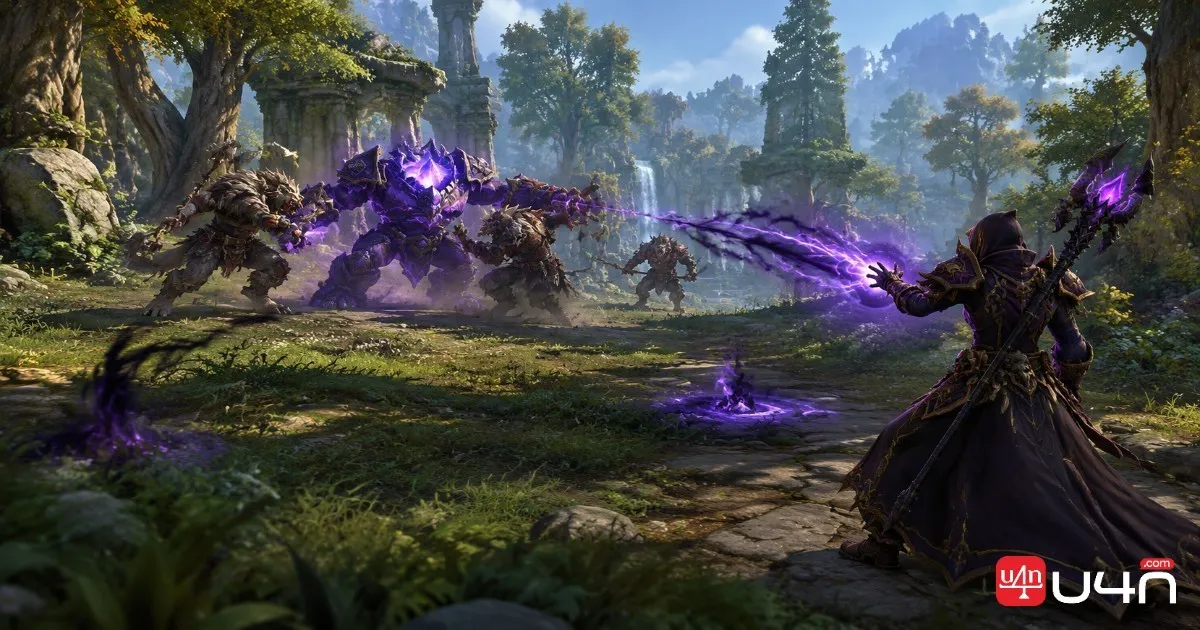
Your pet is part of your combat strategy, not simply a source of additional damage. Different demons offer different combinations of offensive pressure, defensive utility, and group support.
| Pet | Main consideration | When to evaluate it |
|---|---|---|
| Imp | Ranged damage and group utility | Encounters where additional ranged pressure is useful |
| Voidwalker | Durability and enemy control | Solo fights where managing incoming damage matters |
| Succubus or Incubus | Offensive utility and control | Situations where their specific abilities fit the encounter |
| Felhunter | Anti-magic utility and spell disruption | Fights where interrupting or countering magic is valuable |
Exact pet abilities and talent interactions should always be checked against the current version. The best choice depends on the enemy, the group composition, and whether your priority is survival, damage, or utility.
In practice, the biggest mistake is allowing your pet to operate without supervision. Watch its health, keep an eye on threat, and avoid sending it into additional enemies unnecessarily. If a fight starts to deteriorate, correcting your pet's positioning can be more valuable than squeezing in one more offensive cast.
WoW Forever Warlock Leveling Guide
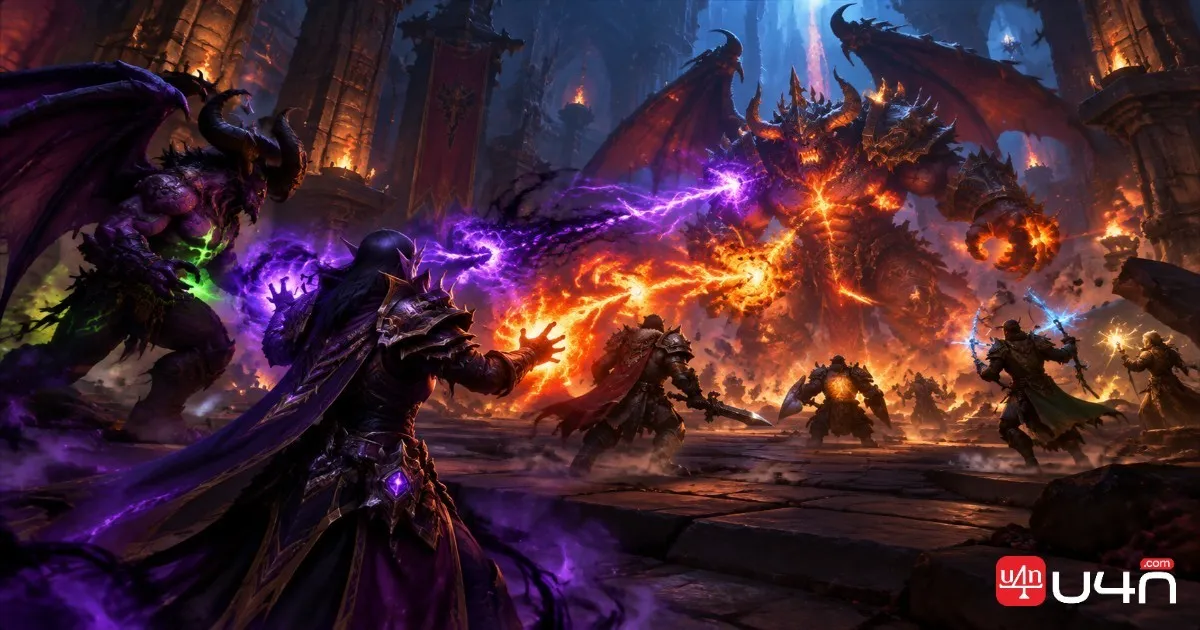
Leveling is where Warlock's strengths become especially noticeable, but only if you learn to manage the entire combat cycle. Applying damage is easy; finishing a fight with enough health, mana, and pet health to handle the next enemy is what makes the process efficient.
Early Levels: Build Good Habits
At low levels, concentrate on learning your available damage spells, defensive abilities, and pet commands. Avoid pulling more enemies than you can safely manage. A controlled fight is usually better than an ambitious pull that forces you to spend time recovering or running back after a death.
Learn how your demon generates threat and how quickly your damage spells can draw enemies away from it. This is especially important when using strong direct-damage spells early in an encounter.
Mid-Leveling: Improve Your Resource Efficiency
As your toolkit expands, begin coordinating damage-over-time effects with direct spells and drains. Use Life Tap when you have enough health to do so safely, and consider Drain Life when restoring health contributes to a sustainable combat cycle.
Do not automatically apply every available damage effect to every enemy. If a target is nearly defeated, additional setup may not be worth the global cooldowns or mana. If an enemy will survive for a longer fight, maintaining your damage effects may offer better value.
Late Leveling: Prepare for Group Content
As you approach the level cap, practice target switching, threat control, and adapting your rotation to longer encounters. Learn which abilities can be used while moving, which require a safe casting window, and how your pet performs against different enemy types.
We also recommend keeping your equipment reasonably current. Spell damage, relevant offensive stats, and survivability all influence the smoothness of your progression. Better gear can help, but it cannot compensate for consistently poor positioning or careless resource use.
For players organizing their character progression, World of Warcraft Forever Items can be a useful search phrase when researching equipment and other in-game resources. Always evaluate upgrades by their actual stats and compatibility with your build rather than assuming an item is valuable simply because it is rare.
Warlock Rotation, Stats, and Endgame Tips
There is no universal Warlock rotation that performs equally well in every encounter. A practical approach starts with the fundamentals: prepare your target, apply the effects that justify their casting cost, use your specialization's main damage tools, and adjust as the fight develops.
A Practical Combat Framework
1. Prepare before engaging. Check your health, mana, pet health, and available buffs. In group content, understand the tank's pull and avoid starting with a spell that immediately creates excessive threat.
2. Apply the right damage effects. Affliction generally benefits from maintaining relevant damage-over-time effects. Destruction focuses more heavily on direct spell combinations, while Demonology requires you to coordinate your own abilities with your demon's contribution.
3. Manage resources throughout the fight. Life Tap is a tool, not a free refill. Avoid converting health into mana when doing so would leave you unable to survive an incoming attack. Use drain abilities and defensive tools according to the situation.
4. Respond to changes. Switch targets when the group needs it, reposition when enemies threaten your casting space, and adjust your pet's behavior when threat becomes unstable. A rigid rotation is less useful than a flexible plan.
Which Stats Should You Prioritize?
Stat priorities depend on specialization, level, equipment, and the content you are playing. In general, evaluate spell damage, spell hit, critical strike, and other relevant offensive stats according to the mechanics of your chosen build. Mana sustainability and survivability can also be valuable when they prevent repeated downtime or failed encounters.
| Stat consideration | Why it matters |
|---|---|
| Spell damage | Improves relevant spell damage according to its coefficients |
| Spell hit | Helps reduce the chance that eligible spells miss |
| Critical strike | Benefits builds and spells that can critically strike |
| Spell haste | Can improve casting speed where supported by the relevant mechanics |
| Stamina and survivability | Help you withstand mistakes and dangerous encounters |
| Mana sustainability | Can reduce downtime during extended combat |
Use this as a framework, not a universal best-in-slot ranking. Check current item tooltips and specialization-specific interactions before replacing a piece of equipment. An upgrade that looks impressive on paper may perform poorly if it sacrifices a stat your build relies on.
Warlock in Dungeons, Raids, and PvP
In dungeons and raids, reliable damage is only one part of your contribution. Respect the tank's threat, use control when the group needs it, and avoid spreading damage or using area attacks when doing so would endanger the party. Warlock's utility becomes more valuable when you recognize the right moment to use it.
PvP requires a different mindset. Positioning, control, and timing often determine whether you can continue casting or are forced onto the defensive. Pay attention to enemy interrupts, use your available control tools deliberately, and avoid spending every defensive resource at the first sign of pressure.
The strongest Warlock players do not simply memorize a rotation. They recognize when to keep applying pressure, when to protect their resources, and when surviving the next few seconds matters more than dealing additional damage.
This approach is particularly useful when encounters become unpredictable. Good positioning, sensible resource use, and timely pet commands can help you maintain pressure without sacrificing your ability to survive.
Summary: Is Warlock Worth Playing in WoW Forever?
Warlock is an excellent class to consider if you enjoy tactical spellcasting, demon companions, and having several ways to approach a fight. Affliction rewards careful damage-over-time management, Demonology emphasizes the connection between caster and pet, and Destruction offers a more direct approach to Fire and Shadow damage.
Our team's advice is to choose the specialization that matches your preferred combat rhythm, then build your understanding around it. Learn to manage your pet, use Life Tap safely, recognize when your damage effects are worth maintaining, and respect the difference between solo and group encounters.
Do not judge your progress by damage numbers alone. Fewer deaths, less downtime, better target selection, and more reliable performance are all signs that your Warlock is improving. Once those fundamentals become second nature, experimenting with talents and more advanced builds becomes far more rewarding.
FAQ
Is Warlock good for solo leveling in WoW Forever?
Warlock has several tools that can support solo progression, including demon pets, damage-over-time spells, and health-draining abilities. Efficient leveling still depends on choosing suitable fights, controlling pet threat, and managing health and mana carefully.
What is the best Warlock specialization for beginners?
There is no single best specialization for every beginner. Affliction suits players who enjoy sustained damage, Demonology appeals to players who like pet-focused combat, and Destruction is worth exploring if you prefer direct spell damage. Try the available options and choose the rotation that feels most manageable.
Which Warlock pet should I use?
Choose a demon based on the encounter. The Voidwalker can be useful when survivability and enemy control are priorities, while the Imp or other demons may better fit encounters that reward their particular damage or utility. Check current abilities before settling on a pet.
What stats are best for Warlock?
Spell damage, spell hit, critical strike, and other relevant stats can all matter, but their value depends on your specialization and the current game mechanics. Compare complete item bonuses and test your setup in the content you actually play instead of following a universal stat ranking.
Is Warlock good in PvP?
Warlock can offer sustained pressure, control, and useful defensive options. Success depends on positioning, timing, resource management, and your ability to respond to enemy interrupts and attacks. A strong build helps, but good decisions during combat remain essential.
Can I use a Classic Warlock build in WoW Forever?
Classic builds can provide a useful starting point, but they should not be followed blindly. WoW Forever revises talents, pet scaling, spell interactions, and other class mechanics. Check current tooltips and official updates before investing talent points or committing to a specialization.