


Alchemy in Hytale becomes much more useful when we treat it as a long-term progression system rather than a way to craft a few emergency heals. Potions can help us recover during dangerous encounters, while a well-planned supply of materials makes it easier to prepare for tougher exploration. Players comparing progression options or browsing Hytale Accounts should also understand how much a character’s preparation can affect the time spent gathering resources and fighting enemies.
Our team recommends building an alchemy routine early, even if you do not immediately need every potion or workbench upgrade. Start with the materials available in your current area, improve your crafting setup gradually, and save more dangerous farming routes for when your equipment is ready. The goal is not to unlock everything at once. It is to create a reliable supply chain that supports the way you actually play.
Why Alchemy Matters in Hytale
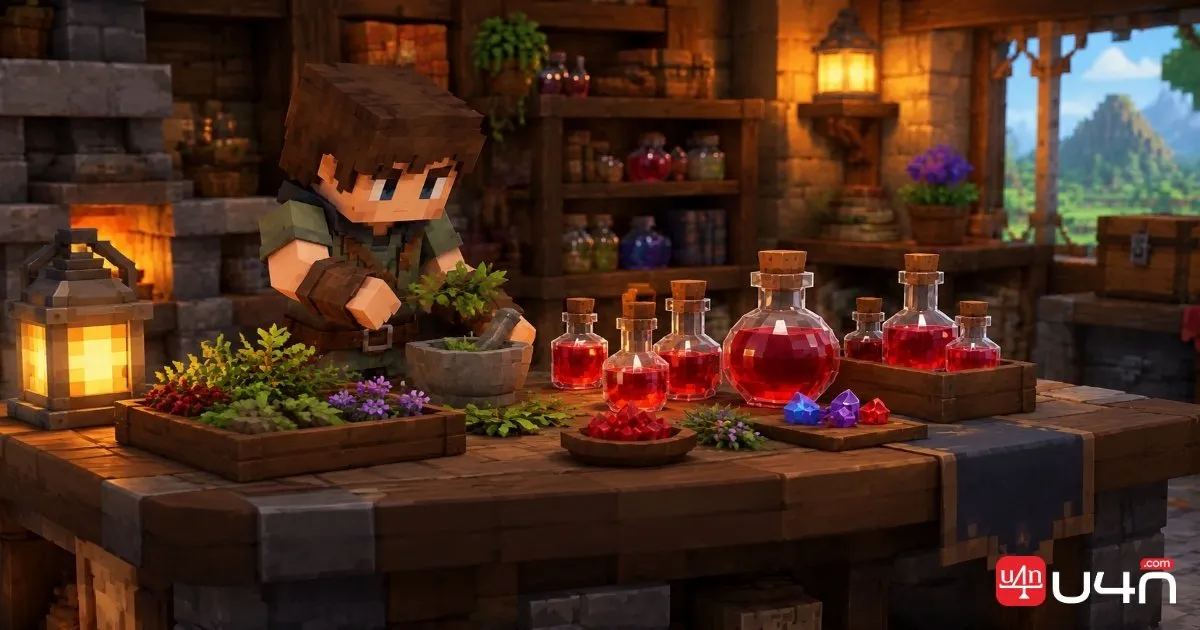
Food and potions serve different purposes. Food is useful for longer-lasting benefits, while health potions offer a more immediate response when a fight starts going badly. That makes potions especially valuable when exploring unfamiliar areas, fighting groups of enemies, or entering dangerous locations where retreating is not always easy.
We would prioritize health potions before investing heavily in less essential options. Those details may change as the game develops, so check the current build before planning around a specific potion type.
Health Potion Healing Values
| Potion | Initial healing | Additional healing |
|---|---|---|
| Lesser Health Potion | 15 | 15 |
| Small Health Potion | 15 | 30 |
| Health Potion | 25 | 35 |
| Greater Health Potion | 25 | 50 |
The additional healing depends on avoiding damage during the five-second interval described. In practice, this means timing matters. Using a potion while standing in the middle of incoming attacks may prevent you from getting its full benefit.
Health potions are a sensible starting point because they provide direct value during exploration and combat, while advanced farming becomes more important as our crafting goals expand.
Upgrade Your Alchemy Workbench Efficiently
The alchemy workbench is the foundation of long-term potion production. It has five upgrade tiers, but we do not recommend treating the highest tier as an automatic early-game priority. Each upgrade should support a clear goal, whether that means expanding your crafting options or preparing to grow more advanced plants.
A practical progression plan looks like this:
| Progression stage | Main objective | Recommended approach |
|---|---|---|
| Early game | Establish basic potion production | Gather accessible materials and craft useful health potions |
| Mid progression | Improve crafting access | Collect upgrade resources during regular exploration |
| Advanced progression | Prepare for higher-tier plants | Farm harder-to-reach materials and improve your equipment |
| Late progression | Maintain a steady supply | Combine material farming with repeatable plant production |
The important distinction is between crafting the best potion and unlocking the full farming system. The fifth workbench tier is not required to craft the highest-tier Greater Health Potion, but it is needed to grow Blood Leaves. If your immediate goal is stronger healing, you may be able to stop upgrading temporarily and focus on the resources you need most.
Find Crystal Shards Without Wasting Trips
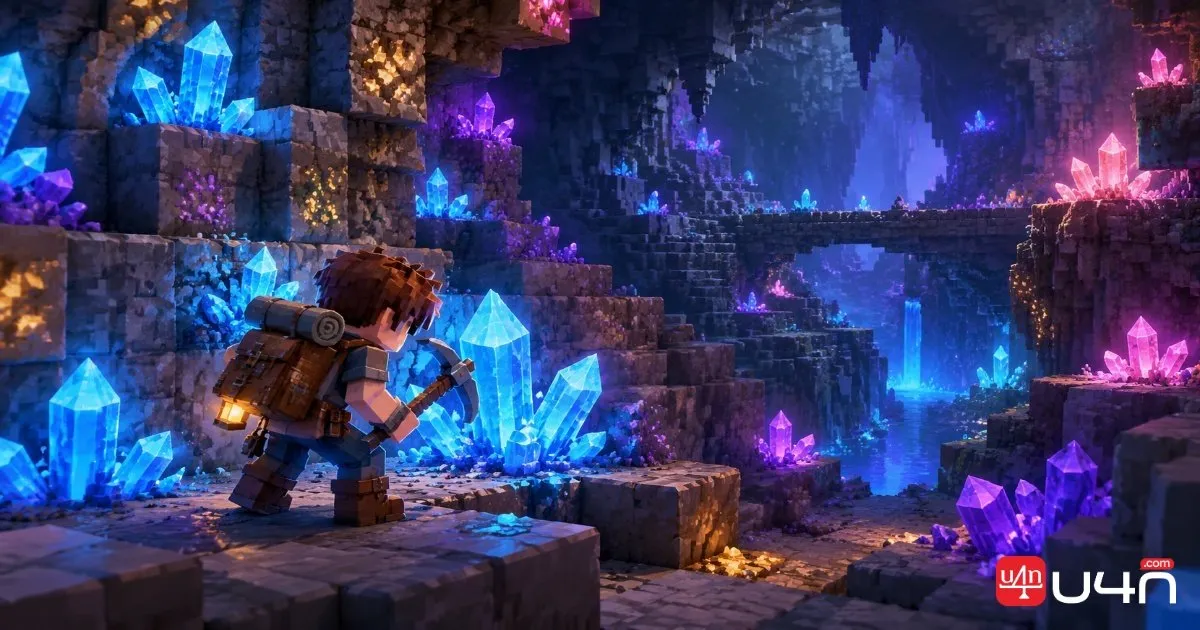
Crystal shards are an important part of the alchemy supply chain, particularly when preparing crystal fertilizer. Rather than searching every region randomly, we recommend choosing a farming area based on the crystal types available, your equipment, and how much danger you can comfortably handle.
Choose a Route That Matches Your Progress
- Zone 2 petrified mushroom areas: The blue crystals here are a useful shard source. Larger crystal formations can provide more shards than smaller deposits.
- Zone 4 surface mushroom areas: Large mushroom formations offer another option for gathering crystal materials.
- Volcano interiors: Red crystals can be found inside volcanic areas, although the danger of the route should factor into your decision.
- Zone 4 underground jungle: Pink, purple, and blue crystals are in this area. Pink crystals are relatively plentiful and accessible compared with other options in the same region.
Do not choose a route solely because it contains a desirable crystal. A shorter, safer run that you can repeat consistently may be more productive than a difficult expedition that forces you to spend extra time recovering from failed encounters.
We also recommend collecting nearby materials while you are already in the area. If a route provides useful crystals alongside other progression resources, it can serve multiple purposes instead of becoming a single-resource farming trip.
Farm Void Essence With Proper Preparation
Void essence is one of the more demanding materials in the alchemy process. We point to the Goblin Breach or Goblin world as the recommended farming route, accessed through a Guttering Hollows fragment. the portal console to level three as a way to increase the available time and challenge.
Before entering, prepare for a sustained fight rather than a quick collection run. Bring suitable armor, reliable weapons, food, and health potions. We recommend Adamantite equipment for players who struggle with the encounter, although less advanced gear may still be workable for basic farming if you are comfortable with the risk.
Surface Enemies or Underground Caves?
The guide describes two broad approaches:
Surface Farming
Surface farming is the more cautious option. Focus on the circular purple areas marked on the map, where surface enemies can provide void essence. This approach is useful when learning the route or when your equipment is not strong enough for extended underground fights.
Underground Farming
Underground farming can provide larger returns, but it also introduces more serious threats, including the Void Fiend. We would not recommend pushing deep underground just to improve a single run's yield. First, learn the layout, understand which enemies you can handle, and establish a safe way to retreat. You can expect roughly 30–50 void essence from mostly surface-focused runs and around 120–200 from successful runs that include underground areas. Your results will depend on the encounter, route, and current game version.
Our preferred strategy is to make each run repeatable. If you consistently return with a moderate amount of essence and few losses, that is a better foundation for production than relying on occasional high-risk runs.

Grow High-Tier Plants for Sustainable Production
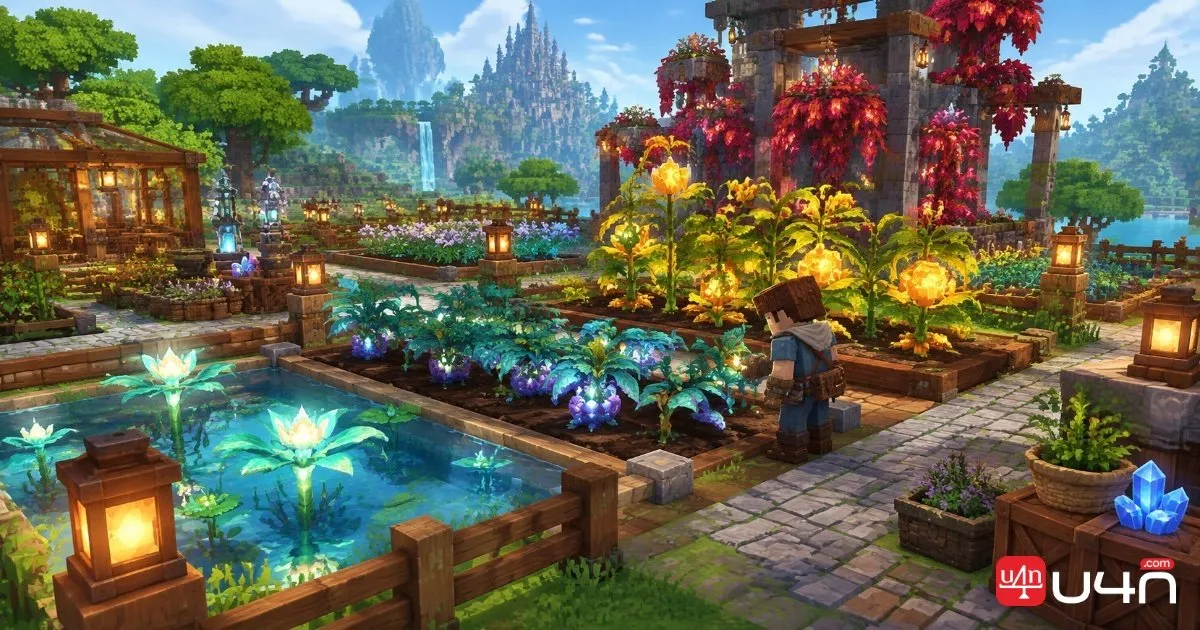
Once you have collected enough crystal shards and void essence, plant farming can turn a difficult gathering loop into a more sustainable resource system. Crystallized dirt is the key growing medium for advanced plants, and it notes that crystal fertilizer bags are required to prepare it.
The cost is 25 crystal shards and one void essence per fertilizer bag. Because this is a specific crafting requirement, check the recipe in your current build before spending rare materials in bulk.
Match Each Plant to Its Growing Conditions
Different plants require different setups. Building a farm without checking those requirements can waste space and delay production.
| Plant | Growing condition described in the guide | Practical tip |
|---|---|---|
| Azure Kelp | Needs water nearby | Plan the growing area around a reliable water source |
| Storm Rush Plant | Grows near gold blocks | Prepare the planting area before using the seeds |
| Blood Leaves | Attach to a full block two blocks high after planting | Build the support structure first, then plant |
Lighting also matters. We recommend placing light near plants to help them grow faster, particularly at night. Before expanding your farm, test a small growing area and confirm that the plants respond as expected in your current version.
Build a Farm You Can Maintain
We recommend separating the farm into clear sections: one for basic ingredients, one for plants with special environmental requirements, and one for higher-tier crops. This makes it easier to identify which materials are running low and reduces the chance of accidentally using rare resources on the wrong setup.
Avoid producing large amounts of crystallized dirt before you know which plants you need. If your immediate goal is to craft health potions, focus on the ingredients that support that goal first. Expand into advanced plant production when you have a clear reason to do so.
Summary
A strong Hytale alchemy setup depends on more than unlocking recipes. We need a workbench progression plan, reliable crystal shard routes, a manageable method for farming void essence, and a growing area that meets each plant's requirements. Health potions are a sensible starting point because they provide direct value during exploration and combat, while advanced farming becomes more important as our crafting goals expand.
Our recommendation is to progress in stages: establish basic potion production, gather materials along routes suited to your equipment, and invest in advanced plants only when the resources justify the effort. Players exploring different progression options or researching buy Hytale Accounts should keep the same principle in mind: preparation and a clear resource plan are more useful than rushing toward every unlock at once.
FAQ
Is the highest alchemy workbench tier required for Greater Health Potions?
No. fifth tier is necessary for growing Blood Leaves, rather than for crafting the highest-tier Greater Health Potion. Check the current recipe and unlock requirements in your game version before committing resources.
Where should beginners farm crystal shards?
Start with the crystal deposits you can reach safely and repeatedly. The guide highlights petrified mushroom areas in Zone 2 and large mushroom areas on the surface in Zone 4. More dangerous locations may be worthwhile later, but they are not automatically the best choice for every player.
Is underground void essence farming always better?
No. Underground routes can provide more essence, but they also expose you to more serious threats. Surface farming is a reasonable way to learn the route and build a supply before attempting more dangerous expeditions.
What should I prioritize when starting an alchemy farm?
Begin with useful health potions and the materials needed to craft them. Then collect crystal shards and void essence for crystallized dirt and advanced plants. Expand the farm gradually, and verify each plant's growing conditions before investing rare materials.