Druids in World of Warcraft: Forever offer something few classes can match: the freedom to switch between melee combat, tanking, and nature-based spellcasting. However, that flexibility does not mean every build performs equally well in every situation. Choosing the right talent path depends on whether you want to deal consistent damage, lead dungeon groups, or fight enemies from range while managing your Mana.
Our team recommends evaluating three practical playstyles: Feral Cat DPS, Feral Bear Tank, and Balance Caster DPS. Each rewards a different approach to combat, and each comes with trade-offs that become more noticeable as your character progresses. Players preparing their characters should also consider how they will manage consumables, equipment upgrades, and other progression costs, including their budget for WoW Forever Gold.
Understanding Druid Builds in WoW Forever
Before committing talent points, it helps to understand the distinction between a talent specialization and a combat build. Balance, Feral Combat, and Restoration are the class's three talent trees. Cat DPS and Bear Tank are two different approaches to Feral Combat, while Balance focuses on spell damage.
This distinction matters because your preferred role determines more than your talent choices. It affects your resource management, equipment priorities, positioning, and responsibilities in a group.
How Shapeshifting Changes Your Gameplay
Shapeshifting is the foundation of the Druid's versatility. Cat Form supports melee damage, Bear Form provides the tools for tanking, and caster form gives you access to your regular spellcasting toolkit.
Forever also introduces meaningful improvements to shapeshifting. Blizzard's official Druid class deep dive explains that potions and most similar consumables can be used without cancelling your form, weapon enchantments and procs work while shapeshifted, and racial abilities can be activated without returning to caster form. These changes make form-based combat more convenient and give players additional options during difficult encounters.
For practical purposes, we recommend learning when to stay in form and when to switch. Constantly changing forms without a clear reason can waste resources, while refusing to switch when a situation demands it can limit your utility.

What Should You Consider Before Choosing a Build?
Start with the content you expect to play most often:
- Solo leveling: Consider how quickly you can defeat enemies, recover resources, and handle unexpected pulls.
- Dungeon groups: Decide whether your group needs a tank or another damage dealer.
- Long encounters: Pay attention to sustained damage, Mana efficiency, and defensive cooldowns rather than judging a build by its opening burst alone.
A build that performs well in one situation may be less effective in another. Our team prefers choosing talents around a clear role instead of spreading points across unrelated bonuses without a specific goal.
Feral Cat DPS Build: Melee Damage and Energy Management
The Cat DPS route is designed for players who enjoy staying close to their targets and maintaining pressure through efficient ability use. Rather than relying entirely on individual high-damage attacks, a strong Feral damage build benefits from consistent uptime, appropriate talent choices, and careful resource management.
Talent Priorities for Cat DPS
When planning a Cat build, prioritize talents that improve your core damage abilities and support the way you generate and spend Combo Points. Attack Power scaling, direct ability damage, and damage-over-time effects all deserve consideration, depending on the available talents and your intended role.
Forever makes several relevant adjustments to Feral gameplay. Claw and Shred receive damage improvements, Rake benefits more from Attack Power, and the class gains access to Shifting Power as a Cat-focused talent. These changes give players more reasons to evaluate the full damage toolkit instead of relying exclusively on familiar builds from earlier versions.
We recommend building around abilities you can use consistently in real encounters. A theoretical damage increase is less valuable if the rotation becomes difficult to maintain or leaves you without resources when a target needs to be finished.
Managing Energy and Combo Points
Cat DPS revolves around two connected resources: Energy and Combo Points. Energy determines how frequently you can use abilities, while Combo Points support finishing moves.
A practical approach is to avoid wasting Energy through poor timing and to use finishing moves when the situation justifies them. Maintaining a damage-over-time effect can be valuable against enemies that will survive long enough for its full duration to matter. Against short-lived targets, spending several actions establishing that effect may offer little benefit.
Positioning is equally important. Abilities such as Shred can impose positional requirements, so you need to account for target movement and group positioning rather than focusing solely on your action bar.

Strengths, Weaknesses, and Gear Priorities
Cat DPS is a good fit for players who enjoy mobile melee combat and managing a damage rotation. Its main challenges are maintaining uptime, positioning correctly, and balancing resource generation with finishing moves.
For equipment, begin by comparing weapon damage and the offensive attributes relevant to your current abilities. Forever's changes to weapon scaling and weapon effects while shapeshifted make weapon selection particularly important. However, do not assume that an item with a higher item level is automatically the best choice; its actual stats and effects still matter.
Feral Bear Tank Build: Threat and Survivability
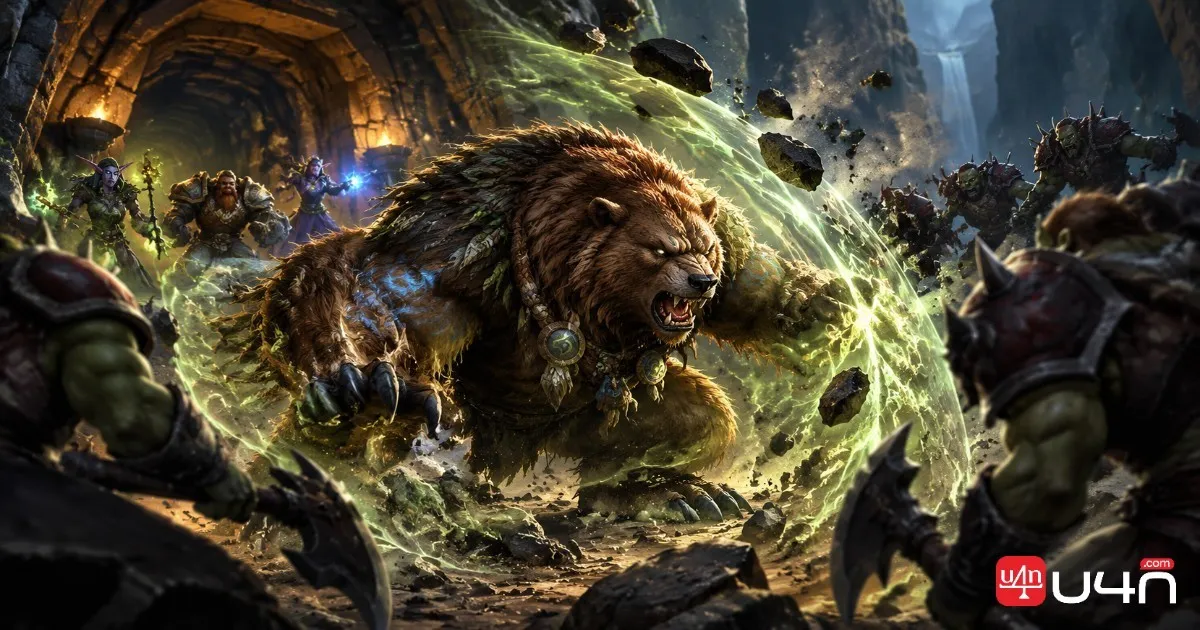
Bear Tank is the natural alternative for players who want to lead dungeon pulls and keep enemies focused on them. Although it shares the Feral talent tree with Cat DPS, its priorities are different. A tank must establish threat reliably, survive incoming damage, and give the rest of the group enough time and space to do their jobs.
Talent Priorities for Bear Tank
For a Bear build, look for talents that strengthen defensive performance, threat generation, and the abilities you use most frequently. The right balance depends on your content: a difficult encounter may demand more survivability, while a group struggling to maintain damage may benefit from more reliable threat generation.
Forever adds Lacerate to the Druid's baseline toolkit at level 42. It applies a stacking bleed and generates substantial threat, making it particularly relevant to Bear gameplay. The class changes also improve several Feral abilities and defensive tools.
These adjustments are useful, but they do not remove the need to understand encounter mechanics. A tank that generates plenty of threat can still struggle if it pulls too many enemies, loses control of priority targets, or ignores incoming damage patterns.
Rage Management and Threat Control
Bear Tank uses Rage rather than Cat Form's Energy system. Your goal is to generate and spend Rage in a way that maintains threat without leaving yourself poorly prepared for the next dangerous moment.
For a typical pull, establish control over the primary target first, then use appropriate abilities to maintain threat across additional enemies. Against multiple opponents, consider which targets are most likely to attack your healer or damage dealers.
Taunt is an important recovery tool, but it should not replace good threat management. If you repeatedly lose enemies because you neglect secondary targets, relying on taunt alone will not solve the underlying problem.
Defensive Stats and Equipment Choices
Bear equipment should be evaluated around effective survivability and reliable threat. Armor, defensive attributes, and other relevant item effects can all influence how comfortably you handle incoming attacks.

Do not judge a tanking item solely by its Armor value. Consider the encounter, your current gear, and whether your group needs you to survive a longer fight or establish threat more quickly.
We also recommend checking the current Forever mechanics before copying an older Classic tanking setup. Changes to weapon scaling, shapeshift interactions, and defensive talent effects can alter the value of familiar equipment choices.
Balance Caster DPS Build: Spell Damage and Mana Efficiency
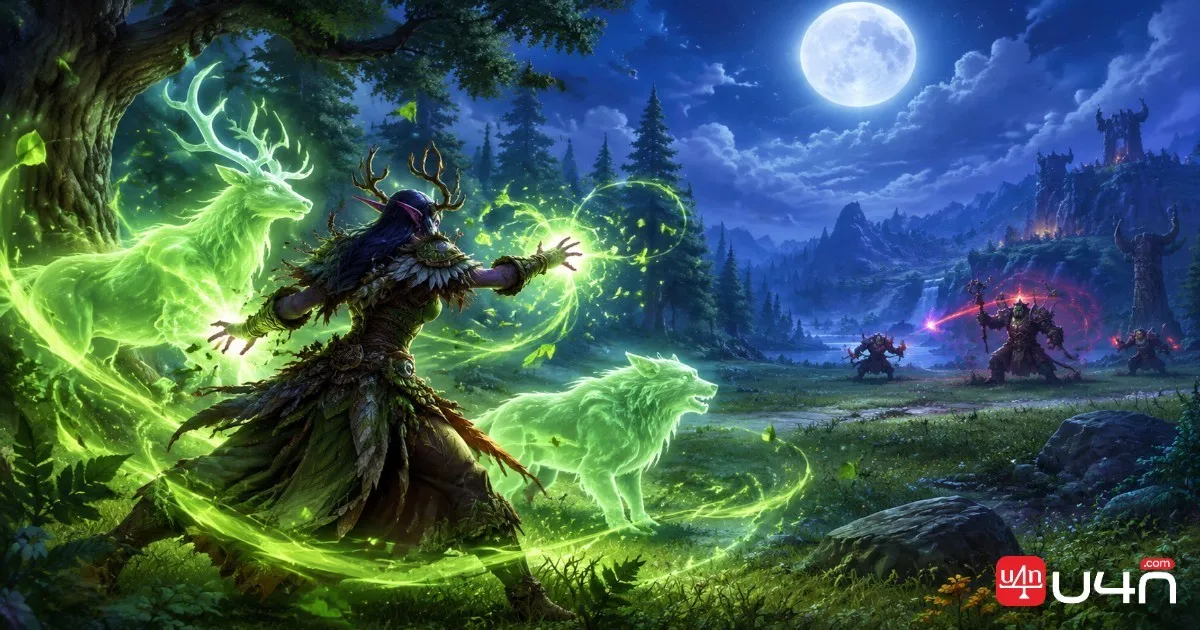
Balance is the ranged damage option among these three builds. Instead of managing melee positioning and Energy, you focus on spell selection, casting windows, and Mana efficiency. It suits players who prefer attacking from a distance and adapting their spell choices to the length and movement demands of an encounter.
Talent Priorities for Balance
Build your talent choices around the spells you expect to use most often. Wrath, Starfire, and Moonfire each serve different purposes, so their value depends on cast time, Mana cost, target health, and the length of the fight.
Forever changes the Balance toolkit in several ways. Wrath has been redesigned to cost substantially less Mana while dealing less damage, and the new Eclipse talent allows Wrath casts to improve the cast time of subsequent Starfire casts. Insect Swarm also becomes an additional damage-over-time option through the Balance talent tree.
Together, these changes make spell sequencing and talent selection important considerations. Rather than assuming one spell should always dominate your rotation, evaluate how your chosen talents support the encounter you are preparing for.
Balancing Damage with Mana
Mana management is one of the central challenges of sustained spellcasting. A rotation that deals strong damage for a short period may become inefficient if it leaves you unable to contribute later in the encounter.
Against durable enemies, damage-over-time effects may provide useful value when they can run for a meaningful portion of their duration. Against short-lived targets, a direct-damage spell may be more practical. Movement also matters: a long cast is less attractive when the encounter frequently forces you to reposition.
Our team recommends evaluating damage over the entire fight rather than focusing only on opening damage. This approach gives you a more realistic picture of how well your build performs in dungeons and other sustained encounters.
Is Balance Good for Solo Leveling?
Balance offers the convenience of ranged attacks, but its effectiveness depends on your Mana supply, spell access, and ability to control enemy engagement. It can be comfortable for players who prefer fighting at range, while Cat may appeal more to those who enjoy melee combat and Bear offers a different approach when durability is the priority.
There is no universal winner for every leveling situation. Consider how often you need to recover Mana, whether enemies force you into close combat, and how reliably you can maintain your preferred rotation.
Cat DPS vs. Bear Tank vs. Balance: Which Build Is Best?
The best Druid build is the one that fits your role and the content you actually play. The following comparison summarizes the practical differences.
| Factor | Cat DPS | Bear Tank | Balance Caster |
|---|---|---|---|
| Primary role | Melee damage | Tanking | Ranged spell damage |
| Main resources | Energy and Combo Points | Rage | Mana |
| Main priority | Damage uptime and rotation | Threat and survivability | Spell sequencing and efficiency |
| Key challenge | Positioning and resource timing | Controlling enemies while surviving | Managing Mana and casting windows |
| Best fit | Players who enjoy active melee combat | Players who want to lead dungeon groups | Players who prefer ranged spellcasting |
Which Build Should Beginners Choose?
If you are new to the class, choose the route that matches the role you want to learn first.
- Choose Cat DPS if you enjoy melee combat and want to improve your ability rotation.
- Choose Bear Tank if you are comfortable leading pulls, watching enemy behavior, and taking responsibility for group survival.
- Choose Balance if you prefer ranged combat and want to learn how to balance spell damage with Mana efficiency.
Do not choose a build solely because someone calls it the strongest. Group composition, equipment, encounter mechanics, and balance changes can all affect performance. A build that matches your preferred role is usually a more useful starting point than a copied talent setup you do not fully understand.
Leveling, Gear Progression, and Talent Planning
Your ideal build can change as you gain levels, unlock abilities, and acquire better equipment. A leveling setup should make everyday combat manageable, while a dungeon-focused setup may prioritize a more specialized role.
Plan Around Your Next Milestones
Review your talents whenever a new ability or important talent becomes available. For example, the arrival of Lacerate at level 42 gives Bear-oriented players another important threat tool. Changes like this can influence how you approach combat and which talents deserve closer attention.
If you plan to tank and deal damage on the same character, consider how much time you want to spend switching roles. Forever introduces Dual Specialization at level 40, giving players an option for maintaining two separate talent configurations. Check the current in-game rules before committing to a specific respec plan.
Upgrade Equipment with a Clear Purpose
For Cat DPS, compare offensive stats, weapon damage, and relevant effects. For Bear Tank, evaluate survivability alongside threat generation. For Balance, consider spell damage, casting performance, and Mana efficiency.
When preparing for a dungeon or raid, identify the weakness you want your next upgrade to address. This is more useful than collecting items simply because they appear to be higher-level rewards.
Players planning their progression around specific equipment goals should also review the attributes and effects of available WoW Forever Items before investing time or resources. The right upgrade is the one that improves your build's actual performance, not necessarily the one with the most impressive tooltip.
Summary: Choosing Your WoW Forever Druid Build
Druid's greatest strength is its flexibility, but that flexibility works best when you understand the role you want to perform. Cat DPS rewards consistent melee pressure and careful Energy management. Bear Tank emphasizes threat control, Rage management, and survivability. Balance focuses on ranged spell damage and making efficient use of Mana.
Our recommendation is to start with one clear role, learn its core abilities, and adjust your talents and equipment as your character develops. Once you understand the strengths and limitations of your first build, experimenting with another route becomes much easier.
Remember that Forever-specific talent and ability changes can affect older build recommendations. Treat familiar Classic strategies as a starting point, verify the current mechanics, and judge your build by its performance in the content you actually play.
FAQ: WoW Forever Druid Builds
What is the best Druid build in WoW Forever?
There is no single best build for every situation. Cat DPS suits melee damage dealers, Bear Tank is designed for tanking, and Balance is the ranged spellcasting option. Your role and the encounter should determine your choice.
Is Feral Druid good for leveling?
Feral can be a strong option for players who prefer shapeshifting and melee combat. Whether Cat or Bear feels better depends on your preferred pace, survivability needs, available abilities, and equipment.
Can a Druid switch between Cat DPS and Bear Tank?
Yes. Both builds use the Feral talent tree, but their talent priorities and combat responsibilities differ. Switching forms alone does not automatically replace the talents and gear needed for a specialized role.
Is Balance Druid good for solo play?
Balance can be effective for players who prefer ranged damage and can manage Mana efficiently. Its performance depends on your available spells, talents, equipment, and the types of enemies you encounter.
Is Restoration a viable Druid build?
Restoration is the Druid's healing-focused talent tree. It is worth considering if your primary goal is to heal dungeon or raid groups rather than focus on one of the three damage or tanking routes covered in this guide.
Should I copy an older Classic Druid build?
Use older builds as references, not as definitive answers. WoW Forever changes several class abilities, talent effects, and shapeshifting interactions, so verify the current version before committing to a talent or equipment plan.