Choosing a Hunter in World of Warcraft: Forever means learning more than how to deal damage from a distance. Your pet, positioning, shot timing, and ability to control enemy movement all shape how effectively you handle quests, dungeons, and PvP. Our team recommends Hunter to players who enjoy a flexible ranged playstyle and want a companion that contributes meaningfully to every fight.
The class also offers more room for experimentation than a traditional Classic Hunter setup might suggest. Whether you're exploring Beast Mastery, building around Marksmanship, or testing Survival's melee options, understanding the updated mechanics matters more than copying an old talent template. Players preparing their characters with World of Warcraft Forever Gold for sale in mind should still prioritize learning the class first, because better combat decisions often save more time than rushing through early progression.
Is Hunter a Good Class in WoW Forever?
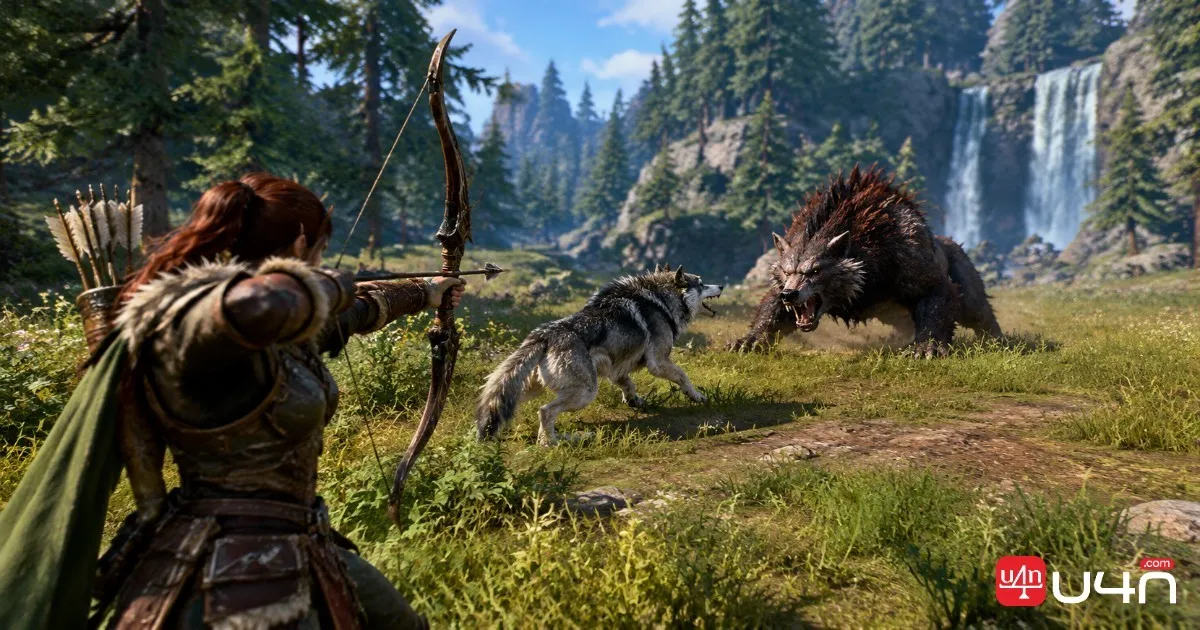
Hunter is a damage-focused class built around ranged weapons, pet support, and tactical utility. It is particularly appealing to solo players because a pet can help manage enemy pressure while the Hunter attacks from a safer distance. This combination makes questing and open-world exploration feel manageable, even when encounters require careful pulling.
However, Hunter is not an effortless class. You need to watch your pet's health, manage Mana, maintain the correct distance, and recognize when an enemy has moved too close. Ranged attacks have a dead zone at close range, so allowing a target to reach you can disrupt your normal damage pattern.
Hunter's Main Strengths and Weaknesses
| Strengths | Limitations |
|---|---|
| Strong ranged damage and long attack range | Ranged attacks are restricted at very close distances |
| Pet support during solo encounters | Pet positioning and survival require attention |
| Traps and movement-control options | Traps require planning and have cooldowns |
| Flexible talent choices | Different builds demand different priorities |
| Useful scouting and tracking tools | Resource management can slow careless play |
Our team considers Hunter a strong choice for players who enjoy controlling the pace of combat. The class rewards preparation, but it also punishes players who rely on standing still and repeatedly pressing their highest-damage ability.
Hunter Talents and the Best Build for Your Playstyle
Hunter has three talent trees: Beast Mastery, Marksmanship, and Survival. Each emphasizes a different part of the class, so choosing a build should begin with your preferred combat style rather than a damage ranking that may change during Beta.
Beast Mastery: Build Around Your Pet
Beast Mastery emphasizes pet damage, durability, and coordination. It is a natural starting point for players who want their companion to play a central role in combat.
When leveling, talents that improve pet survivability and damage can reduce the pressure on your character. A durable pet gives you more room to maintain ranged attacks, recover from mistakes, and handle repeated encounters without constantly resetting your approach.
Our recommendation is to start with a pet-focused setup if you're new to Hunter. Learn how to manage your companion before experimenting with more demanding damage optimizations.
Marksmanship: Focus on Ranged Damage
Marksmanship prioritizes ranged attacks, shot damage, and more specialized offensive options. It suits players who prefer to control distance and pay close attention to ability timing.
In Forever, Aimed Shot is available as a baseline ability at level 20, while the talent tree introduces additional options for ranged damage. The new Lone Wolf talent also supports a build that increases the Hunter's damage when no pet is active.
This creates an important trade-off: stronger personal damage potential in exchange for losing the support and utility of an active pet. Before committing to this approach, consider whether your content rewards a more independent ranged setup or benefits more from having a companion available.
Survival: Explore Traps and Melee Combat
Survival offers a different direction, combining trap utility with melee-oriented talents and abilities. It is worth exploring if you enjoy a more involved combat style instead of relying entirely on ranged attacks.
This specialization requires more attention to positioning and engagement timing. Rather than treating melee as a simple backup for when enemies get close, build around the abilities and talent synergies that support the style you want to play.
| Talent tree | Best suited for | Main consideration |
|---|---|---|
| Beast Mastery | Pet-focused leveling and sustained combat | Keep your pet alive and attacking |
| Marksmanship | Ranged damage and precision | Manage shot timing and distance |
| Survival | Melee options and trap-based control | Plan engagements and use utility deliberately |

Talent trees and ability tuning may change throughout Beta. For that reason, our team recommends treating these as build directions rather than permanent rankings. Check the current talent descriptions before spending points, especially when a build depends on newly introduced abilities.
Best Hunter Pets and How to Choose Them
Your pet is one of Hunter's defining advantages, but the best choice depends on what you need it to do. Damage, durability, movement control, and group utility can all matter more than choosing a family simply because it looks appealing.
Forever expands the identity of individual pet families and gives pets more meaningful access to abilities. Pet statistics also scale with the Hunter's gear, making your own equipment relevant to your companion's performance. These changes are documented in Blizzard's official Hunter class deep dive.

Which Pet Should You Use?
| Pet family | Notable ability | Practical use |
|---|---|---|
| Cat | Prowl | Stealth-based approaches and stronger opening attacks |
| Bear | Swipe | Damage against multiple nearby enemies |
| Wolf | Furious Howl | Supports party members' melee Attack Power |
| Spider | Web | Restricts enemy movement |
| Turtle | Shell Shield | Improves the pet's defensive capability |
| Boar | Charge | Closes distance and briefly immobilizes a target |
| Scorpid | Poison | Applies stacking damage over time |
These abilities give each family a distinct role, but they do not establish a universal best pet. A damage-oriented choice may suit ordinary questing, while a control or defensive ability can be more valuable when an encounter becomes dangerous.
Pet Management Tips
- Keep your pet's health in mind before pulling another enemy.
- Use pet commands deliberately instead of allowing your companion to attack every nearby target.
- Learn the difference between a pet that improves damage and one that helps control dangerous enemies.
- Review available pet abilities as your character progresses.
- Consider group needs when choosing utility over personal damage.
A common mistake is to judge pets exclusively by their damage. In practice, a pet that keeps an enemy controlled or survives a difficult pull can contribute more to a successful encounter than a small increase in raw damage.
Hunter Leveling, Rotation, and Combat Tips
Hunter leveling becomes much smoother once you understand how to combine pet attacks, ranged abilities, and movement. The goal is not to use every ability whenever it becomes available. It is to maintain a reliable combat rhythm while limiting unnecessary downtime.
A Practical Single-Target Rotation
For ordinary leveling encounters, our team recommends the following general sequence:
- Prepare your pet. Make sure it is healthy and ready to engage.
- Pull from range. Start the fight at a distance that gives you room to attack.
- Establish your damage pattern. Use suitable ranged attacks while your pet maintains pressure on the target.
- Manage shot timing. Pay attention to cast times, cooldowns, and Auto Shot rather than interrupting your damage without a reason.
- Use utility when needed. Apply traps, defensive tools, or movement control when the encounter calls for them.
- Finish and recover. Check pet health and Mana before starting the next fight.
This is a practical framework, not a rigid endgame rotation. Your exact priorities depend on your level, talents, weapon speed, available abilities, and the current Beta tuning.
Manage Auto Shot and Ability Cooldowns
Auto Shot is a fundamental part of Hunter damage. Moving at the wrong moment or repeatedly disrupting your attack rhythm can reduce your overall efficiency, so learn when you can safely reposition and when it is better to remain stationary.
Forever also changes how certain shots interact. Arcane Shot no longer shares a cooldown with Aimed Shot, while Multi-Shot shares a cooldown with Aimed Shot. That means older rotations may not transfer cleanly to the updated system.
Use Aimed Shot when its cast time and damage opportunity make sense, and avoid assuming that every available shot should be used immediately. Against multiple enemies, evaluate whether Multi-Shot is worth using rather than focusing on a single target.
Traps, Positioning, and Survival
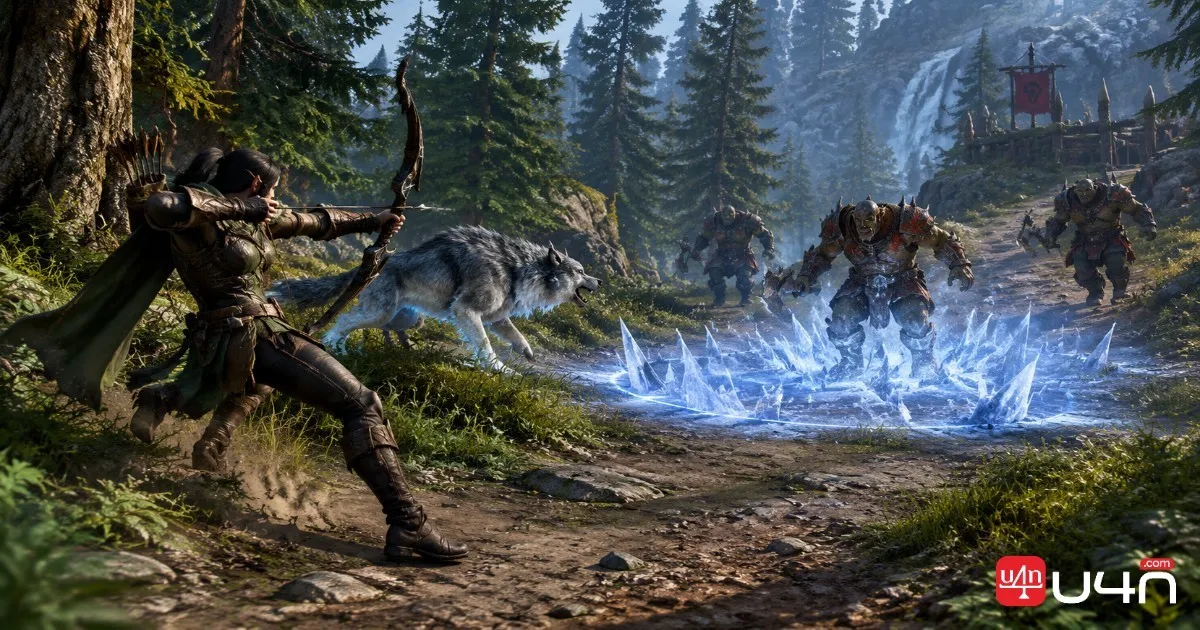
Traps are more flexible in Forever because they can be used during combat, although they have a longer cooldown. This makes them useful for responding to an encounter rather than relying exclusively on pre-placed control.
Still, traps do not solve every positioning problem. They must be placed at your location, so think about where an enemy will move and whether you can afford to stand your ground.
If a target reaches the Hunter's close-range dead zone, use movement and control options to restore a workable distance. Do not wait until your ranged abilities become ineffective before reacting.
For players working toward level 60, these fundamentals are worth mastering before optimizing every talent point. Efficient combat usually comes from fewer mistakes, better pulls, and more consistent damage rather than a complicated rotation.
Hunter in Dungeons, Raids, and PvP
Hunter remains a damage-focused class in group content, but the value of your pet and utility changes with the encounter. Solo leveling rewards safe pulls and steady damage, while group play demands more awareness of threat, positioning, and team coordination.
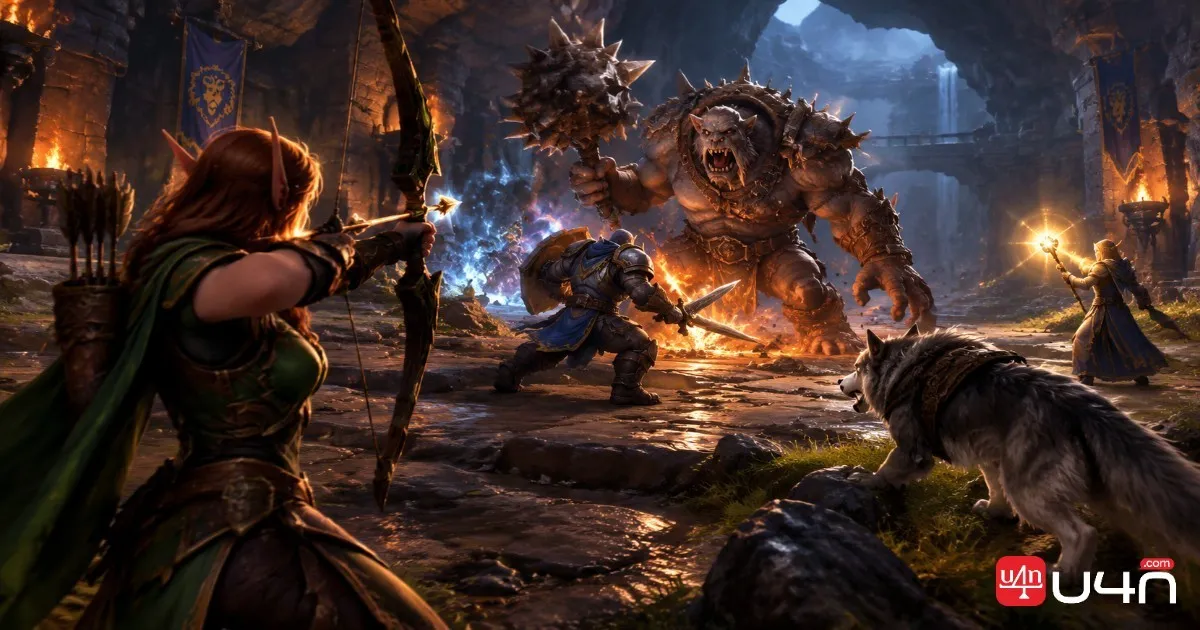
Dungeons and Raids
In group PvE, avoid sending your pet into enemies that the tank has not secured. Uncontrolled pet attacks can complicate a pull, especially when several enemies are close together.
Focus on maintaining damage without creating unnecessary threat. Keep your pet alive, use relevant utility when it helps the group, and make sure your position allows you to attack consistently.
A Hunter who deals slightly less damage but avoids pulling extra enemies can be more useful than one who prioritizes personal output at every opportunity.
PvP and Crowd Control
In PvP, Hunter's advantage comes from range, movement control, and the ability to pressure enemies while repositioning. Traps and pet abilities can create opportunities to attack or disengage, but timing matters more than simply using them on cooldown.
Watch enemy movement, protect your preferred attack distance, and avoid wasting control effects when the opponent can easily escape them. If an enemy closes the gap, prioritize regaining space rather than continuing a ranged rotation that no longer works.
The key lesson is simple: Hunter performs best when you control the conditions of the fight instead of reacting after those conditions have already turned against you.
Is Hunter Worth Playing in WoW Forever?
Hunter is a compelling choice for players who want ranged damage, a customizable companion, and meaningful tactical decisions. Beast Mastery offers a natural starting point for pet-focused play, Marksmanship appeals to players who prefer ranged precision, and Survival opens up a more melee-oriented approach.
Our team's advice is to begin with a straightforward pet-focused build, learn the interaction between Auto Shot and your abilities, and gradually explore more specialized talent combinations. Once you understand positioning, threat management, and pet control, you'll have a much stronger foundation for dungeons, raids, and PvP.
If you're planning your character's progression and considering whether to buy World of Warcraft Forever Gold , first identify the equipment, training, and consumables your chosen build actually needs. A clear progression plan helps you spend resources with purpose rather than chasing upgrades that do little for your current playstyle.
Ultimately, Hunter's strength lies in the combination of ranged pressure, pet utility, and encounter control. Master those fundamentals, and you'll get considerably more out of the class than you would by copying a build without understanding how it works.
FAQ: WoW Forever Hunter
Is Hunter good for beginners in WoW Forever?
Yes. Hunter is a strong option for beginners because a pet can help manage enemy pressure while you learn ranged combat. You still need to understand pet control, positioning, and Mana management to get consistent results.
Which Hunter talent tree is best for leveling?
Beast Mastery is a sensible starting point for players who want their pet to contribute heavily to combat. Marksmanship and Survival are alternatives for players who prefer ranged specialization or melee-oriented gameplay. The best choice depends on your preferred style and current Beta tuning.
What is the best Hunter pet in WoW Forever?
There is no single best pet for every situation. Cats offer stealth-based utility, Bears provide multi-target damage, Spiders can restrict movement, and Wolves contribute group support. Choose based on your encounter and build.
Can Hunters use traps during combat in Forever?
Yes. Blizzard's announced changes allow Hunters to use traps during combat, with a 30-second cooldown. Trap use still requires positioning because traps are placed at the Hunter's location.
Is Lone Wolf a good Hunter build?
Lone Wolf is an option for Marksmanship players who want to deal increased damage without an active pet. However, losing pet damage and utility changes how you handle solo encounters. Evaluate the trade-off before choosing this approach.
Has WoW Forever changed the classic Hunter rotation?
Yes. Some ability and cooldown interactions have changed, including the relationship between Aimed Shot, Arcane Shot, and Multi-Shot. Older guides may still explain useful fundamentals, but their exact rotations and talent recommendations should be checked against the current Forever Beta.