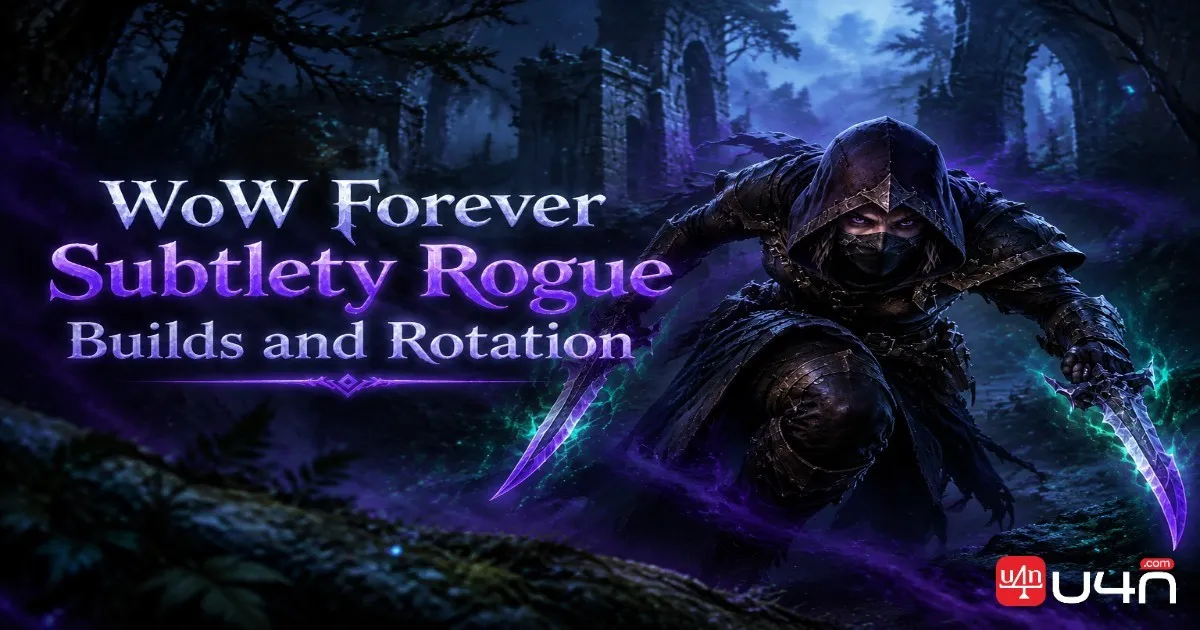
Subtlety Rogue in World of Warcraft: Forever is no longer just a stealth specialist built around quick PvP kills. Its revised talent tree adds more room for sustained damage, giving players new ways to combine bleeds, Combo Points, and repeatable openers. Our team recommends learning how these mechanics work together before investing heavily in a specific build. Even if you are preparing your character with cheap World of Warcraft Forever Gold, understanding your rotation will make a bigger difference than buying gear without a clear plan.
The key is to choose a playstyle that matches your current level and goals. A dagger-focused Ambush build emphasizes opening burst, while a Hemorrhage build leans toward bleed damage and more flexible positioning. The distinction matters because WoW Forever's current level cap limits access to some deeper talents. We will separate practical leveling advice from endgame theory so you can make informed choices without relying on untested damage claims.
What Makes Subtlety Rogue Different in WoW Forever?
Subtlety revolves around Stealth, efficient Combo Point generation, and choosing the right moment to spend those points. Compared with a straightforward melee damage build, it rewards preparation: a good opener establishes pressure, while smart resource management keeps your damage going after the initial burst.
Some changes to familiar talents in WoW Forever. Hemorrhage supports a more sustained damage approach, Premeditation no longer requires Stealth, and Initiative makes opening attacks more rewarding. These adjustments give Subtlety more options than simply relying on Ambush and hoping for a critical strike.
Strengths and Weaknesses
| Strengths | Weaknesses |
|---|---|
| Strong openers and repeatable Stealth opportunities | Energy can feel restrictive before deeper talents become available |
| Bleed damage continues while you reposition | Bleed-immune targets reduce the value of a bleed-focused setup |
| Excellent crowd control for dungeons and PvP | Effective play requires careful timing and resource management |
| Multiple build paths for different combat goals | Full endgame PvE potential remains unproven at the current level cap |
Our team considers Subtlety particularly attractive to players who enjoy controlling a fight rather than simply repeating a fixed damage rotation. However, it is less forgiving when you waste Energy, let important effects expire, or commit your escape tools too early.

Important Talent Changes and Core Mechanics
Before choosing a build, understand the changes that actually influence your combat decisions. WoW Forever introduces new talents while reworking familiar ones, creating a clearer path toward sustained damage without removing the specialization's traditional control tools.
| Talent or ability | What it changes | Why it matters |
|---|---|---|
| Hemorrhage | Builds Combo Points and increases the target's subsequent Rupture damage | Supports a bleed-oriented damage strategy |
| Thousand Cuts | Reduces the Energy cost of qualifying attacks as Rupture ticks | Offers better resource efficiency in a deeper build |
| Quietus | Improves selected attacks against low-health targets | Adds an execute-phase damage benefit |
| Premeditation | Adds two Combo Points without requiring Stealth | Makes it easier to prepare a finisher |
| Initiative | Rewards opening attacks with additional Combo Points | Improves the efficiency of a well-planned opener |
| Dirty Tricks | Reduces the Energy cost of Sap and Blind | Makes crowd control easier to fit into a fight |
These talents do not all belong in an immediately available build. The current level cap restricts access to deeper parts of the tree, so Thousand Cuts and other endgame options should be treated as future build considerations rather than guaranteed level-30 tools. The reference guide also distinguishes current-level recommendations from level-60 theorycrafting.
Which Mechanics Should You Learn First?
Start with three priorities:
- Combo Point generation: Learn how Garrote, Hemorrhage, and your chosen opener contribute to your next finisher.
- Effect management: Understand when Slice and Dice or Rupture is worth maintaining instead of spending every point on immediate damage.
- Cooldown timing: Use Vanish and Preparation to create meaningful opportunities, not simply because they are available.

These fundamentals remain useful even if a later balance update changes individual talent values.
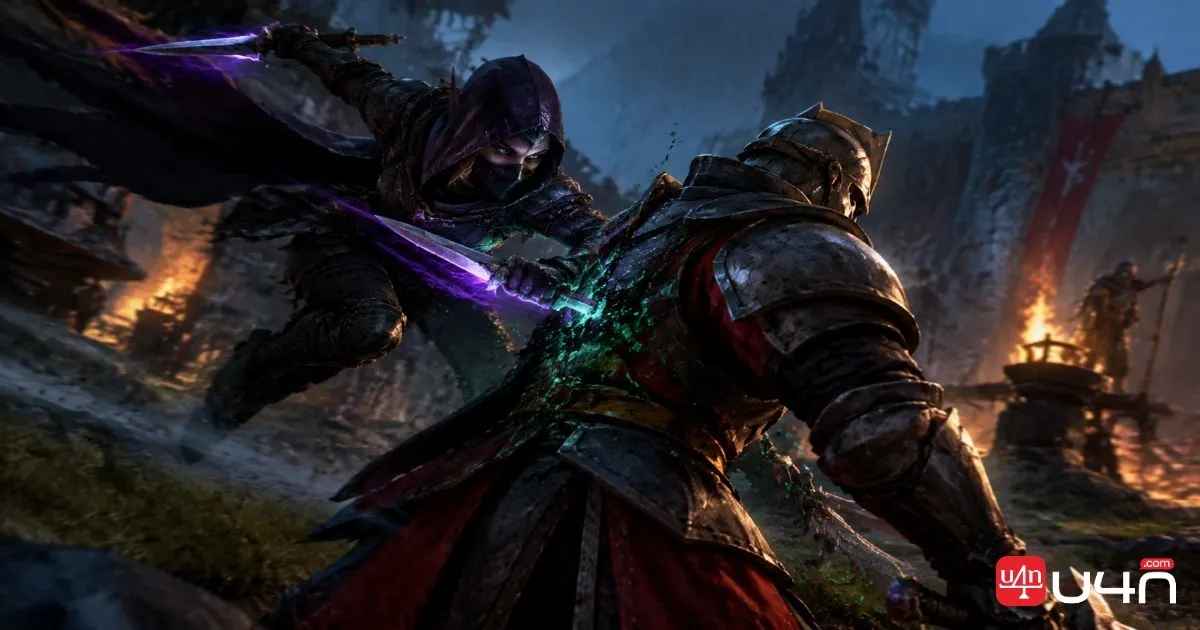
Best Subtlety Rogue Builds for Different Levels
There is no single build that suits every stage of progression. Your available talent points, weapon choices, and intended activity should determine where you invest.
Leveling: Prioritize Reliable Openers
During early leveling, an Ambush-oriented setup offers a straightforward way to start fights with substantial damage. Talents that improve Stealth, Ambush, and follow-up attacks help you remove weaker enemies before they can deal much damage.
Use a dagger for Ambush when your build depends on that ability. If you switch to Sinister Strike for sustained attacks, a slower main-hand weapon can be useful because the ability benefits from stronger weapon damage per hit.
As you unlock more talents, reassess your setup instead of automatically following a level-60 build. Points invested in a talent that is unavailable at your current level cannot help you during today's dungeon run.
Level 30: Explore the Hemorrhage Build
At level 30, a Hemorrhage-oriented setup offers a practical route into Subtlety's revised damage mechanics. The general idea is to establish your opening effects, generate Combo Points efficiently, and use Rupture when the encounter allows its bleed damage to contribute meaningful value.
A sensible talent plan prioritizes the core tools needed for that approach, including Initiative, Premeditation, Serrated Blades, and Hemorrhage, while adapting the remaining points to your available talent budget.
Do not assume that a deeper PvE build will automatically outperform an Ambush setup simply because it contains more new talents. Its full value depends on access to later talent tiers and enough combat time to benefit from sustained effects.
Level 60: Treat Endgame Builds as Provisional
Once deeper talents become available, players can explore Thousand Cuts and Quietus alongside other damage options. A sustained-damage build may become more attractive for longer boss encounters, while a dagger-focused build can remain appealing for burst-oriented PvP.
The important distinction is between a build that looks promising on paper and one that has been tested under actual endgame conditions. Until the full talent package is accessible, avoid treating theoretical damage rankings as established results.
Subtlety Rogue Rotation and Energy Management
A reliable rotation is built around priorities, not a rigid sequence of buttons. Your target's remaining health, the length of the encounter, and the number of Combo Points you have should all influence your next decision.
Single-Target Combat Priorities
For a level-appropriate Hemorrhage setup, use the following framework:
- Open from Stealth. Start with Garrote when you want to establish bleed pressure. Use Ambush instead when your build and weapon are designed for immediate burst.
- Build Combo Points efficiently. Use Hemorrhage as your primary builder once it is available and appropriate for your setup.
- Maintain Slice and Dice when worthwhile. Its attack-speed benefit can support sustained damage, particularly in longer encounters.
- Apply Rupture when the target will live long enough. Bleed damage needs time to contribute value, so avoid blindly applying it to an enemy that is about to die.
- Choose the right finisher. Rupture suits a bleed-oriented approach; Eviscerate can be a better choice when immediate damage matters more or a bleed is ineffective.
- Use cooldowns deliberately. Vanish can create another Stealth opener, while Preparation can reset eligible cooldowns. Save these tools for moments when they improve your damage, control, or survival.
A reliable Subtlety Rogue rotation is a priority system, not a fixed button sequence. Manage Combo Points and Energy, maintain effects when they provide value, and adapt your finishers to the target's remaining health and the length of the fight.
This is a priority framework, not a universal damage-maximizing sequence. Exact decisions depend on talent selection, available Energy, target health, and encounter duration.
Managing Energy Without Losing Momentum
Energy management separates a smooth Rogue rotation from one that repeatedly stalls. Spending everything immediately may leave you unable to use an important ability when an opening appears.
Our team recommends three habits:
- Avoid spending Energy on low-value attacks when a key finisher or control ability is about to be needed.
- Watch the remaining duration of important effects before refreshing them; refreshing too early can waste useful uptime.
- Keep Thistle Tea available for situations where an Energy boost can meaningfully improve an opener or recovery window.
In dungeons, crowd control can be just as valuable as damage. Sap can help isolate a Humanoid before a pull, while Kick can interrupt a dangerous cast. A well-timed control ability often prevents more trouble than a small increase in personal damage can compensate for.
Weapons, Stats, and Practical Gear Choices
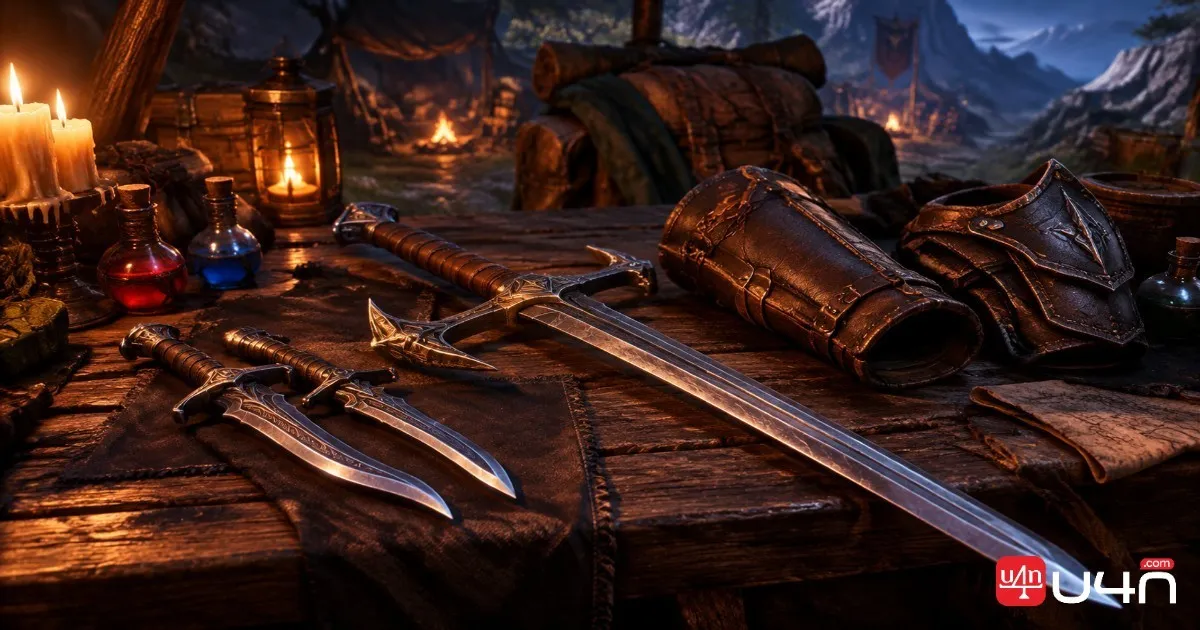
Subtlety's weapon choice should follow your build rather than a universal best-in-slot rule. Ambush and Backstab favor daggers, while a Hemorrhage-oriented setup can benefit from a slower main-hand weapon. Choosing the wrong weapon for your primary damage mechanic can undermine an otherwise sensible talent allocation.
Stat and Weapon Priorities
| Priority | What to consider |
|---|---|
| Main-hand weapon | Match the weapon type and damage profile to your build |
| Agility | Supports Attack Power and critical-strike potential |
| Hit | Helps reduce missed attacks, including important openers |
| Stamina | More valuable when survivability is a major concern, especially in PvP |
| Off-hand weapon | Compare its offensive contribution and overall item stats |
These are practical starting points, not a fixed stat weight for every encounter. The best choice can change with your build, available gear, and whether you are fighting players or NPCs.
Gear Should Support Your Playstyle
When comparing upgrades, look beyond the item's overall level or rarity. Ask whether it improves your main damage mechanic, whether its stats fit your current build, and how much effort it takes to obtain.
For dungeon progression, prioritize upgrades that meaningfully improve combat performance over small sidegrades. For PvP, survivability and the ability to execute your control sequence can matter more than maximizing a single offensive stat.
If you are comparing farming time against other progression options or browsing WoW Forever Gold for sale, set a clear in-game goal first. A weapon that improves your chosen build or an essential consumable can be more useful than spending resources on several minor upgrades at once.
PvE and PvP: How to Adapt Your Playstyle
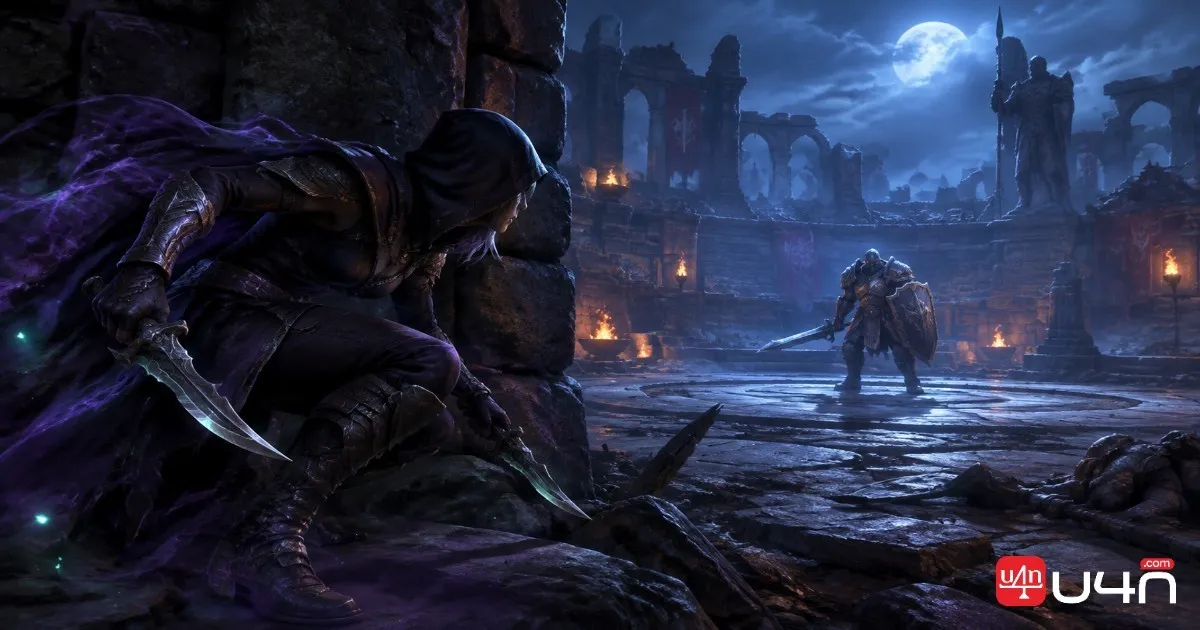
The same class toolkit serves different purposes depending on the content. In PvE, your focus is sustained damage, efficient pulls, and reliable interrupts. In PvP, timing, target selection, crowd control, and survival often decide the outcome.
| Situation | Recommended approach | Common mistake |
|---|---|---|
| Dungeon trash | Use Sap to isolate dangerous Humanoids where practical | Starting a pull before the group is ready |
| Boss encounters | Maintain valuable effects and use finishers according to encounter length | Refreshing bleeds on a nearly defeated target |
| Burst PvP | Use a dagger-focused opener and coordinate follow-up control | Spending every cooldown without a clear kill opportunity |
| Extended PvP fights | Use positioning, control, and defensive cooldowns to create another opening | Staying in a losing trade after your escape options are gone |
| Bleed-resistant or immune targets | Reassess your damage priorities and use effective alternatives | Relying on Rupture when it cannot provide value |
Crowd Control and Cooldown Discipline
Sap, Cheap Shot, Kidney Shot, Blind, Gouge, and Kick each serve a different role. Learning their limitations is more important than trying to use all of them in every fight.
In PvP, avoid spending every control tool on the first target you encounter. Keeping a follow-up option can give you a second chance when the opponent uses a defensive ability or escapes your initial burst.
For PvE, communicate before using control on a target that another player intends to engage. Good Rogue play is not just about personal execution; it is also about making dangerous encounters more manageable for the whole group.
Summary
Subtlety Rogue in WoW Forever combines the traditional strengths of Stealth and crowd control with a more developed path toward sustained damage. Hemorrhage and Rupture support one approach, while Ambush and daggers offer a more direct burst-oriented playstyle.
Our team's recommendation is to master your current-level rotation first, then adjust talents and weapons to match the content you actually play. Keep important effects active when they provide value, manage Energy carefully, and use Vanish as a planned tool rather than an automatic button.
Most importantly, separate proven current-level advice from endgame theory. A build should earn its place through practical performance, not simply through an attractive talent list.
FAQ
Is Subtlety Rogue good for PvE in WoW Forever?
It has promising PvE tools, particularly through Hemorrhage, Rupture, and deeper talents such as Thousand Cuts. However, its full endgame performance cannot be confirmed until those talents are available for meaningful testing.
Which weapon is best for Subtlety Rogue?
Dagger builds favor daggers for Ambush and Backstab. Hemorrhage-focused builds can use a slower main-hand weapon. Choose based on your primary damage abilities rather than assuming one weapon type is best for every build.
Should I use Rupture or Eviscerate?
Use Rupture when the target is likely to survive long enough for bleed damage to matter. Eviscerate is worth considering when immediate damage is more valuable or the target cannot be affected effectively by bleeds.
What should I prioritize while leveling?
Focus on a reliable opener, efficient Combo Point generation, appropriate weapon selection, and core talents that are available at your current level. Avoid copying a level-60 build before you can access its defining talents.
How can I improve my Subtlety Rogue performance?
Start by reducing missed openers, managing Energy more carefully, maintaining useful effects, and saving cooldowns for meaningful opportunities. In PvP, practice control chains and defensive timing; in PvE, focus on consistent damage and reliable interrupts.