



At level 60, the rhythm of WoW Forever changes. Experience stops being the goal, and the December 9, 2026 raid opening gives every gold run and gear upgrade a deadline. Our team would treat this stretch as a short preparation window: build a workable gold reserve, improve the character through reliable gear sources, and avoid spending time on plans that sound profitable but do not fit the rules of this version.
The biggest trap is assuming that unfinished quests will turn into a pile of gold once we reach max level. The developers have said that quest experience will not automatically convert to gold after level 60, unlike in some traditional versions. That makes quest hoarding a poor foundation for a raid budget. Players comparing optional services such as World of Warcraft Forever Gold for sale should still begin with a clear in-game budget and a realistic list of priorities, rather than treating a purchase as a substitute for planning.
Our preparation plan has two tracks. The first is steady income: use repeatable opportunities, keep an eye on ordinary expenses, and avoid spending the same coin twice on paper. The second is gear: run the new level-60 dungeons and use other available sources to fill important gaps. Neither track needs to be perfect before raid day. We want a character that can participate, a supply of useful consumables, and enough gold left over to handle the costs that arise along the way.
Set a realistic gold target
The headline number is the epic mount. Even with a discount, it is reported to cost roughly 900 gold, unless a class-specific quest reduces the expense. That is a substantial purchase for a newly capped character, especially when raid consumables and other preparation costs are still ahead. We would not treat the mount price as the entire gold target: it is only one part of a broader budget.
Before farming, write down what the character actually needs. If the mount is a personal priority, include it as a separate goal rather than quietly taking raid supplies out of the same pile. If the immediate aim is to be ready for the raid, reserve some gold for consumables and routine expenses first. Players who already have useful equipment, a class-specific discount, or gold saved from earlier levels can set a different target from someone starting at nearly zero.
| Budget item | What to consider | Planning approach |
|---|---|---|
| Epic mount | Reported cost is about 900 gold with the discount | Decide whether it is urgent or can wait |
| Raid consumables | Costs may rise as raid preparation gets closer | Set aside a reserve instead of spending everything on gear |
| Gear preparation | Dungeons and other sources may reduce the need to buy upgrades | Check what the character is missing before spending |
| Unexpected expenses | Repairs and other routine costs can interrupt a plan | Keep a small amount uncommitted |

The goal is not to calculate a perfect number from incomplete information. It is to make trade-offs visible. A player who wants the mount immediately may need to accept a smaller consumable reserve. Someone focused on the first raid may prefer to postpone the mount and keep more gold available. Either way, knowing the choice is deliberate is better than arriving at level 60 with no idea where the money went.
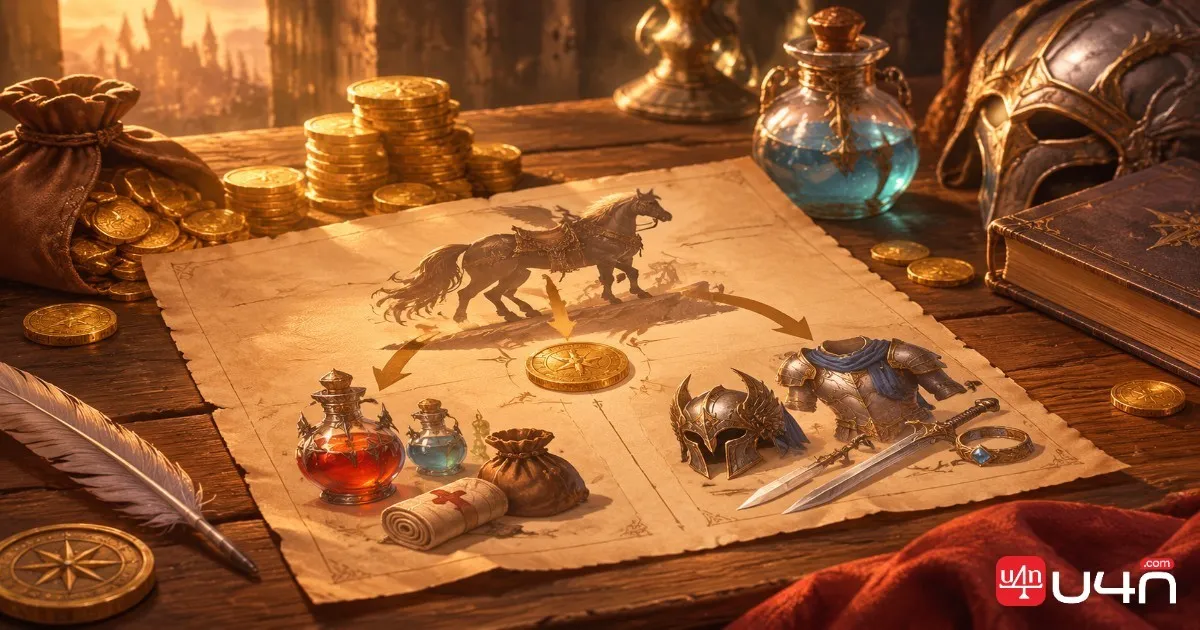
Do not save quests for automatic gold conversion
Questing remains useful for rewards, reputation, or simply finishing content, but it should not be treated as a hidden gold investment that pays out at max level. The developers have explained that quest experience does not automatically become gold after level 60. Their stated reason is to prevent players from storing quests and turning them in all at once for a large payout.
That detail changes how we plan the final levels. If a quest offers an item, reputation, or another reward we need, completing it can still make sense. But leaving a large stack unfinished solely because we expect a gold conversion is not a reliable farming strategy. It may feel efficient to delay turn-ins, particularly when a character is close to 60, yet the expected payoff is not there under the described rules.
We also recommend separating "quest progress" from "gold progress" in any personal checklist. Finish quests because their actual rewards matter, not because of a conversion that will not happen. For gold, focus instead on activities that explicitly provide sellable rewards or currency. This distinction saves time and prevents a common disappointment: hitting the level cap, turning in a backlog, and discovering that the payout does not match the plan.

Make the weekly Booty Bay task part of the routine
The repeatable gold opportunity highlighted in the provided information is a weekly task from a goblin in Booty Bay. It calls for three max-level five-player dungeons. Completing it gives a chest that can be sold to a vendor for an estimated 10 to 100 gold. That is a wide range, so we would treat it as supplemental income rather than a guaranteed weekly paycheck.
The task has an appealing shape for players who are already running dungeons for gear. Instead of choosing between "farm gold" and "improve the character," we can potentially make the same dungeon sessions contribute to both goals. The three-run requirement also gives the week some structure: group up, clear the required dungeons, collect the chest, and include its vendor value in the budget only after it is actually received.
The reward range matters. Ten gold and one hundred gold lead to very different plans, so we should not build a mount purchase or consumable budget around the high end. Record the reward when the task is completed, then update the target. If the chest is modest, the task still adds something to the weekly total; it simply should not be mistaken for a fast route to a large one-time expense.
The developers have also discussed adding weekly goals to provide a steadier source of gold for casual players. That is encouraging for players who cannot spend long stretches farming, but it is a stated plan, not a reason to assume a specific reward or schedule beyond what has been described. We would use the current Booty Bay task as the concrete option and treat any future weekly objectives as additional support once their details are known.

Fill gear gaps through five-player dungeons first
The new five-player dungeons, including Blackfathom Deeps and the Shaper's Terrace, are central to the gearing plan described for level 60. For a character that has just reached the cap, dungeon runs offer a practical place to look for upgrades while also supporting the weekly Booty Bay objective. We would start by identifying the slots that most need improvement, rather than running content without knowing what would actually help.
A simple gear check makes each run more purposeful. Note the character's weakest or outdated slots, then compare dungeon rewards with what is already equipped. If a run provides no upgrade for one character, it may still be useful for another group member, for the weekly task, or for learning the encounter. But repeated runs are easier to justify when we know what we are trying to obtain and when we are willing to stop chasing a particular drop.
The provided information does not specify item levels, drop rates, or a required pre-raid gear threshold. We should not invent one. Instead, use the character's current gear, the group's expectations, and the available rewards to decide whether another dungeon run is more valuable than working on a different source. That practical check is especially useful when raid day is close and time is as limited as gold.
Compare crafting, reputation, PvP, and world drops
Dungeon gear is only one part of the route. Crafting, reputation, PvP, and world drops are also named as possible equipment sources. These options broaden the plan, but they are not automatically equal in cost or convenience. Our team would compare them according to three questions: what slot can this source improve, what time or gold will it take, and can we make progress toward it alongside another goal?
Crafting may be attractive when a recipe and materials are accessible, but a crafted item is not automatically a good purchase. Check the cost against the value of the upgrade, especially if gold is already earmarked for consumables or the mount. Reputation rewards can be worthwhile when the character is close to a useful reward, though starting a long grind immediately before the raid may not be the best use of the remaining time. PvP and world drops may suit players who enjoy those activities or obtain relevant gear naturally, but we would avoid assuming that a particular drop will arrive on schedule.
| Gear source | Useful planning question |
|---|---|
| Five-player dungeons | Which weak slots could the available drops improve? |
| Crafting | Does the upgrade justify the material and gold cost? |
| Reputation | How close is the character to a relevant reward? |
| PvP | Can the character make progress while enjoying the activity? |
| World drops | Is this a bonus opportunity rather than a required plan? |
This is where a little restraint helps. It is tempting to chase every possible upgrade before a raid, but spreading time across too many goals can leave the character short on both gold and gear. Pick the sources that match the gaps you have identified. Treat convenient upgrades as wins, and do not turn uncertain drops into the foundation of the whole preparation plan.
Schedule consumables around the raid date
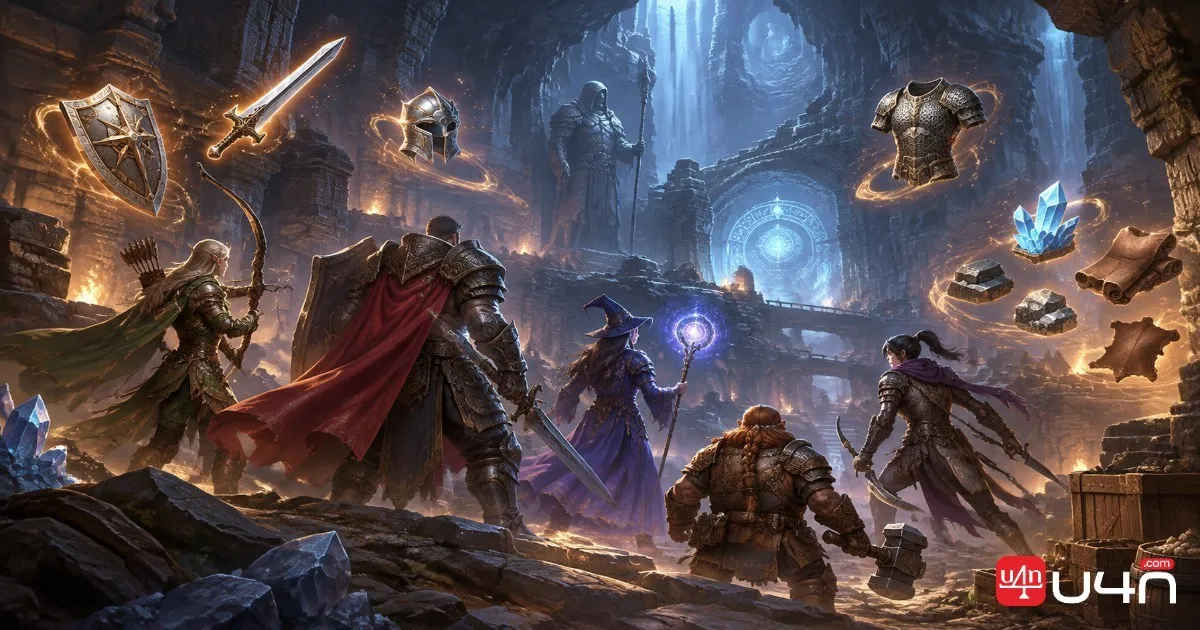
Consumables are part of the raid budget, but the available information does not give a full shopping list or prices. We therefore would not recommend buying large quantities early based only on an assumed price trend. Instead, estimate what the character is likely to need, reserve enough gold to cover those needs, and decide when to purchase based on the raid schedule and what is known in game.
The December 9 date makes timing important. Players still working on gear have a reason to prioritize dungeon runs now, while those whose equipment is in good shape can shift more attention to gold and consumables. There is no need for everyone to follow the same order. The useful question is whether the next hour is more likely to improve a meaningful gear slot, complete the weekly task, or strengthen the raid reserve.
We would also keep some gold unspent until closer to the event. Spending every coin on the epic mount or a speculative gear purchase can create avoidable pressure later. A modest reserve gives us room to adjust when the character's actual needs become clearer. For players considering optional help with preparation, WoW Forever Boosting for sale should not distract from the same basic checklist: know the character's gear gaps, confirm the expected costs, and keep the remaining time before raid day in view.
A practical checklist for the final stretch
For a character near or newly at level 60, our team would use a short checklist rather than trying to complete every possible activity:
- Confirm what the character needs most: gold, specific gear slots, or raid supplies.
- Do not count on saved quests converting into gold after reaching level 60.
- Complete the Booty Bay weekly task if the character can comfortably run the required three max-level dungeons.
- Use dungeon runs to pursue real gear upgrades and, where possible, make progress on the weekly task at the same time.
- Compare crafting, reputation, PvP, and world-drop opportunities against their time and gold costs.
- Reserve money for consumables and ordinary expenses before committing everything to the epic mount.
- Reassess the plan as December 9 approaches, using the character's actual gear and gold total rather than an idealized target.
The underlying priorities are clear: do not rely on quest conversion, make steady use of available weekly income, and pursue gear through sources that match actual gaps.
The right balance varies with each character's starting point, but the underlying priorities are clear: do not rely on quest conversion, make steady use of available weekly income, and pursue gear through sources that match actual gaps. With the raid date approaching, a focused plan is more useful than an ambitious list of every activity in the game.