


The November 25, 2026 hotfixes give Balance Druids a talent rebuild to examine and Alterac Valley groups a reason to rethink their opening route. Our team's first priority is checking talent allocation before entering combat. Our second is changing how we approach battleground objectives, especially when a group still expects a quick ride to the enemy General.
We would also check account housekeeping before spending WoW Forever Gold on routine character preparation. Eligible Paladins and Warlocks have a free Journeyman Riding recovery option, while several combat fixes deserve a quick check before the next dungeon or battleground queue. Blizzard's hotfix page is a rolling record, so the November 23 and November 20 entries beneath this update belong to earlier batches.
The useful question is what these changes ask us to do differently. For Balance, that means rebuilding carefully and evaluating casting reliability alongside damage. For Alterac Valley, it means treating objectives as part of the route to a successful finish. We would avoid declaring a new optimal build or reputation route until those choices have been tested under comparable conditions.
Balance Druids Should Inspect Their Entire Build
Improved Starfire is the immediate login check. The talent has dropped from five ranks to two, and Druids who previously invested three or more points have their entire talent allocation reset. That makes a saved build screenshot useful, but copying the old distribution point for point would miss the purpose of the update.
Our approach would be to rebuild around the content scheduled for that session. A dungeon group, an organized battleground team, and a solo questing character can place different demands on casting uptime and mana support. Before committing points, we would read the current tooltips and check how the revised talents connect through the tree.
| Talent or ability | November 25 change | What we would examine |
|---|---|---|
| Starlight Wrath | Renamed from Improved Wrath; also reduces Starfire's cast time by 0.1 to 0.5 seconds | Whether shorter casts improve practical casting windows |
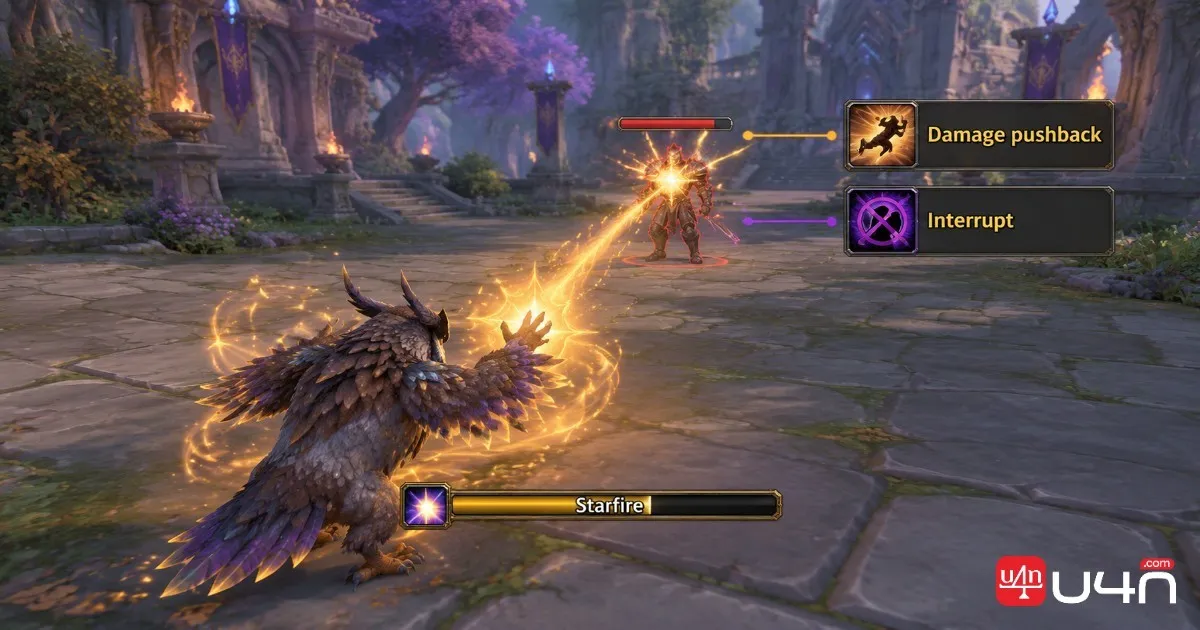
| Moon and Stars | Renamed from Improved Moonfire; adds 50%/100% protection against Starfire cast-time loss from damage | How reliably Starfire completes under pressure |
| Improved Starfire | Reduced to two ranks, with listed chances of 8%/15% | The full effect in the current tooltip before allocating points |
| Eclipse | Adds 7%/13%/20% Wrath critical strike chance at all times | How Wrath fits into the revised build |
| Dreamstate | Replaces Moonfury; grants 20% to 100% of Innervate's benefit when used on another target | Whether coordinated Innervate use supports sustained casting |
| Moonkin Form | Adds 10% Arcane and Nature damage while active | Damage performance with the complete revised talent setup |
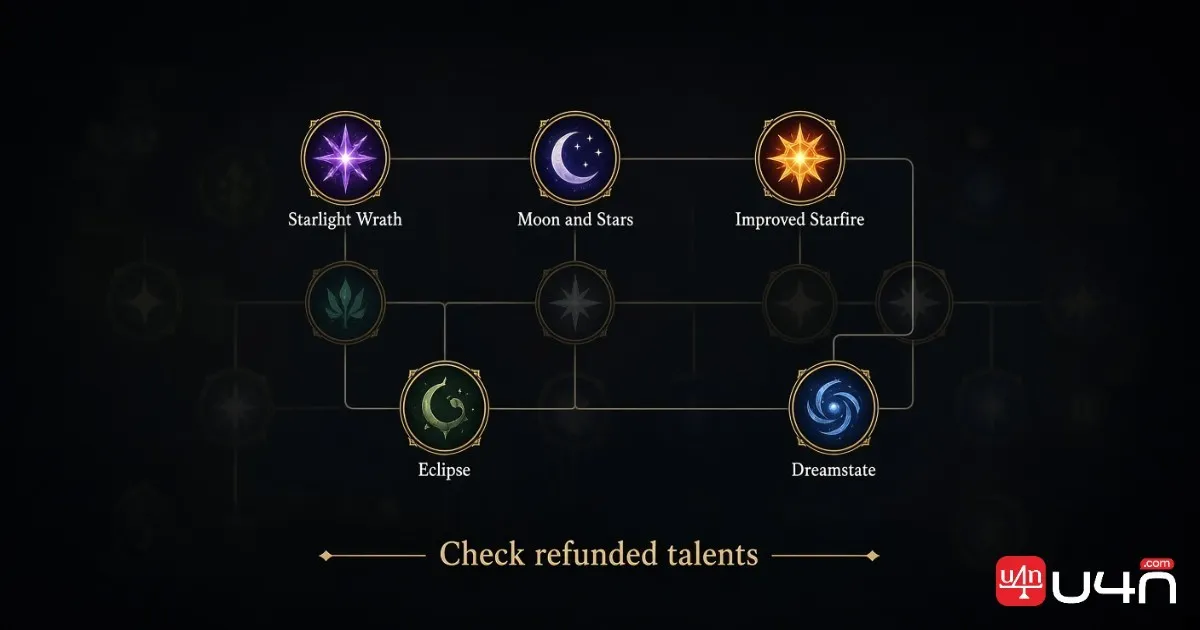
The hotfix entry gives Improved Starfire's revised probabilities without fully restating the associated effect. We would verify that missing detail in the game rather than fill it in from another version of the talent. The same official entry confirms the full talent reset condition, so checking only the Balance branch after logging in is insufficient.
Once the build is restored, we would review action bars and any talent-dependent reminders. A short preparation check is easier to manage in town than during a pull when an expected ability or interaction is missing.
Starfire Reliability Deserves Attention Alongside Damage
Our reading of the Balance changes puts casting consistency near the center of the discussion. Shorter Starfire casts and protection against damage-induced pushback address two different ways a cast can become awkward to complete. We would evaluate them separately before deciding how heavily to favor either benefit.
Pushback protection needs precise wording. Protection against losing casting progress when damaged should never be presented as blanket immunity to interrupts. Our positioning advice remains conservative: find a usable casting lane, watch enemy pressure, and preserve an escape route. A more dependable cast does not justify standing still through every threat.
For testing, we would compare attempts with similar gear, buffs, targets, and movement requirements. Record how often a cast finishes, how frequently movement cancels it, and how much time passes without a spell being completed. A single large critical hit makes a memorable screenshot, but it tells us little about sustained performance.
Dreamstate also invites a coordination check. Before a longer encounter, we would agree on an Innervate recipient and a rough timing window. That gives the group a plan for using the talent's shared benefit. It also avoids the familiar problem of several players requesting the same support cooldown only after their mana has already become urgent.
Hurricane's final hit and Genesis interactions with Hurricane and Tranquility have also been corrected. Those fixes belong in any post-update comparison, but we would keep area damage, single-target casting, and emergency healing observations separate. Each answers a different question about the build's usefulness.
We would be cautious about assigning a single percentage gain to the specialization. Moonfury's removal sits alongside the new bonuses and revised utility. A credible damage estimate needs the complete build and an encounter model, not a sum of the most attractive numbers in the notes.

Alterac Valley Rewards Now Favor Objective Work
The Alterac Valley changes make the old General-first route less attractive on paper. Rewards have been redistributed toward work elsewhere on the map, while enemy creatures and commanders have become more demanding. Our recommended response is to organize objective groups before the main force reaches the enemy base.
| Area | Confirmed adjustment | Our suggested response |
|---|---|---|
| Enemy General | Honor and reputation rewards reduced substantially | Reassess how much the group sacrifices to reach the boss quickly |
| Towers, graveyards, and mines | Reputation increased; objective Honor slightly increased | Include capture and control assignments in the opening plan |
| Enemy NPCs and Lieutenants | Reputation increased, with a substantial increase for Lieutenants | Evaluate worthwhile targets along the route |
| Battleground enemies | Health and damage increased | Use controlled pulls and keep healers within reach |
| Warmasters and Marshals | Longer aggro reach and room leashing | Plan engagements around their rooms |
| Generals and their commanders | Stronger while relevant objectives remain | Check objective progress before committing to the final fight |
Blizzard describes the intended result as relatively similar Honor gains and increased reputation per match. That is a design target, not proof of equal Honor per hour. Our team would track match length alongside rewards before judging whether a particular route improves session efficiency.
The distinction matters when discussing the patch with a group. A larger reputation total at the scoreboard can still accompany a slower hourly rate. Conversely, a match with a modest total can be efficient if it ends quickly and consistently. We would want several matches before turning either observation into a recommendation.
Our opening call would therefore focus on assignments: which players secure the next objective, who stays to defend, and where the main force regroups. A clear plan gives a pickup team something more useful than repeated instructions to rush.
The 20-Minute Threshold Is a Checkpoint, Not a Goal
The long-match reputation threshold has fallen from 60 minutes to 20 minutes. Holding graveyards and mines at the end of qualifying matches can now produce meaningful reputation rewards. Separately, Generals and Warmasters or Marshals begin with a four-stack strengthening effect that lasts 20 minutes, with each objective taken removing a stack. These are distinct mechanics, even though they share the same duration. (news.blizzard.com)
We would never turn that into a blanket instruction to stall. The useful decision is whether another objective, a defense, or an immediate finish offers the stronger result from the current position. Waiting without improving map control gives the opposing team time to recover.
For a match approaching the threshold, we would ask three questions:
- Can the team finish cleanly with its current position?
- Which controlled objectives are vulnerable before the match ends?
- Would splitting the group improve control or simply weaken the final push?
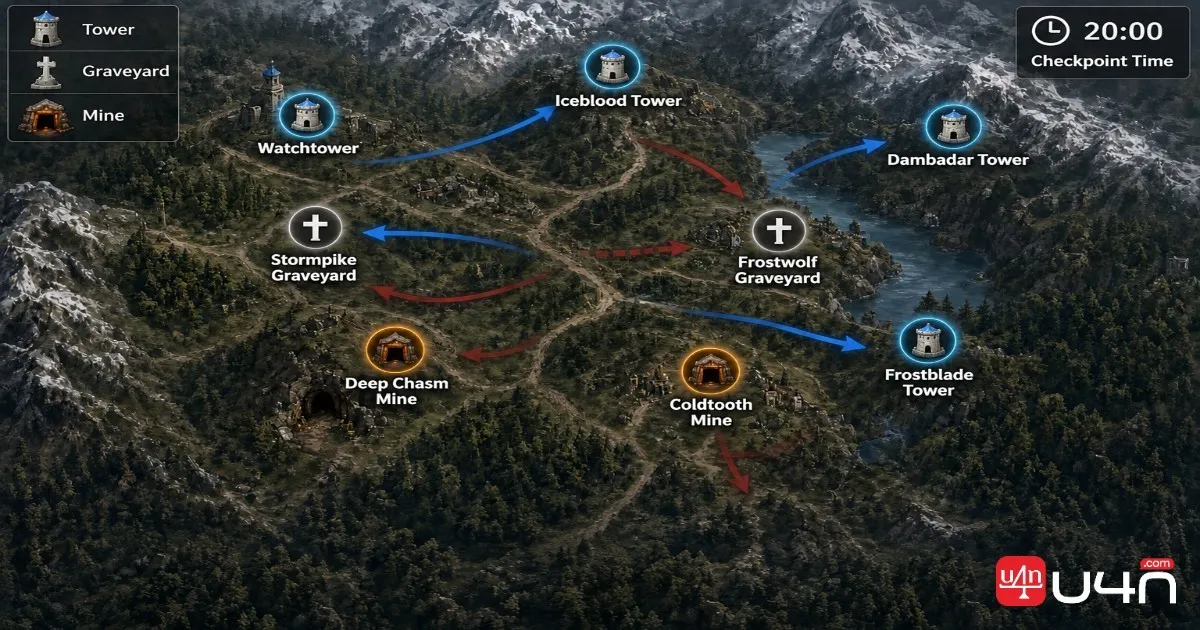
Those questions are more useful than watching the clock alone. If the team has committed to a viable finish, abandoning it to manufacture a longer match needs a clear justification. If the push has already stalled, reorganizing around defensible objectives may give the group a more productive next move.
The commander changes also encourage a disciplined pull. Our preference would be to gather the intended force, confirm healer readiness, and agree on the engagement point before anyone initiates. After an unsuccessful attempt, review what caused it. Missing objective progress, an uncontrolled pull, and insufficient healing require different corrections.
We would log the result without overstating it. Match duration, reputation earned, objective control, and the cause of any failed boss attempt provide a useful starting record. One difficult match should prompt investigation rather than an immediate claim that every future queue will be equally slow.
Other Class Fixes Need a Short Combat Check
The smaller class entries deserve a few minutes of preparation, especially for players whose regular routines were built around inconsistent behavior.
Hunter and Warlock pets no longer have zero melee basic-attack critical strike chance. Hunter hawks also receive targeting and dismissal corrections. For Hunters, we would check a normal summon, target selection, and dismissal sequence before relying on that behavior in a crowded encounter.
Paladins should review Judgement refreshing and Exorcism critical strikes. Oath of Light now lasts 60 minutes, which is a convenient opportunity to align it with the team's normal preparation routine. We would refresh reminders around the current duration rather than continue using an outdated timer.
Rogues need an inventory check because poisons and Blinding Powder are temporarily bind-on-pickup. Our practical response would be to confirm supplies on the character entering combat and avoid planning around last-minute transfers.
Shamans should examine the interaction between Chain Lightning, Clearcasting, and five Maelstrom Weapon stacks. The corrected consumption behavior deserves attention in any resource tracker or combat review. Comparing a new result against a previous bugged interaction can lead to the wrong diagnosis.
We would keep these checks brief and specific. The aim is to confirm that a familiar action now behaves as expected. Rebuilding an entire setup after one unusual combat sequence would introduce too many variables at once.
Eligible Mount Quest Characters Can Recover Riding
Paladins and Warlocks who completed the qualifying mount quests should check their riding skill before paying for training. The recovery route uses a special dialogue option from the appropriate NPC.
| Eligible character | NPC | Location |
|---|---|---|
| Forsaken Paladin | Danitha Morr | Bandarion Keep |
| Alliance Paladin | Lord Grayson Shadowbreaker | Stormwind Cathedral |
| Horde Warlock | Zevrost | Cleft of Shadow, Orgrimmar |
| Alliance Warlock | Ursula Deline | The Slaughtered Lamb, Stormwind |
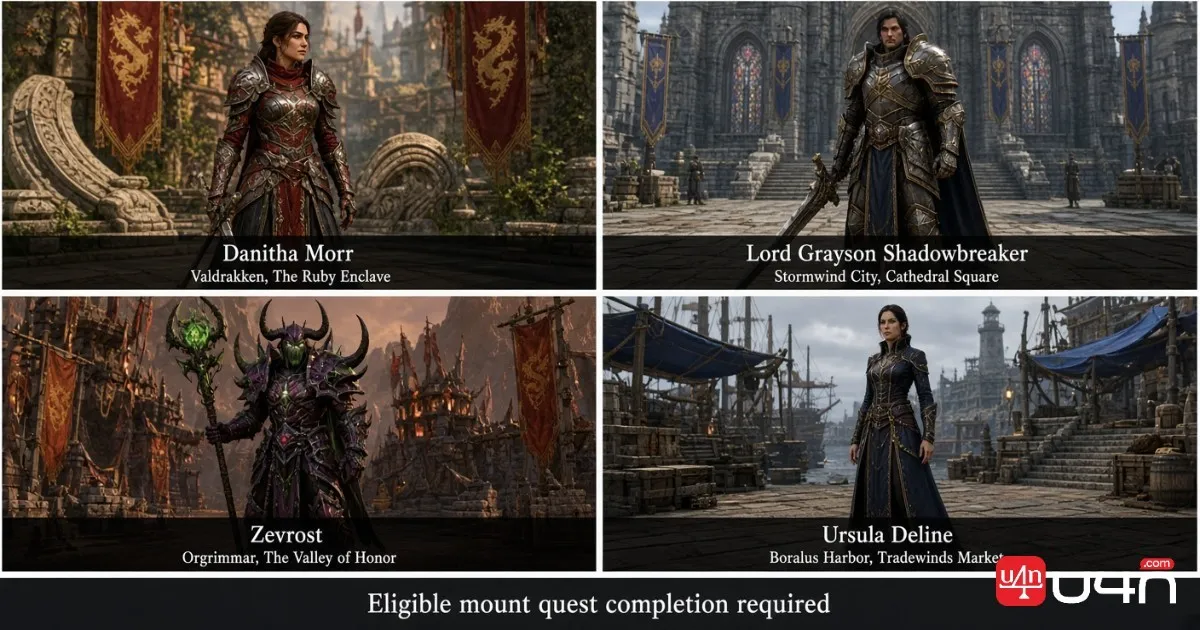
The listed quest prerequisites are Justice and Retribution for Forsaken Paladins, Judgment and Redemption for Dwarf and Human Paladins, and Dreadsteed of Xoroth for Warlocks. Players who already completed the relevant quest can use the recovery dialogue to learn Journeyman Riding for free.
Our suggested order is simple: inspect the riding skill, confirm the quest completion, and then visit the matching NPC if the skill is missing. After speaking to the NPC, check the character's skill listing again so the task is actually closed.
This is an easy errand to place before a scheduled group. We would handle it while the team is gathering, leaving the combat session free for the changes that require observation and discussion.
What We Would Do Before the Next Queue
Our first session would begin with character readiness. Restore any reset talents, read the revised tooltips, verify important spell and pet behavior, and collect missing riding where eligible. Then enter content with one or two questions to test, such as Starfire completion under pressure or how well an objective assignment survives the opening push.
Before replacing WoW Forever Items to solve a perceived performance problem, we would check talent allocation, spell use, and encounter conditions. A character with an incomplete rebuild or a group repeatedly losing its assigned objectives needs those problems addressed before equipment changes can be evaluated sensibly.
For Alterac Valley, our next call would identify the objective, its defenders, and the regroup point. For Balance, it would confirm a complete build and an Innervate plan. Those are concrete adjustments we can make before the pull, then judge against what actually happens.