



Our team's advice for the crafting update is simple: stop restocking from an old shopping list. Before another gathering run, separate the materials needed for processing from the drops required by your next piece of equipment. We would rather spend a minute checking a recipe than an evening farming something it no longer needs.
For readers comparing progression routes, including those searching for ArcheAge Chronicles Boosting, we recommend starting with that same inventory check. A clearer material list gives every session a purpose, without turning a straightforward crafting project into a collection marathon.
As of November 16, 2026, these changes are still a preview for the planned November 17 update. The official announcement says processed-material recipes, including Ingots, Textiles, and Additives, will lose their monster-loot and Sweetgrass Powder requirements. Common and Uncommon loot used directly in equipment crafting will retain its current setup or become more available. Bone Chip yields will also increase across regions, with larger gains in later areas. Exact recipe quantities and yield increases have not been published.
What the Crafting Changes Mean for Your Material List
We would organize preparation around three separate jobs: making processed materials, collecting equipment-specific drops, and supplying Bonecraft. Keeping those jobs apart makes it easier to see which trips are still necessary.
| Crafting goal | Previous collection burden | Announced change |
|---|---|---|
| Produce Ingots, Textiles, and Additives | Many recipes included monster loot and Sweetgrass Powder | Those requirements will be removed from processed-material recipes |
| Craft equipment using Common or Uncommon loot | Gather the drops listed in the equipment recipe | Those materials remain relevant; their acquisition may increase |
| Collect Bone Chips for Bonecraft | Build up the required quantity through farming | Yields will increase, especially in later regions |
These distinctions come from the official crafting preview. The practical divide is between ingredients used to process materials and loot consumed directly by equipment recipes. We would not treat both categories as disposable. (steamcommunity.com)
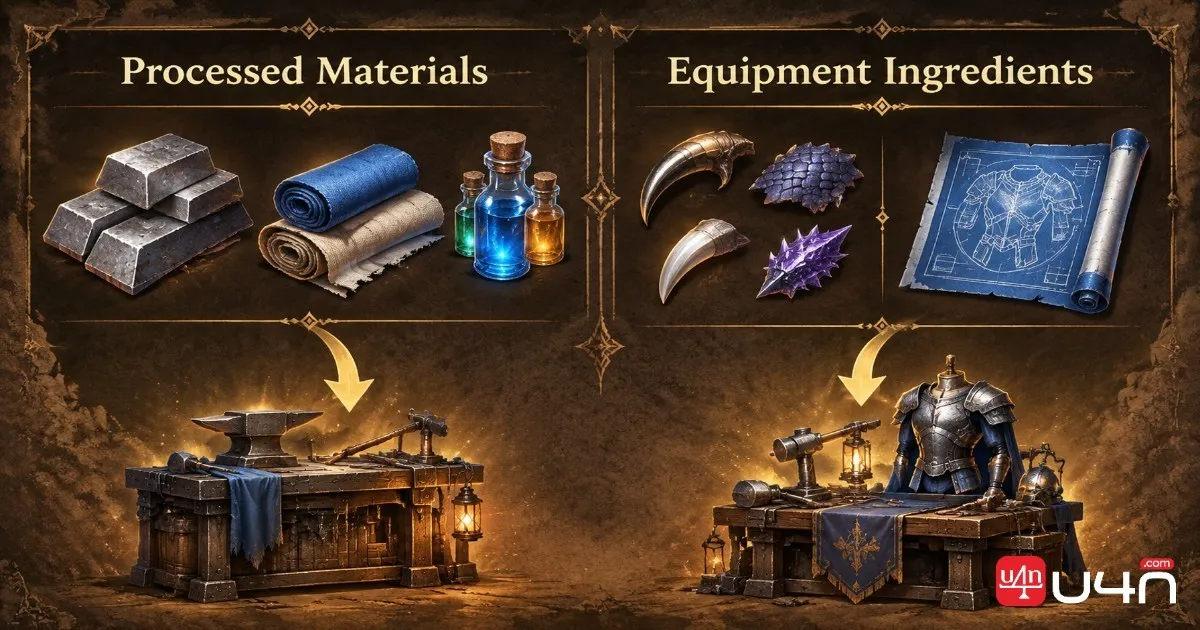
Our preparation sheet would list one target item, its processed-material requirements, and its direct-drop requirements in separate columns. That is enough detail to plan a run without maintaining a spreadsheet for the entire crafting system.
Should You Keep Sweetgrass Powder?
We would pause bulk purchases intended solely for the affected processing recipes. There is little reason to keep topping up an old requirement before checking its replacement.
Existing stock deserves a calmer approach. Our recommendation is to set it aside until the live recipes can be checked, rather than immediately selling everything. A change to one crafting category is not a safe basis for assuming an item has no remaining purpose.
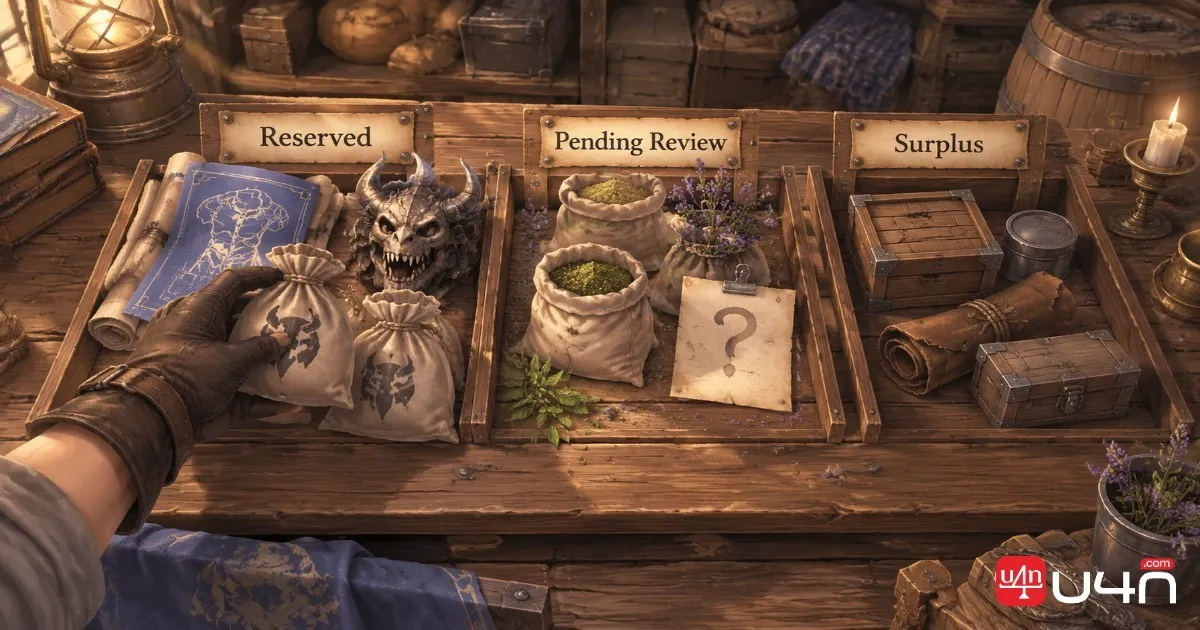
We would use three simple inventory labels:
- Reserved: needed for a confirmed, near-term craft.
- Pending review: previously required, but its current use needs checking.
- Surplus: checked against the updated recipes and not needed for planned projects.
Sweetgrass Powder belongs in the review pile until that check is complete. We prefer a slightly untidy storage tab to buying back materials after an overenthusiastic clear-out.
Which Equipment Materials Should You Save?
We would judge a drop by its recipe use, not its rarity color. Before selling Common or Uncommon materials, open the equipment recipe you actually intend to complete and reserve the listed amount.
Our preferred approach is to plan around the next meaningful upgrade. Preparing several speculative gear sets makes it harder to distinguish a real shortage from materials collected “just in case.”
For each target item, we would record:
| Inventory check | What we would write down |
|---|---|
| Equipment target | The specific item we intend to craft |
| Direct-drop requirement | Materials consumed by that equipment recipe |
| Available stock | What is already in storage |
| Remaining shortfall | Only the amount still needed |
We would also keep reserved equipment drops separate from general processing stock. That small organizational step makes a quick inventory clean-up much less risky.
How We Would Test Bone Chip Farming Routes
We would not name a best Bone Chip farming spot without post-update testing. Our starting point would be two accessible routes: one close and comfortable, another in a later region that our character can handle reliably.
Run each for the same amount of time. Fifteen minutes is a useful initial test, not a promised benchmark. Record the Bone Chips collected, travel time, interruptions, and any return trips for supplies.
Our comparison would use this calculation:
Bone Chips per minute = Bone Chips collected ÷ total elapsed minutes

We would count the whole trip, not just the busiest stretch of combat. A route should earn its place through repeatable results, rather than one unusually generous pull.
We would repeat a close result before committing to either location. If the later route requires constant recovery or awkward travel, we would keep testing the nearer option instead of assuming that a higher-region label settles the question.
Build Gathering Routes Around the Craft You Need
Our route planning would begin at the crafting interface, not at the map. Check the live recipe, subtract stored materials, and leave with a defined shortfall.
For Ingots, Textiles, and Additives
We would connect the relevant raw-material gathering points with a convenient processing location. Any detour should serve the current recipe or save a separate trip we already expect to make.
We would also set a stopping point before leaving. “Enough for this batch” is a better instruction than “gather until we get bored.”
For Equipment Crafting
We would keep a gathering list and a direct-drop list. Combine them when their locations genuinely overlap; split them when forcing a combined route means long stretches of travel.
Our rule would be straightforward: an optional stop needs to save more time than it adds. A distant material node does not become efficient just because it is technically on the same map.
For Bone Chips
We would dedicate the session to the route being tested. Mixing in unrelated gathering makes the result harder to compare.
Once we have a reliable route, we would revisit the comparison after a meaningful equipment upgrade or a change in material requirements. There is no need to keep retesting every session.
What We Would Craft Now and What We Would Delay
We would finish urgent projects that directly support a scheduled group activity or an immediate upgrade. For optional batches, we would wait until the updated recipe is visible and calculate the remaining cost again.
Before committing ArcheAge Chronicles Gold, we would check the actual shortage rather than refill every depleted stack. Our spending priority would be materials for the next confirmed craft, with speculative stockpiles left off the purchase list.
For the first post-update session, we would choose one equipment target, reserve its direct-drop materials, and gather only the remaining ingredients. Once that batch is ready, we would return to the crafting station instead of adding another lap.