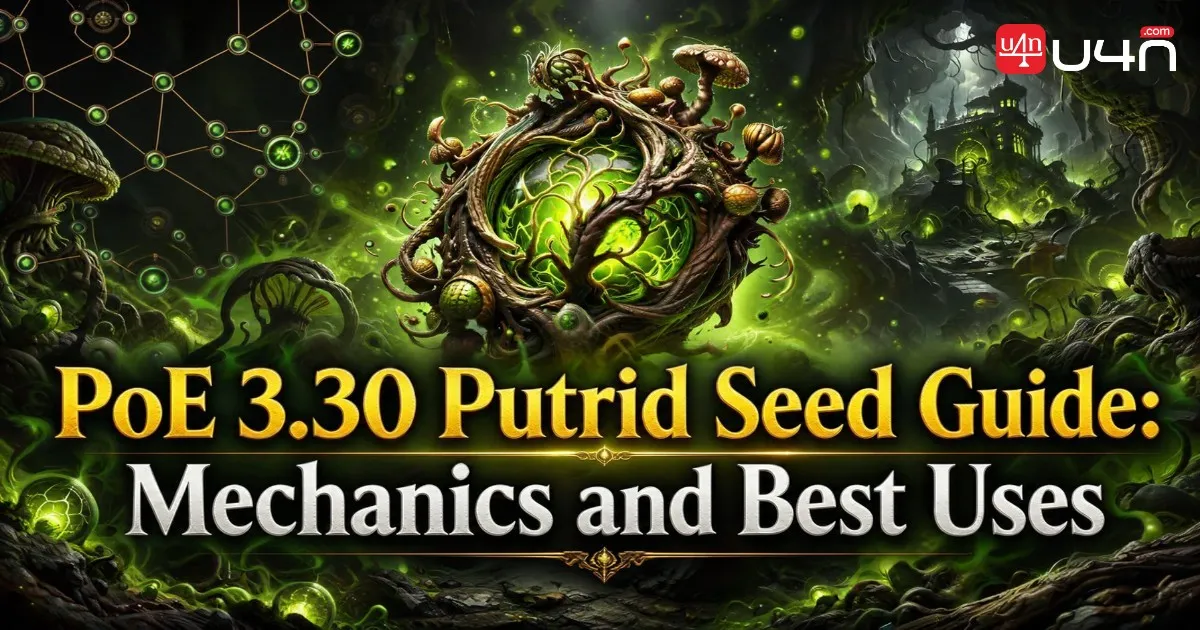
Putrid Seed introduces a different approach to passive tree customization in Path of Exile 3.30: Covens of Umbra. Rather than offering only a fixed set of bonuses, this unique jewel can grow additional passive skills through Anointing. The Oils you choose influence the outcome, making it an interesting option for players who enjoy experimenting with their builds and managing their POE Currency carefully.
However, getting useful results from Putrid Seed takes more than simply applying a few Oils. Players need to understand its fixed modifiers, random passive generation, socket requirements, and the actual cost of fitting it into an existing build. Our team takes a closer look at how the jewel works and what you should consider before investing in one.
What Makes Putrid Seed Different?
Putrid Seed uses the Mycelium Core base and introduces an Anointing mechanic that expands its passive skill options.
Its main feature is the ability to grow four random passive skills when Anointed. The resulting skills are influenced by the Oils used during the process, giving players some control over the type of passives they may receive without guaranteeing a specific combination.
There is also an important detail that is easy to overlook: Putrid Seed has four listed fixed added passive skills.
| Passive Skill | Type |
|---|---|
| Swagger | Fixed passive |
| Twin Terrors | Fixed passive |
| Courage | Fixed passive |
| Skittering Runes | Fixed passive |
These should be distinguished from the four additional random passives generated through Anointing. The jewel therefore offers both predetermined additions and an Oil-influenced customization mechanic.
You are not simply purchasing a jewel with four random bonuses. You are evaluating a unique item with a combination of fixed and generated passive skills.
For build planning, this distinction matters.
How to Get Putrid Seed in PoE 3.30
Putrid Seed is one of the unique items introduced with the Covens of Umbra expansion. Its connection to the updated Blight system makes Blight encounters a natural place to investigate when looking for the jewel.
In 3.30, Threads replace the previous Scarab system. A Blight Thread can be used through the Map Device to add a Blight encounter to an area. This gives players a more direct way to include Blight in their mapping activities.
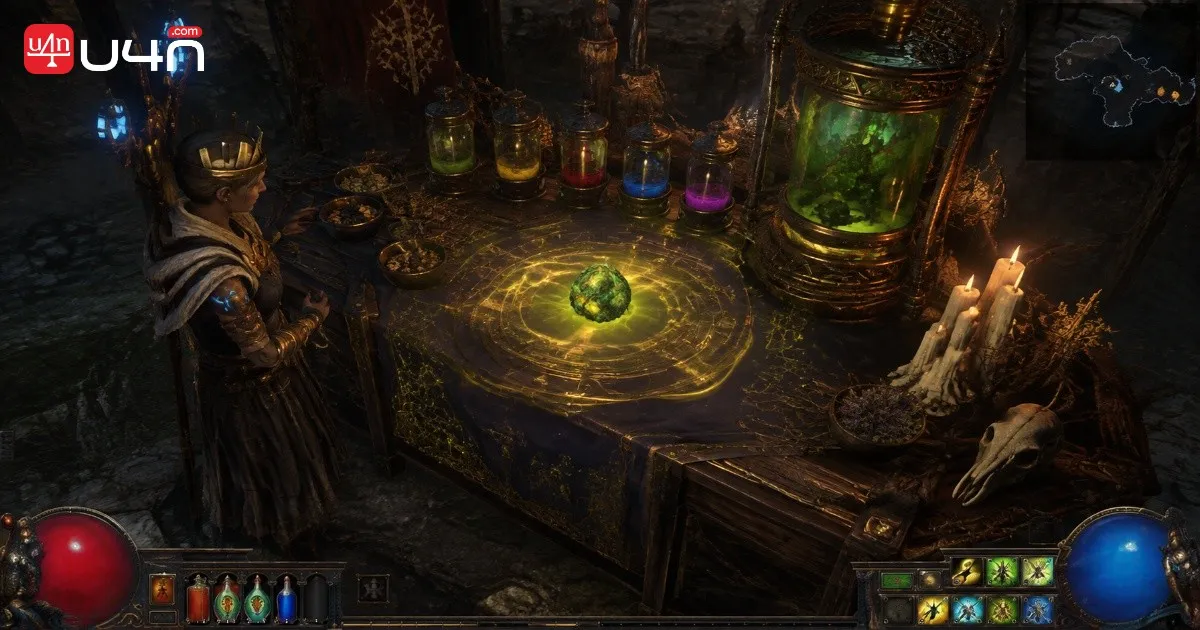
Our suggested approach is to start with Blight-focused maps and monitor the rewards carefully.
When testing this farming direction, pay attention to:
- The cost of Blight Threads.
- The number of Blight encounters completed per hour.
- The rewards received from each encounter.
- Whether Putrid Seed appears in the tested reward pool.
- The market value of the jewel compared with the overall farming cost.
We would avoid committing to an expensive farming strategy before collecting enough results. A mechanic being associated with an item does not automatically establish its exact drop source or drop rate.
For players who prefer trading, comparing the current market price against the cost of farming is another sensible option. This can save considerable time, especially when the jewel is needed for an immediate build upgrade.
How Putrid Seed's Anointing System Works
Anointing is the defining mechanic behind Putrid Seed. It allows the jewel to grow four additional random passive skills, with the Oils used influencing which skills can appear.
The process involves Cassia, the Blight NPC, and follows the general Anointing interaction.
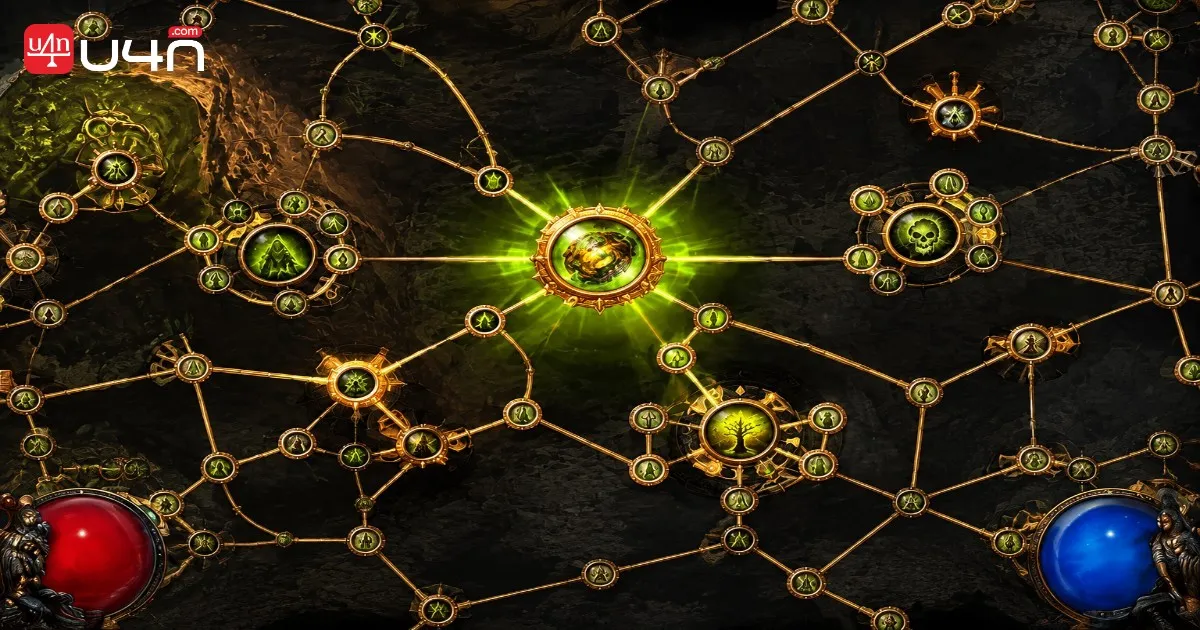
Before committing valuable Oils, we recommend approaching the process in three stages.
First, Establish Your Build Requirements
A damage-focused character may want offensive passives, while a character struggling with survivability may benefit more from defensive options. There is little reason to chase an expensive combination if its possible outcomes do not support your current setup.
Second, Compare the Available Oil Combinations
Different Oils influence the passive pool. However, players should not assume that a particular combination guarantees a specific passive unless that interaction has been verified.
Keep track of the combinations you test and their results. This is particularly useful during the early stages of a new league, when the community is still collecting information.
Third, Evaluate the Completed Jewel
Once the four additional passives appear, examine the entire result rather than focusing on one attractive modifier.
| Evaluation Point | What to Check |
|---|---|
| Passive relevance | Do the generated skills support your build? |
| Oil investment | Was the result worth the materials spent? |
| Tree compatibility | Can you use the skills efficiently? |
| Alternative options | Would another jewel provide more consistent value? |
One practical point from our team's perspective: an expensive Oil combination is not automatically a better investment. The goal is to obtain useful passives at a reasonable overall cost, not to spend the most resources possible.
Passive Tree Placement and Build Planning
Putrid Seed has a specific placement requirement. It must be placed in an already allocated Large Jewel Socket on the Passive Skill Tree.
This is an important distinction because reaching a suitable socket can require additional passive points. The jewel also has a particular interaction with its generated skills: the added passives do not interact with jewel radiuses.
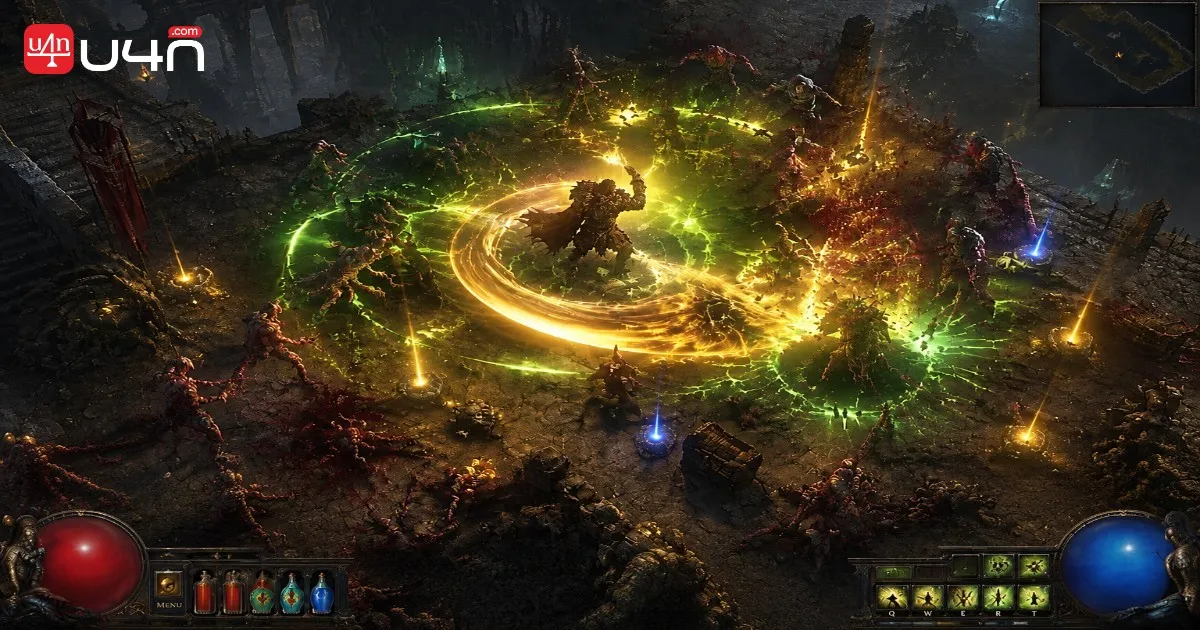
Before using Putrid Seed, our team recommends checking the following:
- Socket availability: Does your current tree already have an allocated Large Jewel Socket?
- Travel cost: How many passive points are needed if you use a different socket?
- Opportunity cost: Which existing Notables or other passive bonuses would you have to sacrifice?
- Build flexibility: Will the jewel remain useful if you change your passive tree later?
The important thing is to evaluate the complete setup, not just the jewel's individual bonuses.
For example, a character may receive four excellent generated passives but still lose efficiency because reaching the socket requires too many points. Another character may obtain a less impressive combination but benefit from a socket that already fits its normal progression.
We generally favor the second situation when the difference in passive strength is relatively small. Efficient tree planning often provides more practical value than chasing an ideal result at any cost.
Which Builds Can Benefit From Putrid Seed?
Putrid Seed does not have one universal best configuration. Its usefulness depends on the generated passives and how they interact with the character's existing scaling.
Here are three build categories worth considering.
Mapping Builds

Mapping characters generally benefit from improvements that make regular encounters faster and smoother.
Depending on the available passive results, useful options may include:
- Movement and attack speed.
- Area of effect.
- Mana sustain.
- Defensive recovery.
- Damage that improves clear speed.
For these builds, efficiency is often more important than maximizing one individual damage statistic. A jewel that fits naturally into the existing tree can be more attractive than one requiring extensive passive rearrangement.
Bossing Builds
Bossing characters usually have more specialized requirements. They may prioritize maximum Life, Energy Shield, Spell Suppression, defensive mitigation, or additional single-target damage.
The value of a generated passive should be judged by its actual contribution to the encounter. A general damage modifier is not necessarily useful if the build relies on a different scaling method.
Minion Builds
Minion players need to be especially careful when evaluating generated passives.
A modifier that increases the character's own damage does not automatically improve minion damage. Always check whether the passive explicitly supports minions or affects a mechanic that benefits the build indirectly.
For this reason, we would not recommend investing in Putrid Seed simply because a generated passive looks impressive. Its actual wording and interaction with your character matter much more.
Is Putrid Seed Worth Using?
Putrid Seed is an interesting addition to the PoE 3.30 passive tree system, particularly for players who enjoy experimenting with different passive combinations.
Its biggest advantage is flexibility. Anointing introduces four additional random passive skills, while the Oils used influence the available results. However, randomness also means that not every jewel will provide meaningful value.
Our team's recommendation is to evaluate three things before committing resources:
- The result: Do the generated passive skills genuinely support your build?
- The total cost: Are the jewel and Oil investments reasonable?
- The placement: Can you use an allocated Large Jewel Socket without sacrificing too much of your existing tree?
If you are still developing your character, it may be better to prioritize essential equipment and upgrades before experimenting with expensive Oil combinations. Players comparing POE Items for sale should also consider whether purchasing an already suitable jewel is more economical than repeatedly investing in uncertain results.
Ultimately, Putrid Seed is best viewed as a specialized build customization option rather than an automatic upgrade. Its real value comes from how efficiently you can turn its random passive generation into practical character improvements.
FAQ About Putrid Seed
1. How many random passive skills does Putrid Seed generate?
It generates four additional random passive skills when Anointed. These are separate from its four listed fixed added passive skills.
2. Do Oils affect Putrid Seed's passive skills?
Yes. The Oils used during Anointing influence which passive skills can be generated. However, this does not mean every Oil combination guarantees a particular result.
3. Where should Putrid Seed be placed?
It must be placed in an allocated Large Jewel Socket on the Passive Skill Tree. It is not restricted specifically to an outer socket.
4. Do Putrid Seed's additional passives benefit from Jewel Radius effects?
No. Its added passive skills do not interact with jewel radiuses.
5. Is Putrid Seed suitable for every build?
No. Its usefulness depends on the generated passives, the character's scaling mechanics, and the passive points required to accommodate the jewel.
6. Should I use expensive Oils immediately?
Not necessarily. Compare the potential passive outcomes with current Oil prices first. Waiting for more community testing can help you avoid unnecessary investment.