

Our team's priority with this update is deciding where an evening of play will actually pay off. Chasing an event reward, organizing a Ground War squad, and protecting a DMZ loadout are different jobs. Treating them as one grind makes it easy to spend an entire session playing hard without getting much closer to the result we wanted.
For readers searching for MW4 Boosting while planning their progression, we would start with the same practical question: what are we trying to finish tonight? A leaderboard placement needs a different schedule from a few relaxed multiplayer matches. A DMZ equipment run deserves its own plan, especially when familiar damage numbers no longer tell the whole story.
We would approach the November 23 update by setting one main objective, checking the relevant rules, and leaving enough time to adjust. The useful decisions are fairly specific: which mode produces reliable event progress, which unearned reward justifies another leaderboard attempt, and whether our usual rifle still supports the close fights we tend to take.
What the November 23 Update Changes
The November 23, 2026 entry on the Season 1 patch page sets Combat Outpost to 24v24. Thanksgiving Duty Roster awards 10 points per multiplayer kill, 20 per Warzone kill, and 2 per DMZ kill. Leaderboards last three hours and reset every four hours; each reward, including the Bird Call Astaroth .57 blueprint, is earnable once. Gauntlet 1v1 rewards are doubled, with consecutive wins locking in 40 trophies, then 50 more, then 60 more. Fixes address Gun Game spawns outside the map, invalid favorited loadouts creating empty classes after Classic Prestiging, incomplete leaderboard profiles, and the interface opening the Battle Pass instead of explaining earned catch-up rewards.
Our reading is that the event rules deserve the first look before matchmaking. They affect how we schedule a session and what we expect to receive. The interface fixes matter for the same reason: we want to understand our progress before committing another hour.
We would also keep the different reward systems separate. A promising Gauntlet streak can be a perfectly reasonable reason to stay in that playlist, but it should be a deliberate choice. Switching activities every time another reward catches our attention makes progress harder to judge.
Pick an Event Mode by Points per Minute
Warzone is the obvious mode to investigate for event scoring, but our team would resist calling it the automatic winner. A larger reward for one elimination only helps when we can produce those eliminations consistently.
We would measure a complete block of play, including time spent queuing, loading, and recovering from an unsuccessful match. The useful calculation is simple: event points earned divided by total elapsed minutes. That gives us a much better basis for choosing a playlist than remembering one unusually good match.
| Mode | What we would evaluate | Reason to stay |
|---|---|---|
| Multiplayer | Repeatable engagements and time between matches | Our scoring remains steady across several games |
| Warzone | Elimination frequency across the full session | Higher individual rewards produce stronger sustained progress |
| DMZ | Event progress alongside our existing objectives | We already have a worthwhile reason to deploy |
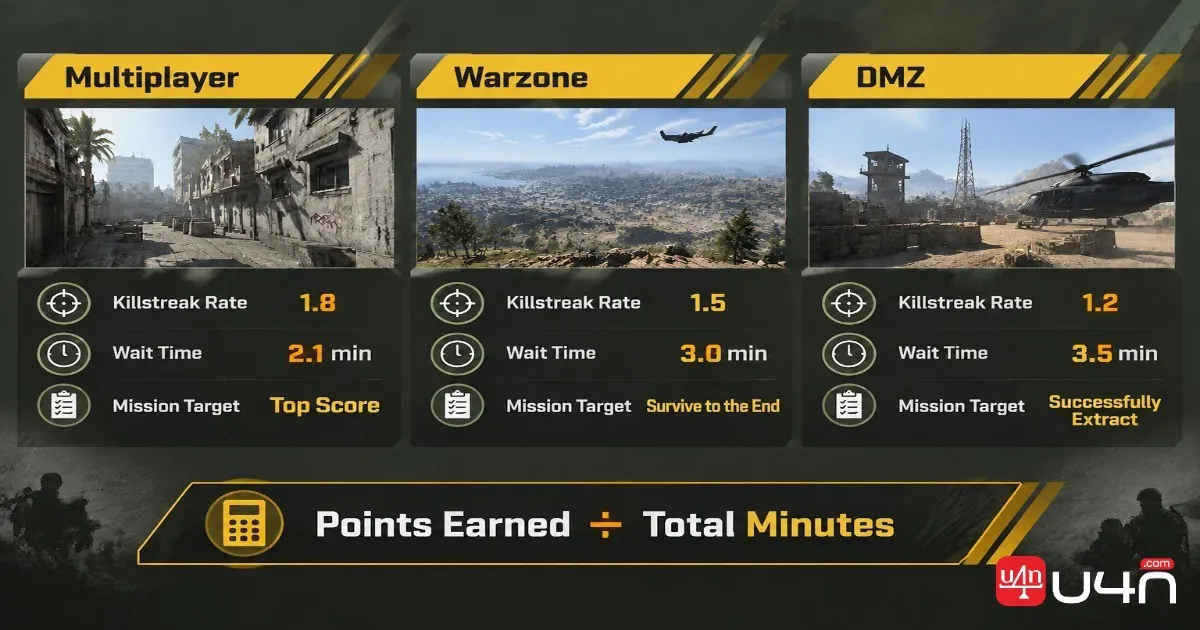
Our preference would be to give a familiar mode a fair trial before switching. One rough opening match tells us very little. A short run with the same squad, similar effort, and a recorded start time is more useful.
We would be especially careful about forcing fights just to improve a spreadsheet. If chasing another elimination keeps sending us back to matchmaking early, the theoretical advantage has stopped helping. A dependable multiplayer session can be a better use of the evening than repeatedly trying to rescue an unproductive Warzone run.
For DMZ, we would treat event points as incidental progress when the main purpose is completing objectives or bringing equipment out safely. Turning every nearby player into a required fight can undermine the very reason we entered the match.
Plan Around the Reward You Have Not Earned
Our approach to a leaderboard reset would begin with the reward screen. Before another attempt, we would identify one remaining reward we actually want and check the placement conditions attached to it.
That sounds basic, but it changes the decision. "Can we climb again?" is an open-ended invitation to keep playing. "Can we realistically reach this unearned reward during the available window?" gives us something concrete to assess.

We would use the displayed event timer rather than assume that the reset schedule creates a fresh competition whenever we log in. A late start may still be worthwhile, but we would want to see the current standings before committing.
The published timing also leaves details that should be checked in the live interface. We would not assign a purpose to the interval between the stated competition duration and reset cadence without confirmation. The event timer and reward panel should guide the session.
Once a round is underway, we would check our position at sensible intervals rather than interrupt every match to watch the leaderboard. A useful review asks whether we are closing the gap to the placement we need and whether enough time remains to make that progress plausible.
If the target has moved beyond a reasonable evening's play, we would stop that attempt. There is little value in letting a reward we wanted for fun turn the rest of the night into an obligation.

Rebuild Our Combat Outpost Plan Around Coverage
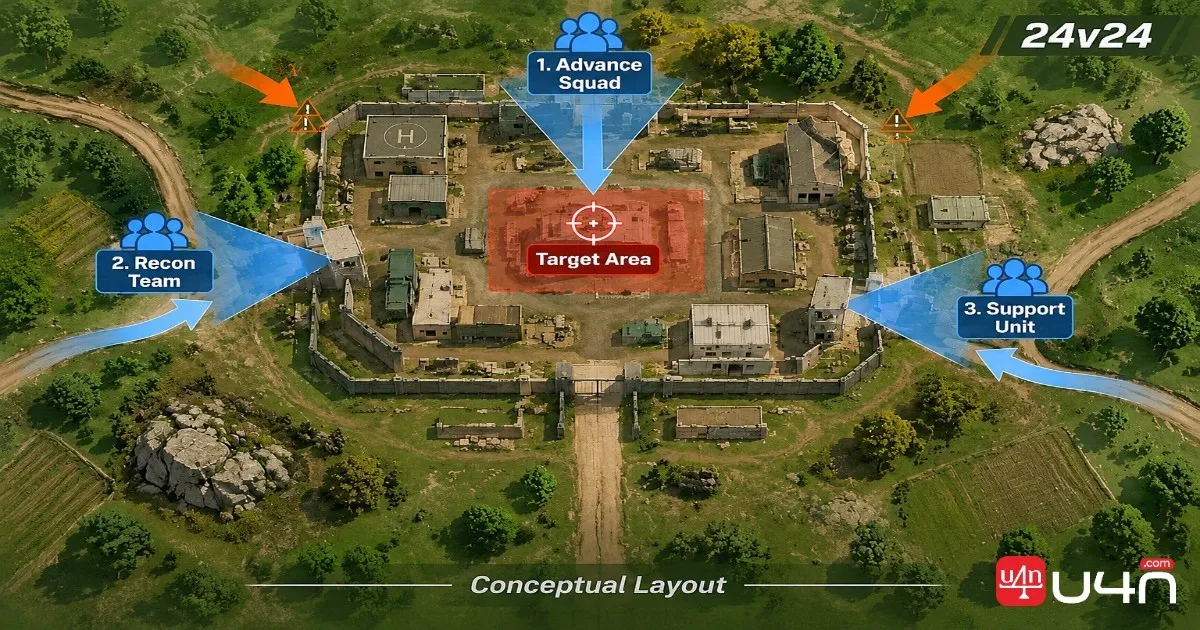
For Combat Outpost, our first adjustment would be organizational. We would decide who watches the approach, who moves onto the objective, and who remains available to respond when the position changes.
We would avoid promising that the revised player count automatically creates quieter lanes, faster matches, or easier flanks. Those are things to assess in actual matches. Our practical response is to make fewer assumptions about where friendly coverage will appear.
Before crossing an exposed route, we would check whether a teammate can support the move. Before committing everyone to a capture, we would leave someone watching the entrance we just used. These are modest habits, but they give the squad a plan that survives an unexpected enemy push.
Communication should stay specific. "Two entering the west doorway" gives our teammates a location and a decision. A general complaint about enemies being everywhere gives them neither.
We would also resist solving every lost objective by sending the whole squad toward it. Keeping one player in a useful covering position may give the next push a better starting point than arriving together through the same doorway.
During the first few matches, our team would pay attention to repeated problems rather than individual deaths. If we keep losing the same approach, we change the coverage. If our pushes stall because nobody is watching a side entrance, we assign that job explicitly.
That is a more useful response than rebuilding every class before we understand what is actually going wrong.
Read the DMZ Nerfs Beyond Maximum Damage
The developers describe the DMZ goal as slightly longer close-range PvP engagements while preserving longer-range balance. Axion's maximum damage falls from 40 to 36, and M4's from 34 to 30. Their listed damage ranges stay unchanged, but both also receive reductions to intermediate and minimum damage. "Range unchanged" therefore does not mean "damage unchanged at range." (callofduty.com)
This distinction changes how we would evaluate our rifles. We would check performance across the distances at which we actually use them, rather than conduct one doorway fight and assume the rest of the weapon behaves exactly as before.
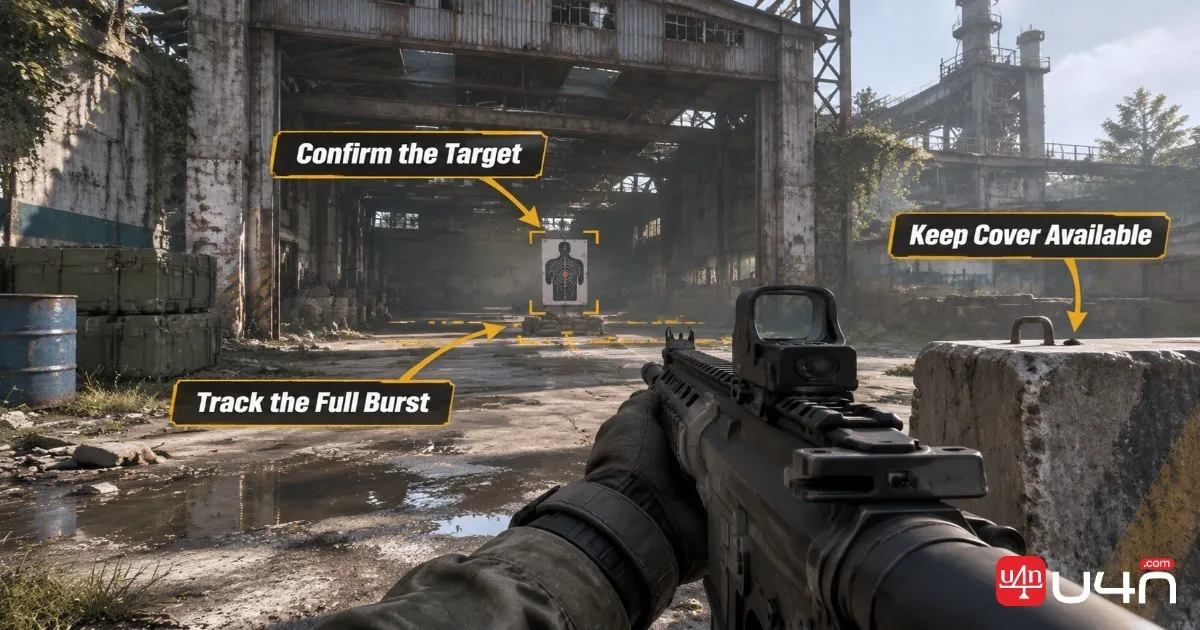
Our immediate concern would be commitment. If we begin reloading, turning away, or moving toward the next opponent before the current target is down, an old expectation may be directing the fight. We would make a conscious effort to confirm the result before changing actions.
We would be equally cautious about translating a damage reduction into an exact number of extra bullets. That calculation needs the relevant target health, armor conditions, hit locations, and weapon behavior. The headline numbers alone do not establish a universal new time to kill.
The same restraint applies to declaring a replacement rifle superior. We would want a comparison under similar conditions before giving up a weapon whose recoil and handling we already understand.
Our working adjustment would be to take close encounters with a clearer exit available. We would favor a position that lets us return to cover if the opening burst does not finish the fight. That is a recommendation for managing uncertainty, rather than a claim that every engagement now lasts dramatically longer.
Test Familiar Rifles Before Replacing Them
Our team would begin testing with the loadout we already know. Changing the rifle, optic, magazine, and handling attachments at the same time creates too many moving parts to learn anything useful.
We would keep the setup stable for a short comparison and record the situations that feel different. The question is not simply whether we lost. It is whether a repeated, identifiable problem appears in fights we normally understand.
| Question | What we would record | Possible adjustment |
|---|---|---|
| Did we stop firing too early? | Targets surviving after we shifted attention | Confirm the elimination before moving on |
| Did we lose track during sustained fire? | Aim drifting during the later part of an engagement | Review recoil control and tracking |
| Did we expose ourselves without an exit? | Fights becoming difficult to disengage from | Change the approach or nearby cover |
| Did the same problem recur at another distance? | Similar failures across comparable encounters | Compare another rifle under matching conditions |
We would keep those notes brief. A few useful observations beat a long list of angry explanations after a bad deployment.
For example, "missed the later shots while strafing through the doorway" points toward something we can change. "The rifle is useless now" does not tell us whether the issue was accuracy, positioning, target condition, or the weapon itself.
We would also separate AI encounters from player encounters in our notes. Mixing different situations into one impression makes the result harder to interpret. A weapon can feel comfortable during routine movement through a match and still deserve closer scrutiny during the particular PvP encounters that worry us.
If the familiar rifle continues producing the same problem after a controlled adjustment, we would test an alternative. We would compare how reliably we can complete the engagement, retain cover, and handle the next decision. A replacement should earn its place through repeatable results.
Give the Next Session One Clear Job
For an event-focused evening, our team would begin at the reward panel, choose a realistic target, and use the mode that produces the most consistent progress during a complete session. We would review our position while there is still time to act on it. If we also want Gauntlet rewards, we would give that playlist its own block of time instead of drifting between unrelated goals.
For a DMZ session, we would settle the objective and loadout before deploying. Researching MW4 DMZ Items for sale may be part of a reader's equipment planning, but our preparation would still center on what we intend to carry, what we can afford to lose, and how we plan to leave. We would take a familiar rifle into manageable encounters and use those fights to identify any adjustment we actually need.
For Combat Outpost, we would start with assigned coverage and clear calls, then revise the plan around the routes we repeatedly lose. If the squad keeps getting caught at the same entrance, that entrance becomes the next problem to solve. If a rifle repeatedly leaves us exposed after the opening burst, we change the engagement or test another setup. Each session should leave us with one useful decision for the next match.