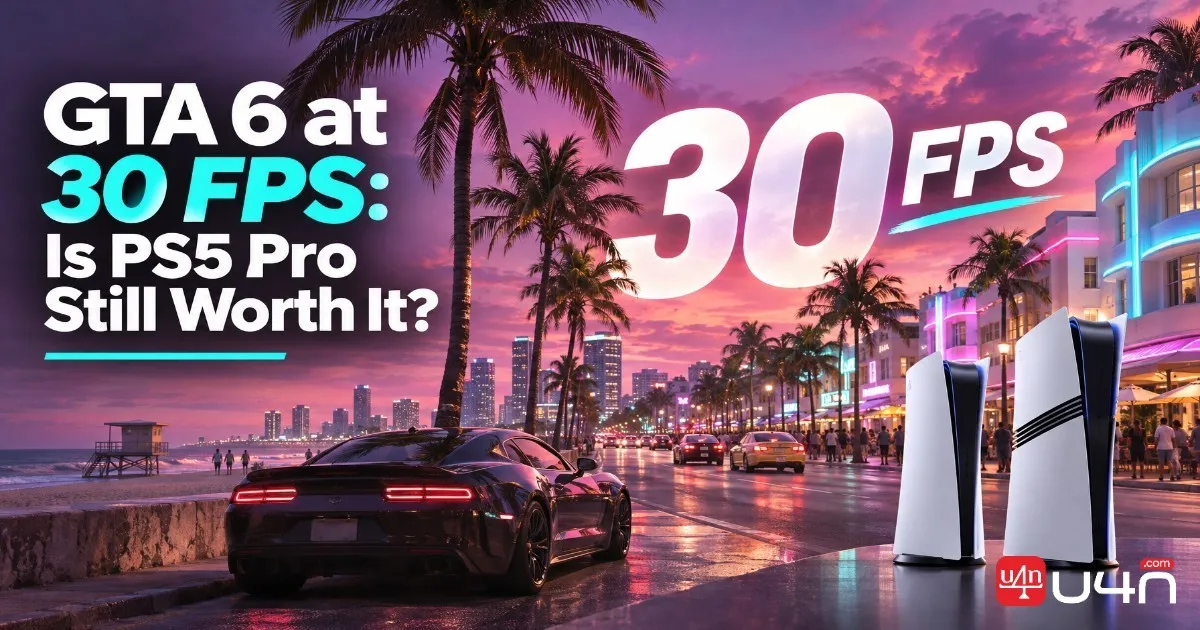
GTA 6 targeting 30 FPS across consoles makes the upgrade question harder to ignore. If we are buying a more expensive machine mainly to make Vice City feel smoother, we need a clear answer about what that extra money actually delivers. A sharper image matters, but it does not satisfy the same need as a higher frame rate.
As of November 17, 2026, Rockstar's published console target is 30 FPS. That covers PS5 and Xbox Series X|S, with PS5 Pro also sharing the target. The announcement does not offer a selectable performance mode or a 60 FPS option. Our team would treat that as the basis for a purchase today, while keeping a distinction between an announced target, verified stability, and whatever future updates might bring.
Even for readers researching GTA6 Accounts while planning their setup, we would settle the hardware question first: are you comfortable buying into this experience at 30 FPS? Account arrangements cannot answer that question for you. The useful starting point is what you expect to feel when driving through traffic, swinging the camera around a corner, or lining up a shot.
What GTA 6's 30 FPS Target Actually Tells Us
The word "target" deserves attention. It describes the performance level the developer is working toward. It does not provide a complete measurement of every mission, crowded intersection, or extended play session.
We would therefore keep three questions separate. What frame rate is intended? How consistently does the finished game reach it? How responsive does it feel while we are actually controlling it? A single number answers only the first.
There is a similar distinction around performance modes. "No 60 FPS option has been announced" gives us a sensible purchasing boundary. "There will never be a 60 FPS option" makes a prediction that goes beyond the available information.
Our position is straightforward: buy for the available experience. If a future patch improves it, that is welcome. We would not pay for an upgrade on the assumption that an unannounced mode must eventually arrive.
We would also resist reading identical frame-rate targets as proof of identical presentation. The useful comparison will include image quality, stability, and how each version handles demanding scenes. A shared target alone cannot settle which version looks or feels better.
For anyone searching "GTA 6 PS5 Pro 60 FPS," that distinction is the part to hold onto. A premium console needs to justify its price through demonstrated benefits, and those benefits need to match the reason you wanted to upgrade.
Why a 60 FPS Mode Is a Bigger Ask Than a Toggle
We understand the instinct behind "just lower the graphics." Given the choice, our team would want to try a less detailed but more responsive version too. The difficulty is knowing which parts of the workload a particular setting would actually reduce.
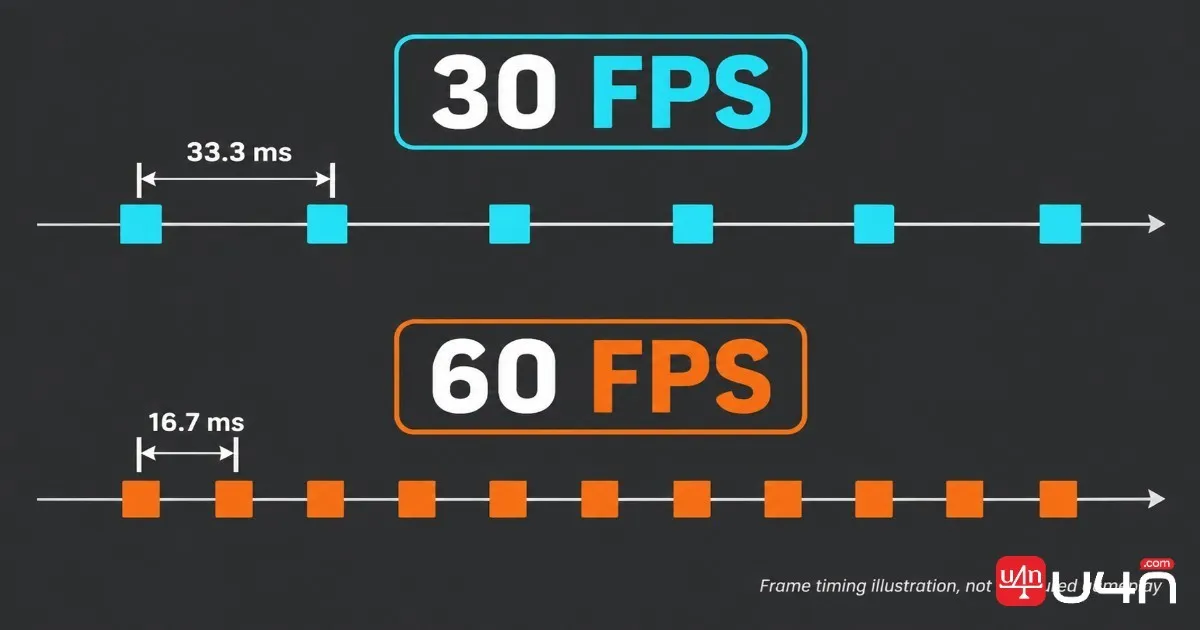
The arithmetic sets out the challenge. At 30 FPS, evenly spaced frames arrive roughly every 33.3 milliseconds. At 60 FPS, that interval falls to approximately 16.7 milliseconds. Those figures come from dividing one second by the frame rate. They describe the frame budget, rather than measuring total controller latency.
| Target frame rate | Approximate interval per frame | What we would want tested |
|---|---|---|
| 30 FPS | 33.3 ms | Consistent delivery during demanding gameplay |
| 40 FPS | 25 ms | Whether such a mode exists and maintains its target |
| 60 FPS | 16.7 ms | Sustained performance with acceptable visual compromises |
This table is a timing comparison, not a list of available GTA 6 modes.
To assess the "lower the graphics" argument properly, we would want to know where the game spends its time. If rendering is the limiting factor, reducing its cost could create useful headroom. If another part of the game still exceeds the frame budget, the same change might not be enough.
That leaves several reasonable questions for a technical analysis. How much time goes into scene rendering? What happens when traffic and pedestrians fill the screen? Do the busiest moments respond to resolution changes, or does performance remain similar?
Until those questions are measured, "GTA 6 is definitely CPU limited" is too confident. We can discuss that possibility without presenting it as an established diagnosis.
We would welcome a performance option if Rockstar could deliver one with worthwhile compromises. We would also want to see what had changed to achieve it. A lower resolution, thinner traffic, and reduced environmental activity would have different consequences for how the city feels.
What PS5 Pro Offers Instead of a 60 FPS Promise
Sony's November 10 feature announcement identifies improved image clarity through PlayStation Spectral Super Resolution, or PSSR, and ray-traced shadows as GTA 6's PS5 Pro enhancements. It does not list a 60 FPS performance mode. Those are the specific improvements we can use to frame the upgrade discussion.
Our next question would be practical: how visible are those improvements from the sofa?
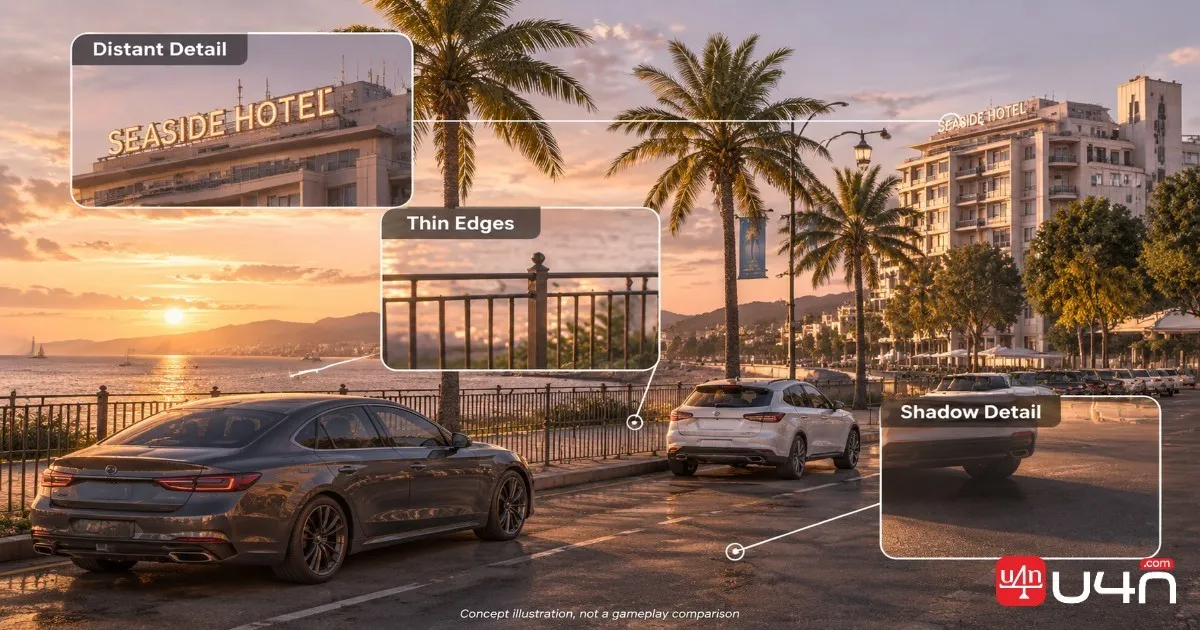
For clarity, we would examine distant signs, thin railings, foliage, and objects moving across the background. We would watch them during driving as well as in still shots. The comparison that interests us is the image we spend hours looking at, rather than a carefully selected pause screen.
For shadows, we would compare the same location, time of day, and camera angle. We would look at how vehicles and characters sit against the environment, then decide whether the difference remains noticeable during ordinary movement.
We would avoid promising a particular result before that comparison exists. An enhancement label gives us something to investigate. It does not tell us how large the improvement will appear on every display.
This is where expectations matter. If our goal were a cleaner picture on a large television, we would keep PS5 Pro on the shortlist. If our goal were specifically a smoother 60 FPS experience, those visual enhancements would leave the main purchasing question unanswered.
We would also test image stability. A comparison should include camera pans and busy streets, with attention to flickering detail, unstable edges, or distracting trails. Any strengths or weaknesses need to be visible in repeatable footage.
Will GTA 6 Feel Too Slow at 30 FPS?
We would not tell someone who strongly prefers higher frame rates that they simply need to get used to it. Comfort and responsiveness are legitimate reasons to care about performance. They deserve the same attention as lighting and environmental detail.
Our own assessment would start with camera control. Can we follow a moving vehicle comfortably? Can we turn quickly and still identify the object we were looking for? Does aiming feel predictable when a scene becomes busy?
Those questions are more useful than deciding in advance that 30 FPS must be either perfectly fine or completely unplayable.
We would pay close attention to frame pacing too. An average can conceal uneven delivery. For our review standard, a convincing 30 FPS result would need to show consistent intervals across representative gameplay, together with footage that lets readers judge the motion for themselves.
The distinction matters during the kinds of moments we associate with a long GTA session: taking an unfamiliar turn too quickly, correcting the camera while reversing, or trying to track several threats at once. Those would be useful test situations, rather than claims about how GTA 6 already performs.
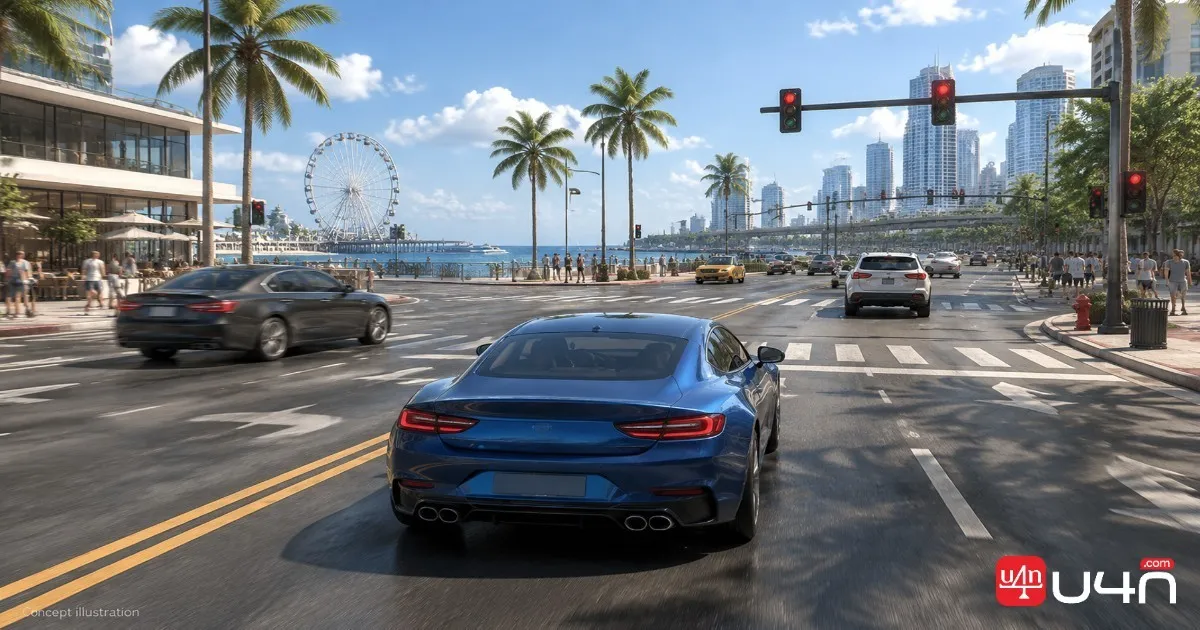
Display settings also belong in the assessment. We would document the television mode, motion-processing settings, and game settings used for each comparison. Otherwise, readers could be reacting to different setups without realizing it.
We would give the game a fair uninterrupted session before writing our verdict. That creates room to assess comfort without letting the immediate switch from another game dominate the entire judgment. If the motion still bothered us, we would say so plainly.
The Console Comparison We Would Actually Trust
We would want more than a platform name and an FPS counter. A useful GTA 6 performance comparison should make its conditions clear enough that another reviewer could repeat it.
That means identifying the game version, using comparable routes, and distinguishing captured footage from analysis overlays. We would also want several types of gameplay. An empty road can establish one result; it cannot stand in for a crowded district.
| Test scenario | What we would examine | Why we would include it |
|---|---|---|
| Fast driving through a busy area | Frame delivery and image stability | It combines movement with a changing scene |
| A crowded intersection | Sustained performance across repeated passes | It helps test a demanding location consistently |
| Combat with multiple effects | Responsiveness and temporary drops | It checks moments where control matters most |
| Slow camera rotation | Motion clarity and uneven pacing | It makes some presentation issues easier to inspect |
| Extended travel between areas | Interruptions and consistency | It broadens the test beyond a short clip |
We would compare PS5 and PS5 Pro at normal viewing distance before reaching for magnified crops. Crops help explain a difference, but we want to know whether we would notice that difference during play.
For Xbox Series X and Series S, we would ask the same questions without assuming that a shared frame target means matching image quality. Resolution behavior, detail, and stability all need their own evidence.
Repeatability would carry more weight than a dramatic isolated clip. If one version drops frames at a junction, we would run the route again and check whether the same behavior returns.
Our preferred review would also explain its limits. A few hours of testing can support findings about the scenes examined. It cannot prove that every mission maintains the same result. That qualification makes the comparison more useful when deciding how much confidence to place in it.
Should You Upgrade Your Console for GTA 6?
For an existing PS5 owner, our first move would be to wait for a direct comparison before spending more. We would want the Pro improvements demonstrated in the situations where we expect to spend most of our time.
A still image might convince us that one version looks cleaner. To justify replacing a console, we would also want to see the difference in motion and decide how much we value it. The price gap has to make sense against that actual improvement.
For an existing Xbox Series owner, we would widen the calculation. Moving platforms could involve a different controller, a separate game library, subscriptions, and the preferences of friends we play with. Our recommendation would need to account for that whole setup.
For someone buying their first console, we would compare complete ownership costs alongside GTA 6 performance. Storage needs, disc preferences, and other games we want to play all belong in the budget. We would avoid allowing an unconfirmed frame-rate hope to decide the purchase.
| Your situation | Our purchasing approach |
|---|---|
| You already own a supported console | Check its measured performance before considering replacement |
| You want clearer presentation | Compare the visual improvement at your viewing distance |
| You require 60 FPS | Wait for a verified option that meets that requirement |
| You are buying your first console | Compare the full setup and the wider library |
| You are considering another platform | Include the cost and inconvenience of switching |
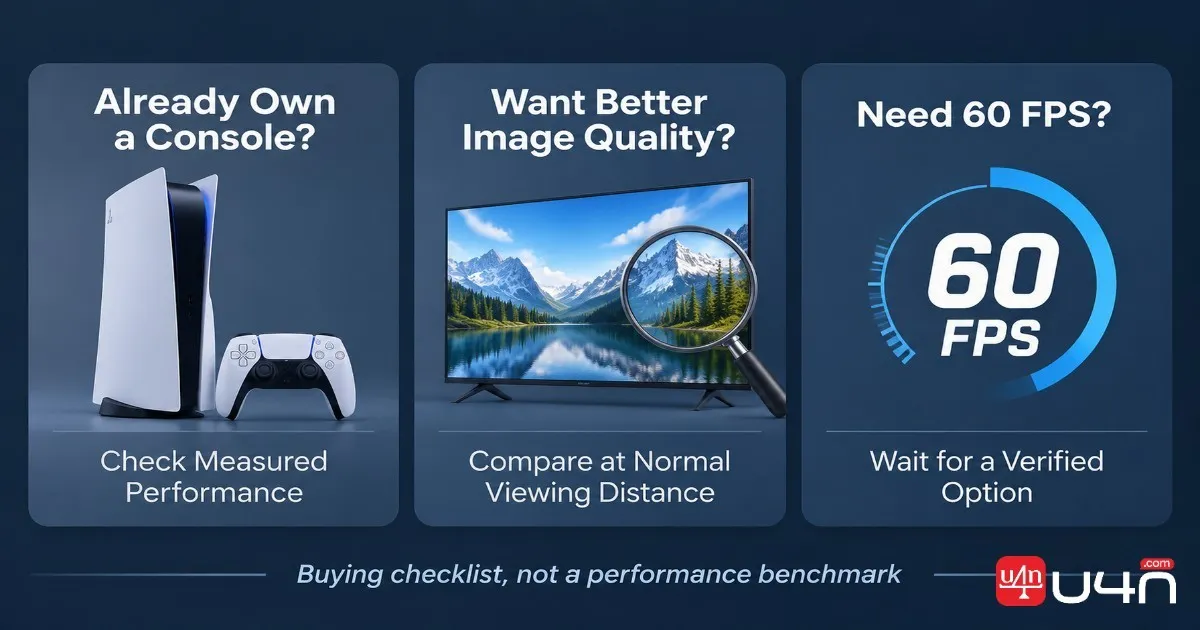
We would be especially cautious about financing an upgrade around a speculative patch. A purchase should still feel worthwhile if the game remains at its announced target throughout your time with it.
That does not make PS5 Pro an automatic rejection. It gives the decision a clearer test: would we still want the upgrade for its demonstrated picture quality if the frame rate stayed the same? If we could answer yes comfortably, we would have a sounder reason to buy.
What Would Change Our Buying Recommendation?
A verified performance mode would make us reassess. We would check its actual frame rate, visual compromises, and behavior in demanding scenes before recommending it. A menu label alone would not finish that job.
A patch announcement would also need specific details. We would look for an identified version, supported platforms, and a clear description of what changed. Claims about a hidden setting or a guaranteed future upgrade would stay outside our buying advice until they could be checked.
The same standard applies to a possible 40 FPS option. We would be interested in testing one, but we would not tell readers to purchase hardware around a mode that has not been demonstrated. Our recommendation should follow the available build.
We would keep GTA 6 money discussions separate from the performance budget. Progression decisions concern what we do inside the game; console spending should be justified by the picture and responsiveness we can verify. Neither should distract us from checking whether the experience meets our expectations.
Before recommending an upgrade, we would want repeatable driving footage, demanding combat tests, frame-time measurements, and a clear PS5-to-Pro comparison. We would watch those results at normal speed and normal viewing distance. If the improvement is difficult to notice there, we would keep our current console.