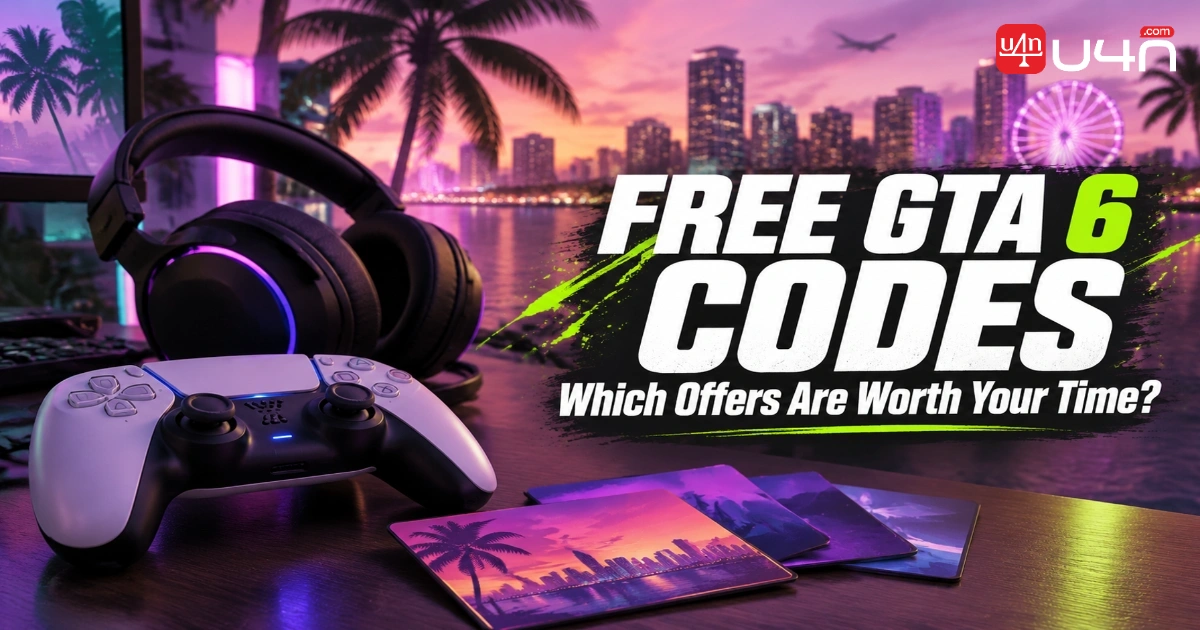
A free copy of GTA 6 is an appealing reason to open a stream. It is a much weaker reason to spend your entire evening watching something you do not enjoy. Our team's approach is simple: check what an offer actually promises before treating it like another mission on the checklist.
We keep the game license separate from everything that comes after it. Browsing guides about GTA 6 money, planning purchases, and following community discussions should not blur the immediate question: does this promotion offer a guaranteed copy, a chance to win, or a different reward entirely?
The Twitch, KICK, and InPost claims circulating together need different treatment. We would not build a launch plan around a forwarded screenshot. We would verify the organizer, match the offer to our account, and decide how much attention it deserves. That process leaves more room for actually playing.
Separate the Reward From the Headline
Our first question is not "How many hours does this take?" It is "What happens when we finish?" Those questions sound similar until the task ends and the expected game turns out to be a badge, an entry, or a reward that requires another condition.
We read the action and the outcome as separate pieces. Watching is an action. Opening a case is an action. Receiving a valid game code is an outcome. A promotion needs to explain the connection between them before we can judge its value.
Twitch, KICK, and InPost Offers at a Glance
We have organized the offers described in the post below. Check each organizer's official terms before committing viewing time or reward points.
| Platform | Dates | Requirements | Reward | What to Check |
|---|---|---|---|---|
| Twitch | November 19–30 | Watch any GTA 6 stream for one hour a day on six days. | Daily game-code giveaways. | Confirm whether the viewing requirement applies to game-code eligibility or a separate reward. Do not assume six days of viewing guarantees a copy. |
| KICK | November 12–December 7 | Watch streams for at least three hours a day to receive a reward case. The post also describes one free starting case for new accounts. | A chance to win one of 10,000 game codes. | Verify campaign dates, case limits, new-account requirements, regional eligibility, and prize delivery terms. Receiving a case does not guarantee a game code. |
| InPost | Starting November 16 | Exchange 3,500 InCoins through the rewards catalog in the app. | A PS5 copy of the game, with highly limited stock. | Check whether the offer appears in your account, whether copies remain available, and which redemption conditions apply. |
Our team would verify the exact Twitch reward before starting a viewing schedule, set a time limit for KICK entries, and check existing InPost points alongside live inventory. Each offer asks for a different commitment, so we would evaluate them separately.
We avoid filling gaps with optimistic assumptions. If the rules do not say a completed task guarantees the game, we do not treat it as a guarantee. That is a useful standard for any giveaway, especially when a short social post compresses several rewards into one sentence.
Spend time according to the reward the rules promise, not the reward the headline makes you picture.
Twitch: Do Not Confuse Badge Progress With a Copy
The circulating Twitch claim connects a daily viewing schedule with free game codes. Our team would check those two elements separately on Twitch before accepting that connection. A campaign announcement needs to explicitly identify the game copy as the reward for completing the viewing requirement. A badge requirement alone does not establish that promise.
That distinction changes the whole viewing plan. We would choose a channel because we like the creator, the commentary, or the community. The possibility of a game code can sit in the background. It should not become a reason to force six evenings into a schedule built on an unverified interpretation.
Read the Reward Name Before Starting the Timer
We would check the campaign panel and ask one narrow question: what is this particular progress bar tracking? A chat badge can be a reasonable reward for someone who enjoys collecting badges. It should not be mentally upgraded into a game license.
Our preference is to keep separate notes for separate rewards. One line for the viewing task, another for any game-code instructions. If we cannot explain the difference to a friend in two sentences, we have not checked closely enough.
We would protect the first playthrough, too. If avoiding story spoilers matters more than watching launch streams, that preference belongs in the decision before the stream starts. A possible prize is not automatically worth giving up the opening hours fresh.
KICK: A Large Prize Pool Needs Realistic Expectations
The KICK offer described in the circulating post combines a viewing requirement, reward cases, and a claimed pool of 10,000 game codes. We would verify the campaign through KICK and read its full terms before arranging our evening around those details. The dates, eligible accounts, case requirements, and prize delivery conditions all need confirmation.
Our reading of any case-based giveaway starts with one distinction: earning a case is not necessarily earning a game. Unless the terms explicitly guarantee the desired prize, we would treat participation as an opportunity to enter. We would not promise a friend that three hours of viewing will cover their copy.
Do Not Invent Odds From the Prize Count
A claim of 10,000 prizes supplies only part of a probability calculation. Without the relevant entry count or a disclosed probability, we cannot turn that number into a reliable estimate of our own chance.
For a hypothetical comparison, 100 prizes among 1,000 equally eligible entries would mean something very different from 100 prizes among one million entries. Those are illustrative numbers, not estimates for this campaign. We use the example to keep an impressive prize total from doing all the persuasive work.
We would check whether a free onboarding case requires anything beyond registration, whether existing accounts qualify, and whether additional entries have separate conditions. The phrase "new account" deserves attention before creating one, especially if we already use the platform.
Our viewing limit would be set before opening the rewards screen. If the stream is entertaining, great. If we are checking the clock every few minutes and resenting the task, the promotion has already become a poor use of that evening, regardless of what happens afterward.
InPost: Check the App, Not an Old Screenshot
The original InPost claim describes a PS5 copy for 3,500 InCoins. Our team would treat that as a lead to verify, not a live inventory guarantee. We are not presenting the quoted points requirement, stock status, or account eligibility as independently confirmed here.
For a US-focused reader, our immediate question would be access. Does the promotion actually appear in your own account's reward catalog? If not, we would stop there rather than assume that a promotion shared in Polish applies to app users elsewhere.
If the reward does appear, we would inspect the full listing before redeeming anything. We want the platform, delivery method, redemption conditions, points cost, and current availability in one place. A screenshot from someone else's phone cannot answer all of those questions for our account.
Existing Points and Extra Purchases Are Different Decisions
We would compare the game reward with whatever else the same balance could buy. Points already in the account are still a resource. Spending them on one reward means passing on another, even if no money leaves the bank that afternoon.
Our stronger boundary is around extra purchases. We would not order things we did not need merely to approach a limited reward. Before making any qualifying purchase, we would want a purchase we already intended to make and terms we could explain without guessing.
The useful habit is checking what we already have. The risky habit is creating spending to chase the word "free."
Put a Time Budget Beside the Entry Requirements
Our team likes a giveaway more when it fits an existing routine. Watching a favorite creator while relaxing is one decision. Rearranging an evening for a chance at a code is another. We would not assign both the same cost just because neither requires a checkout screen.
Here is a personal budgeting example, not a valuation of anyone's wages: if we value a free evening hour at $10, three unwanted viewing hours represent $30 of time we could have spent elsewhere. The point is not to invoice ourselves. It is to make the trade visible.
| Our situation | Our suggested boundary | Reason |
|---|---|---|
| We already enjoy the stream | Stay within our normal viewing time | The entertainment remains worthwhile without a prize |
| We only want the game code | Choose a strict maximum before entering | The possible reward should not expand the evening indefinitely |
| We need reliable access on a particular date | Keep giveaway participation separate from access plans | A possible win cannot serve as a confirmed game license |

We are especially cautious with streaks. Our recommendation is to evaluate tonight on its own merits. Yesterday's viewing time is already spent; it does not make another three hours more enjoyable or prove that a prize is getting closer.
That approach leaves room for spontaneous fun. We can enjoy an event, leave when it stops being interesting, and avoid turning a leisure activity into unpaid homework.
Check Compatibility Before Celebrating a Win
We would verify the account and platform requirements before entering, not after receiving a notification. Our checklist includes the console we own, the account region we actually use, the advertised edition, and any delivery conditions. We would not substitute a preferred answer for the information shown in our account.
For US players, we would specifically look for US eligibility and the appropriate redemption region. An English-language announcement would not be enough for us to assume participation is open. We would also check age requirements and any location restrictions stated in the terms.
We want a clear way to verify messages with the organizer. Our preferred routine is to open the platform directly and inspect the account's rewards area, rather than making a decision from a private message alone. If the message and account disagree, we would pause and contact support through the organizer's own site.
- Keep a copy of the rules and reward description available when entering.
- Check that the registered email address is accessible and current.
- Review platform and region selections before confirming them.
- Keep passwords, recovery codes, and full redemption codes out of public screenshots.
- Ask the organizer about unclear instructions instead of asking strangers to handle the account.
We would be particularly unwilling to pay an unexpected "release fee" or hand over account access to someone offering to claim a prize for us. That is our safety boundary, not a statement about a specific message or organizer. A confusing reward is a reason to slow down, not a reason to surrender control.
Our Five-Minute Plan Before Entering
We would start with one organizer, one official page, and one clear reward description. Then we would check account compatibility and choose a time limit. If the required information is missing, we would leave the offer pending rather than fill the blank with a claim copied from social media.
Our preference is to separate the license, the prize conditions, and later gameplay planning. Community pages about GTA6 Items belong to that later planning stage; they should not be treated as evidence that a giveaway includes particular in-game benefits. We would only count benefits explicitly named in the organizer's offer.
Before opening a stream tonight, we would write one sentence: "If we do not win, this is still how much time we are willing to spend." Then we would keep that limit. The code can be a welcome surprise. The evening should still be ours.