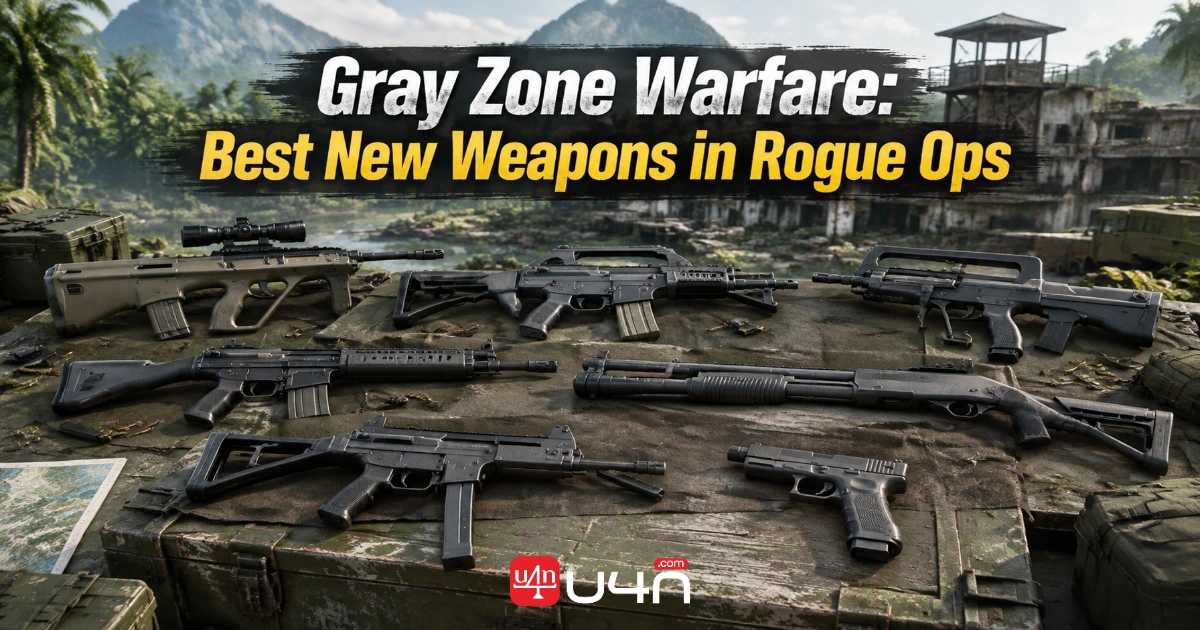
Gray Zone Warfare's Rogue Ops update gives players seven new weapons to experiment with, but the real question is which ones deserve a place in your loadout. The AUG, G36, and FAMAS offer fresh options for rifle users, while the G3, Benelli M4, UMP, and Glock 18C bring different strengths to the battlefield. Choosing the right gun means looking beyond damage numbers and considering recoil, ammunition, attachments, and the kind of missions you run.
Our team recommends treating these additions as an opportunity to rethink your entire loadout rather than simply replacing your favorite rifle. In a tactical shooter like Gray Zone Warfare, a weapon is only as useful as your ability to control it and keep it supplied. Before committing to an expensive setup, consider how your preferred Gray Zone Warfare Items fit into your overall equipment plan, especially when you are preparing for unfamiliar locations or higher-risk deployments.
What Are the 7 New Weapons in Gray Zone Warfare?
Rogue Ops, also known as Update 0.5, launched on October 22, 2026, introducing seven new weapons alongside expanded customization options and changes to loot distribution. Rather than offering seven interchangeable guns, the update adds several distinct approaches to combat.
Here is a quick breakdown of the new weapons and what players should consider before choosing one.
| Weapon | Category | What to Consider |
|---|---|---|
| Steyr AUG / AUG A3 | Assault rifle | Modular setup options and optic configuration |
| H&K G36 | Assault rifle | Integrated optics and compact variants |
| FAMAS F1 | Bullpup rifle | High rate of fire and magazine compatibility |
| H&K G3 | Battle rifle | 7.62×51mm ammunition and substantial recoil |
| Benelli M4 | Semi-automatic shotgun | Close-range effectiveness |
| H&K UMP | Submachine gun | Compact handling and .45 ACP ammunition |
| Glock 18C | Select-fire pistol | Backup weapon utility and ammunition management |
The most important distinction is that these weapons do not all compete for the same role. A rifle suited to flexible engagements will not necessarily outperform a shotgun in a tight interior, and a powerful battle rifle may be less practical when weight, recoil, and ammunition supply become concerns.
The best weapon is not automatically the one with the highest damage. It is the one that fits your engagement distance, remains controllable under pressure, and can be supplied consistently throughout your missions.
AUG vs. G36 vs. FAMAS: Which Rifle Should You Choose?
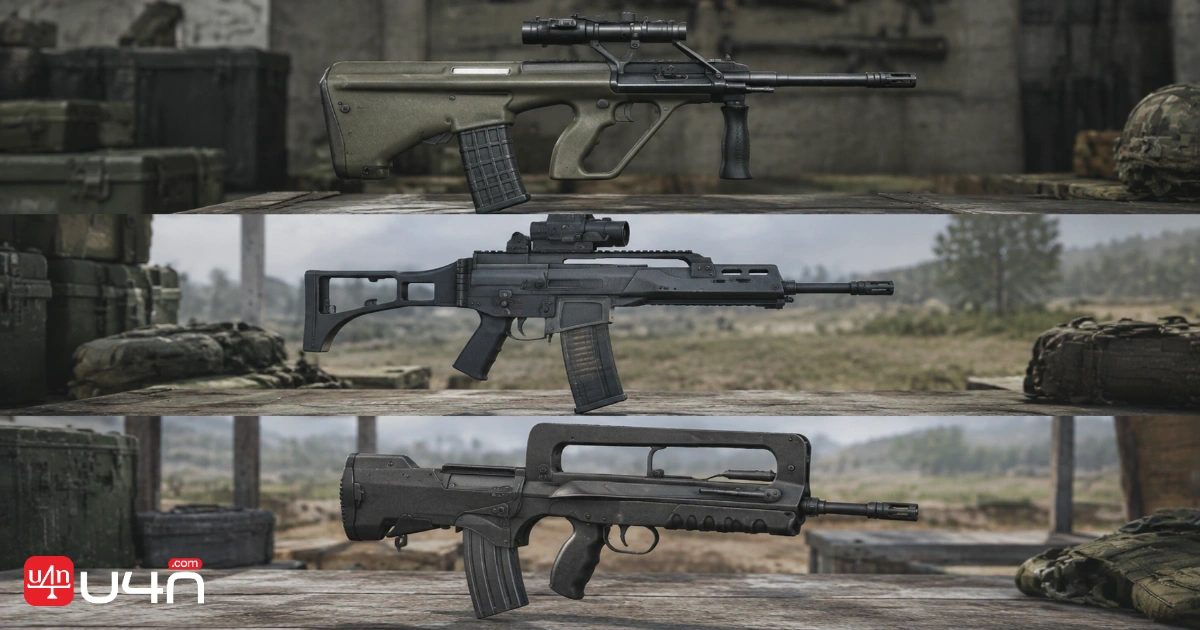
The AUG, G36, and FAMAS are natural starting points for players who prefer rifles. All three use the 5.56×45mm ammunition family, but their handling characteristics, available configurations, and customization options give them different identities.
Steyr AUG: A Flexible Starting Point
The AUG stands out for its bullpup layout and modular design. The AUG A1 comes with an integrated 1.5x optic, while the AUG A3 offers a more modern rail-based configuration. This gives players different starting points depending on whether they prefer a straightforward sight setup or greater freedom to customize.
Our team would prioritize testing the AUG A3 if customization is your main concern. Being able to choose an optic and tailor the setup to your engagement distance can be more useful than relying on the factory configuration. However, the best choice still depends on the attachments you can obtain and the handling you prefer.
G36: A Practical All-Rounder
The G36 offers another approach to the 5.56mm rifle role. Its base configuration includes an integrated 3x optic and a red dot, while alternative variants such as the G36K and G36C provide more compact options.
For players who want to experiment with different sight arrangements, the ability to replace the original optic assembly with rail-compatible components is worth investigating. Before settling on a build, test how quickly you can acquire targets at both short and medium distances. A configuration that looks versatile on paper still needs to feel comfortable in actual combat.
FAMAS F1: Speed Comes With Trade-Offs
The FAMAS F1 is the most distinctive option for players interested in a fast-firing rifle. Its rate of fire can reach 1,100 rounds per minute, making ammunition discipline especially important during sustained engagements.
The trade-off is control. Rapid fire can consume magazines quickly, and the original 25-round magazines are not interchangeable with standard AR-15-pattern magazines. Players should also check which modifications are available before planning a fully customized build.
Our recommendation: Start with the AUG if you want to explore customization, consider the G36 for its optic options and compact variants, and test the FAMAS if you can manage its rapid fire and ammunition consumption. These are role-based recommendations, not a definitive strength ranking.
Is the G3 Worth Using for More Demanding Engagements?
The H&K G3 takes a different approach from the three 5.56mm rifles. Chambered in 7.62×51mm, it offers a battle-rifle platform for players who want to explore a heavier-caliber setup.
The main consideration is recoil. The G3 can be difficult to control during automatic fire, particularly before you improve its ergonomics with suitable modifications. That makes it important to evaluate the rifle in the firing modes and configurations you actually intend to use.
For more deliberate engagements, we suggest testing the following:
- Single-shot control: Check whether you can consistently place follow-up shots without losing your sight picture.
- Optic selection: Choose a sight that matches the distances you expect to encounter rather than automatically equipping the highest magnification.
- Weapon weight: Consider the effect of your overall loadout instead of evaluating the rifle in isolation.
- Ammunition supply: Confirm that you can maintain a reasonable supply of the correct caliber before committing to repeated deployments.
The G3 is worth testing if you enjoy a more deliberate rifle setup, but its larger caliber does not automatically make it the best choice for every encounter. Practical performance still depends on shot placement, ammunition, target protection, and recoil management.
Benelli M4, UMP, and Glock 18C: Best Options for Close Quarters?
The remaining three weapons fill different roles. They are especially interesting for players who want to move beyond a conventional rifle-centered loadout.
Benelli M4: For Close-Range Encounters
The Benelli M4 is a semi-automatic shotgun designed around close-range combat. It is a natural candidate for players who frequently fight inside buildings or other confined spaces.
Its main limitation is engagement distance. Rather than trying to make a shotgun cover every situation, build your loadout around the environments where it is most useful. Before entering a dangerous area, consider whether your secondary weapon can cover the distances at which the shotgun becomes less practical.
UMP: A Compact Alternative
The UMP uses .45 ACP ammunition and provides a different handling experience from the rifle platforms. Its compact form makes it worth considering for players who prefer a less cumbersome weapon for infiltration or close-range engagements.
The UMP can also be paired with a suppressor, making it an option to investigate for quieter approaches. However, suppressed fire should not be treated as a guarantee that enemies will never detect you. Positioning, target awareness, and the wider sound environment still matter.
Glock 18C: A Backup With a Different Purpose
The Glock 18C is a select-fire pistol that can provide an alternative when carrying or switching to a primary weapon is impractical. Its value lies in having another option available, not in replacing a rifle or shotgun in every situation.
Our advice is to treat it as a supporting part of your loadout. Consider its ammunition needs, your preferred primary weapon, and how often you realistically rely on a sidearm. A backup is most useful when it fills a specific gap rather than duplicating the role of your main gun.
Best Attachments and Loadout Choices for the New Weapons
Rogue Ops expands weapon customization, so choosing a gun is only half the decision. The attachments you use can change how comfortable it feels and how well it fits your mission.
Match Your Optic to the Fight
A red dot or reflex sight can suit players who prioritize fast target acquisition at shorter distances. A magnified optic can help when you expect longer sightlines, although additional magnification is not always an advantage in confined spaces.
For the AUG, G36, and G3, start with a configuration that makes target acquisition comfortable at your expected engagement distance. Test alternative optics before spending resources on a final build.
Balance Recoil and Ergonomics
A weapon with strong damage potential can still perform poorly if you struggle to control follow-up shots. When choosing modifications, pay attention to recoil, ergonomics, weapon weight, and the practical trade-offs between them.
For the FAMAS and G3 in particular, spend time testing how the weapon behaves during repeated shots. A build that improves control may be more useful to you than one that prioritizes a single attractive stat.
Plan Ammunition Before Deployment
Do not assume that all ammunition types perform equally well against every target. Rogue Ops changes ammunition behavior, making ammunition selection an important part of loadout planning.
Check your available stock, verify the caliber and ammunition type, and bring enough supplies for the mission you intend to run. This is especially important when trying a new weapon that uses a different ammunition family from your usual setup.
Where to Find the New Weapons in Rogue Ops
Finding a new weapon is only useful if you can repeat the process or keep it supplied. Rogue Ops places greater emphasis on location-specific weapon distribution, so exploring the right areas and understanding the enemies you encounter can matter more than repeatedly searching the same familiar route.
Explore With a Clear Objective
Rather than entering a high-risk area simply because it might contain valuable equipment, plan around your mission objectives and extraction route. Consider the enemies likely to be present, the supplies you can afford to lose, and whether your current weapon is appropriate for the encounter.
Most of the new weapons are associated with world loot rather than straightforward vendor purchases. Specific availability can vary by weapon and location, so verify current in-game information before relying on a particular spawn.
Keep Your Loadout Sustainable
A weapon that is difficult to replace may not be the best choice for every deployment. If you find a new rifle you enjoy, consider whether you can maintain its ammunition supply and whether you have a practical alternative when a run goes badly.
For players building a more consistent equipment routine, Gray Zone Warfare Dollars can be considered as part of broader resource planning. The key is to balance your available resources against the risk of each mission instead of spending heavily on a configuration you have not tested.
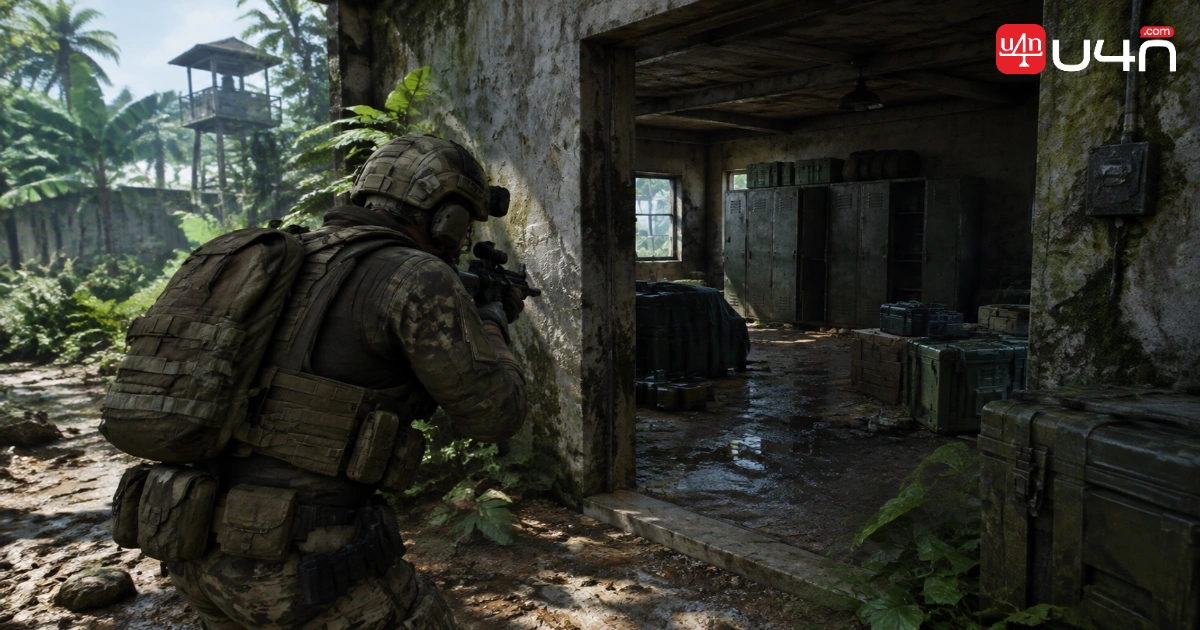
How Rogue Ops Changes Weapon Selection
The seven new weapons are only one part of the update. Rogue Ops also changes the wider environment in which weapons are used, making it important to reconsider habits developed in earlier versions.
First, location-specific weapon distribution encourages players to explore beyond familiar loot routes. Second, the return of suppression adds another tactical consideration during firefights. Third, ammunition behavior has changed: the update notes that SP and HP rounds inflict larger wounds than FMJ and AP rounds. These differences should be considered alongside penetration, target protection, and the specific ammunition available to you.
Taken together, these changes reward a more deliberate approach to preparation. Instead of choosing a gun based only on its headline damage, think about how it handles, what ammunition it needs, where you plan to use it, and how easily you can replace lost equipment.
The real advantage of Rogue Ops is not simply having seven more weapons to choose from. It is learning how weapon handling, ammunition, customization, and mission planning work together to create a more reliable loadout.
Which New Weapon Should You Try First?
There is no single winner among the seven new weapons for every player. The AUG, G36, and FAMAS are strong candidates to explore if you prefer rifle-based loadouts. The G3 offers a different experience for players willing to manage heavier recoil, while the Benelli M4, UMP, and Glock 18C serve more specialized roles.
Our team recommends starting with the weapon that best matches your normal engagement distance and then testing one or two configurations before committing to it. Pay attention to ammunition supply, attachment availability, and how comfortably you can control the gun under pressure.
Ultimately, the best new weapon in Gray Zone Warfare is the one you can use consistently, supply reliably, and trust when a mission becomes unpredictable. Rogue Ops gives players more ways to approach combat; the real advantage comes from choosing a loadout that fits your own playstyle.