

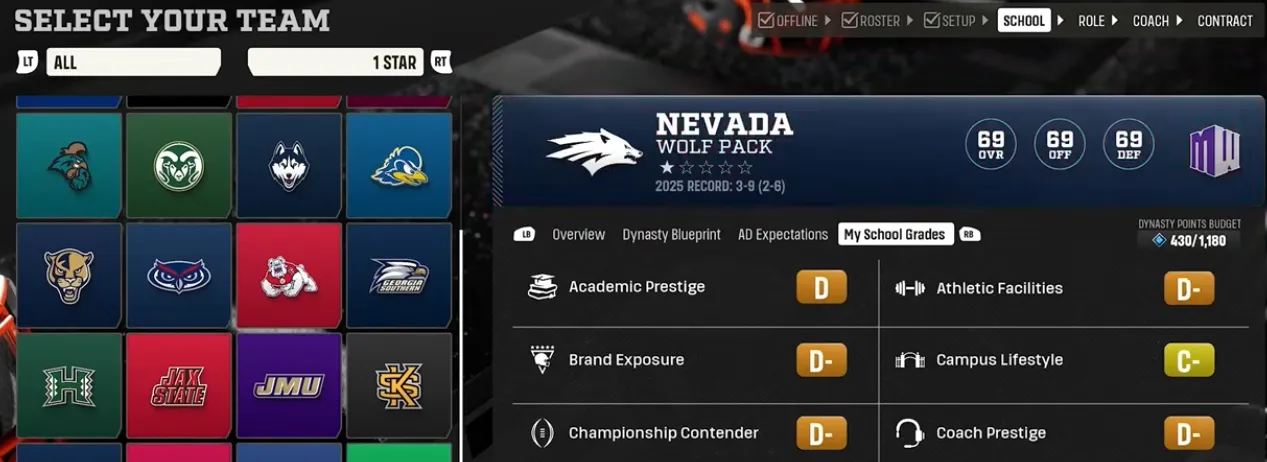
Dynasty Mode in College Football 27 is built around long-term program building, where every decision impacts your coach, roster, resources, and school expectations. Success is no longer just about winning games—it's about managing Athletic Director goals, Dynasty Blueprint spending, NIL strategy, staff construction, and facilities development. Below is a guide to help you understand and optimize every major system in Dynasty Mode.
1. Core Dynasty Pillars
Every Dynasty is built on three foundational systems:
| Pillar | What It Means | Key Focus |
|---|---|---|
| Build Your Coach | Career progression and coaching identity | Abilities, archetypes, Coach Points |
| Build Your Program | Roster construction and recruiting | NIL, Transfer Portal, recruiting strategy |
| Deliver College Football World | Realistic league simulation | Conferences, schedules, postseason, realism |
These pillars define every long-term decision you make as a coach.
2. Athletic Director Expectations (Most Important System)
Each school has unique expectations that directly affect job security.
Key Components
- School Demeanor (patience level)
- 3 Active Goals per season
- Program priorities (recruiting, wins, rivalry, stats)
- Job security tracking
School Demeanor Types
| Type | Behavior |
|---|---|
| Patient | Long-term rebuild allowed |
| Balanced | Moderate expectations |
| Impatient | Immediate success required |
| Reactionary | Fast firing risk |
Tips
- Always check goals before accepting a job
- Rivalry games can matter more than record
- Meeting “small goals” can still be critical for job security
In College Football 27, Athletic Director Expectations and school demeanor play a major role in shaping your job security, with each program setting different goals around wins, rivalries, recruiting, and performance standards. Patient schools allow long-term rebuilding, while impatient or reactionary programs demand immediate results, making it important to understand objectives before taking a job. Many players also choose to support their Dynasty progress by using CFB 27 coins, and it is often recommended to purchase them directly from the official website for a safer and smoother experience.
3. Dynasty Blueprint (Resource Management System)
Dynasty Blueprint is your annual budget system using Dynasty Points.
Where You Spend Points
- Coaching Staff
- Facilities
- Recruiting NIL
- Roster NIL
Key Strategy Rule
You cannot max everything—you must specialize.
Spending Strategy Table
| Strategy Type | Best For | Risk |
|---|---|---|
| Staff Heavy | Development & gameplay boost | Weak recruiting |
| NIL Focus | Recruiting dominance | Weak facilities |
| Facilities Focus | Long-term growth | Short-term performance drop |
| Balanced | Stability | No elite advantage |
4. Dynasty Points System (Budget Economy)
How You Earn Points
- School prestige & brand exposure
- Conference strength
- Season performance (bowl, playoffs, championships)
- AD goal completion rewards
Important Rule
- Dynasty Points reset every year (use-it-or-lose-it system)
Tips
- Do NOT save points too conservatively
- Spend based on next season expectations
- Upgrade facilities only when long-term plan supports it
5. NIL System (Recruiting + Retention Meta)
NIL is split into two systems:
Recruiting NIL
- Used to win recruits and transfers
- Can override weak school prestige
- Increases influence in recruiting battles
Roster NIL
- Prevents player transfers
- Used during offseason retention phase
NIL Strategy Table
| Situation | Best Action |
|---|---|
| 5-star recruit battle | Overpay strategically |
| Stable roster | Maintain baseline NIL |
| Star player at risk | Increase retention NIL |
| Transfer portal | Aggressive NIL push |
Critical Rule
Overpaying recruits increases their future NIL expectations permanently.
6. Facilities System (Long-Term Power Growth)
Facilities directly improve player development and recruiting appeal.
Facility Tier Ladder
| Tier | Grade Range |
|---|---|
| Basic | F |
| Competitive | D- to D+ |
| Premier | C- to C+ |
| Elite | B- to B+ |
| National Powerhouse | A- to A+ |
Key Insight
- Facilities = long-term dynasty dominance
- Equipment = short-term seasonal boost
Tips
- Upgrade facilities only if staying at school long-term
- Equipment is better for short rebuild cycles
7. Coaching Staff Strategy
Staff Types
- Coordinators (on-field performance + scheme)
- Support Staff (recruiting, development, NIL efficiency)
Key Mechanics
- Staff hired using Dynasty Points
- Higher prestige = better staff access
- Coordinators can leave or be poached
Hiring Tips
- Early dynasty: invest in coordinators first
- Mid dynasty: balance staff + facilities
- Late dynasty: maximize NIL + elite coordinators
8. Recruiting System Changes
Recruiting is now multi-stage:
- Open → Top 5 → Top 3 → Verbal Commit → Hard Commit
Key Change
Verbal commits are NOT safe anymore.
Tips
- Keep recruiting even after verbal commit
- Focus on Top 3 battles
- Use NIL late cycle for flips
9. Practice & Wear Management
You now control weekly training intensity.
Practice Options
| Type | Benefit | Risk |
|---|---|---|
| Full Practice | High XP | Injury risk |
| Limited | Balanced recovery | Lower XP |
| No Practice | Recovery focus | Cold start risk |
| Week Off | Full recovery | Miss game |
Tips
- Use limited practice during rivalry weeks
- Protect star players before playoffs
- Rotate heavy usage players frequently
10. Coaching Carousel Strategy
Key System Change
- No guaranteed job offers
- You must “express interest”
Tips
- Don't spam job applications (lowers stability)
- Evaluate: budget + expectations + roster fit
- Better job ≠ better situation
11. Best Overall Dynasty Strategy (Meta Guide)
Early Dynasty (Years 1–2)
- Focus: Staff + recruiting NIL
- Accept lower facilities
- Take patient school jobs
Mid Dynasty (Years 3–6)
- Focus: balanced Blueprint
- Upgrade facilities gradually
- Build roster retention system
Late Dynasty (Years 7+)
- Focus: elite NIL + facilities maxing
- Maintain dynasty stability
- Prioritize championship windows