


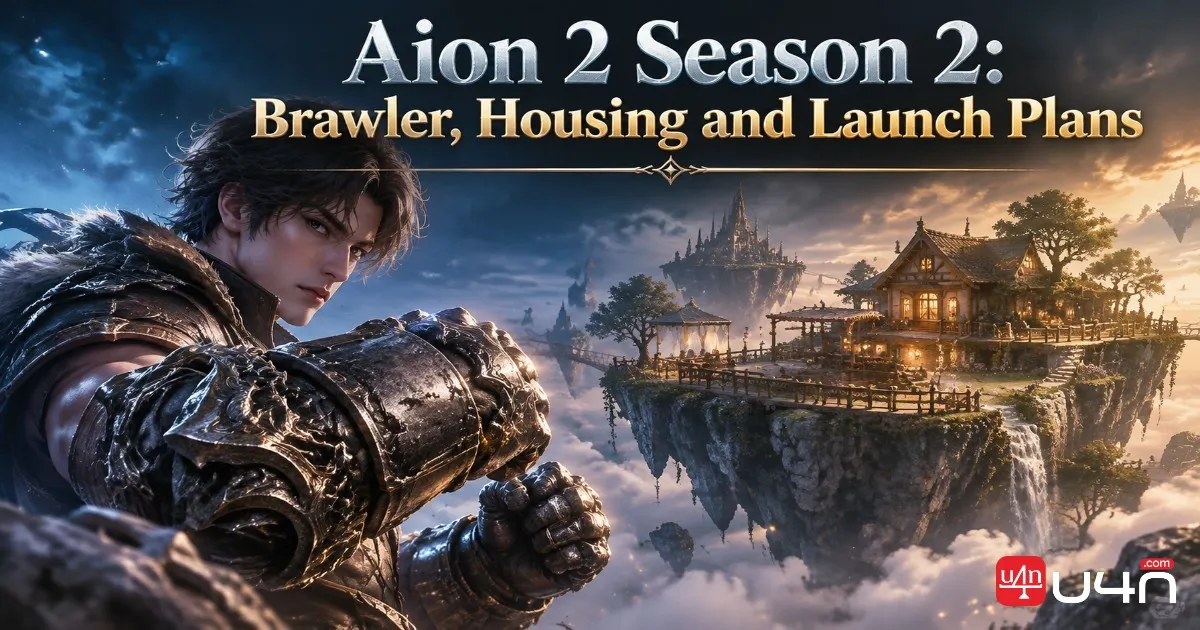
Aion 2's second season gives us two reasons to watch the next update closely: a new melee class and a personal space away from combat. The supplied announcement sets December 16, 2026, as the season's scheduled opening, with Brawler presented as an upcoming addition and housing targeted for January 2027. Community coverage also separates the season date from the more cautious wording around individual features. We would keep that distinction visible when planning a return.
For our team, the immediate question is how much preparation makes sense before the missing details arrive. Players reviewing Aion 2 Items for a possible character switch need equipment requirements and progression rules before committing resources. The announcement gives us a direction, but a weapon reveal alone cannot tell us which purchases will help a new character.
Our approach is to examine what each feature promises, identify the details that would change a player's decision, and prepare around those questions. That keeps the excitement useful without turning an early preview into a finished build guide.
Season 2 Timing: Separate the Launch From Each Feature
The original report groups several announcements around the second season. For planning purposes, we would separate the season opening, Brawler's availability, and the housing window. Even when features appear in the same announcement, players still need to know which ones become accessible after maintenance.
| Announcement element | Timing presented in the supplied article | Our planning recommendation |
|---|---|---|
| Season 2 opening | December 16, 2026 | Use this as the scheduled season date |
| Brawler | Associated with Season 2; described as coming soon | Confirm availability in the release notes |
| Housing | January 2027 | Treat this as a month, without inventing an opening day |
| Maintenance and access | No exact times supplied | Wait for regional service information |
This distinction becomes practical when arranging a group session. A date on a season announcement does not explain when maintenance ends, whether character creation opens immediately, or whether a new system has an introductory quest. Those are separate questions.
We would also keep the regional context attached to every update. Before using information from another service version, check that it applies to the servers where your group plays. A useful preparation note should identify the feature, the relevant version, and the source of its release timing.
The supplied article also includes a scheduling caveat. Our recommendation is to keep plans flexible until the maintenance notice appears, especially if the main reason for returning is one specific feature.
Brawler: What We Need Beyond the Gauntlet Reveal
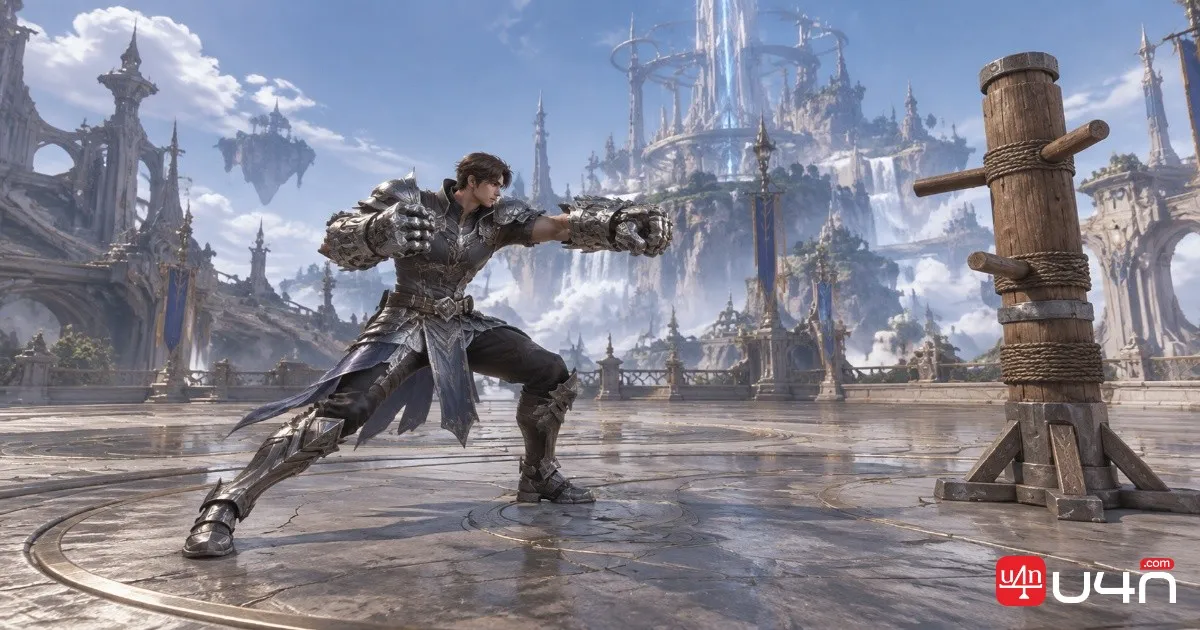
The supplied description gives Brawler a clear visual identity: a close-range fighter using a Gauntlet and aggressive melee attacks. It does not establish a full combat role, skill rotation, or performance ranking.
We would resist assigning Brawler a tank role, a top damage position, or an easy learning curve from that description. Those conclusions require different evidence. A character can look direct and physical while still demanding careful resource timing or strict positioning.
Attack commitment matters as much as attack speed
The first thing we would examine in gameplay footage is how long an attack keeps the character committed. Short animations can still feel restrictive if the most valuable sequence has to finish before movement becomes available.
Consider a boss preparing a ground attack. We would want to know whether Brawler can interrupt its sequence, reposition, and resume useful damage without losing its entire setup. That interaction says much more about everyday comfort than a highlight showing uninterrupted punches.
Our review would also distinguish visual speed from input pressure. A class that attacks rapidly does not automatically require constant button presses. The relevant questions are how many decisions the rotation asks us to make and how severely it punishes a missed input.
Staying close requires more than a gap closer
For mobility, we would look beyond the presence of a forward rush.
- Can the class approach again after a forced retreat?
- Can it disengage?
- Does an offensive movement skill become unavailable precisely when defensive movement is needed?
These are evaluation criteria, not claims about Brawler's unannounced kit. We would apply them before recommending a main-character switch because they affect both comfort and damage opportunities.
A short-range fighter also needs a readable relationship with enemy movement. If a target steps away during a sequence, the important detail is what happens next: a clean recovery, a wasted attack, or a resource loss.
Group value needs its own assessment
For organized content, we would examine damage alongside survivability, interruption tools, and any contribution to the party. A personal damage demonstration cannot answer every question a group leader needs to ask.
We would especially want footage from encounters that force movement. Training-target sequences are useful for understanding a rotation, but our class recommendation would also require examples of the player responding to mechanics.
Until those details appear, our position is straightforward: Brawler has an appealing combat premise, while its practical strengths remain a subject for testing.
Housing: A Private Island Needs Useful Building Tools
The housing concept in the supplied article centers on a private island and freely arranged furniture and decorations. That establishes a customization theme. Our assessment would focus on how the tools support that promise once players begin placing objects.
The first questions concern control. We would check rotation options, placement boundaries, object overlap, and whether small decorations can sit naturally on larger furniture. A room can contain attractive assets and still feel difficult to build if the editor fights every adjustment.

We would then examine the relationship between indoor and outdoor space. Can players shape a coherent island layout, or does customization stop at a limited building area? The announcement provided here does not resolve that distinction, so we would avoid illustrating either arrangement as a confirmed feature.
Furniture access will shape the experience
Our preferred housing preview would explain where furnishings come from. Crafting, activity rewards, vendors, and cosmetic purchases create different planning needs. Before recommending a material stockpile, we would need actual recipes or acquisition rules.
We would also check what happens after an item is placed.
- Can it return safely to storage?
- Does moving a house affect existing furniture?
- Are duplicate pieces needed for repeated designs?
These details determine whether experimentation feels welcoming or expensive.
None of those mechanics should be inferred from a furnished promotional room. We would treat them as questions for the system reveal.
Social features deserve clear answers
A private island raises another useful question: who can visit? We would want explicit information about invitations, visitor permissions, and any ability to share a design.
Our interest is practical. A player planning a quiet personal retreat has different needs from a group hoping to create a regular meeting place. Before presenting housing as a social destination, we would confirm that the relevant access tools exist.
We would keep combat benefits out of the discussion unless the developer documents them. Decoration alone provides enough material for a focused preview without inventing buffs, production bonuses, or progression advantages.

The Missing Details That Would Change Our Recommendation
The original article repeatedly points out that information is limited. We would make that observation more useful by identifying which missing answers actually affect player decisions.
For Brawler, the highest priorities are access requirements, progression support, equipment compatibility, and a full skill explanation. Those answers determine whether trying the class is a small side project or a substantial restart.
For housing, we would prioritize unlock conditions, ownership scope, furniture acquisition, and placement limits. A feature can sound simple at announcement level while requiring several decisions once it opens.
| Question we want answered | Decision it affects |
|---|---|
| How is Brawler unlocked or created? | Whether we can try it immediately |
| What progression support is offered? | How much time to reserve |
| Which existing resources remain useful? | What to keep and what to spend |
| How is housing accessed? | Which character should prepare |
| How are furnishings obtained? | Whether advance gathering is justified |
| What are the building limits? | How ambitious an initial design should be |
We would avoid filling these gaps with assumptions imported from another class or another MMO. A familiar system name is a starting point for questions, not proof of identical rules.
The same restraint applies to the season's wider scope. The supplied article does not describe new zones, instances, or events in detail. We would phrase that as a limitation of the available text. It is insufficient evidence for declaring that the entire season contains only Brawler and housing.
That change improves the article's accuracy without weakening its criticism. We can reasonably ask for a more informative feature preview while leaving room for material outside the source excerpt.
How We Would Prepare Without Overcommitting

Our preparation would begin with an account review. We would record available character slots, stored equipment, unspent resources, and rewards with visible expiration dates. The purpose is to understand our options before a new class creates pressure to make quick decisions.
We would then separate necessary upgrades from speculative purchases. If an upgrade helps the character we actively use today, it has a clear purpose. If its only justification is an assumed Brawler build, we would wait for the missing requirements.
Keep resources flexible
We would preserve flexibility rather than assemble a guessed equipment set. Before saving any reward for a future character, check its description for binding, eligibility, and expiration conditions.
An unopened box is only useful preparation when its rules support the intended use. We would not tell readers to hoard every container or currency simply because a season is approaching.
The same reasoning applies to housing materials. Until furniture recipes are published, we would organize storage and note existing supplies. We would not buy large quantities of unrelated crafting components on the assumption that they will become valuable.
Plan a class trial with clear goals
Our first Brawler session would answer a few specific questions.
- Can we read the attacks comfortably?
- Can we move when an encounter demands it?
- Do the controls remain manageable during a longer fight?
We would try ordinary content before committing to a demanding group session. That gives us room to learn recovery options and defensive habits without evaluating every mistake under time pressure.
We would also keep our current character available while testing. A promising first impression deserves follow-up, especially if changing characters would affect a regular group's composition.
Give housing its own budget
For the island, we would begin with a small design: one room or one outdoor area with a clear purpose. A compact project helps us understand scale, lighting, and placement before spending resources across an entire property.
Our initial shopping list would come after that test. Knowing that a chair fits the intended space is more useful than owning several expensive pieces with no layout in mind.
This approach also gives the feature room to develop. We would rather complete one satisfying area and expand it deliberately than exhaust the decoration budget before understanding the editor.
Our Season 2 Assessment
Our team's interest is strongest where the two additions offer distinct experiences: Brawler invites a fresh combat evaluation, while housing invites a more personal project. Before searching for buy Aion 2 Kina options, we would establish what the intended upgrade or decoration actually costs and which acquisition methods the game permits. Spending against an unconfirmed build or furnishing system adds uncertainty to a decision that already lacks essential information.
We would prepare enough to participate, then let the detailed release information guide the larger commitments. For Brawler, we need representative combat footage and clear access rules. For housing, we need the editor, acquisition methods, and limits explained. Those are the details that will turn an attractive announcement into a useful reason to return.
FAQ
When is Aion 2 Season 2 scheduled to begin?
The supplied article gives December 16, 2026, as the scheduled opening. We would use the regional maintenance notice to confirm the actual access time before arranging a group session or setting aside a full day.
Is Brawler guaranteed to be playable at the season opening?
The source associates Brawler with the second season but also describes it as coming soon. Our recommendation is to confirm its availability in the release notes rather than assume that a season date settles every feature's timing.
What should we check before switching to Brawler?
We would check access requirements, progression support, equipment rules, and combat behavior under pressure. The most useful trial includes movement, interrupted attack sequences, and defensive decisions, giving us a clearer basis for committing resources.
Does housing have an exact release date?
The supplied article gives January 2027 as the intended window, without a specific day. We would avoid presenting a January date, maintenance time, or access requirement until those details are published.
Should we stockpile materials for the private island?
We would organize existing supplies and wait for confirmed furniture recipes or vendor information. A useful stockpile follows an actual requirement; buying unidentified materials in advance makes it harder to judge whether the preparation has any value.