



A robbery can look successful right up until the getaway falls apart. We would rather leave with a modest haul and a workable plan than chase one extra payout while every decision gets harder. That is the approach our team takes to GTA 6: understand the systems around a job before worrying about how much it pays.
Managing GTA 6 money belongs in that preparation. So do choosing a suitable car, reading police attention correctly, and keeping track of Jason and Lucia's behavior. Treating these as separate topics makes the game harder to read. We find it more useful to connect them around one question: what needs to happen for this particular job to end cleanly?
The seven areas below follow that logic. We start with finances, move through vehicles and robberies, then consider police pressure and the longer consequences of our decisions. Our priority is practical judgment: knowing what to check, when to commit, and when to walk away.
Give Your Money a Job Before Spending It
We recommend separating immediate spending from long-term commitments before making a large transfer. BuckMe Family Savings is a shared account for Jason and Lucia, and either character can contribute. Deposits cannot be withdrawn or spent afterward, so this is a commitment rather than an emergency fund. The savings system also has consequences for their shared future, which makes the decision relevant beyond the current balance.
Our preferred budgeting method starts with the next objective. What do we actually need to buy or prepare? Keep enough accessible money for that plan, plus a reasonable margin for mistakes. Only then consider moving the remainder into savings.
A bigger total is satisfying, but accessible funds matter when we are trying to get something done. We would avoid emptying an account just to reach a milestone if doing so leaves the next session without a clear route forward.
| Money decision | What we check | Our preferred approach |
|---|---|---|
| Everyday spending | What the next objective requires | Keep a practical reserve |
| A large purchase | Its immediate usefulness | Buy for a specific purpose |
| A savings contribution | What remains available afterward | Transfer deliberately |
| An unfamiliar balance or payment status | The explanation shown in the app | Read the status before taking action |

We also suggest checking the banking screen after a substantial payout. Read the available balance, any pending status, and the current account information together. If something looks wrong, establish what the interface is telling you before spending money simply to make room.
The habit we want is simple: decide where a payout belongs while there is time to think.
Choose a Getaway Car You Can Actually Drive
Our first question about a vehicle is where we expect to use it. A straight highway run, a tight urban escape, and a delivery through crowded streets ask different things of the driver. We would choose around the route before looking at a ranking.
The fastest-car material discussed earlier needs a careful reading. A vehicle-card speed rating should be treated as a rating unless the accompanying source establishes a measured top speed. We would not turn it into a precise miles-per-hour claim or assume it settles every performance comparison.
For a working getaway car, our checklist looks like this:
| Consideration | Question we ask |
|---|---|
| Acceleration | Can we regain speed after slowing down? |
| Braking | Can we judge corners without repeated collisions? |
| Handling | Does the car feel predictable on this route? |
| Capacity | Can it accommodate the planned passengers? |
| Condition | Is it ready for the journey we have planned? |
| Familiarity | Can we drive it confidently under pressure? |
We tend to favor familiarity during the early stages of a crime game. Learning a difficult vehicle while managing a tense escape is an unnecessary complication. Take an unfamiliar car for an ordinary drive first, where a missed corner is just a missed corner.
Our recommendation is to maintain a dependable option for routine work. Save performance experiments for a session where testing the vehicle is the actual objective.
Check Vehicle Tracking Before Committing
Vehicle tracking deserves its own preparation step. Our reading of the supplied guide material is that its tracker categories are meant to describe different problems, each with its own conditions. We would keep those distinctions intact rather than reduce the advice to "steal the car and deal with it later."
Before committing to a vehicle, read the relevant prompt and establish three things: what kind of tracking is indicated, what response is available, and whether that response is currently usable.
We would also separate acquiring a vehicle from making it suitable for the intended job. Getting into the driver's seat is only one part of the plan. If a task involves keeping, delivering, or selling the car, check those requirements before investing more time in it.
A useful team rule is to pause whenever an instruction mentions a tool or capability we have not encountered. Look for the corresponding objective or tutorial instead of guessing at a workaround. Repeating the same attempt without understanding the restriction usually teaches very little.
Preparation also needs a time limit. If a vehicle requires more effort than the current objective justifies, choose something else and return later. We prefer to make that decision while the situation is quiet.
For our purposes, a suitable car is one we understand well enough to use now.

Plan Store Robberies Around the Exit
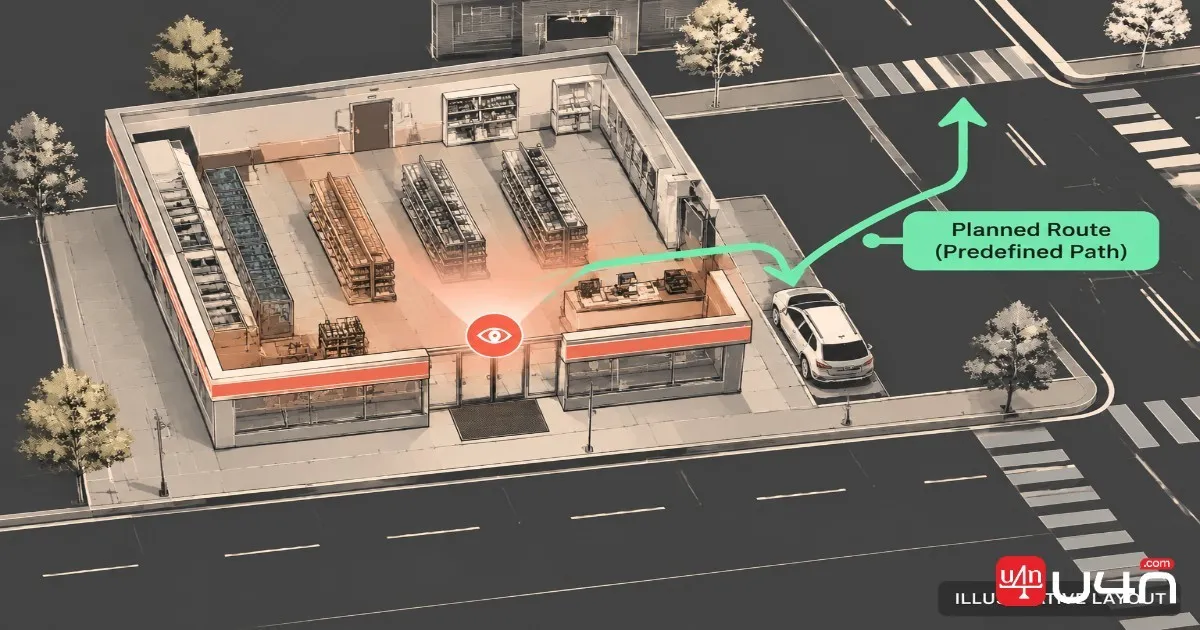
We would begin a store robbery by deciding how to leave. That means examining the approach, locating the parked vehicle, and choosing a first escape direction before starting the interaction inside.
The robbery material brings together several possible elements, including staff, surveillance, alarms, registers, and safes. We recommend reading these as things to assess at the location. Avoid assuming that every store presents the same sequence or requires every possible action.
Our preparation has three parts: understand the target, identify the immediate objective, and set a stopping point.
That stopping point matters. Without one, it is easy to keep adding tasks: another container, another room, another attempt at a safe. We would decide beforehand which reward we came for and what change in circumstances would make us leave.
Read the Situation Before Adding Steps
Once the robbery starts, focus on the instructions actually presented. Check interaction prompts carefully, particularly when following a guide written for a different control scheme. We would describe actions in words and confirm the corresponding button in the game.
Avoid adding violence simply because a scene feels tense. Our preferred approach is to complete the required interaction with as few unnecessary decisions as possible.
If the situation changes, reassess the remaining objective. How much is left to do? What would that extra step require? Is the exit still practical? These questions are more useful than trying to force the original plan through every complication.
Practice Leaving With Enough
We suggest treating an early robbery as practice for the whole sequence. The useful lesson is how preparation, interaction, departure, and recovery fit together.
A modest payout can still make a worthwhile practice run if we understand why it worked. Afterward, review one mistake to fix next time. Perhaps the car was parked awkwardly, the controls were unfamiliar, or we stayed longer than intended.
Change one thing on the next attempt. That gives the result a clearer explanation.
Read Police Pressure and Long-Term Consequences Separately
Several systems need to stay distinct. The wanted and heat guidance separates immediate pursuit from information police retain about a suspect. Criminal Profiles track Jason and Lucia individually, while relationship status concerns the pair together. Profile choices can influence their relationship, and the Irredeemable profile is described as permanent. Robbery guidance also treats the escape as part of securing the proceeds. These are connected considerations, but resolving one does not establish that all the others have been resolved.
Our approach to a chase is to read the current status before choosing the next action. Are we responding to direct pursuit, a search, or an identification problem? Follow the information the game provides rather than assuming every police response needs the same solution.
We would give each maneuver a purpose. A turn should help us reach a useful route or break contact. A stop should put us somewhere suitable to wait. Changing direction repeatedly without a reason makes the situation harder to assess.
The same applies to changing appearance or vehicles. Check what information is relevant before taking that step. We would avoid making several changes at once and then guessing which one helped.
Once the immediate pressure has eased, allow time to verify the status. Our recommendation is to stay focused on ending the current incident before starting another.
That quiet pause is part of the escape plan.
Protect the Campaign You Want to Build
We treat the Criminal Profile material as a reason to pay attention to behavior between objectives. Before experimenting with an action that could have lasting consequences, check the current profile and read any warning attached to it.
The distinction we care about is intention. Are we completing a task, testing a mechanic, or deliberately choosing a more violent direction for the character? Knowing the answer makes the resulting campaign easier to understand.
For players who want to explore freely, we recommend using a separate manual save where the game allows it. That creates room to test a choice without turning the main campaign into a series of uncertain experiments.
Our team would use the relationship system with similar care. Check the current state, read the available interactions, and pay attention after significant shared events. We would avoid treating every friendly interaction as a guaranteed repair for a larger problem.
A useful review after an important mission takes very little time:
- Check both characters' current profiles.
- Review the relationship state.
- Read new messages or objectives.
- Confirm whether there is a decision worth saving before.
We also recommend keeping narrative curiosity separate from optimization. It is perfectly reasonable to choose an imperfect response because it suits the story you want to follow. The aim is to recognize that choice while making it.
Our preference is for a campaign whose consequences feel understandable. A surprising scene can be memorable; an irreversible decision made because we ignored a warning is harder to enjoy.
Build a Repeatable Routine Between Jobs
The practical value of these systems comes from checking them at sensible moments. We would use a short routine before each job, then a second review afterward. There is no need to inspect every menu constantly.
Before starting, confirm the objective, available spending money, vehicle suitability, relevant equipment, and first escape direction. If the plan relies on a tool, verify that it is available. If it relies on an unfamiliar interaction, read the prompt before committing.

Afterward, establish that the immediate incident is finished. Check the proceeds, review any meaningful status changes, and decide whether the next objective needs fresh preparation. That gives each job a clear endpoint.
When organizing GTA6 Items, we would group equipment by the task it supports: entry, control, escape, or recovery. Keep the next objective in mind while reviewing the inventory. An item earns attention because we have a reason to use it, and unfamiliar gear deserves a quick check before a tense situation.
Our suggested early-session goal is modest: complete a manageable job, bring it to a clean endpoint, and identify one improvement. Learn the banking screen, settle on a familiar vehicle, and practice reading status changes without rushing past them. Repetition becomes useful when we can explain what went better.
Before the next attempt, open the map and point to the exit route. Check the car, check the money available for preparation, and decide what will make us leave early. Then start the job.