
A profitable dungeon run can change the way we plan an entire week in WoW Forever. When one room pays far more than our usual quests, gathering routes, and Auction House sales, it is tempting to drop everything and farm it until our bags are full.
Blackmaw Hold showed why that strategy can fall apart overnight. Blizzard fixed the dungeon's abnormal loot and began investigating the resulting economic impact. For players looking to earn WoW Forever Gold consistently, the more useful question is what to do after a headline-making farm disappears.
We will start by separating reliable income from lucky drops, then build a routine around several activities that can survive price swings and balance changes. There is still plenty of room to improve, but a strong route should make sense without relying on a broken loot table.
What Happened to the Blackmaw Hold Gold Farm?
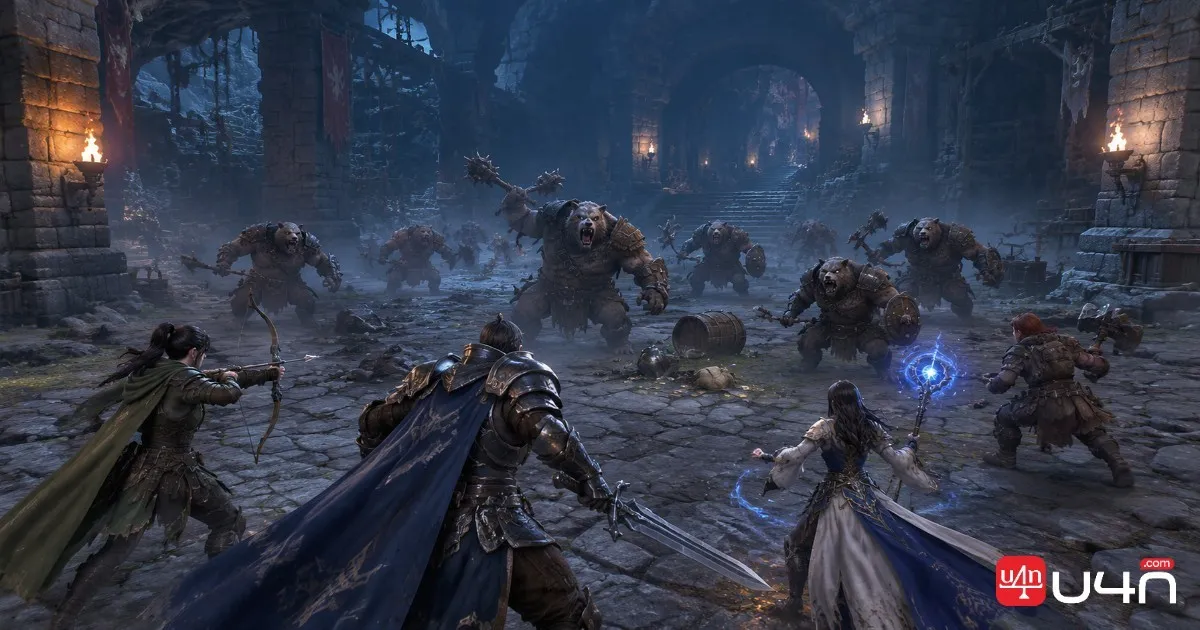
A group of non-elite enemies in Blackmaw Hold was incorrectly dropping the amount of dungeon loot expected from elite enemies. Because players could repeatedly kill those enemies and sell the resulting drops to vendors, the farm produced unusually high returns for the effort involved.
On November 17, 2026, Blizzard confirmed that the loot issue had been hotfixed. The company said it had placed economic restrictions on accounts while investigating and was removing gold earned through the exploit, including proceeds from selling the bugged drops to vendors. It was also applying suspensions to significant abusers. Blizzard's November 17 announcement also clarified how the investigation separated ordinary dungeon runs from deliberate, extensive farming.
Blizzard drew a distinction between deliberate, extensive farming and ordinary dungeon runs. According to the announcement, players who ran Blackmaw Hold a few times and benefited from extra loot during normal play did nothing wrong.
The important line is not whether a dungeon sometimes produces good loot. The risk begins when players recognize an unintended mechanic and repeat it exclusively for hours after its abnormal behavior is clear.
That distinction matters. Our group does not need to abandon a dungeon because a pack looks generous or because someone posts a high earnings screenshot. The concern begins when an obviously unintended mechanic becomes the reason to repeat the same encounter for hours.
Why One Dungeon Farm Can Affect the Economy
The Blackmaw Hold issue was especially damaging because a meaningful part of the income came from selling loot to vendors. Vendor sales create gold that enters the game economy. A trade on the Auction House generally moves existing gold from one player to another, with fees or deposits affecting the seller's return.
That difference changes how we judge a farm. Suppose we gather herbs and sell them to another player. We earn gold, but the buyer gives up gold in exchange for materials. If we sell vendor trash, the game pays us directly. Both activities can be legitimate, but an unintended source of vendor income can add currency much faster than the surrounding game systems were designed to handle.
More gold in circulation can put upward pressure on player-traded goods, particularly if newly wealthy players compete for a limited supply. It does not guarantee that every item will become more expensive. Supply, leveling patterns, demand, and Blizzard's response all matter, and prices can move differently from one server to another.
For players who did not use the farm, the practical question is simple: are our usual expenses rising faster than our income? Track a few goods we actually buy, including raid consumables or profession materials, instead of treating every expensive Auction House listing as proof of runaway inflation.

How to Spot a Risky Gold Farm
Efficient farming is part of WoW. Pulling several enemies at once, finding a quiet gathering route, or improving a dungeon group's clear speed is a normal way to earn more from our time.
An unusually profitable farm deserves a closer look when its rewards seem disconnected from the difficulty or purpose of the content. None of the following signs proves that a route is an exploit on its own, but several appearing together should make us pause:
- Weak enemies drop rewards that look wildly out of line with similar enemies.
- Nearly all the income comes from repeating one interaction or killing one small pack.
- A reset or positioning trick bypasses most of the intended activity.
- The route relies on behavior that players themselves describe as clearly broken.
- A recent official notice or hotfix has already identified the mechanic as unintended.
We will also be cautious with earnings claims that have no breakdown. A screenshot showing a full inventory tells us little about repair costs, time spent traveling, unsold goods, or the number of unsuccessful attempts.
If a promising route looks suspicious, stop repeating it and check Blizzard's current guidance. A high gold-per-hour estimate is not useful if the income can be removed or the account faces action.

Build a Gold Plan Around Multiple Income Sources
We prefer a plan with three layers: a dependable activity for immediate cash, a market activity with room for profit, and an optional farm for extra income. The exact mix can change as our character progresses.
| Income source | Main advantage | Main limitation | Best use |
|---|---|---|---|
| Quest rewards | Predictable progress and direct gold | Finite opportunities on a character | Building cash while completing available content |
| Gathering | Flexible sessions and tradable materials | Competition and changing prices | Filling short play sessions |
| Crafting | Can contribute value to gathered or purchased materials | Materials, deposits, and unsold stock reduce profit | Selling goods with steady demand |
| Normal dungeon runs | Combines character progression with loot | Group time and shared rewards affect returns | Earning while pursuing upgrades |
| Auction House trading | Flexible and potentially profitable | Requires capital and price knowledge | A limited part of an established budget |

This table is a planning tool, not a promise that every activity pays equally well. Availability and prices vary, so we should test the options on our own server before committing a full evening.
Use quests and normal play as a base
Unfinished quests are an obvious place to look when we need gold without tying up money in inventory. They can also advance our character through areas we want to complete anyway.
We will not call every quest route a permanent farm. Once a finite set of quests is done, that source is gone for the character. Treat it as a useful injection of cash rather than a recurring income stream unless the activity is explicitly repeatable.
The same principle applies to dungeons. A run can be worthwhile even if its direct gold is modest: an upgrade, a useful material, and a bit of vendor loot all have value. Just avoid counting an item at its full potential sale price until it actually sells.
Gather goods that move
Gathering works best when we pay attention to demand, not simply the highest listing on the Auction House. A material priced at several gold can look attractive, but a stack that never sells is inventory, not income.
We usually check how many competing stacks are listed and revisit the market at different times. If a material sells steadily in smaller batches, we can keep collecting without tying up the entire bank in one resource. If the price falls sharply, we can switch routes or hold a modest amount until demand returns.
Time matters as much as the map. A route that looks excellent early in the morning can feel miserable during peak hours when several players are chasing the same nodes.
Craft only after checking the margin
Crafting can turn materials into more valuable goods, but the sale price alone does not tell us whether a recipe is profitable. Materials we gathered ourselves still have value because we can sell them instead.
Use a simple calculation before committing:
Estimated crafting profit = expected sale price − material value − Auction House costs
As a simple case, if materials can sell for 8 gold and the finished product is expected to sell for 10 gold, the starting margin is 2 gold before listing costs and any failed sales. If repeated listings consume that margin, selling the materials directly can be the better move.
We will start with a small batch, watch what sells, and expand only when the results justify it. That keeps a promising recipe from becoming a bank full of stock.
Measure Gold Per Hour Without Fooling Yourself
A useful gold-per-hour number includes the entire session, not just the best ten minutes of combat. We time the trip to the farm, clearing, looting, repairs, vendor stops, and the journey back. For group content, we count our share rather than the value of everything the party collected.
Separate the results into two categories:
- Realized income: gold received directly, items sold to vendors, and completed player sales.
- Unrealized value: goods still in bags, bank slots, or active Auction House listings.
Say we spend 90 minutes gathering and sell enough materials to net 12 gold after costs. The realized rate is 8 gold per hour. If we also have a rare item listed for 20 gold, we keep it out of that calculation until it sells. The listing price can be optimistic, and it can take several attempts to find a buyer.

A few short tests are more useful than one lucky run. Record the route, time of day, competition, expenses, and final sales. If the farm only looks good when a rare drop appears, label it as a gamble rather than a reliable source of income.
Protect Your Budget When Prices Move
After a major economic intervention, we will avoid making a large purchase solely because someone claims prices are about to explode. A thinly supplied market can change quickly in either direction, and the highest listed price is not necessarily the price at which an item sells.
Keep enough liquid gold for the costs that keep the character moving: repairs, travel, training where applicable, and the supplies needed for planned group content. Set aside a separate amount for a mount or a profession goal. Only the remainder should be considered available for speculative purchases.
It also helps to distinguish a useful purchase from an investment. Buying an ingredient because our raid group needs it this week is straightforward. Buying a bank tab full because a streamer expects a price spike is a bet, and we should be comfortable if that bet takes time to pay off or loses value.
If we buy materials to craft, we can reduce exposure by making small batches. If we sell gathered goods, we can compare current prices with the last few times our own listings sold. Neither method removes risk, but both give us a reason for the price we choose.
A Practical Weekly Farming Routine
We will organize a week around the activities already on our calendar. On dungeon nights, collect and sell the ordinary loot, then note any materials worth listing. On shorter evenings, run a gathering loop or finish a few available quests. When we have time to inspect prices, craft a small batch of goods that have sold consistently.
A sample session can look like this:
- First 15 minutes: check sales, collect mail, and compare prices for a few familiar materials.
- Next 30 to 45 minutes: gather or complete available quests, depending on competition.
- Next 45 to 60 minutes: run normal group content or test a legitimate solo route.
- Final 10 minutes: repair, sell vendor items, list goods, and record the result.
Those times are a starting point, not a schedule we need to follow exactly. The important part is leaving the session with a clear picture of what became usable gold and what is still waiting to sell.
Before buying WoW Forever Items, we will compare the purchase with our next planned expense and the cash we need to keep farming. An upgrade that helps us clear content more reliably can be worth saving for; a speculative purchase should come from money we can afford to leave tied up.
Blackmaw Hold is a reminder to check where a farm's rewards come from and how easily they can change. When our income comes from several ordinary activities, one hotfix can alter the plan without emptying the whole week's budget.