
Feral Druid is one of the most flexible choices in WoW Forever, giving players access to melee damage, tanking, and valuable group utility. Whether we are leveling a new character, preparing for dungeon runs, or building toward endgame content, the key is understanding when to use each form and how to make the most of the updated talent system. Smart resource management and sensible preparation, including planning how to use WoW Forever Gold, can also make the leveling process smoother.

Unlike a class that follows one fixed combat pattern, Feral Druid changes considerably as new abilities become available. Bear Form unlocks at level 10, while Cat Form arrives at level 20, creating distinct stages in the leveling journey. Our guide focuses on practical decisions that help players deal consistent damage, reduce downtime, and contribute to groups without wasting mana or choosing talents that do not support their preferred role.
Feral Druid's strength is adaptability: choose talents and abilities that fit your current level and preferred role, then adjust your approach as new forms and group responsibilities become available.
Is Feral Druid a Good Choice in WoW Forever
Feral Druid is a strong option for players who value flexibility. Cat Form supports melee damage and mobility, while Bear Form provides the tools needed to absorb incoming damage and tank enemies. Outside shapeshifting, Druids also bring healing, buffs, crowd control, and other useful abilities to group content.
The important advantage is adaptability. During solo leveling, we can focus on dealing damage and healing between fights. In a dungeon, we can switch toward tanking when the group needs someone to hold enemy attention. This flexibility does not mean every build performs every role equally well, however. A character optimized for Bear Form tanking may make different talent and gear choices from one built primarily for Cat Form damage.
| Playstyle | Main Strength | What to Consider |
|---|---|---|
| Solo leveling | Flexible damage, mobility, and self-healing | Mana management and efficient pulls |
| Cat Form DPS | Mobile melee damage and combo-point gameplay | Energy use, target selection, and finishers |
| Bear Form tanking | Threat generation and durability | Rage management and incoming damage |
| Hybrid group play | Ability to adapt to changing party needs | Talent trade-offs and form-switching decisions |
For players who enjoy switching between roles rather than committing to a single combat style, Feral Druid is particularly appealing. We recommend choosing a primary role first, then using the flexibility of the class to support other situations when needed.

Best Feral Druid Talents and Build Choices
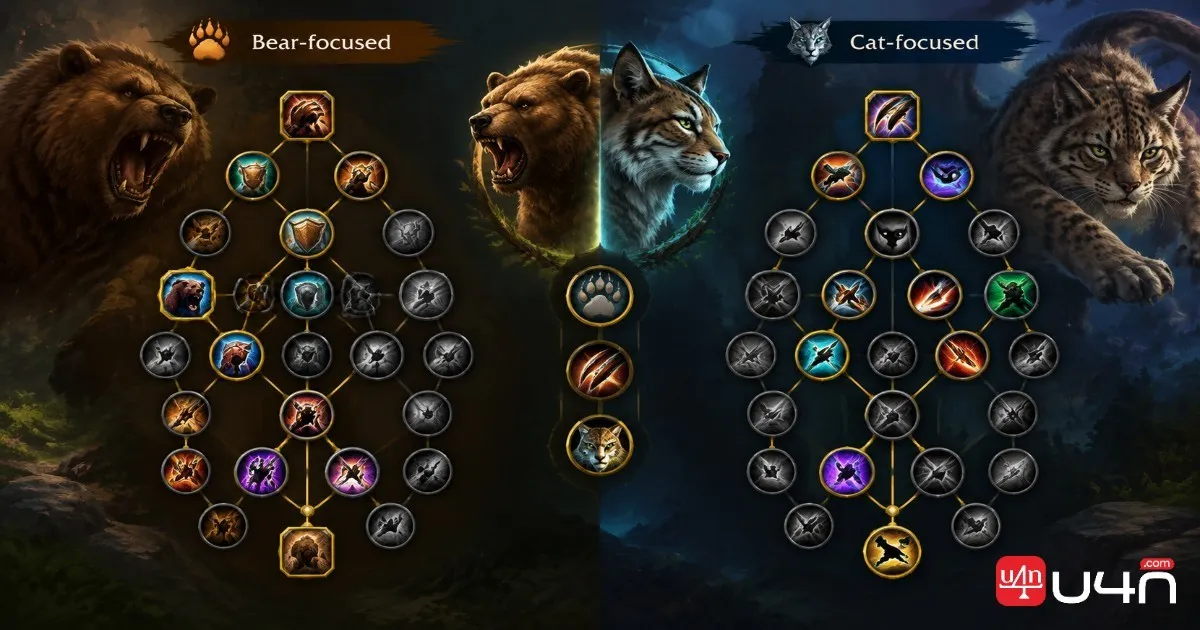
The right talent build depends on your level and intended role. Mobalytics' current guide provides level 30 Beta builds for Bear-focused and Cat-focused play, alongside expected level 60 configurations. These recommendations remain subject to change as the Beta develops, so we should treat endgame builds as provisional rather than guaranteed final setups. View the current Feral Druid talent guide.
Talents for leveling
Early in the leveling process, talents that improve damage across multiple forms, increase mobility, or reduce the time spent recovering can deliver consistent value.
- Ferocity: A useful early investment for reducing the cost of key abilities in the relevant forms.
- Feral Swiftness: Supports mobility and survivability, helping us travel between objectives and avoid unnecessary damage.
- Feral Charge: Adds an engagement tool and can help interrupt or close distance, depending on the target and encounter.
- Sharpened Claws and Savage Fury: Support damage-focused progression when their effects fit the selected build.
- Leader of the Pack: Offers a group-oriented benefit, making it relevant when building toward party content.
These talents should not be treated as a universal point-by-point order for every player. The best sequence depends on which abilities are available at your current level and whether you intend to spend most of your time in Bear Form or Cat Form.
Bear-focused versus Cat-focused builds
A Bear-focused build prioritizes the ability to handle incoming damage and maintain threat in group encounters. A Cat-focused build places more emphasis on melee damage and the talents that support its combat rhythm.
| Build | Main Priority | Best Use |
|---|---|---|
| Leveling Bear | Durability, threat, and reliable damage | Players who expect to tank or fight several enemies |
| Leveling Cat | Melee damage, mobility, and efficient single-target combat | Players who mainly quest and deal damage |
| Expected level 60 Bear | Tanking tools and sustained group utility | Future dungeon and raid preparation |
| Expected level 60 Cat | Damage optimization and talent synergy | Future endgame DPS planning |
We recommend avoiding frequent talent changes without a clear reason. First decide how you want to play, then follow a build that supports that goal. Since respecialization costs and talent balance can change during testing, check the current Beta rules before spending currency to reset your talents.
Leveling Guide: What to Do at Levels 1–30
Feral Druid feels different at each stage of early progression. Understanding these transitions helps us avoid relying on abilities that are not yet available.
Levels 1–10: Use spells and weapon attacks efficiently
Before unlocking shapeshifting, Druids depend on spells and regular weapon attacks. Rather than repeatedly casting Wrath until the enemy is defeated, combine spell damage with auto attacks and use mana carefully.
A practical approach is to open with a damaging spell, apply Moonfire when appropriate, and let weapon attacks contribute between casts. Keep Mark of the Wild active, and use Thorns when it suits the encounter. If you are taking significant damage, consider healing between pulls instead of spending your entire mana pool during combat.
Weapon upgrades can also make a noticeable difference. If you have enough currency and find a suitable upgrade, compare its damage with your current weapon before buying. New players should prioritize quest rewards and affordable improvements rather than spending heavily on equipment they will quickly replace.
Levels 10–20: Make the most of Bear Form
Bear Form opens up a different way to approach combat. It gives you a more durable form and useful tools for controlling enemies, making it particularly valuable if you plan to tank dungeons or engage multiple opponents.
- Open with a ranged spell when appropriate to establish initial threat.
- Use Bear Form abilities to maintain damage and control incoming enemies.
- Heal between pulls when needed to reduce downtime.
- Learn how your Rage generation and defensive abilities interact before taking on larger groups.
If you plan to tank, practice maintaining enemy attention rather than focusing exclusively on personal damage. A tank who keeps enemies away from the healer and other damage dealers is often more valuable than one who deals slightly more damage but loses control of the fight.
Levels 20–30: Develop your Cat Form playstyle
Cat Form introduces a more mobile melee approach. At this stage, players who prefer solo damage can focus on efficient single-target pulls, while those interested in tanking can continue refining their Bear Form gameplay.
We recommend paying attention to energy, combo points, and the timing of finishers. Avoid spending resources without a clear purpose, especially when an enemy is nearly defeated. If your character is losing too much health between fights, adjust your pull size and use healing abilities before re-engaging.
These early levels are also the right time to experiment with your preferred role. A build that feels comfortable for questing may need adjustment before you begin regularly tanking group content.

Race Choices, Stat Priority, and Equipment
Race selection can influence how a Feral Druid feels in combat, but it should support your preferred playstyle rather than dictate it. The available choices in WoW Forever include Night Elf, Tauren, and Skyborne, with availability depending on faction and the current rules.
Choosing a race
Night Elf offers abilities associated with critical strike and mobility, while Tauren brings tools such as War Stomp and additional health. Those features can be useful in different situations, but the overall value depends on the encounter, build, and current racial tuning.
We recommend comparing racial abilities against your primary goal. A player focused on leveling may value mobility and survivability, while a player preparing to tank may prefer tools that help control enemies or withstand incoming damage. Check the current race guide and game information before treating any option as the definitive best choice.
Understanding stat priority
Strength, Agility, and Stamina are important stats to consider, but their relative value changes with your role and the mechanics of the current version.
| Stat | Why It Matters | Practical Consideration |
|---|---|---|
| Strength | Contributes to attack power | Useful when evaluating damage-focused gear |
| Agility | Supports critical strike, dodge, and armor-related benefits | Relevant to both melee damage and survivability |
| Stamina | Increases health | Particularly valuable when tanking or struggling to survive |
| Intellect | Increases mana capacity | Can help when frequent spellcasting and healing are part of your routine |
| Spirit | Supports regeneration | Value depends on how much time you spend recovering mana and health |
Do not follow a stat priority without considering the item as a whole. Weapon damage, armor, available upgrades, and the content you are preparing for can all affect which piece is the better choice. For shapeshifting Druids, weapon selection deserves special attention because the Forever version changes how form-based attacks interact with weapon damage.
Combat Rotation, Tanking, and Group Utility
Feral Druid performs best when we use the right tools for the situation instead of treating every encounter as a damage race.
Cat Form: Focus on efficient melee combat
In Cat Form, pay attention to energy, combo points, and the relationship between building resources and spending them. Keep your rotation practical: maintain relevant effects when worthwhile, generate combo points efficiently, and use finishers when the target's remaining health and encounter length justify the investment.
There is no reason to force a complicated rotation onto every leveling enemy. Short fights often reward simple, efficient decisions, while longer encounters give sustained effects and careful resource use more time to pay off.
Bear Form: Manage threat and incoming damage
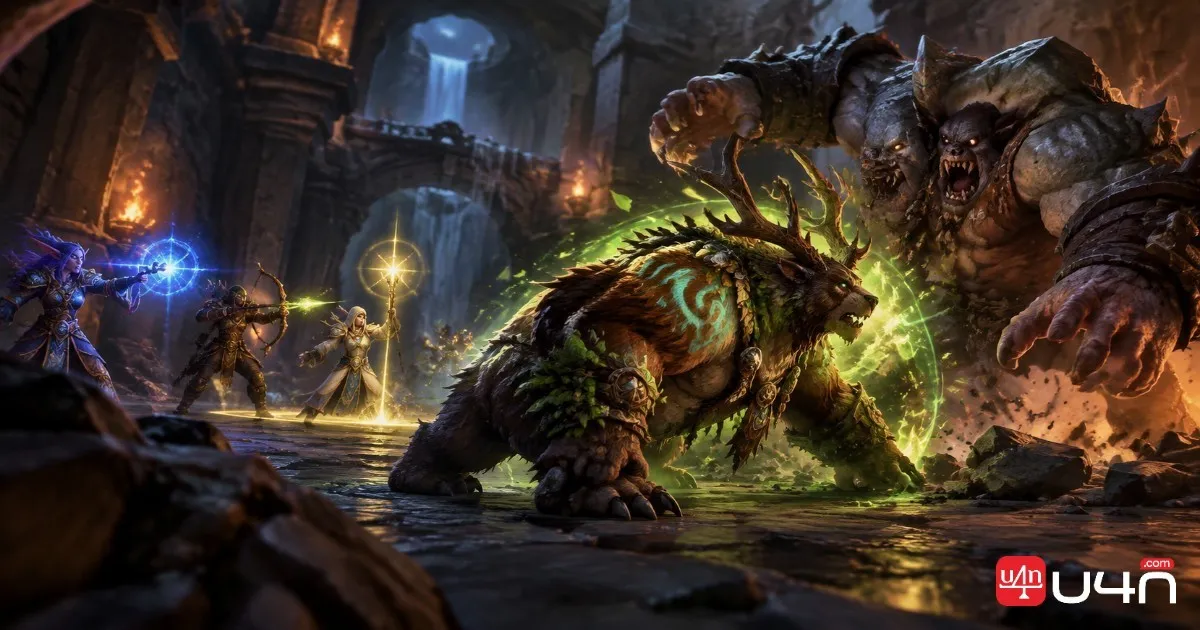
For tanking, threat management is just as important as damage. Use the appropriate abilities to establish control, apply area damage when several enemies are involved, and reduce incoming damage when a pull becomes dangerous.
Growl can help recover an enemy that has moved away from you, while abilities such as Swipe and Demoralizing Roar can support multi-target control and mitigation where appropriate. Learn the current effects and cooldowns of each ability rather than relying on assumptions from older versions of WoW.
Make use of Druid utility
Druids contribute more than damage or tanking. Mark of the Wild can support the group, while Entangling Roots can help control an enemy in suitable situations. Remove Curse and Abolish Poison can address specific harmful effects, and Rebirth can provide an important recovery tool when its requirements are met.
Before a dungeon or group encounter, we recommend checking that essential buffs are active and carrying any required reagent for abilities that need one. During a difficult fight, use utility when it can prevent a death or help the group regain control.
Summary
Feral Druid is a flexible choice for WoW Forever because it can move between melee damage, tanking, and group support. The strongest approach is not to copy a build without context, but to understand which talents and abilities support your current level and preferred role.
Our team recommends focusing on efficient early leveling, learning Bear Form at level 10, and developing your Cat Form playstyle after it becomes available at level 20. As the Beta evolves, revisit talent choices, weapon upgrades, and stat priorities instead of assuming that one setup will remain optimal. When preparing your character and comparing WoW Forever Items, prioritize upgrades that improve your actual build and the content you intend to play.
FAQ
Is Feral Druid good for solo leveling?
Yes. Feral Druid offers melee damage, mobility, and self-healing options. Its leveling experience changes as Bear Form and Cat Form become available, so your approach should adapt to your character's level.
When do Druids unlock Bear Form and Cat Form?
In the current guide, Bear Form becomes available at level 10 and Cat Form at level 20. Check the latest Beta information in case these details change.
Should I choose a Bear-focused or Cat-focused build?
Choose Bear-focused talents if you expect to tank and prioritize durability and threat. Cat-focused builds are more appropriate if your main goal is melee damage. Hybrid choices can work, but they involve trade-offs.
Which stats should Feral Druids prioritize?
Strength, Agility, and Stamina are important starting points. Their relative value depends on your build, equipment, and role, so avoid using a single stat ranking for every situation.
Is the level 60 build final?
No. The level 60 recommendations are expected builds while the guide is being updated for Beta and launch. Recheck current talent information before committing to a final endgame setup.