



The WoW Forever Duel Tournament is starting to reveal a much clearer PvP picture as more players reach level 30 and commit to their tournament characters. With $100,000 on the line, the latest class distribution and duel footage give us the first meaningful look at which classes are actually dominating the beta meta—and which ones are struggling.
The newest data is particularly useful because the tournament has moved beyond simply counting registered characters. Once players reach level 30, most are expected to stick with their chosen class rather than reroll. That makes the level-30 distribution a much better indicator of what competitive players currently believe is worth playing. For anyone planning their own WoW Forever Gold budget around a PvP character, these trends are worth watching before investing heavily in gear, consumables, and profession materials.

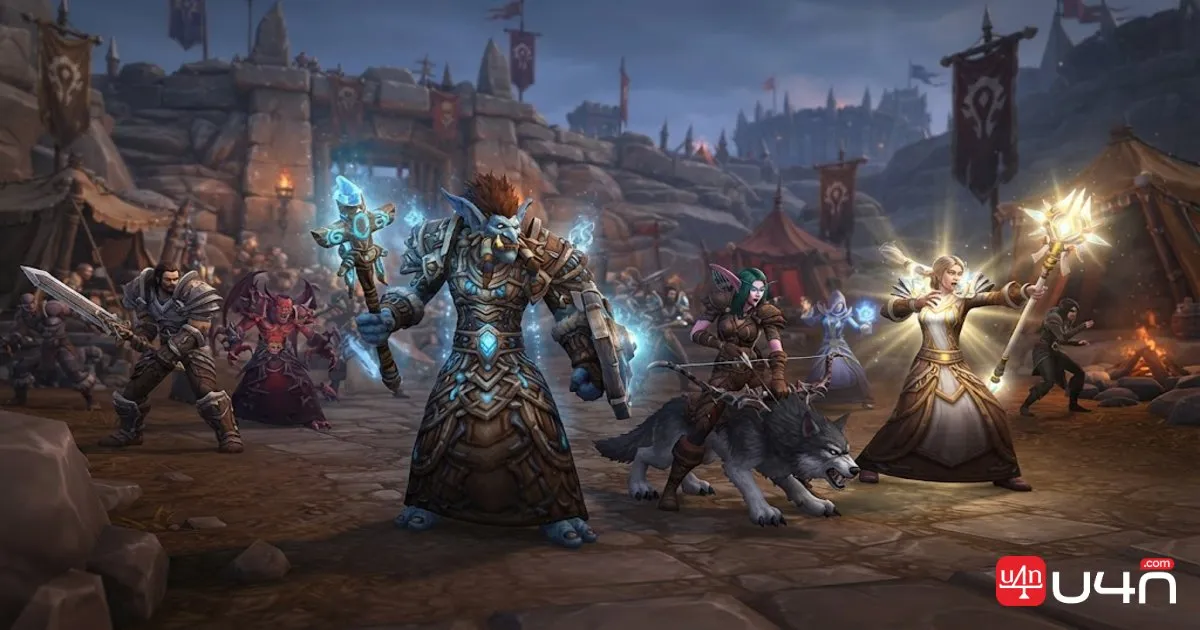
Level 30 Data Shows a Clear Class Divide
The latest infographic tracks roughly 4,000 tournament players and adds one important statistic: how many characters have reached level 30.
That matters because early character selection can be misleading. Players may experiment with several classes during leveling, but once a character reaches level 30, switching becomes a much bigger commitment. The current numbers therefore provide a stronger indication of where tournament players are settling.
Shaman stands out immediately, followed by Hunter and Priest.
| Class | Current Tournament Position | PvP Impression | Main Strength |
|---|---|---|---|
| Shaman | 1st | Extremely strong | Burst damage and Windfury RNG |
| Hunter | 2nd | Extremely strong | Kiting, pet pressure, sustained damage |
| Priest | 3rd | Very strong | Defensive tools, mana management, control |
| Paladin | 4th by player count | Overrepresented relative to perceived power | Strong cooldowns |
| Mage | Mid-tier | Strong but matchup-dependent | Control and mobility |
| Druid | Mid-tier | Situational | Utility and mobility |
| Warlock | Mid-tier | Promising | Strong against Priest |
| Rogue | Lower tier | Cooldown-dependent | Burst and utility |
| Paladin | Lower competitive tier | Cooldown-dependent | Powerful when major cooldowns are available |
| Warrior | Lowest | Weakest overall | Mirror-match specialization |
The important distinction here is that player population does not necessarily equal class strength. Paladin, for example, currently has a surprisingly large tournament presence, but the observed duels do not necessarily suggest that it belongs among the strongest classes.
Why Shaman Is Taking Over the Tournament
Shaman is currently the biggest story.
The class has a combination that is particularly dangerous in a duel environment: once a Shaman gets enough uptime on its opponent, a single Windfury sequence can completely change the fight.
This creates an unusual dynamic. A Shaman does not necessarily need to dominate every second of a duel. It simply needs enough opportunities to connect.
One of the clearest examples comes from the Priest-versus-Shaman duels between Peekaboo and Summit. Peekaboo repeatedly attempted to kite while conserving mana, leaving Summit in increasingly difficult situations. The Shaman could spend much of the fight sitting around with low health and mana while looking for an opportunity.
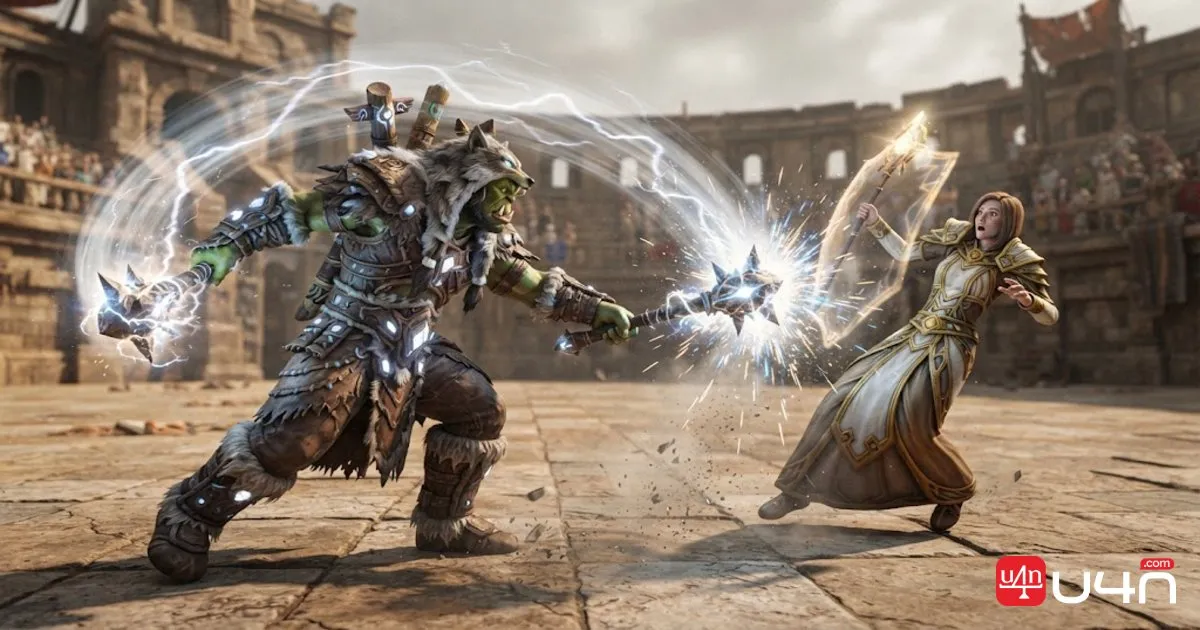
Then the opportunity arrived.
A single sequence took the Priest from roughly 70% health to zero.
That is the fundamental reason Shaman is so popular in the tournament. Its ceiling is enormous even when the player is not controlling the fight for most of the duel.
There is also a psychological advantage. Players looking at these clips can immediately understand the appeal: get into melee range, connect, and hope the Windfury sequence produces the kind of burst that ends the fight before the opponent can recover.
However, this should not be mistaken for proof that Shaman automatically wins every matchup.
The sample is still extremely small.
Priest Is Better Than the Population Suggests
Priest currently sits near the top of the class distribution, but the available numbers may actually undersell its competitive potential.
One reason is simple: fewer players appear to have extensive Priest PvP experience compared with more familiar classes such as Hunter.
That matters in a tournament environment.
A player choosing between a class they already understand and a class they believe might be stronger has to consider the cost of relearning positioning, cooldown management, matchups, and resource management. The tournament is not simply a theoretical class-balance test; it is also a test of player familiarity.
The Peekaboo versus Summit duels demonstrate this perfectly.
Peekaboo is an experienced World of Warcraft PvP player, while Summit has a background in competitive Counter-Strike. Despite the enormous difference in WoW experience, their duels were surprisingly competitive.
Across roughly 15 duels, Peekaboo appeared to win around 60%, rather than completely overwhelming his opponent.
That makes the matchup more interesting than simply declaring Shaman unbeatable.
Shaman vs. Priest: What the Duels Show
The basic pattern is fairly consistent:
Based on the small sample discussed in the source material, Based on the small sample discussed in the source material, Shaman appeared to have roughly a 60% win rate against Priest in those observed duels. That figure should not be treated as a broader tournament-wide win rate, since the sample is far too small to establish a reliable matchup percentage.
But that figure should not be treated as a reliable tournament-wide win rate. The sample is far too small, and individual player skill clearly affects the results.
Hunter Has a Different Kind of Advantage
Hunter is the other class consistently appearing near the top of the current meta.
Unlike Shaman, Hunter does not need to rely on one explosive melee sequence to create pressure. Its strength comes from controlling distance while allowing the pet and ranged attacks to steadily wear down the opponent.
The Priest-versus-Hunter footage illustrates this well.
The Hunter uses a Crocolisk pet to apply a 50% healing reduction effect while maintaining distance with slows, Scatter Shot, and careful positioning. That combination makes it extremely difficult for the Priest to recover efficiently.
The result is a matchup where the Hunter can dictate the pace of the fight.
The Priest may have powerful healing available, but healing becomes considerably less threatening when a healing-reduction effect is active.
One mistake did give the Priest an opening. The Hunter became slightly less patient and allowed the Priest to enter effective range, creating an opportunity for a Fear. That moment shows an important difference between having a strong class and playing it correctly.
Even in a favorable matchup, positioning still matters.
Once the Hunter regained range and reapplied the healing reduction effect, the Priest's recovery became much less meaningful. The Hunter could then finish the duel with free ranged attacks.
The takeaway is straightforward: Hunter currently looks strong because it can control the conditions under which the opponent is allowed to fight.
The Current Competitive Tier List
The source material does not present an official tier list, but the player distribution and analyzed duels point toward a rough competitive hierarchy.
| Tier | Classes | Why |
|---|---|---|
| Top | Shaman, Hunter, Priest | Strong matchup tools, high pressure, and reliable win conditions |
| Second | Mage, Druid, Warlock | Strong potential but more matchup-dependent |
| Lower | Paladin, Rogue | Powerful tools, but heavily dependent on cooldown availability |
| Bottom | Warrior | Weak overall tournament performance, though dedicated players remain |
This should be viewed as a current beta snapshot, not a permanent ranking.
The tournament format itself creates unusual pressures. Classes with powerful cooldowns may look much stronger in isolated duels than they actually perform in a sequence of back-to-back matches.
That is particularly relevant for Paladin and Rogue.
If major cooldowns such as Lay on Hands, Preparation, Vanish, or Sprint are unavailable, their next duel can become dramatically harder.
In other words, the tournament does not only ask:
Which class wins a duel?
It also asks:
Which class can continue winning when the next duel starts immediately?
That distinction could become increasingly important as the qualifier format is finalized.
Why Warrior Players Are Still Showing Up
Warrior is currently at the bottom of the competitive ranking, but that has not stopped players from choosing it.
The reason is surprisingly simple: some players are not entering primarily because they expect Warrior to win the entire tournament.
They want to prove that they are the best Warrior.
The tournament format could also influence how players approach their class choices. The source material describes potential mirror-matchup scenarios, such as Warrior versus Warrior and Mage versus Mage, but the final qualifier format and rules should be treated as subject to change until officially confirmed. That changes the motivation behind character selection.
For a dedicated Warrior player, the tournament is partly about class mastery.
The same applies to Mage. Many of the Mage players appear to be committed specialists who simply want to compete against other players who have chosen the same class.
That is an important reminder when looking at class population statistics. A large number of players does not automatically mean a class is considered the strongest.
Sometimes it simply means the class has a dedicated player base.
The Spiderwarm Consumable Could Become a Major Problem
One of the more interesting discoveries from the latest duels is Spiderwarm.
The consumable summons three spiders that attack the target for around 30 damage each. More importantly, the effect can interfere with spellcasting by causing interruptions and knockback.
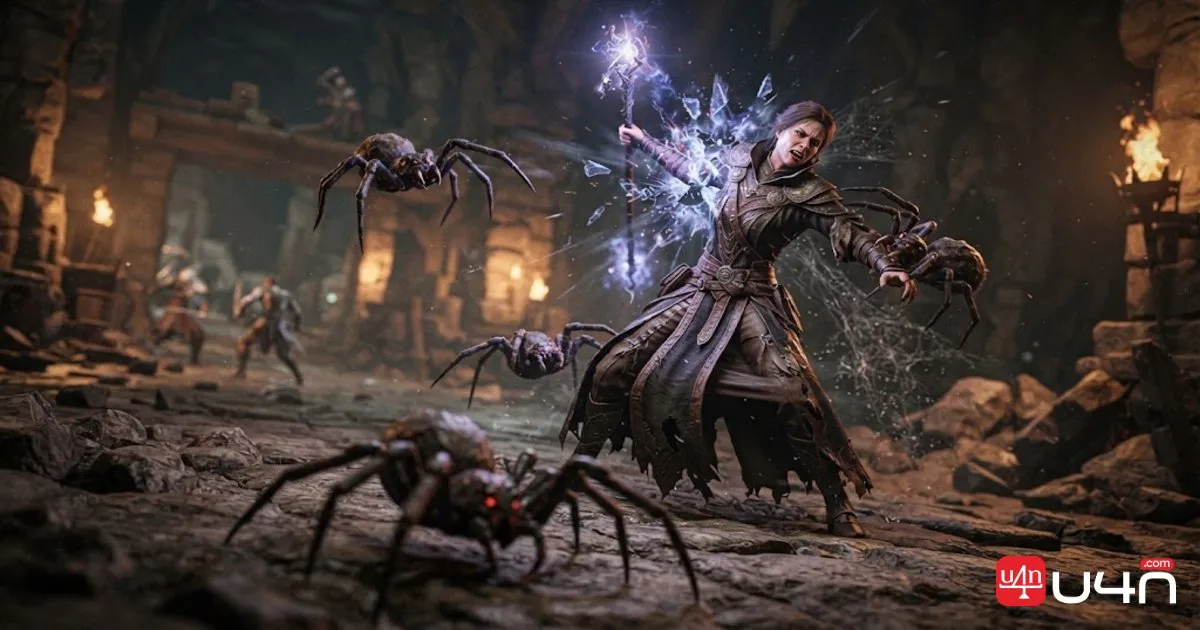
In a PvP environment, that is potentially much more valuable than the raw damage suggests.
For a caster, being interrupted at the wrong moment can be the difference between stabilizing and dying.
The item is already being described as a new piece of tournament "tech," and this is exactly the sort of discovery that can rapidly reshape a developing beta meta.
However, Spiderwarm also appears to share a cooldown with other summon trinkets or consumables. That means players have to decide when the effect is worth using rather than treating it as completely free pressure.
Why Spiderwarm Could Be Banned
The tournament's final qualifier format and updated ban list had not yet been announced in the source material.
Nevertheless, Spiderwarm looks like an obvious candidate for restrictions.
If every competitive player can effectively add three extra attacking creatures to a duel, the item could become mandatory rather than strategic. At that point, it stops creating interesting build choices and starts creating a standard tournament requirement.
That would be particularly problematic if the item remains as powerful as the early footage suggests.
For players preparing their tournament characters, this is another reason not to spend all of their WoW Forever Gold too early on one specific consumable or strategy. Beta PvP rules can change quickly, and an item that looks mandatory today could be restricted tomorrow.
Warlock Is Worth Watching
Warlock is another class that deserves more attention than its current population might suggest.
Snuts was reportedly leveling a Warlock for the tournament, and the early observations indicate that Warlock can perform reasonably well against Priest.
The matchup does not necessarily look as favorable against Hunter or Shaman, but the class has already shown enough potential to justify watching future duels.
This is exactly where a developing tournament meta becomes interesting.
Shaman may be the strongest class today. Hunter may have the cleanest answer to Priest. Warlock may have a favorable niche matchup. A new consumable may suddenly become standard.
None of these developments happen in isolation.
As more players reach level 30 and more high-level duels are recorded, the competitive picture should become considerably more reliable.
What the Current Data Actually Tells Us
The safest conclusion from the available evidence is not that one class has already solved the tournament.
It is that Shaman, Hunter, and Priest currently form the clearest top group, while the rest of the field appears more dependent on matchup, cooldowns, player specialization, or specific strategies.
Based on the limited player data and duel footage currently available, the emerging picture looks roughly like this:
Shaman → Hunter → Priest → Mage/Druid/Warlock → Paladin/Rogue → Warrior
This is best viewed as an early beta snapshot rather than a definitive tournament ranking. More level 30 players, additional matchups, and potential rule or balance changes could significantly alter the order.
But the gaps between these classes should not be treated as absolute.
Skill expression still matters.
A strong player on a theoretically weaker class can absolutely upset someone playing a stronger class. The Peekaboo versus Summit duels are a good example of why raw class rankings cannot tell the whole story.
There is also another variable: new technology.
Every day, players are discovering new consumables, positioning tricks, cooldown interactions, and matchup strategies. Spiderwarm is already an example of how quickly something can become relevant.
What This Means for Players Preparing for WoW Forever PvP
If you 're preparing a character for the tournament, the current data suggests that choosing a class should be only the first decision.
You also need to consider:
| Preparation Area | What to Watch |
|---|---|
| Class | Current matchup strength versus long-term tournament viability |
| Gear | Whether investment remains useful if the meta shifts |
| Consumables | Strong options that are unlikely to become restricted |
| PvP practice | Positioning, cooldown tracking, and matchup knowledge |
| Economy | Keeping enough currency available for changing strategies |
| Tournament rules | Qualifier format and updated ban list |
| Class mastery | Personal experience can matter more than theoretical tier placement |
This is also where World of Warcraft Forever Gold for sale searches can become relevant to players who are trying to prepare their characters quickly, but the tournament's evolving rules make it especially important to understand what you 're actually investing in before committing resources.
The best approach is not simply to copy whichever class currently has the highest population. A player who already understands Priest or Hunter may perform better with that class than with a theoretically stronger Shaman they have never played competitively.
Final Takeaway
The latest WoW Forever tournament data gives us an early look at how the PvP meta may be developing, with Shaman, Hunter, and Priest currently standing out in the available player distribution and duel footage.
Based on the early data, Shaman currently looks like the class to beat, largely because Windfury creates an enormous burst ceiling whenever the Shaman gets meaningful uptime., largely because Windfury creates an enormous burst ceiling whenever the Shaman gets meaningful uptime. Hunter is close behind thanks to powerful kiting, pet pressure, and healing reduction, while Priest continues to look dangerous despite being somewhat underrepresented.
Mage, Druid, and Warlock occupy a more uncertain middle ground. Paladin and Rogue can be dangerous when their cooldowns are available but become much less reliable in repeated duels. Warrior remains the weakest class on paper, although dedicated Warrior players are still entering for the challenge of proving themselves in mirror matchups.
Most importantly, none of this should be considered final.
The tournament is still developing, the sample size remains small, and new strategies are appearing constantly. Spiderwarm is already showing how quickly a single consumable can become part of the conversation.
For now, the meta points toward Shaman, Hunter, and Priest—but the real tournament story will be whether players can turn those class advantages into consistent wins once the qualifiers begin.