


The Thanksgiving Duty Roster event gives MW4 players a reason to switch modes, chase kills, and check the leaderboard between matches. The main attraction is the "Bird Call" Astaroth .57 weapon blueprint, but the real question is how to earn enough points without wasting time in a mode that does not match your strengths.
We tested the event from a practical player perspective. Multiplayer offers reliable kill volume, Warzone pays more for each elimination, and DMZ can fit naturally into a longer deployment route. The right route depends on how consistently you can turn playtime into kills. A high-value Warzone elimination looks attractive on paper, but a fast Multiplayer match can still produce better progress for players who win close-range fights regularly.
For players searching for MW4 Boosting methods, the safest approach is to improve your points per minute instead of chasing risky shortcuts. We recommend tracking one or two complete matches in each mode, including queue time, loading screens, looting, and failed extractions. That record tells us much more than the points shown beside a single kill.
How the Thanksgiving Duty Roster Event Works
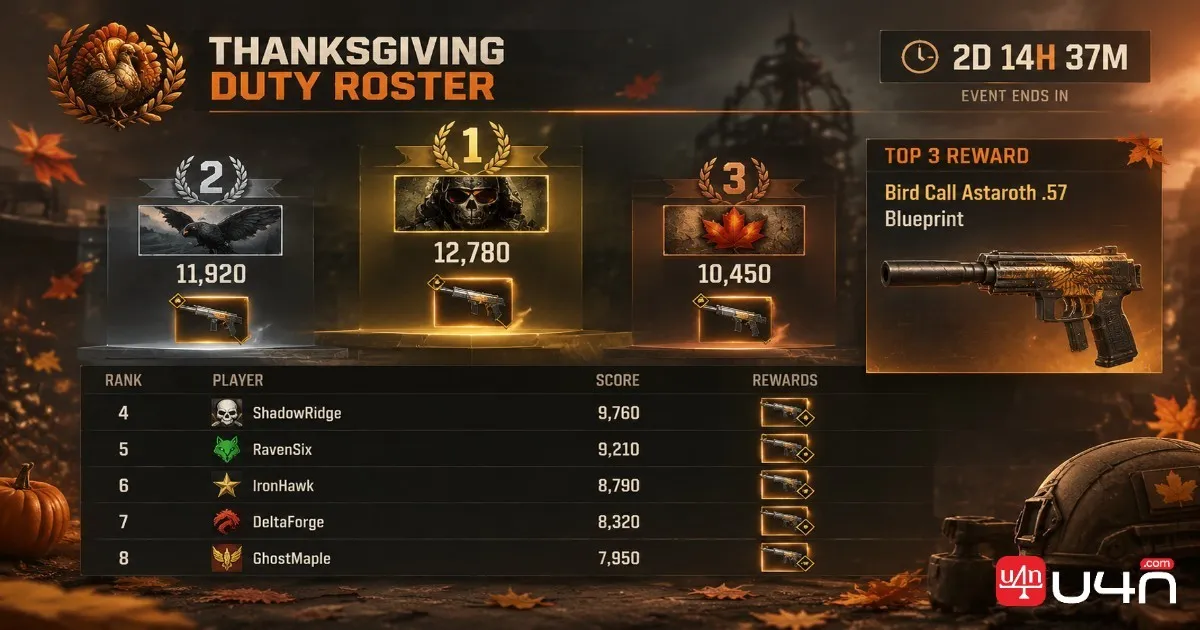
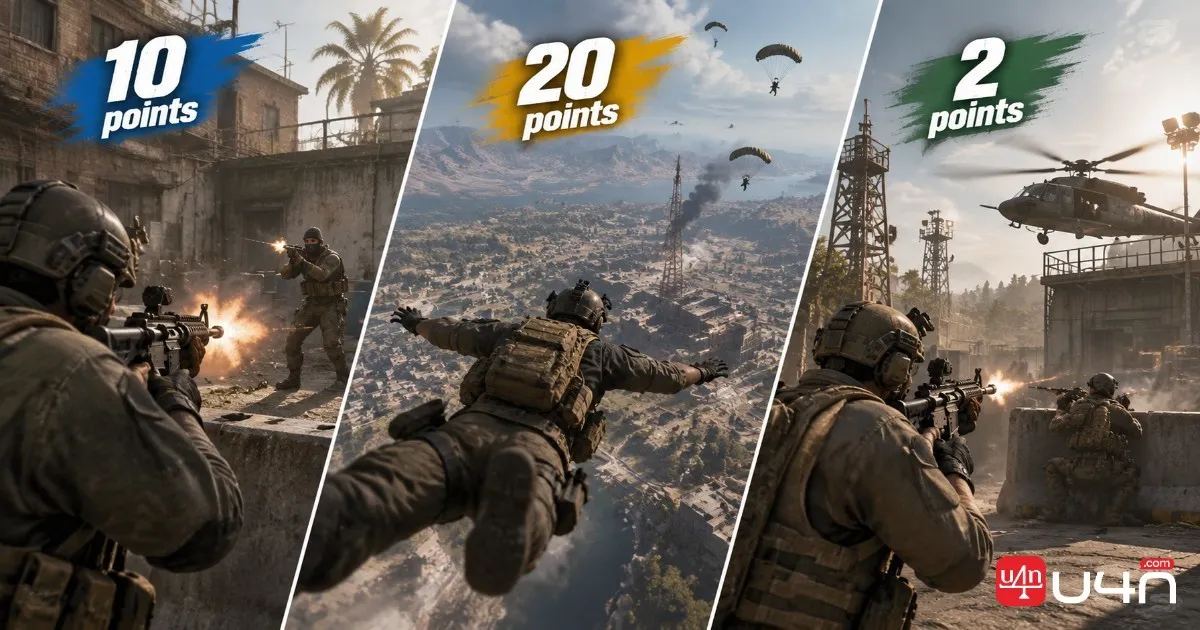
Thanksgiving Duty Roster is a cross-mode leaderboard event. Kills in Multiplayer, Warzone, and DMZ all contribute to the same event score, but each mode uses a different points value.
| Mode | Points per player kill | Practical strength |
|---|---|---|
| Multiplayer | 10 points | Fast matches and frequent engagements |
| Warzone | 20 points | Higher reward per elimination |
| DMZ | 2 points | Natural progress during missions and extractions |
The event leaderboard remains active for three hours before resetting on a four-hour cycle. Rewards are tied to leaderboard placement, and each reward can only be earned once. That means players cannot repeatedly collect the same reward by placing high after every reset.
The official event notes confirm the point values, the three-hour leaderboard window, the four-hour reset cycle, and the Bird Call Astaroth .57 blueprint reward.
What Counts as Efficient Progress
We measure event efficiency with a simple formula:
Total event points ÷ total time spent playing
That time should include everything from matchmaking to the end screen. A player who earns 100 points in a ten-minute Multiplayer match is progressing at roughly 10 points per minute. Another player may earn 80 points in Warzone, but if the match lasted 20 minutes, the real rate is much lower.
This does not mean Multiplayer is automatically the best option. A confident Warzone squad can earn several eliminations, survive longer, and finish with a better rate. The important part is finding the mode where your average match result stays consistent.
Bird Call Blueprint and Leaderboard Rewards
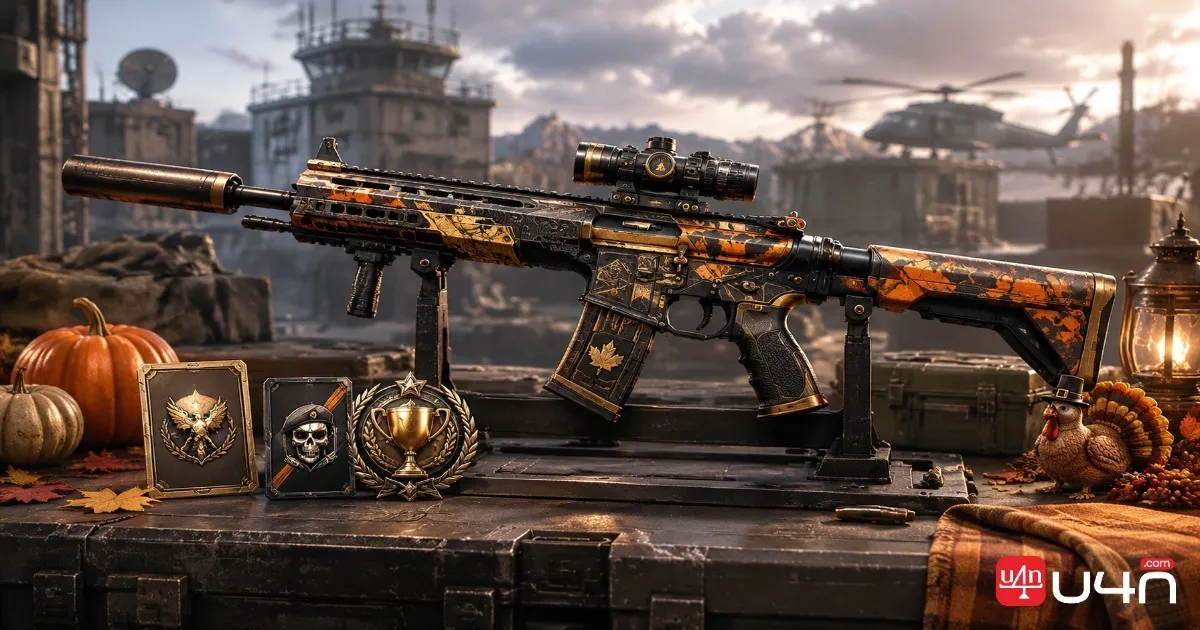
The Bird Call Astaroth .57 blueprint is the event reward most players are watching. It is tied to leaderboard performance rather than a simple login bonus, so players need to enter the event window, earn points, and protect their placement until the round ends.
The leaderboard can change quickly during the final minutes. We have seen players hold a comfortable position, stop playing too early, and drop several places before the timer closes. A small lead is useful, but it does not guarantee a reward when other players are still active.
How to Protect Your Ranking
We use three habits when chasing a placement reward:
- Check the leaderboard before entering a match. This shows how many points are needed to reach the next reward tier.
- Avoid long matches when the timer is close to ending. A 25-minute DMZ deployment can finish after the leaderboard has already closed. The points may still help a later round, but they will not protect the current placement.
- Change modes when your progress slows down. If a Warzone drop produces no kills and consumes half the event window, move to Multiplayer for faster attempts.
The leaderboard timer should guide your decisions. A player with limited time may gain more from two short Multiplayer matches than from one slow DMZ run, even if the DMZ deployment produces better loot.
Can You Earn the Same Reward Again?
Each event reward can only be earned once. A leaderboard reset gives players another opportunity to climb for rewards they have not yet collected, but it does not create unlimited copies of the same blueprint.
That rule changes how we approach later rounds. Once Bird Call is secured, there is less reason to force high-risk matches purely for the same placement. Players can shift their attention toward missing rewards, weapon testing, or regular progression.
Multiplayer, Warzone, or DMZ for Event Points?
The fastest mode depends on how many eliminations we can produce during a complete match. The points table looks simple, but the match rhythm is very different in each mode.
Multiplayer Is the Most Reliable Farming Route
Multiplayer is usually the easiest mode for consistent event progress. Respawns keep the action moving, maps offer repeated close-range fights, and one poor engagement does not end the entire run.
We prefer small and medium maps for this event because they reduce travel time. A balanced assault rifle or submachine gun works well, especially on layouts with clear lanes and predictable spawn routes. The goal is not to create a highlight reel. The goal is to keep finding fights without spending long stretches searching for enemies.
Players who average 15 to 25 kills per match can build points steadily. A 20-kill match produces 200 event points, which is easy to compare against the results of a full Warzone or DMZ session.
Multiplayer also gives us a useful recovery option. If a match starts badly, the next match begins almost immediately. That makes the mode less punishing for solo players and those playing without a coordinated squad.

Warzone Has the Highest Value per Kill
Warzone pays twice as many points per kill as Multiplayer. That makes every elimination meaningful, but it also creates a wider gap between strong and weak matches.
A player who earns five kills receives 100 points before considering placement bonuses or other event factors. A player who spends most of the match rotating, looting, and avoiding fights may finish with little progress despite staying alive for a long time.
We suggest an aggressive opening only when the squad has a clear plan. Land near a reliable loot area, secure a usable weapon, and take early fights that can be finished quickly. Long chases through multiple buildings often cost more time than they are worth.
Warzone becomes especially attractive for players who already have good positioning and endgame awareness. A strong squad can collect several eliminations while completing normal match objectives. A casual solo player may find Multiplayer more efficient because the kill opportunities are more predictable.
DMZ Fits Players Who Already Have a Route
DMZ awards fewer points per kill, so we would not choose it purely for leaderboard speed. Two points per elimination means the player needs a large number of kills to match the score from a short Multiplayer session.
DMZ still makes sense when the event overlaps with an existing plan. A deployment that includes missions, contracts, looting, and an extraction can generate useful progress without forcing us to abandon our normal objectives. Players who already understand Hajin's routes can turn event points into an extra benefit during a regular run.
The main mistake is hunting players only for event points. DMZ fights carry a much higher cost than Multiplayer deaths. Losing a strong operator, backpack, or mission item can erase the value of a handful of event kills.
| Player situation | Recommended mode | Reason |
|---|---|---|
| Short play session | Multiplayer | More attempts within the event window |
| Strong Warzone squad | Warzone | High points per kill and shared pressure |
| Mission focused DMZ player | DMZ | Event progress fits existing deployments |
| Solo player with uneven results | Multiplayer | Lower penalty after a failed match |
| Reward already secured | Preferred mode | No need to force risky leaderboard runs |
DMZ Weapon Damage Changes Explained
The DMZ weapon update changes how close-range fights feel. The stated goal is to extend player-versus-player time to kill at shorter distances while keeping long-range combat from becoming excessively slow.
That difference matters during the Thanksgiving event because DMZ kills now require more discipline. A weapon that previously won a close fight with a short burst may need another shot or a cleaner hit pattern. Players who continue using the old rhythm may lose fights while believing the weapon has become inaccurate.
The official damage adjustments include reduced close and mid-range damage on weapons such as the Axion and Cronen Osprey. The Axion maximum damage changed from 40 to 36, while the Cronen Osprey maximum damage changed from 31 to 28. The Oden keeps its maximum damage but loses damage in its middle and minimum profiles.
| Weapon | Maximum damage before | Maximum damage after | Main impact |
|---|---|---|---|
| Axion | 40 | 36 | More shots required in close fights |
| Cronen Osprey | 31 | 28 | Less forgiving during rapid engagements |
| Oden | 60 | 60 | Mid-range and long-range damage are reduced |
| M4 | 23 | 23 | Maximum damage stays stable, range profile changes |
Why the Change Matters More in DMZ
DMZ fights rarely happen under perfect conditions. We may enter an engagement with damaged armor, limited plates, poor cover, or an enemy arriving from an unexpected angle. A small damage reduction can become significant when the fight includes a reload, a missed burst, or a second opponent.
Close-range players should focus on shot placement and cover timing. Running into a room while relying on raw damage can fail if the target survives long enough to plate or reach a better angle. Use doors, corners, and head glitches to create a second chance when the first burst does not finish the fight.
Long-range players should not assume every damage decrease affects their build equally. Several changes preserve damage ranges while adjusting the damage values inside those ranges. A weapon can still feel dependable at distance, but the number of shots required may change against armored targets.
Weapons We Would Test First
The Axion remains easy to control, but the lower maximum damage makes missed shots more expensive. We would pair it with a stable optic, a magazine that supports extended engagements, and attachments that improve recoil without destroying movement speed.
The Cronen Osprey deserves a fresh firing range test. Its fast handling can still help during quick pushes, but the lower damage profile means players need to commit to accurate bursts. We would avoid treating it as a pure close-range weapon until the new breakpoints feel comfortable.
The Oden is a more interesting case. Its maximum damage remains strong, but the weaker middle and minimum damage values reduce its consistency once the target moves outside the first damage zone. We would use it with a build that supports deliberate mid-range shots rather than constant close pushes.
The M4 is easier to recommend to players who want a familiar baseline. Its close damage remains stable in the listed profile, while range adjustments affect how it performs beyond the first damage zone. It is a practical comparison weapon for testing other rifles after the update.
How the Damage Changes Affect Thanksgiving Progress
DMZ's lower kill value already makes it a slower event route. The damage update adds another reason to avoid unnecessary PvP fights. If we need to kill several players to match one Multiplayer session, every failed engagement becomes more costly.
Our DMZ approach would be simple:
- Bring a weapon with predictable recoil.
- Carry enough plates for a second engagement.
- Avoid chasing a player through unknown terrain.
- Finish AI, contracts, or mission goals while taking only favorable fights.
- Extract when the run has already produced useful progress.
Players who want fast leaderboard points should use Multiplayer or Warzone as their main event route and keep DMZ for missions. DMZ still has value, especially for players who prefer extraction gameplay, but the current point rate makes it difficult to justify reckless hunting.
A Practical Event Routine for Solo Players
Solo players face a different problem from coordinated squads. We cannot rely on teammates to finish a downed enemy, watch a flank, or recover our gear. The event routine needs to protect consistency.
We recommend starting with two Multiplayer matches. Record kills, match length, and points earned. If the results are stable, continue with the same playlist. If the numbers are low, test Warzone for one match and compare the full session rather than a single elimination.
For DMZ, enter only when we already have a clear mission plan. Choose a familiar route, use a weapon we can control, and leave after the run has reached a sensible value. There is no reason to risk a successful deployment for a small number of event points.
Solo players should also watch the leaderboard timer. A short match near the end of a round is safer than a long deployment that cannot finish before the reset. The timer changes the value of every mode, especially when the event window is close to closing.
A Squad Plan for Faster Leaderboard Climbing
A coordinated squad can make Warzone more competitive with Multiplayer. One player can handle navigation, another can watch the rear, and the team can focus on fights that produce fast eliminations.
The squad should set a point target before the match. For example, a team may decide to disengage after two failed fights instead of spending ten minutes chasing the same enemy group. This keeps the session focused on event progress rather than personal pride.
In DMZ, squad communication matters even more after the damage changes. Call armor status, reload timing, and enemy movement before pushing. A slower time to kill gives the second enemy more time to join the fight, so isolated pushes are less attractive than crossfires and controlled angles.
Players who regularly trade Modern Warfare 4 DMZ Items should also separate normal loot goals from the Thanksgiving leaderboard plan. Expensive gear can help a mission route, but it does not automatically make low-value event kills worthwhile. Use the loadout that supports survival and extraction, then leave when the run has done its job.
Thanksgiving Duty Roster FAQ
What mode gives the most event points?
Warzone gives the most points per kill, but Multiplayer can produce a better score per minute for players who secure frequent eliminations. Test complete matches and compare the final rate.
How do we get the Bird Call blueprint?
Earn enough points to reach the leaderboard placement connected to the Bird Call Astaroth .57 reward. Check the event screen during each round because ranking requirements can change as other players continue earning points.
How often does the leaderboard reset?
The leaderboard runs for three hours and resets every four hours. Use the timer shown in the event menu when deciding whether to start another match.
Can the same reward be earned multiple times?
Each reward can only be earned once. Later leaderboard rounds can help you claim rewards you have not received yet.
Is DMZ worth playing during the event?
DMZ is worthwhile when event progress fits into an existing mission or extraction route. It is less attractive as a dedicated point farming method because DMZ kills award fewer points and now require more careful close-range engagements.
Should we change our DMZ loadout?
Test the weapons you already use before rebuilding everything. Focus on close-range damage, recoil control, magazine size, and how many shots are needed against armored players. A stable weapon that keeps you alive can be more useful than a high damage build that is difficult to control.