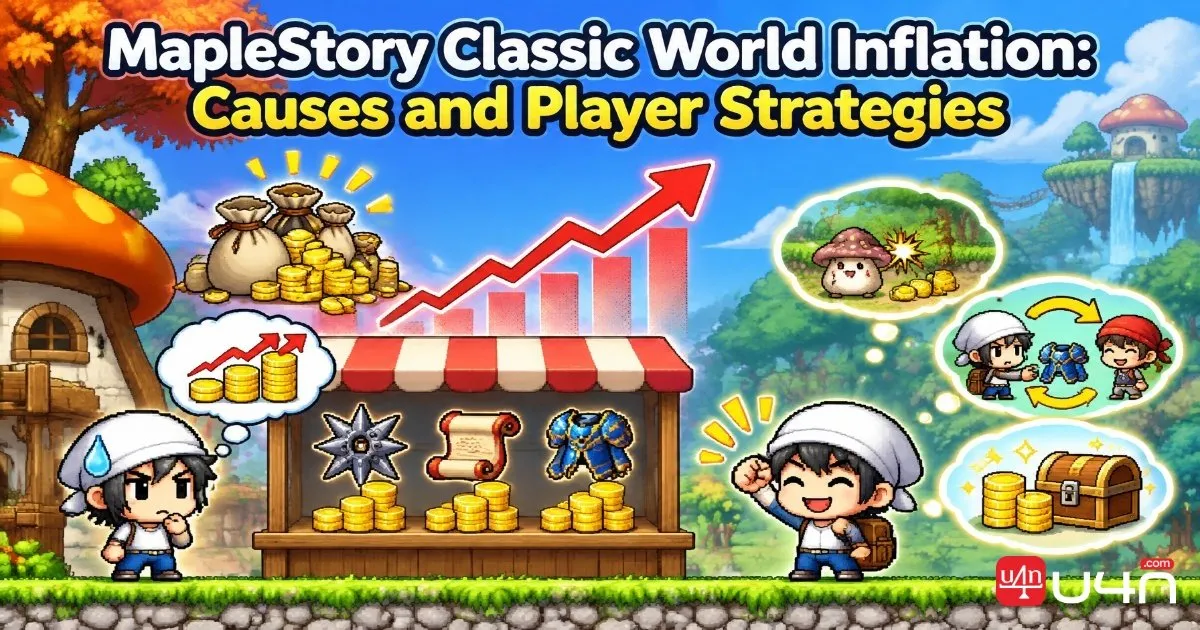
The MapleStory Classic World economy is becoming increasingly difficult for ordinary players to navigate. Scrolls, NX Cash items, and other popular trade goods have seen significant price increases, making equipment upgrades and everyday progression more expensive. For players holding MapleStory Classic World Mesos, the challenge is no longer just earning enough currency. It is deciding when to spend, what to keep, and how to protect purchasing power while the market remains unstable.
Several factors are contributing to this situation. Bot farming and Real Money Trading (RMT) continue to put pressure on the economy, while limited item supplies and growing demand make certain goods harder to obtain. Nexon has responded with stricter trading restrictions and additional anti-bot measures, but these changes will not immediately correct every imbalance. We believe players need to understand both sides of the problem: how the economy is changing and how those changes affect their progression decisions.
MapleStory Classic World Market: What Is Getting More Expensive?
The clearest sign of economic pressure is the rising cost of commonly traded items. Scrolls are particularly important because nearly every player eventually needs them to improve weapons, gloves, accessories, or other equipment. When demand remains high while available stock decreases, prices can climb quickly.
The market figures show how sharply some categories have moved:
| Market category | Reported price movement or value | Why it matters |
|---|---|---|
| Scroll market | Reported increase of up to 86% | Higher equipment enhancement costs |
| NX Cash items | Reported increase of up to 64% | More expensive cosmetic trading |
| Gloves ATT Scroll | Around 1.7 million Mesos | Important equipment upgrade material |
| Cat Soul | Around 1.2 million Mesos | Limited-event item with collector demand |
| Halo | Around 545,000 Mesos | Popular NX trade item |
| Icicle | Around 800,000 Mesos | Relevant to Assassin supply costs |
These figures should be treated as reported market observations rather than guaranteed current prices. Individual listings, completed trades, and available stock can differ considerably.
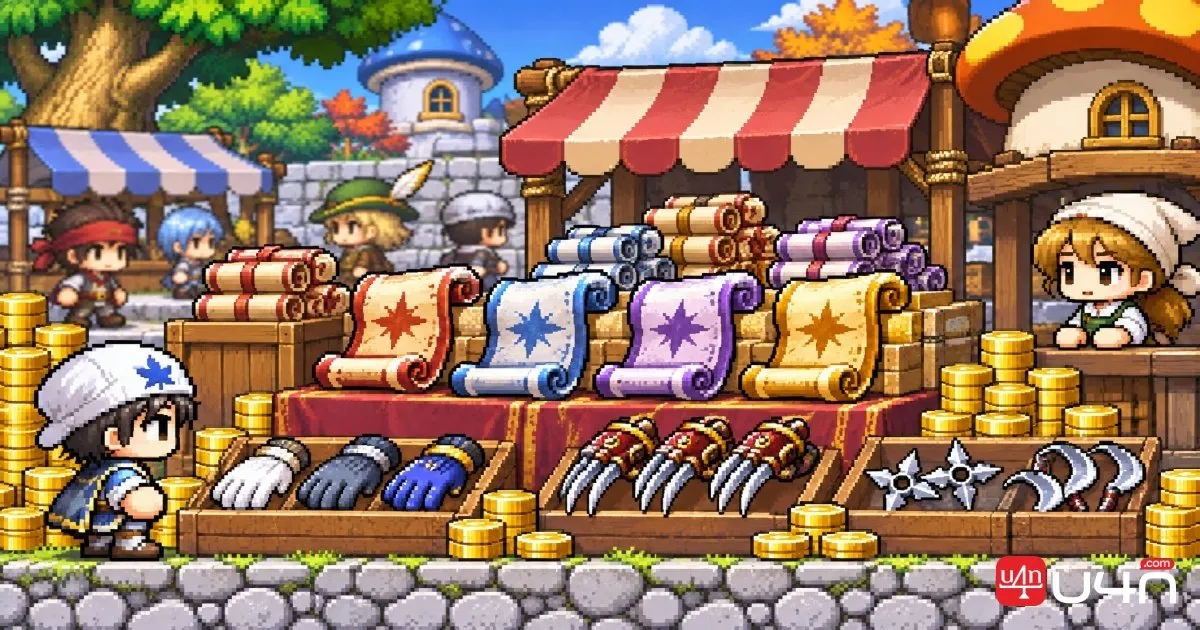
Why scrolls deserve attention
Scrolls occupy an important position in the MapleStory Classic World economy because their demand is tied directly to character progression. Players do not simply purchase them for collection purposes. They use them to improve equipment and increase combat effectiveness.
For example, Gloves ATT Scrolls can remain attractive to players looking to improve their damage output. Claw ATT Scrolls are particularly relevant to Assassins and other claw-using characters.
This creates a recurring demand cycle:
- Players acquire equipment through drops, quests, or trading.
- They purchase scrolls to improve that equipment.
- Successful upgrades consume scrolls and reduce available stock.
- New players and progressing characters continue entering the market.
- Remaining sellers may raise their asking prices when supply becomes limited.
Unlike some temporary cosmetic trends, equipment enhancement has a direct connection to character progression. However, consistent demand does not guarantee that every scroll will appreciate in value.
Why Is the MapleStory Classic Economy Inflating?
The current market situation is not the result of one isolated problem. Several economic forces are interacting, and understanding their differences is essential before making purchasing decisions.
Bot farming and RMT increase economic pressure
Automated farming is one of the major concerns raised by players. Bot accounts can repeatedly defeat monsters and collect currency or valuable drops with less manual effort than legitimate players.
When large numbers of automated characters operate continuously, they can introduce additional Mesos and trade goods into circulation. Some of that currency may then enter the player market through RMT transactions.
The problem extends beyond the accounts running the bots. Players purchasing illegally obtained currency can also contribute to demand for automated farming operations.
This creates a cycle:
- Bot operators generate Mesos and valuable items.
- RMT buyers create demand for those resources.
- More automated farming is encouraged by potential profits.
- Additional currency enters circulation.
- Legitimate players face a market increasingly influenced by abnormal trading activity.
It is important to distinguish currency inflation from individual item shortages. More Mesos in circulation can weaken purchasing power, but a particular scroll can also become expensive because fewer copies are available.

Free access and growing demand
The expansion of access to MapleStory Classic World also changed the market environment.
When more players enter the game, demand increases for equipment, consumables, throwing stars, enhancement scrolls, and NX items. New characters need basic progression supplies, while experienced players continue investing in stronger equipment.
The problem becomes more noticeable when demand grows faster than the supply of useful items.
Limited supply and player speculation
Some items become expensive because their supply is naturally restricted. Limited-time NX cosmetics are a good example.
Cat Soul, which originally appeared through a Halloween-related box, illustrates how event availability can influence market expectations. Once the acquisition window closes, players may become more reluctant to sell their remaining copies.
Speculation can intensify this situation. When players expect a future update to increase demand, they may purchase items earlier than they normally would.
That behavior can push prices higher even before the expected demand actually arrives.

Slow content expansion adds another constraint
New maps, monsters, quests, and item drops can help refresh an economy by creating additional acquisition opportunities.
When players have limited ways to obtain desirable materials, existing market stock becomes more important. This is especially noticeable for enhancement items that are consumed regularly.
However, adding new content does not automatically solve inflation. The actual effect depends on what the content drops, how frequently players can obtain those items, and whether new currency rewards introduce additional economic pressure.
Nexon's Anti-Bot Measures: What Has Changed?
Nexon has introduced stricter trading restrictions to make abnormal account activity more difficult. These changes target several stages of the trading process rather than relying exclusively on account bans.
The measures highlighted include:
| Anti-abuse measure | Previous restriction | New restriction | Main purpose |
|---|---|---|---|
| New character trading restriction after Lv.15 | 24 hours | 7 days | Slow down newly created accounts entering the trading economy |
| NX item trading after the first NX purchase | 48 hours | 96 hours | Make suspicious cash-item transfers more difficult |
| Bot detection and enforcement | Ongoing | Strengthened | Identify and restrict automated activity |
Nexon's November 4 maintenance announcement also confirmed improvements to bot detection and prevention systems, along with additional restrictions on Megaphone use during the 96-hour Cash item trade restriction.

The longer restrictions increase the time and effort required for accounts involved in suspicious activity to become commercially useful.
For legitimate players, however, these changes also mean that account progression and trading access require more planning. Players should avoid assuming that newly created characters can immediately transfer items or participate in unrestricted trading.
Why account restrictions alone are not enough
Trading restrictions can make certain abuse patterns more difficult, but they do not directly remove currency that has already entered the economy.
There are three important limitations:
- Existing Mesos remain in circulation: Restricting newly created accounts does not automatically remove previously generated currency.
- Bot operators can attempt to return: Banned accounts may be replaced with new ones if detection and enforcement cannot keep pace.
- Supply problems remain: Even with fewer bots, legitimate players still need scrolls and other materials.
This is why anti-bot enforcement needs to work alongside better detection, consistent account penalties, and a healthy supply of legitimate in-game rewards.
For the economy to stabilize, Nexon needs to address both abnormal currency generation and the underlying availability of useful trade goods.
What Should Players Buy, Sell, or Hold?
For ordinary players, the most important decision is not identifying the next item that might double in price. It is balancing character progression against the risk of holding assets during an unstable market.
We would approach the current market through three categories.
1. Scrolls: Prioritize practical long-term demand
Scrolls are worth monitoring because equipment enhancement remains a recurring part of character progression.
Gloves ATT and Claw ATT Scrolls are examples of items that can attract demand from players pursuing better damage output. Their usefulness gives them a clearer gameplay purpose than purely speculative collectibles.
However, buying scrolls at inflated prices carries risks. A future increase in drop availability or a change in player demand could push prices down.
Our recommendation is to separate purchases into two groups:
- Progression purchases: Buy the scrolls required for equipment upgrades you genuinely intend to complete.
- Investment purchases: Only consider additional stock when the price, available supply, and likely demand justify the risk.
Do not delay important character upgrades simply because you expect scroll prices to rise further.
2. Limited NX items: Watch supply and player interest
Items such as Cat Soul and Halo can attract buyers because of their appearance, rarity, or limited availability.
Their market behavior differs from enhancement scrolls. A player does not necessarily need a particular cosmetic item to improve combat performance, so demand depends more heavily on popularity and collector interest.
Before purchasing these items, examine:
- Whether the item is still obtainable.
- How many copies are available for sale.
- Whether completed trades support the current asking price.
- Whether player interest is increasing or fading.
A high listing price alone does not prove that an item has strong market demand.
3. Consumables and throwing stars: Consider your class
Assassins and other characters that depend on throwing weapons face a different set of economic pressures.
Icicles and similar supplies can become expensive when players compete for limited stock. Buying enough supplies for regular gameplay may be sensible, but holding excessive quantities solely for resale can tie up capital that could be used elsewhere.
For players who are still leveling, we would prioritize affordable combat supplies over speculative inventory.
Practical strategy by player type
| Player type | Main priority | Recommended approach |
|---|---|---|
| New players | Build initial savings | Complete quests, sell surplus drops, and avoid overpriced upgrades |
| Active progression players | Improve equipment efficiently | Purchase only the scrolls and supplies needed for planned upgrades |
| Established players | Protect purchasing power | Maintain a balanced mix of Mesos and useful trade goods |
| Market traders | Manage price volatility | Compare completed trades, inventory, and buying demand before purchasing |
One principle applies to every group: do not convert all available Mesos into a single item category. Keeping liquid currency gives you the flexibility to react when better opportunities appear.
Forgotten Hollow: Could the November Update Change the Economy?
The planned November 18 opening of Forgotten Hollow is another development worth watching.
New maps and monsters can change the distribution of farming activity across the game. If the area introduces useful drops, additional quest rewards, or more efficient farming routes, it could create new sources of market supply.
There are three areas we would monitor after launch:
| Update element | Potential economic effect | What players should verify |
|---|---|---|
| New monsters | Additional equipment and material drops | Actual drop tables and drop rates |
| New quests | New sources of rewards and progression resources | Quest rewards and completion requirements |
| New farming locations | More opportunities to collect tradeable goods | Farming efficiency and market supply |
We should avoid assuming that Forgotten Hollow will immediately lower scroll prices. If its rewards are mostly unrelated to existing enhancement materials, the effect on the current scroll market may be limited.
On the other hand, if new quests or monster drops introduce additional useful supplies, the market could become less dependent on its existing sources.
The first few weeks after the update will be particularly important for identifying which items gain supply and which remain difficult to obtain.
Summary: How to Protect Your Mesos in an Unstable Market
MapleStory Classic World's economy is facing pressure from several directions. Bot farming and RMT create enforcement challenges, while growing demand, limited item supplies, and speculative purchases contribute to price volatility.
Nexon's longer trading restrictions are a meaningful response to suspicious account activity, but they are only one part of a broader economic solution. Long-term stability will also depend on effective bot detection, legitimate item acquisition, and a healthier balance between currency and goods.
For players, our advice is straightforward:
- Prioritize character progression over speculative investments.
- Monitor scroll prices because enhancement demand remains relevant.
- Treat limited NX items as higher-risk assets rather than guaranteed investments.
- Keep some Mesos available instead of tying up all your currency.
- Recheck market prices before buying or selling valuable equipment and MapleStory Classic World Items.
- Watch Forgotten Hollow's actual drops and rewards before making assumptions about its economic impact.
The goal is not to predict every market movement. It is to make decisions that remain reasonable even when prices move in the wrong direction.
FAQ
Why are MapleStory Classic World prices increasing?
Several factors contribute to rising prices, including bot farming, RMT activity, increased player demand, limited item supplies, and speculative purchases. Different items can experience price increases for different reasons.
Are scrolls a good investment in MapleStory Classic World?
Scrolls have recurring demand because players use them to enhance equipment. However, their prices can fall if supply increases or demand weakens. Buying what you need for progression is generally less speculative than purchasing large quantities for resale.
What are Nexon's new trading restrictions?
The measures discussed include extending the new-character trading restriction after Lv.15 from 24 hours to 7 days and increasing the NX item trading restriction after a first NX purchase from 48 hours to 96 hours.
Can Nexon's anti-bot measures stop inflation?
They can help reduce abnormal farming and suspicious transactions, but they cannot automatically remove existing Mesos or resolve every item shortage. Additional economic measures and consistent enforcement are still necessary.
Will Forgotten Hollow reduce scroll prices?
It is too early to determine. The effect depends on the new area's actual quest rewards, monster drops, and farming opportunities.
Should players hold Mesos or buy items now?
There is no universal answer. Players with immediate equipment needs should prioritize progression, while experienced traders can monitor undervalued items and market supply. Maintaining a reasonable amount of liquid Mesos helps reduce exposure to sudden price changes.