MapleStory Classic World's Free Market preserves the familiar trading experience of the original game, but its convenience is becoming harder to defend. Players are expected to visit different channels, check individual shop rooms, compare prices, and hope someone has listed the item they need. In practice, many players are turning to third-party tools such as Meso Watch to avoid that process.
The bigger issue is not whether the Free Market feels nostalgic. It is whether the system still works efficiently for the people using it. When players rely on external price listings and shop-location information to find equipment, the game is effectively operating with an unofficial auction house, just with extra steps. A healthy in-game economy should make it easier to find the right MapleStory Classic World Mesos and equipment without forcing players to spend unnecessary time searching.
When players rely on external tools to search for items and compare prices, the Free Market is effectively operating like an unofficial auction house, just with extra steps.
How Meso Watch Changes Free Market Trading
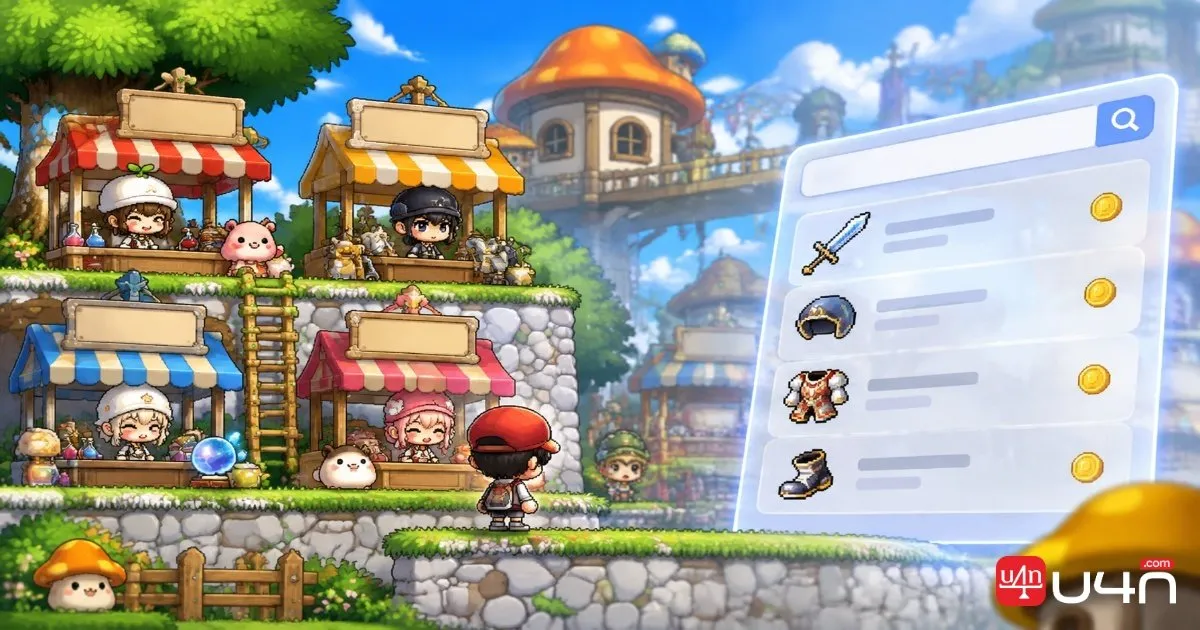
The traditional Free Market depends on players physically visiting shops. If you want a particular weapon, armor piece, or scroll, you may need to move between channels and inspect several rooms before finding a suitable listing. Even after finding the item, you still have to compare its price with other offers.
Meso Watch changes that process by giving players an external way to search for listings. The site can show item prices, average values, minimum and maximum prices, and the channel and shop location where an item is being sold.
| Meso Watch feature | How it helps players |
|---|---|
| Item search | Find listings without checking every shop manually |
| Average price | Get a general idea of an item's market value |
| Lowest and highest prices | Compare available offers more efficiently |
| Shop location | Identify the channel and Free Market room to visit |
There is an important limitation: the information does not replace inspecting the actual equipment. Meso Watch cannot show an item's specific upgrade values. Players still need to visit the shop and check the item before buying it.
Even with that limitation, the tool removes much of the tedious searching that makes traditional trading frustrating.
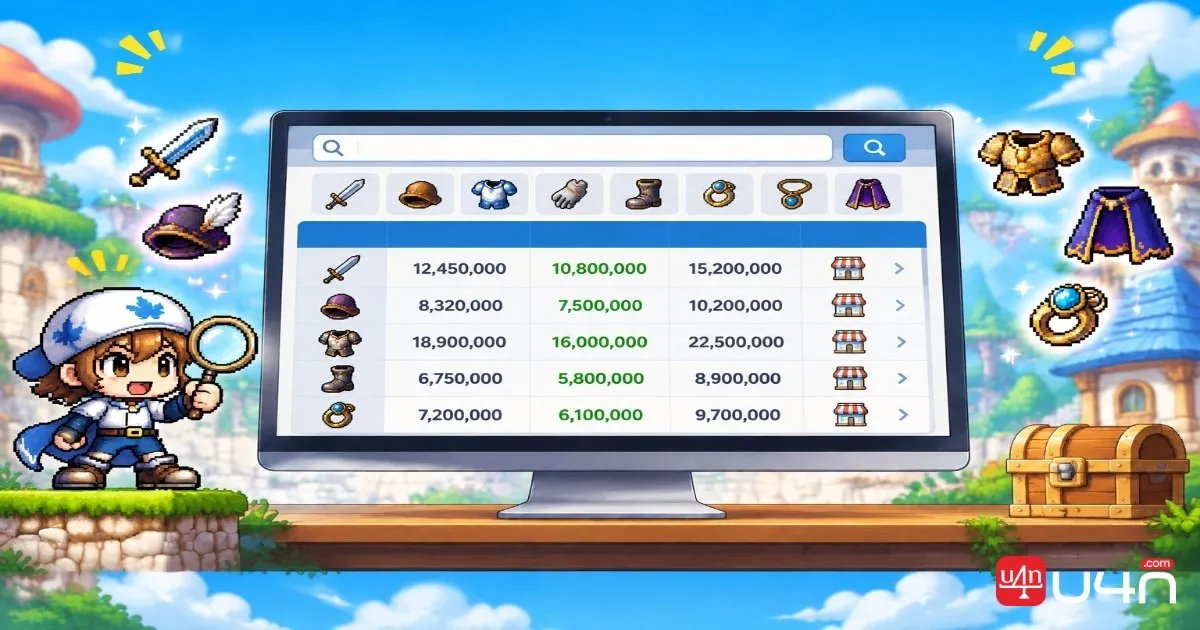
A Two-Minute Test Shows the Difference
We ran a practical test to demonstrate how quickly players can locate a shop through Meso Watch.
We opened a shop in Channel 32, Free Market Room 20, a deliberately quiet location that most players would be unlikely to discover by browsing normally. The shop listed an Archer Hat and a Level 30 Thief Top. After scanning the shop information and uploading the listing to the website, we waited to see how long it would take for another player to arrive.
The result was approximately two minutes.
Another player found the shop in about two minutes, despite its deliberately remote location.
The test is useful because it highlights the difference between browsing the Free Market manually and searching through an external listing tool. A player no longer needs to visit every room in sequence. They can look up an item, identify its location, and travel directly to the relevant shop.
However, this should be treated as an individual demonstration rather than server-wide usage data. The low-priced listings may also have increased the chance of attracting a buyer.
Still, the result illustrates why searchable listings can make even a remote shop accessible.

Why Traditional Free Market Trading Feels Inefficient
The main weakness of the traditional system is the amount of work required before a purchase can happen.
Imagine looking for a specific weapon or a popular piece of equipment. You might start in Channel 1, check several rooms, move to Channel 2, and repeat the process. If you find the item, you still need to decide whether the asking price is reasonable.
This creates three major problems:
- High search cost: Players spend time visiting channels and checking individual shops.
- Poor price discovery: Comparing several listings requires additional travel and manual inspection.
- Uncertain availability: Finding one shop does not mean it offers the best price or the exact item configuration you want.
We use a Level 100 Blood Weapon 50 as an example of an item that can be difficult to locate without external tools. The problem is not necessarily that the item does not exist in the market. It is that finding the right listing can take too much time.
For experienced players, this is a familiar economic trade-off. A trading system can preserve player interaction while still making basic item discovery unnecessarily inconvenient. Nostalgia explains why some players enjoy the old process, but it does not prove that the process is efficient.
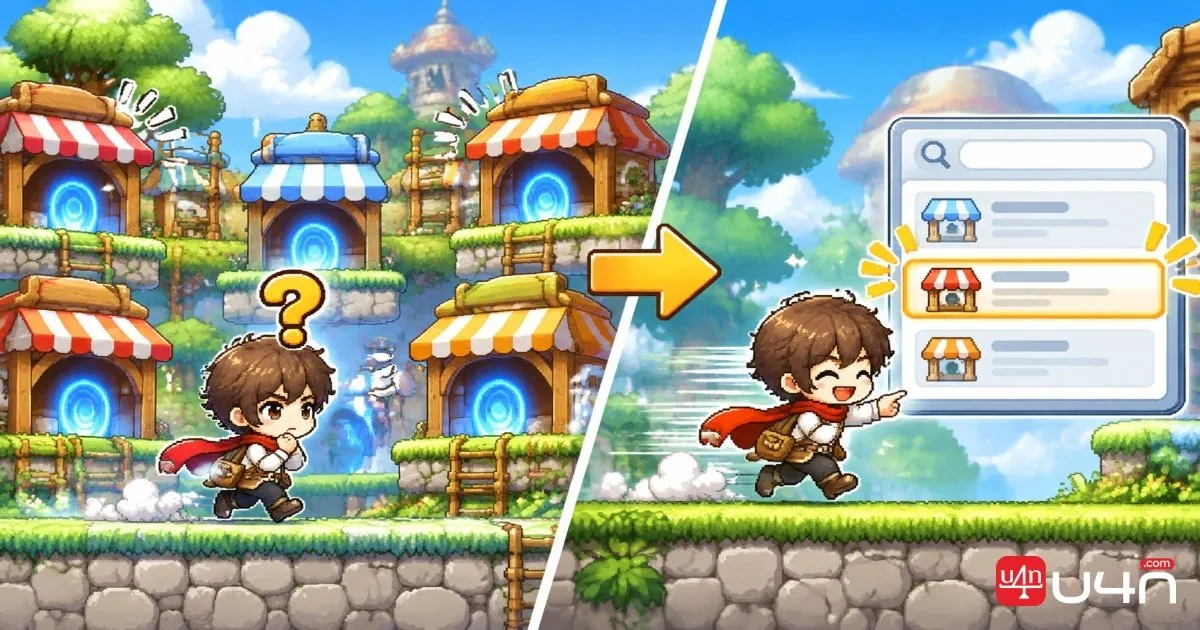
Minerva's Owl Is Not the Same as a Full Auction House
We discuss Minerva's Owl as a possible direction for Nexon's trading system. We argue that adding a paid search feature would not fully solve the problem if players still have to pay extra to access convenient item discovery.
There is a meaningful distinction between a limited search service and a complete marketplace.
| System | Main purpose | Potential drawback |
|---|---|---|
| Traditional Free Market | Player-operated shops across different channels | Requires manual searching |
| Third-party listing tools | Search prices and shop locations externally | Depends on an outside service |
| Minerva's Owl | A search option | Additional access costs may discourage use |
| Full Auction House | Centralized item discovery for players | Requires careful design to preserve market balance |
The important question is whether every player should have access to basic item-search functionality. If finding an item depends on an additional paid feature, players who do not use that feature remain at a disadvantage.
What an Official Auction House Should Look Like
A full Auction House does not necessarily need to remove the Free Market entirely. One possible solution is to preserve player shops while adding a unified search interface.
We suggest that shop licenses could remain necessary for selling items, while everyone would be able to search available listings. Channel-based differences could also remain part of the system, allowing different channels to display different groups of shops or listings.
A practical design could include the following features:
- Free item search: All players can search available listings without paying an additional search fee.
- Shop licenses: Players still need the appropriate license to operate a shop.
- Channel identity: Different channels can retain their own marketplace listings, preserving some of the original Free Market structure.
- Clear listing information: Search results should show item names, prices, and shop locations.
- Accurate availability: Sold items and closed shops should disappear from search results promptly.
This approach would preserve part of the classic trading experience while reducing the time required to find equipment.
There are trade-offs, of course. A centralized search system could make price competition more direct, reduce spontaneous shop browsing, and change how players discover unusual deals. Nexon would also need to consider listing updates, shop availability, and how much marketplace information should be visible.
But these are design challenges worth addressing. They are not reasons to leave players dependent on external tools for basic item discovery.
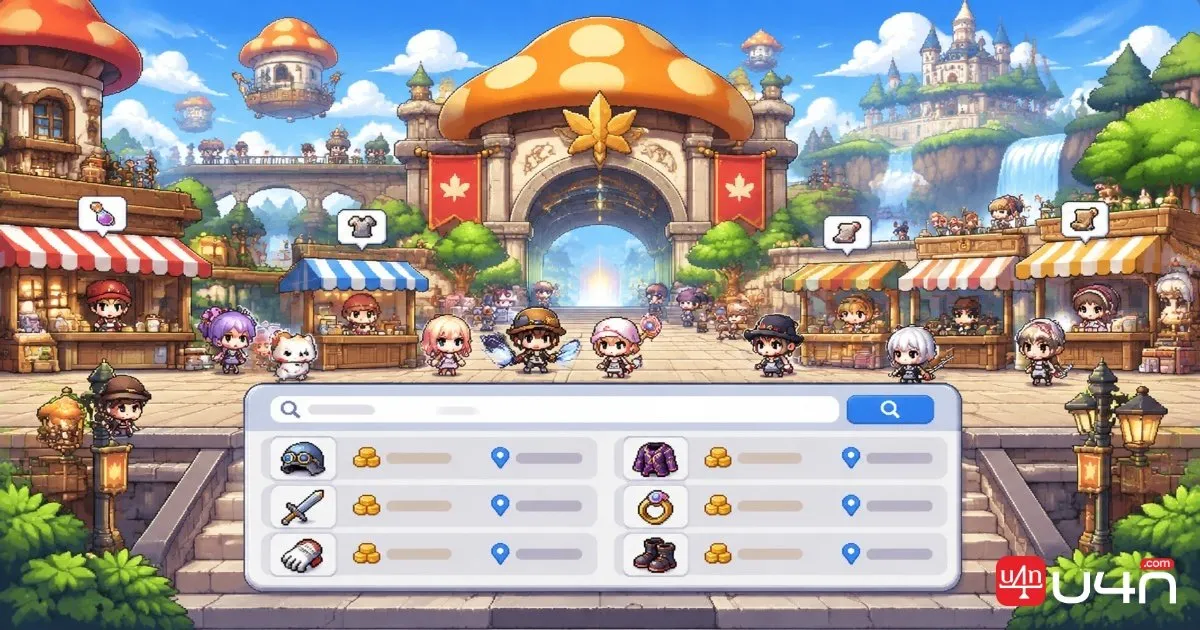
Summary
MapleStory Classic World's Free Market still provides the familiar player-shop experience, but its manual search process does not match how many players want to trade today. Meso Watch and similar tools have filled that gap by making item prices and shop locations easier to find. Our two-minute test offers a practical example of how effective this approach can be, even for a shop in a quiet corner of the market.
We do not need to choose between preserving the classic Free Market and improving convenience. An official system could keep player shops, shop licenses, and channel-based listings while giving everyone access to a reliable item search function. That would reduce unnecessary browsing without completely removing the social and economic identity of the original marketplace.
We do not need to choose between preserving the classic Free Market and improving convenience. An official system could keep player shops, shop licenses, and channel-based listings while giving everyone access to a reliable item search function. That would reduce unnecessary browsing without completely removing the social and economic identity of the original marketplace.
For players looking to prepare their equipment or compare available buy MSCW Items options, better item discovery would make the trading experience considerably more practical.
FAQ
Does Meso Watch replace the MapleStory Classic World Free Market?
No. Meso Watch is an external listing and search tool. Players still need to visit the relevant in-game shop to inspect and purchase an item.
What information can Meso Watch show?
Item listings, average prices, lowest and highest prices, and the channel and shop location where an item is being sold. It also notes that specific equipment upgrade values are not displayed.
How long did it take another player to find the test shop?
Another player located the shop in approximately two minutes. The shop was in Channel 32, Free Market Room 20.
Does MapleStory Classic World have a confirmed full Auction House?
We discussed the need for an official Auction House and proposed possible designs. It does not confirm that Nexon has announced or scheduled a full Auction House.
Would an Auction House have to remove the Free Market?
Not necessarily. A searchable marketplace could coexist with player-operated shops, shop licenses, and channel-based listings. The challenge would be improving item discovery without removing the features that give the Free Market its classic identity.