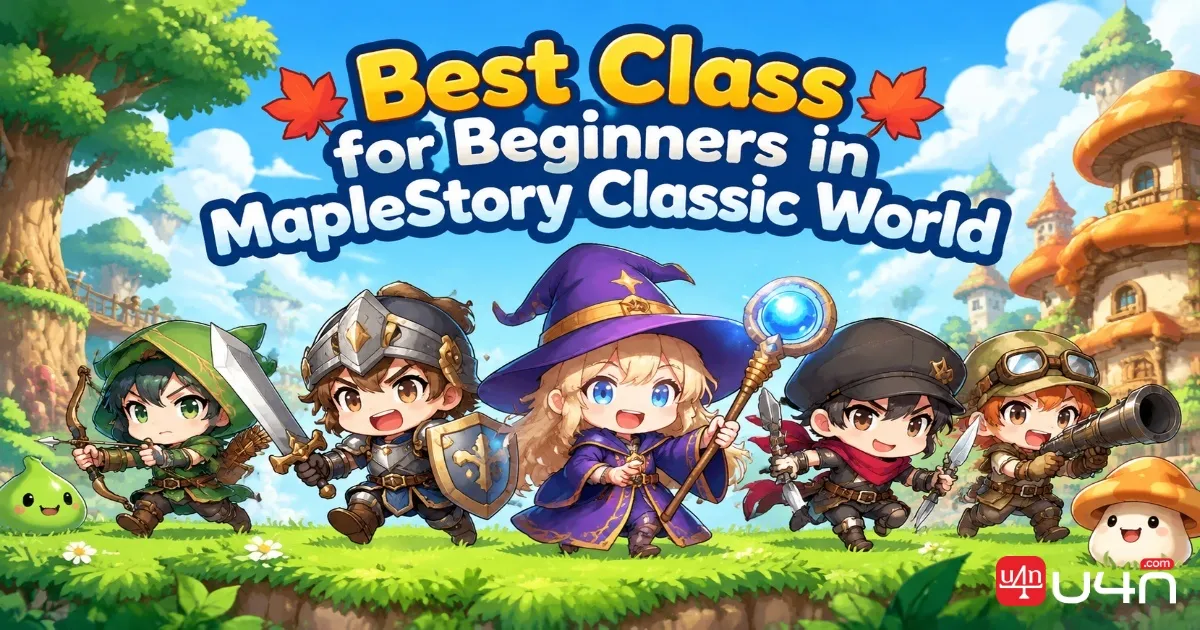
Choosing a first class in MapleStory Classic World can make the early game feel much easier—or much more frustrating. For new players, Magician stands out for its ranged attacks and ability to deal damage without constantly fighting monsters at close range. Our team sees a strong case for beginners trying this class, although its low durability and resource needs still deserve attention. Players planning their early progression should also consider how they spend their MapleStory Classic World Mesos.
The best starting class is not necessarily the one with the most serious damage. It is the one that lets you learn the game's movement, combat, and progression systems without making every mistake expensive. Magician offers a forgiving attack range, but new players still need to understand skill points, equipment upgrades, and MP management before they can make the most of it.

Is Magician a Good First Class
Our early-game experience points to Magician as a solid choice for newcomers, especially those who prefer attacking from a distance. Before unlocking magic, basic melee combat can feel slow and expose you to unnecessary hits. Once a ranged spell becomes available, some early monsters become much easier to handle.
That difference matters when you are still learning how enemy movement, terrain, and portals work. Keeping your distance gives you more room to react, and finding a safe position can make routine training less punishing.
However, ranged combat does not make Magician invulnerable. The class has limited close-range strength and relatively low durability, so careless positioning can still lead to a quick death. We would recommend Magician to players who value ranged damage and are willing to learn its basic systems—not as an unquestionable winner over every other class.
Magician is a strong starting option for players who prefer ranged damage, but its low durability and resource requirements mean that positioning and careful progression still matter.
How to Become a Magician
The first major milestone is reaching the level required for your first job advancement. From there, travel to Ellinia and speak with the appropriate job instructor to become a Magician. Follow the current in-game instructions, since exact requirements can vary by version.
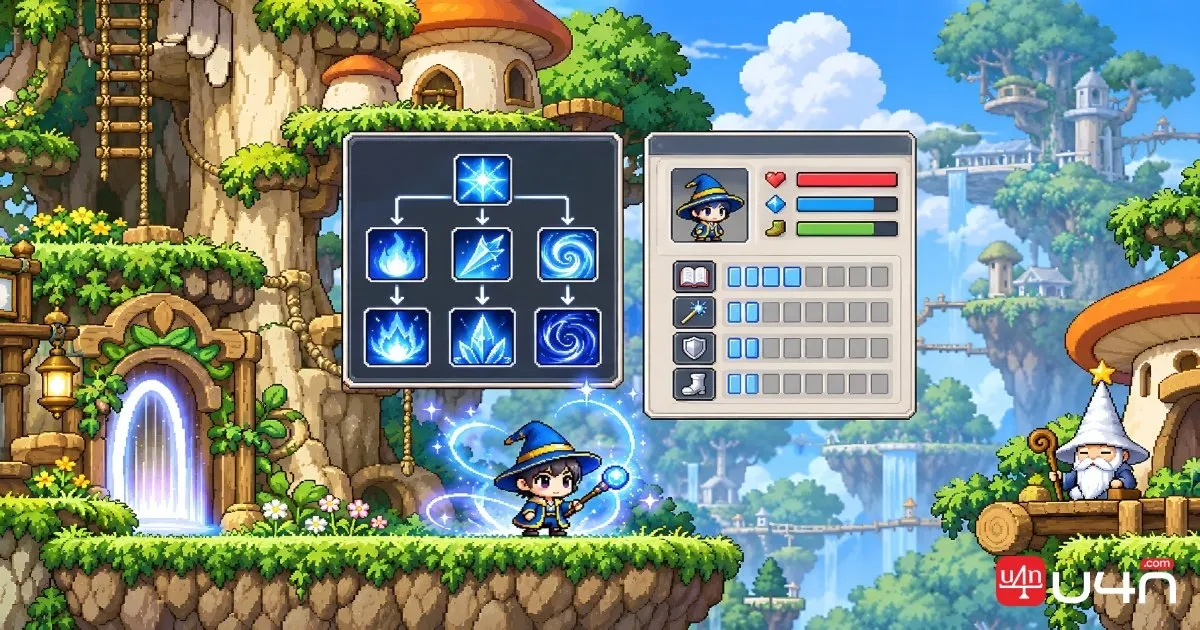
After advancing, take a moment to review your character's new skills instead of immediately returning to training. Your first skill points determine which attacks you can use, while the skill menu and quick-slot bar control how easily you can access them during combat.
Set Up Your First Offensive Skill
A simple setup is usually best when you are learning the game. Put your main attack on a comfortable key, test it against a few low-risk monsters, and make sure you understand its MP cost before committing to a longer training session.
Early Skills and Stat Priorities
Magician's early progression revolves around Intelligence (INT), skill-point allocation, and learning when to use each available spell. The original playthrough highlights Energy Bolt as an early offensive option and Magic Claw as another attack to consider after meeting its prerequisite.
| Priority | What to focus on | Why it matters |
|---|---|---|
| Main attack | Learn and equip an available offensive spell | Makes ranged combat accessible |
| Skill points (SP) | Check prerequisites before spending points | Helps avoid an inconvenient early build |
| Intelligence (INT) | Follow the current version's recommended stat rules | Supports the class's magical progression |
| Quick slots | Assign frequently used skills to easy-to-reach keys | Reduces friction during combat |
| Defensive awareness | Watch HP and enemy positioning | Helps compensate for low durability |
Do not assume that every skill should be upgraded immediately. Read each description, check its requirements, and compare its damage and resource cost where possible. In particular, Energy Bolt and Magic Claw should not be treated as interchangeable without checking their current effects and MP demands.
The same caution applies to stat allocation. INT is central to a Magician's development, but players should confirm the rules and recommended build for the version they are actually playing rather than relying on assumptions from another release.

Combat, Survival, and Early Training
The main advantage of Magician is the ability to attack before a monster reaches melee range. In practice, that can reduce the number of hits you take and make certain training areas more manageable. It does not remove the need to learn monster patterns, choose suitable maps, or retreat when an area becomes too dangerous.
Prioritize Consistent Fights
Our advice is to prioritize reliable fights over impressive-looking damage. Start with monsters you can defeat consistently, watch how many casts each kill requires, and pay attention to how quickly your MP runs down. If a monster can deal heavy damage when it closes the gap, reposition rather than standing still to finish the fight.
Understand the Risk of Death
Death is another reason to play carefully. The character died but remained at the same level, losing some accumulated experience instead. That experience should not be taken as a complete explanation of every death penalty, but it illustrates why unnecessary risks can slow early progression.
For beginners, the practical goal is steady experience with manageable supply costs—not squeezing out a little more damage at the expense of repeated deaths.
Mesos, Equipment, and Party Play
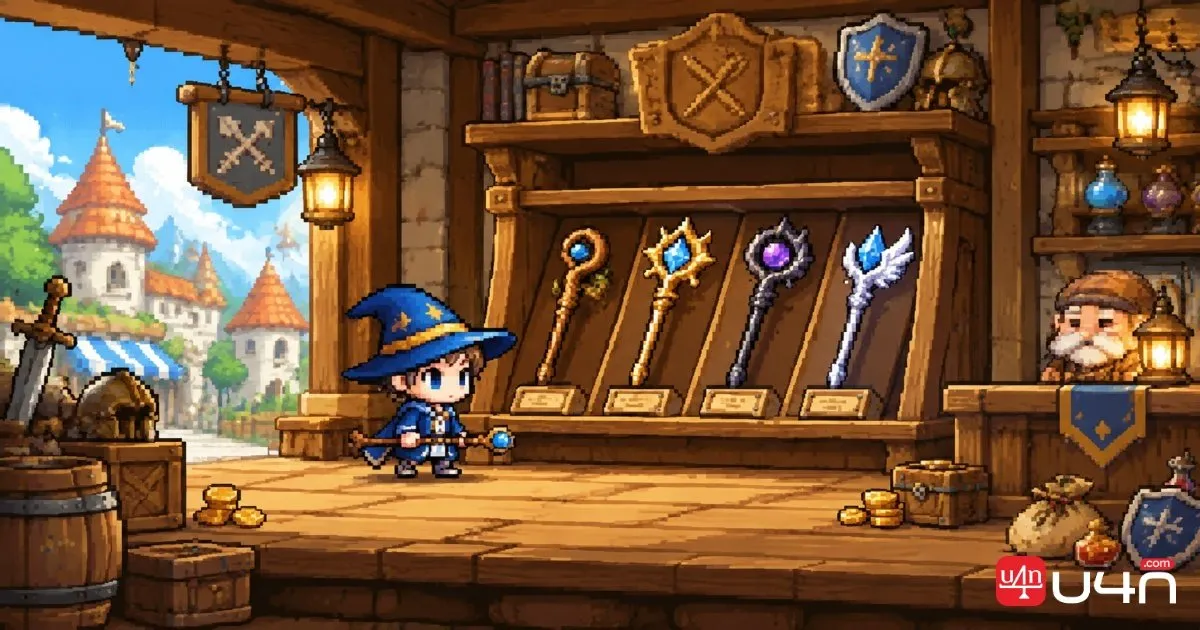
Early equipment upgrades can improve combat, but small gains need to be weighed against the cost. We suggest the player consider replacing the default beginner wand with one that offers slightly higher magic attack.
Choose Equipment Based on Practical Gains
Before buying an upgrade, check whether it meaningfully changes how many attacks you need to defeat common monsters. If it does not, keeping some currency for potions and other essential expenses may be more useful. Avoid selling items you may need for an active quest or crafting recipe without checking their purpose first.
What Party Play Adds
Party play can also make the early game more enjoyable. Other players may help with difficult encounters, while a pet with an item-pickup function can reduce the repeated effort of collecting drops. These are useful conveniences, but they should be separated from Magician's own class advantages: a party can improve the experience for several classes, not just this one.
For solo players, Magician's ranged attacks offer a useful foundation. For those who prefer cooperative play, the class can also fit comfortably into a group. The best choice ultimately depends on whether you enjoy ranged combat, careful positioning, and managing magical resources.

Summary
Magician is a strong class to consider for beginners in MapleStory Classic World because ranged attacks can make early combat more manageable. The transition from basic melee attacks to offensive magic gives new players a clear sense of progression, and a well-positioned Magician can defeat suitable monsters without taking unnecessary hits.
Still, the class is not effortless. Low durability, MP costs, skill-point decisions, and equipment expenses all affect how smoothly the early game goes. We recommend learning one main attack, prioritizing sensible stat and skill choices, and upgrading equipment only when the benefit justifies the price. If you plan to buy MapleStory Classic World Mesos, consider your actual progression needs and budget before spending.
Ultimately, Magician is a good starting option—not a proven universal best. It suits players who enjoy ranged damage and are willing to learn the systems behind it.
FAQ
Is Magician beginner-friendly in MapleStory Classic World?
It can be. Ranged attacks let you engage many monsters from a safer distance, although low durability and MP management still require attention.
Which early skill should a new Magician learn first?
Energy Bolt is an early offensive skill, and Magic Claw is a follow-up option. Check the current skill descriptions and prerequisites before allocating SP.
Should beginners spend their Mesos on a better wand immediately?
Not necessarily. Compare the weapon's magic-attack increase with its price and consider whether it changes your practical damage output. Keep enough currency for essential supplies.
Is Magician better for solo play or parties?
It can work in either setting. Ranged attacks help with solo combat, while party members can make training and difficult encounters easier. Your preferred playstyle matters more than assuming one setup is always superior.