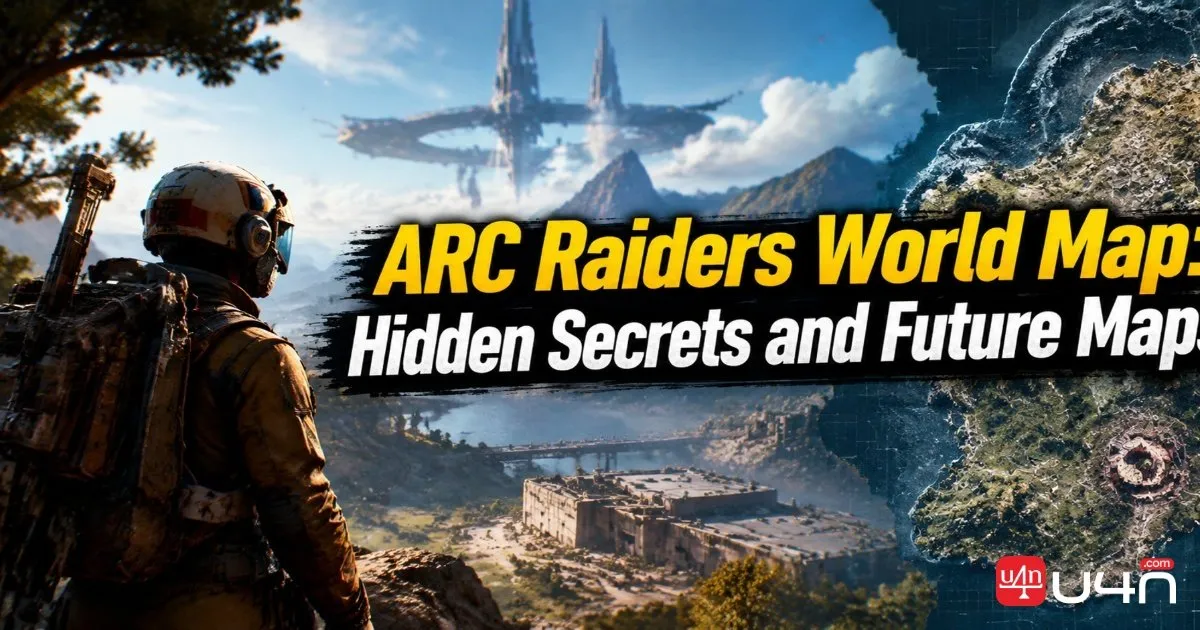
The world map in ARC Raiders reveals more than the locations we can raid today. With Frozen Trail introducing Pendola Pass, we now have a clearer look at the wider world beyond the Rust Belt, including named settlements, unexplored routes, strange handwritten notes, and places that have appeared in concept art. For players interested in the game's deeper lore, these details are worth examining alongside the locations and resources we already know from exploring the surface.
Our team sees one particularly interesting question behind these discoveries: could some of these places eventually become playable areas? The map does not confirm future expansions, but its geography and annotations give us plenty to investigate. By comparing the visible clues with established lore, we can separate what the game tells us from what remains speculation—and identify which mysteries deserve the closest attention.
Toledo's Neighborhoods Reveal a Larger Underground Civilization
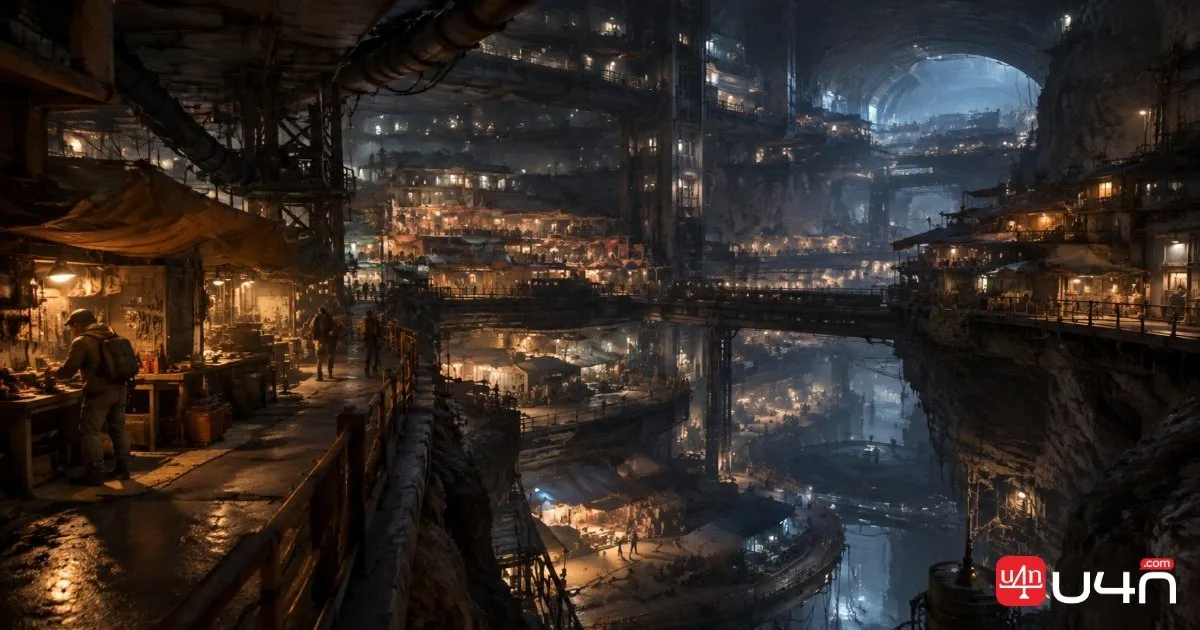
Speranza may be the Raiders' home, but it is only one part of Toledo. The updated world map identifies several neighborhoods, giving us a better picture of how the underground settlement developed after humanity was forced below the surface during the second wave of ARC activity.
Three neighborhoods stand out:
| Location | What We Know | Why It Matters |
|---|---|---|
| Ferrovia | An engineering and intellectual center associated with the development of Toledo's tunnel network | Its engineering background connects the settlement to the infrastructure that supports travel beyond the Rust Belt. |
| Volto | An isolated neighborhood whose residents are known for careful observation and planning | It suggests that different communities within Toledo may have developed distinct ways of surviving.g |
| Werter | An affluent district with guarded entrances, better accommodation, and access to clean water | Its apparent privilege hints at social and economic divisions within the underground population |
Ferrovia is especially interesting because its engineers are also associated with the ballistic gondolas used to reach Pendola Pass. That connection gives the neighborhood a practical role in the wider world, rather than making it just another name on the map.
These details also change how we should think about Toledo. It is not simply a single shelter with Speranza at its center. It is a collection of neighborhoods that grew around the remains of an older buried city, each with its own character and apparent resources.
For lore-focused players, this raises a broader question: how much of Toledo's social structure and history remains unexplored? The map provides a framework, but it does not yet answer every question about how these communities interact.
Unexplored Locations Extend Beyond the Current Playable Areas
Several locations marked on the world map have names, geographic positions, or possible visual references in the game's concept art. These details do not guarantee that the areas will become playable, but they show that the world extends well beyond the boundaries of the current raid maps.
| Location | Visible Clue | What We Can Reasonably Infer |
|---|---|---|
| White Dunes Cemetery | A named location near Spaceport, with potential visual references in concept art | It offers a glimpse of the wider landscape beyond current playable boundaries |
| Tricolo | A named area near what appears to be a large excavation site | The excavation could be an important environmental landmark, although its original purpose remains unclear |
| Big Bowls | A group of enormous circular structures or depressions | Their scale makes them intriguing, but their function is not established by the map alone |
| Tricase or Tricasa | A location marked along the southern coast | The name resembles a real town in southern Italy, but that resemblance does not establish a direct connection to the game's fictional geography |
The most valuable part of these discoveries is the relationship between the map and the visual material. When a named location appears to correspond with concept art, we have more to examine than an isolated label. We can begin asking what the environment might have looked like, what purpose it served, and how it fits into the surrounding geography.
However, we should be careful not to treat concept art as a promise of future content. Developers create environmental designs for many reasons, and some never become playable spaces. A named location is evidence that the world has been mapped in greater detail—not proof that it is next on the development schedule.
Strange Map Notes Hint at Stories We Have Yet to Discover
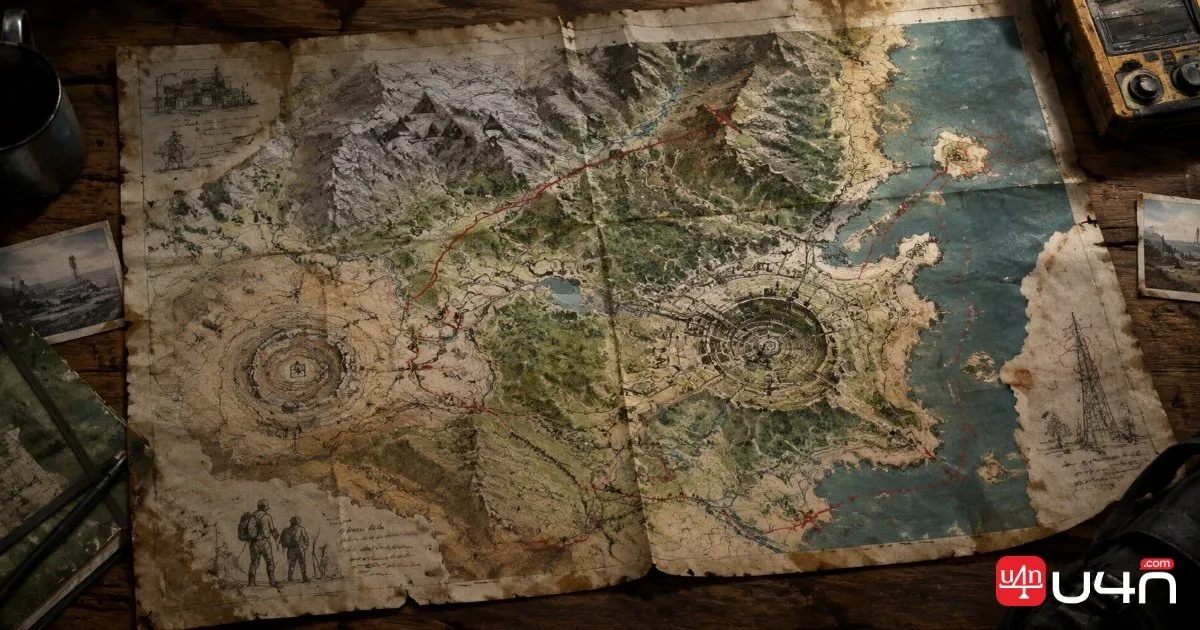
Not every mark on the world map looks like a formal location. Some resemble personal notes, reminders, or quick sketches left by whoever charted the region. These small details are easy to overlook, but they give the map a sense of history and human activity.
One sketch labeled OG Crew depicts four characters that appear to include Celeste, Lance, and Bilgen, alongside a fourth figure whose identity is uncertain. Nearby, the word decimare—Italian for decimate—adds another possible layer of meaning. It could relate to an earlier wave of events or commemorate a group, but the map alone does not establish what the note refers to.
Near Pendola Pass, Palazzo della Neve, roughly translated as "Palace of Snow," offers a more straightforward example of how the map uses Italian names to characterize its locations. The name suits the frozen mountain setting, even if it does not reveal anything specific about the area's history.

Other notes are less clear. Around Stella Montes, references to coffee, fruit, and bringing a shovel appear alongside more intriguing labels, including Tunnel Dwellers. These could be practical reminders, references to small settlements, or informal notes made by someone familiar with the region.
The important distinction is that these annotations do not all carry the same narrative weight. A character doodle may be a small world-building detail, while a reference to unknown tunnel inhabitants could point toward a much larger question about who still lives beyond the Raiders' known communities.
We should treat the notes as leads rather than answers. Their value comes from encouraging us to compare them with other evidence, not from assigning a definitive meaning to every scribble.
Nomads, Mountain Routes, and the Mystery of the Lost Trail
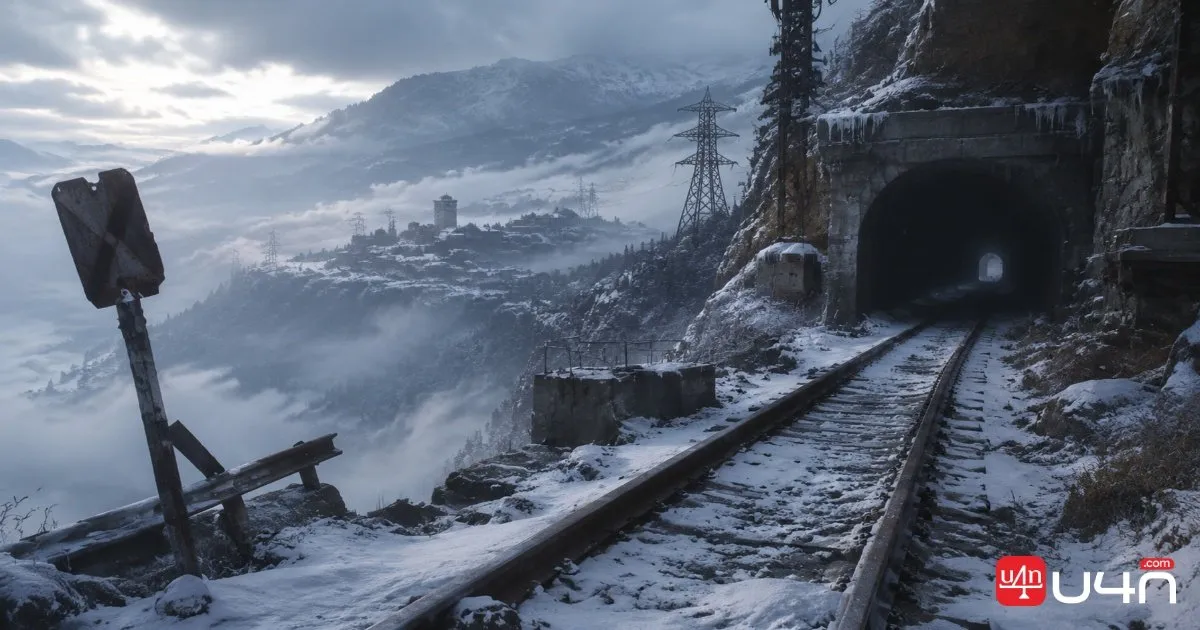
The map becomes more compelling when we look at how its routes and settlements fit together. Around Stella Montes and Pendola Pass, several annotations point toward movement through the mountains and the possibility of communities beyond the areas we currently explore.
The Nomad Hideout, along with other Nomad references near Pendola Pass, suggests that the region has a wider network of inhabitants and routes. A nearby label, Mountain Pass 2, also raises questions about whether the area once had another important crossing. One theory is that the Emperor blocked an original mountain route, but the map label alone cannot confirm when or why that happened.
A small drawing of a mountain goat appears near Ibex Ridge. It may simply refer to local wildlife, although it also highlights something the game could explore more in the future: the presence of living creatures in environments that are otherwise dominated by ruins, machinery, and hostile ARC.
Further north, railway lines appear to continue beyond Pendola Pass toward the Northern Ridges, passing what look like small settlements. Given the importance of transport infrastructure to the world's history, those tracks are worth watching. They could help explain how people and supplies once moved through the region, even if we cannot yet determine where every line leads.
Another route, the Lost Trail, branches east from the Blue Gate area. Its name invites speculation about a forgotten path or an abandoned connection. It may also remind players of the Nomad-related quest material mentioned in the original investigation, but a direct link between the map annotation and a future playable area remains unconfirmed.
Taken together, the railway lines, mountain passes, and Nomad references suggest that the Rust Belt is only one part of a larger network of places. The most useful next step is to establish how these routes connect geographically before concluding what might lie at their endpoints.
The Emperor's Trail May Hold the Most Important Clues
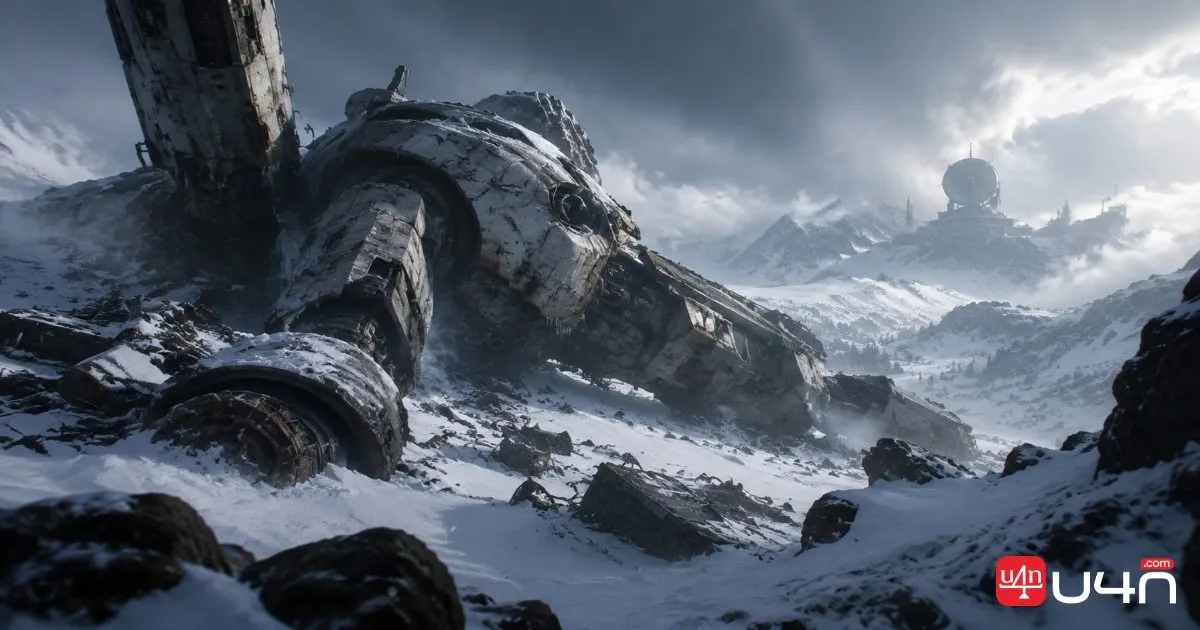
Among all the map annotations, the markings associated with the Emperor deserve particular attention. Unlike isolated place names or decorative sketches, these notes appear to form a sequence around Pendola Pass.
The map includes a red line labeled Signal Trajectory, a binocular symbol beside the words “No No”, a later mark reading Signal Lost, and a nearby reference to an avalanche. The route also appears to end around the location of the fallen Emperor.
These details invite several questions:
- What was the signal tracking, and why did it disappear?
- Does the binocular symbol indicate an observation point or a warning?
- Is the avalanche note connected to the Emperor's fall, or is it a separate event?
- Could the red line represent a sequence of events rather than a simple travel route?
We should not assume that these markings describe one confirmed incident. Their proximity makes a connection plausible, but the available annotations do not provide a complete account of what happened.
Still, this is one of the strongest areas for further lore investigation. The official Frozen Trail announcement establishes Pendola Pass as the destination reached by tracing a strange signal from Toledo, and identifies the fallen Emperor as a central part of the new region's premise. That established connection gives the map's signal-related notes more context than many of its other unexplained markings.
The remaining details could help expand that story, but we need additional in-game dialogue, quest information, or official material before treating any specific interpretation as fact.
The Emperor's signal trail is one of the most promising mysteries on the map, but the connection between the signal, the avalanche, and the fallen machine remains unconfirmed.
Could ARC Raiders Expand Its Existing Maps?
Pendola Pass has renewed the question of how much larger the world of ARC Raiders could become. Its geography, vertical terrain, and mixture of open spaces and dense structures show that the game can support a different scale and style of exploration. That makes future expansion an interesting possibility, although it is not evidence of a confirmed development plan.
There are two ways such expansion could happen.
New Areas Beyond Current Map Boundaries
Locations connected by railways, mountain passes, and named trails could provide natural starting points for future regions. The Northern Ridges and the area around the Lost Trail are intriguing because the map already gives players geographic clues to follow. Whether those routes lead to future maps, background locations, or simply enrich the fictional world is still unknown.
New Spaces Within Existing Maps
Expansion does not necessarily require larger boundaries. Spaceport, for example, contains enormous hangars that players may wonder about when exploring the area. Opening a previously inaccessible interior could introduce new encounters and environmental storytelling without requiring an entirely separate map.
A similar approach could make use of sealed facilities or other restricted spaces already present in the game. From a level-design perspective, these locations offer an opportunity to build on familiar environments while changing how players navigate and understand them.
The distinction matters. An unexplored location on a world map, a visible but inaccessible building, and a fully developed concept-art scene are three different kinds of evidence. Each can inspire a reasonable theory, but none independently confirms a future expansion.
For players who enjoy investigating the setting as much as completing raids, that uncertainty is part of the appeal. The map provides enough detail to support questions and competing interpretations without giving away every answer.
Summary
The world map in ARC Raiders offers more than a guide to the regions players can currently visit. Toledo's neighborhoods reveal the scale of underground society, distant locations hint at a much wider landscape, and small notes around Pendola Pass introduce questions about the Nomads, forgotten routes, and the Emperor's history.
The most promising clues are those that connect multiple pieces of information, particularly the railway network and the Emperor's signal trail. These details provide stronger starting points for investigation than isolated sketches or unexplained names.
For now, we should view future map expansions as possibilities rather than confirmed plans. As players continue exploring and new official information becomes available, these annotations may become easier to interpret. Until then, keeping a record of the map's locations and comparing them with new quests and lore is a useful way to follow the game's evolving world. Players who also want to prepare their loadouts for future expeditions can review available ARC Raiders Items, while keeping an eye on new information that could clarify the world beyond the Rust Belt. Players can also explore ARC Raiders Materials as they prepare for future expeditions.
FAQ
Does the ARC Raiders world map confirm future playable maps?
No. Named locations, geographic routes, and concept-art references suggest that the fictional world extends beyond the current playable areas, but they do not confirm that those locations will become maps.
What are the most interesting hidden clues on the map?
The Emperor's red signal trajectory, the Signal Lost annotation, the avalanche note, the references to Tunnel Dwellers, and the routes around the Nomads and Lost Trail are among the most promising clues because they may connect to broader world-building questions.
What do Ferrovia, Volto, and Werter tell us about Toledo?
They suggest that Toledo is a larger underground civilization composed of distinct neighborhoods. Ferrovia is associated with engineering, Volto with isolation and careful planning, and Werter with guarded access and comparatively privileged living conditions.
Could Spaceport's sealed hangars become playable areas?
They could provide opportunities for future exploration, but their presence alone is not evidence that Embark plans to open them. Any specific claim about future access would need official confirmation.
How should players interpret unexplained map annotations?
Start with what is directly visible, compare it with established in-game lore and official materials, and label any further explanation as a theory. This approach keeps the investigation grounded while leaving room for new discoveries.
What should we watch for in future updates?
Pay attention to new quest dialogue, Codex entries, official map reveals, and any changes that clarify the railway network, the Nomads, the Lost Trail, or the Emperor's signal. These developments are more likely to resolve the current mysteries than speculation based on map labels alone.