Fine Asvata Log farming starts with a simple decision: how many logs do we actually need? Our team's approach is to set a crafting target, test a compact gathering loop, and judge the surplus by completed sales rather than optimistic market listings.
Among the Aion 2 Items on a crafting shopping list, similarly named materials deserve a second look. We recommend checking the full item name before buying anything, then keeping gathering results separate by grade. That small habit makes both recipe planning and profit tracking much cleaner.
Identify the Material and Set Your Crafting Target
The client-derived item database identifies Fine Asvata Log as a tradable, Rare Asmodian gathering material. Its listed uses include the following Handicrafting recipes, plus a supply request. Confirm your current client's recipe and request details before committing materials.
| Crafting target | Fine Asvata Logs required |
|---|---|
| Expert's Asvata Bow | 6 |
| Expert's Asvata Staff | 6 |
| One of each | 12 |
Those quantities cover only the Fine Asvata Log component, not the complete ingredient list. The database also distinguishes other Asvata grades, so we treat the exact recipe name as the purchasing reference, not simply the word “Asvata.”
Our recommendation is to reserve materials for a confirmed craft, not a vague future upgrade. Before setting aside twelve logs, check the remaining ingredients and decide whether both weapons are genuinely part of your plan.
Where to Start Gathering Fine Asvata Log
The Asvata gathering map extracted from the October 28, 2026 client lists gathering proficiency 1 and locations in Altgard and Morheim. It identifies clusters around the areas below and lists ordinary, Fine, Pure, and Radiant Asvata materials among the node outputs. These records support route planning, not a guaranteed yield per attempt.
| Map | Areas to investigate | Our suggested starting approach |
|---|---|---|
| Altgard | Black Claw Village, Purifying Forest, Nameless Cemetery | Pick one nearby cluster and build a short circuit |
| Morheim | Iralcig Highland, Patamor Plains | Test a compact circuit for comparison with Altgard |
A marker represents a possible node location. We use it as a place to check, not a promise that a harvestable node is waiting.
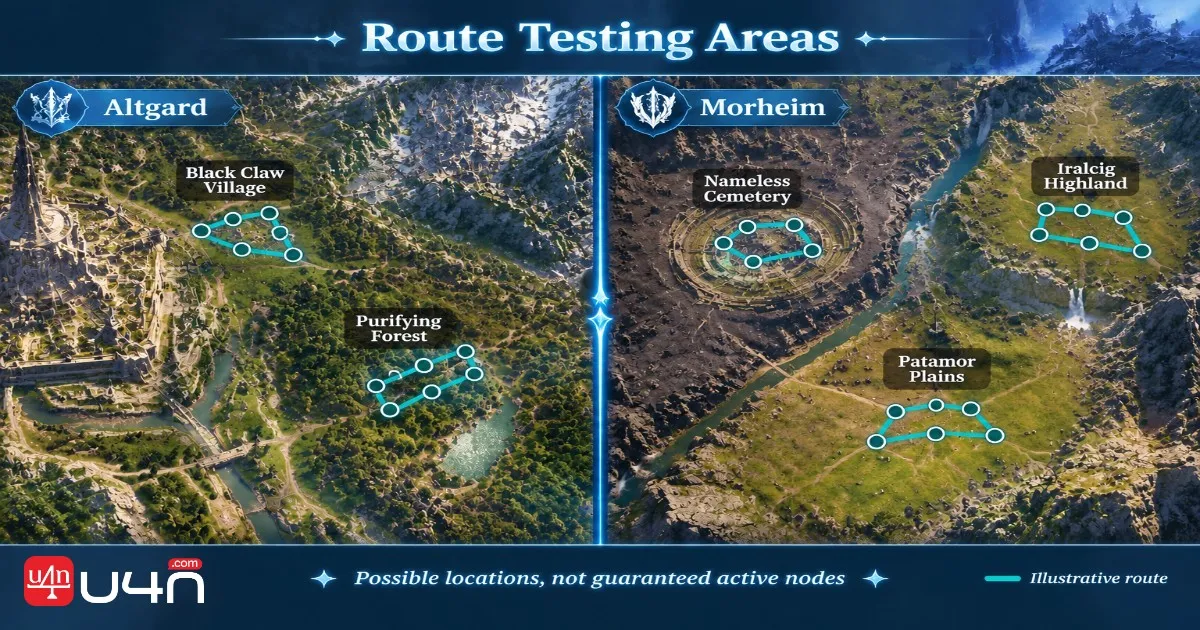
Resist the urge to connect every marker on the map. We prefer a route that is easy to repeat and trim. If a distant branch repeatedly adds travel without adding useful materials, leave it out of the next test.
Test Routes With a Repeatable Thirty-Minute Session
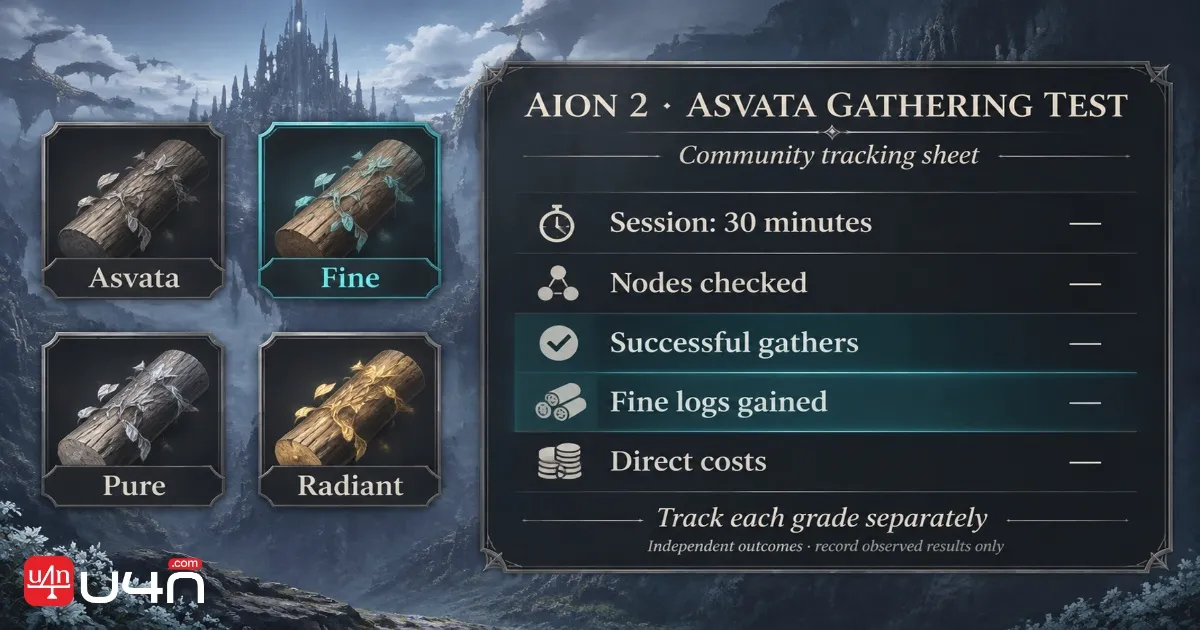
We recommend thirty minutes as a practical starting sample, not proof that a route is consistently strong. Start the timer before travelling through the circuit, so movement and empty-node checks remain part of the result.

Record your inventory beforehand, then track:
- The map, area, and approximate playing time.
- Nodes checked and successful gathers.
- Additional logs received, separated by grade.
- Direct expenses incurred during the session.
Count only the added Fine logs toward your Fine Asvata target. Keep the other grades in separate columns rather than combining the entire wood haul into one number.
Run the competing route for the same duration. We suggest comparing several sessions before settling into a regular loop, especially if one result looks unusually productive. Choose using the output you can repeat, not your luckiest lap.
Calculate Profit From Completed Sales
For a worked example, suppose a thirty-minute session produces twelve Fine logs that all sell for 50,000 Kinah each. Other materials from that session sell for another 200,000 Kinah. The following costs are hypothetical too.
| Entry | Example amount |
|---|---|
| Fine log sales: 12 × 50,000 | 600,000 Kinah |
| Other completed material sales | 200,000 Kinah |
| Gross sales | 800,000 Kinah |
| Selling fees | −40,000 Kinah |
| Direct gathering expenses | −20,000 Kinah |
| Net session profit | 740,000 Kinah |
| Hourly equivalent for this session | 1,480,000 Kinah |
Our calculation is: net session profit ÷ gathering minutes × 60.
The hourly figure describes this example session. It is not a current price estimate or a farming forecast. If only half the materials sell, count only those completed sales and leave the rest in inventory.
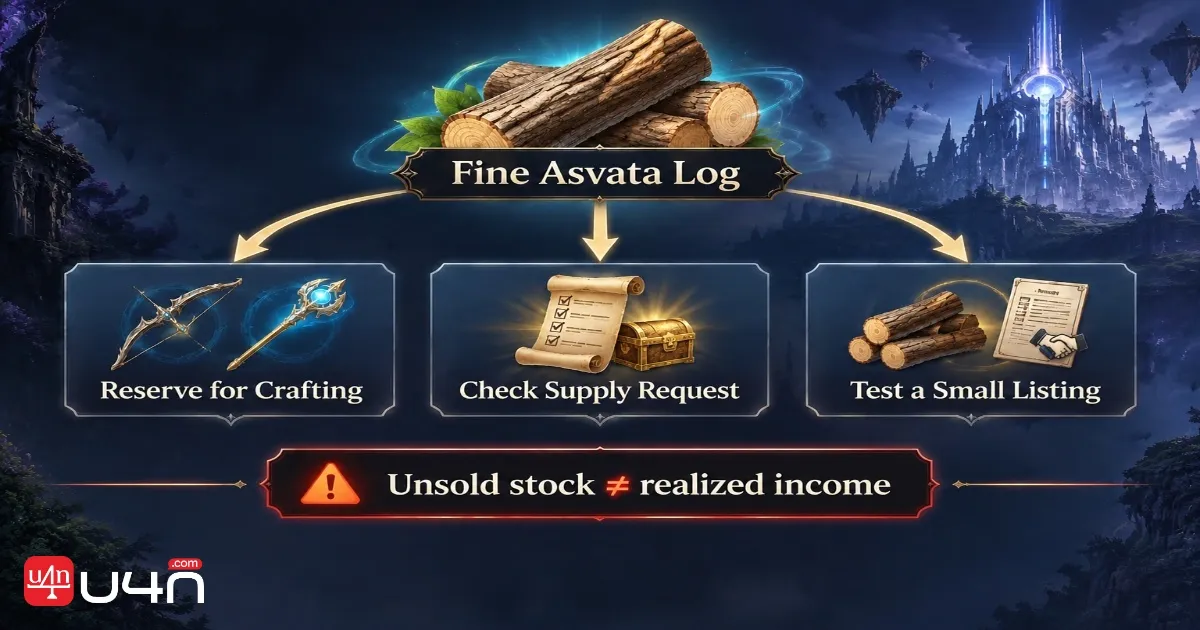
We also separate self-use from cash income. Logs reserved for equipment can reduce a planned purchase, but that saving is not a completed sale. Recording both under one profit figure makes the route look more profitable than the cash it actually generates.
Decide What to Keep, Submit, or Sell
Our preferred order is to cover confirmed crafting requirements, evaluate an available supply request, and then test the surplus on the market. For a request, compare the rewards shown in your client with the sale value of the exact quantity being submitted. Do not assign a cash value to rewards you have no reason to use.
Start with a small listing rather than your entire stockpile. We recommend testing a quantity relevant to the crafting targets above, while checking the competing unit prices. A large asking price is only a seller's proposal; use your completed sales to establish what buyers actually pay.
For readers searching for cheap Aion 2 Kinah, we recommend making the gathering comparison concrete: what can this route earn after fees, and how much of that income actually clears? A short sales record is more useful for this decision than a high valuation attached to unsold logs.
Our Practical Farming Plan
We recommend leaving town with a defined material target, running one compact route, and recording the result by grade. Repeat the test before extending the circuit. Expand only when the extra travel earns its place in the session.
Keep the logs assigned to confirmed crafts separate from sale stock. Once that reserve is covered, let completed sales and current request rewards guide the next batch. If inventory keeps growing without selling, reassess the listing or stop gathering more of the same material.
FAQ
What should we check before buying Fine Asvata Log?
We check the full material name against the recipe, verify the quantity still missing, and review the listing's unit price. That prevents a cheap-looking purchase from filling the wrong inventory slot.
Does a mapped Asvata node guarantee Fine logs?
We do not use map markers to predict a guaranteed Fine yield. For planning, we count the Fine logs actually added to inventory during each timed session.
Should we reserve twelve logs immediately?
We reserve that amount only when the bow-and-staff plan is confirmed against the recipe table above and the remaining ingredients are accounted for. Otherwise, we set the reserve to the craft we intend to complete.
How should we compare gathering with buying?
We compare the cost of the missing logs with the time needed to gather them in our recorded sessions. For a small shortage, purchasing the exact quantity can be a reasonable way to finish a craft without starting another full gathering session.