



Our approach to Wrathful materials starts with the recipe, not the dungeon queue. Before committing an evening or a pile of Kina, we identify the exact shortage for the piece we intend to craft.
When comparing Aion 2 Items for that upgrade, we separate three questions: where the material comes from, whether our character can use the version available, and how much remains to finish the recipe. That keeps a targeted upgrade from turning into an expensive stockpile.
Wrathful Mind, Will, and Ego Sources at a Glance
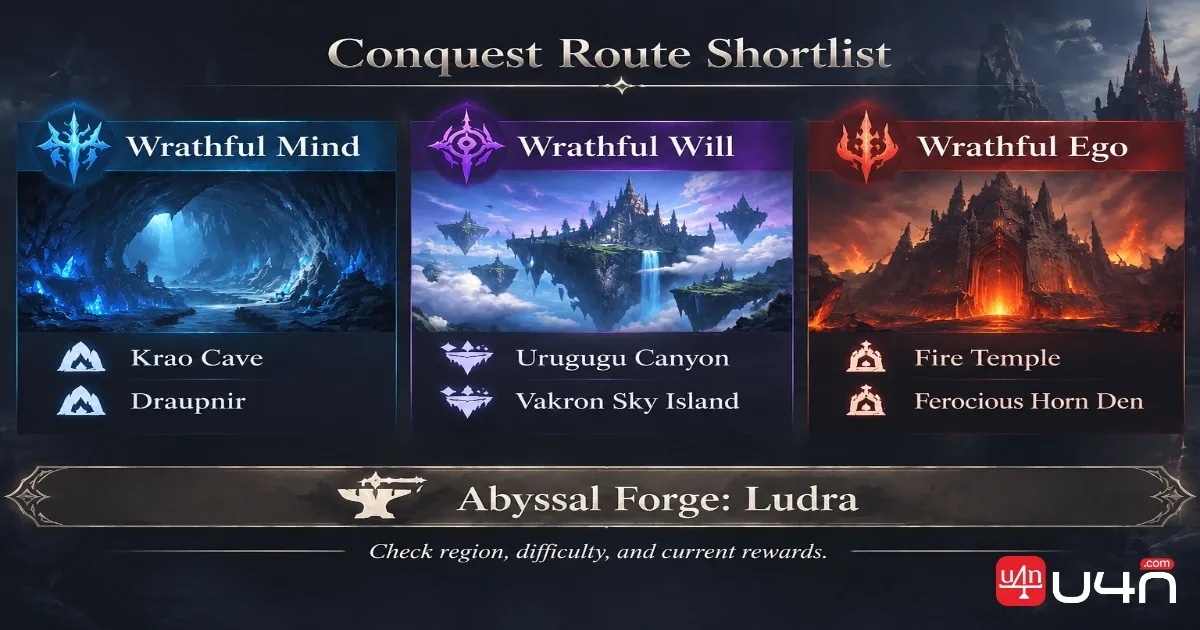
The client-derived database identifies all three as Unique materials used for Draconic gear. We use the following Conquest routes as a starting shortlist, not an exhaustive source list.
| Material | Conquest routes to compare | Additional listed source |
|---|---|---|
| Wrathful Mind | Krao Cave, Draupnir | Abyssal Forge: Ludra |
| Wrathful Will | Urugugu Canyon, Vakron Sky Island | Abyssal Forge: Ludra |
| Wrathful Ego | Fire Temple, Ferocious Horn Den | Abyssal Forge: Ludra |
Tradeable entries exist for all three. Binding permissions still need a separate check: Wrathful Mind (Bound), item ID 660511001, is listed as untradeable and unavailable for server storage. For a recipe reference, the listed Wise Dragon Lord Greatsword requires 3 Mind, 3 Will, and 20 Ego, alongside other components and transfer equipment. These details come from client-derived records, not a promise that every dungeon mode awards the same items.
Check Reward Changes Before Choosing a Route
Fire Temple and Ferocious Horn Den Hard difficulty gained all three Wrathful materials. Ludra Normal and Hard also received bound versions in Reward Group 5, whose activation rate increased from 30% to 100%. That percentage describes the reward group, not a stated guarantee of each material. The same update changed Krao Cave and Draupnir Conquest Kina rewards to bound currency.
Our recommendation is to check the selected difficulty and reward preview before spending entry resources. Keep two goals separate: obtaining crafting materials directly and earning currency to purchase the remaining shortage. Evaluate each route against the goal it actually serves.
Measure Farming Efficiency Across the Whole Session
We favor repeatable clears over an impressive boss timer. A route only earns its place when the group reaches the rewards consistently.
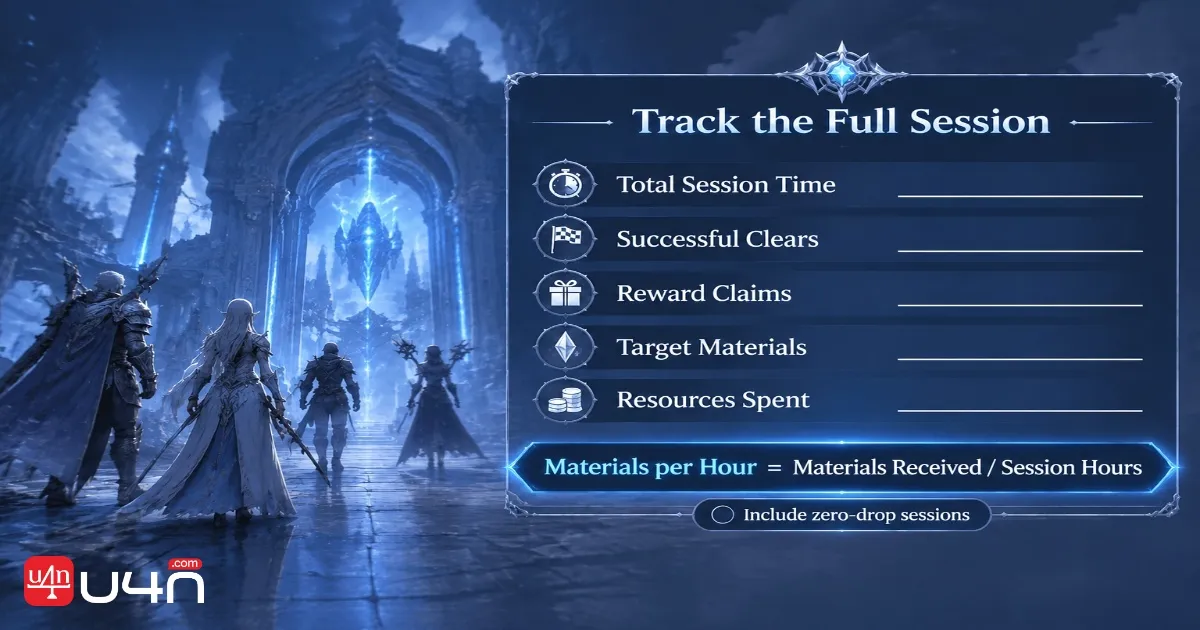
For each comparison session, record:
- Total time, including recruitment, travel, wipes, and reward collection.
- Successful clears and relevant reward claims.
- Copies of the target material received.
- Entry resources and consumables spent.
Use this working metric:
Target materials per hour = materials received ÷ total session hours
Treat that figure as a record of your session, not a discovered drop rate. We also track successful reward claims per hour, which helps compare execution without letting one lucky drop decide the entire route.
Our preference is to test within a fixed time budget and retain zero-drop sessions in the log. Deleting the unlucky evenings makes a farming route look better on paper than it feels to run.
Check Binding Before Moving or Buying Materials
We check the crafting character's inventory before counting supplies on alternate characters. A stack only belongs in the usable total after its transfer permissions and recipe compatibility have been confirmed.
Our pre-purchase check is short:
- Open the exact target recipe, including its crafting variant.
- Check whether it accepts the bound materials already owned.
- Inspect storage and trading permissions on each relevant stack.
- Subtract only materials the crafting character can actually use.
Where the recipe accepts bound copies, we generally prefer using those before tradeable copies. That preserves the option to sell or redirect the tradeable stock later.

Budget the Shortage, Not Just the Largest Stack
For an illustrative basket of 3 Mind, 3 Will, and 20 Ego, assume prices of 3 million, 2 million, and 4 million Kina respectively. These are hypothetical inputs, not live market quotes.
| Material | Example quantity | Assumed unit price | Subtotal |
|---|---|---|---|
| Wrathful Mind | 3 | 3 million Kina | 9 million Kina |
| Wrathful Will | 3 | 2 million Kina | 6 million Kina |
| Wrathful Ego | 20 | 4 million Kina | 80 million Kina |
| Total | 26 | 95 million Kina |
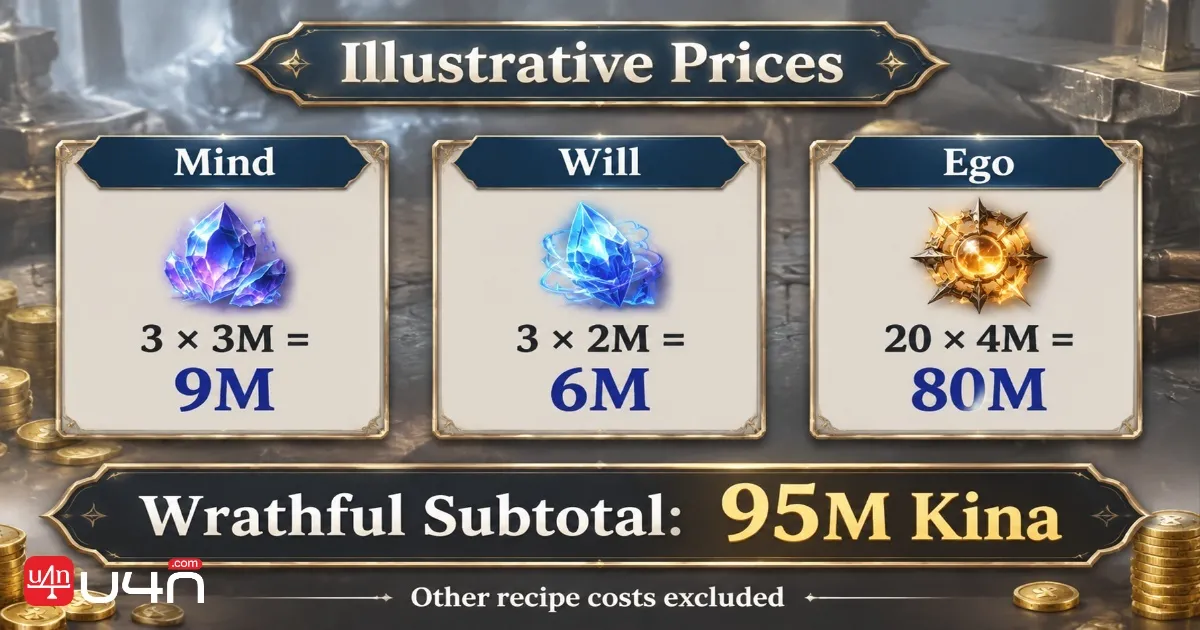
We treat that 95 million as the Wrathful-material subtotal only. Price the remaining equipment and components separately, then recalculate using the quantities still missing. For materials already owned, compare keeping them with their net sale proceeds after applicable selling costs.
If you are considering whether to buy Aion 2 Kina for the upgrade, establish the remaining material bill first and check the publisher's transaction rules. We do not recommend choosing a currency budget before confirming what the craft still needs.
Our Recommended Material Plan
We start with a recipe audit, test an eligible route, and reserve purchases for a clearly measured shortage. If only a few materials separate us from a ready-to-craft upgrade, buying those pieces deserves consideration. If several expensive requirements remain, we prefer retaining budget flexibility.
After each session, update usable inventory and the remaining bill. Stop purchasing a material once its shortage reaches zero unless another confirmed recipe already needs it.
FAQ
Where should we start farming Wrathful Mind?
We start by comparing Krao Cave and Draupnir against the character's available rewards and clear consistency. Use the source shortlist to choose a test route, then judge it by complete session time and successful reward claims.
Should we prioritize Ludra for all three materials?
We include it in the comparison when the group is ready to clear it reliably. We do not treat access to several materials as sufficient reason to abandon a shorter, dependable route.
Can we count bound materials stored on an alternate character?
We leave them out of the crafting budget until transfer access and recipe compatibility are confirmed. Our usable total includes only supplies that can reach the intended craft.
What should we do after several runs without a drop?
We keep the results in the log and review time spent, reward claims, and resource use. If the session has reached its planned limit, we stop and reassess the remaining purchase cost rather than extending the run to chase a drop.